Abstract
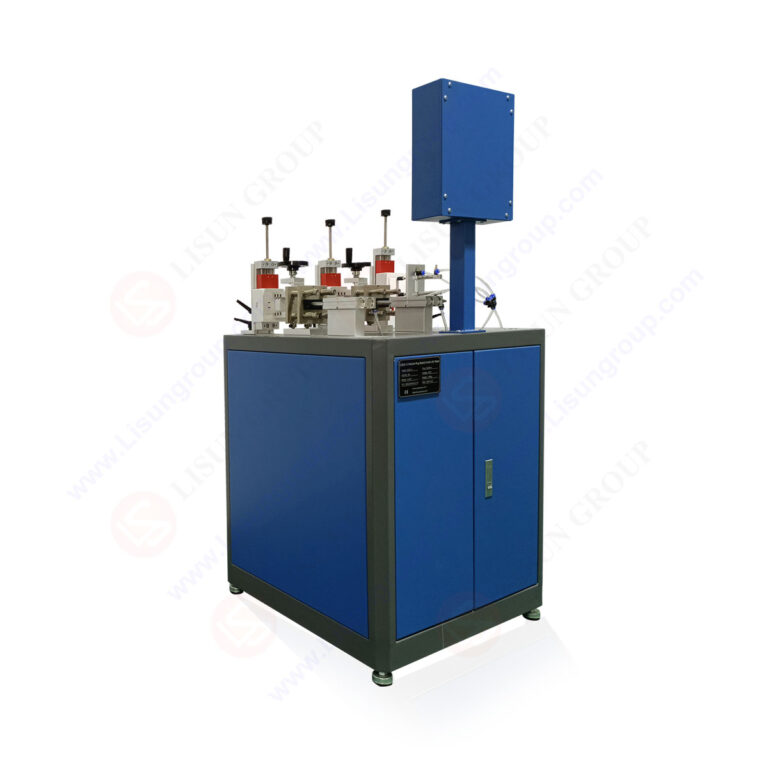
This article examines the technical requirements of IEC 60669-1:2017 for general-purpose switches and presents LISUN’s comprehensive testing solutions, with a primary focus on the IEC 60669-1:2017 switch testing methodology. The LISUN CZKS-3 series switch durability testers provide automated, repeatable platforms for verifying switch mechanical and electrical endurance under controlled conditions. These systems address testing requirements for plugs, sockets, and switches across household and automotive applications. By integrating PLC control, cylinder-driven actuation mechanisms, and real-time failure monitoring, the CZKS-3 series enables compliance verification against IEC 60669-1, IEC 60884-1, and IEC 61058-1 standards. This article provides technical specifications, comparative analysis of model variants, and practical guidance for achieving certification through precise electrical fatigue testing and contact adhesion assessment.
1.1 Scope and Applicability of IEC 60669-1:2017
IEC 60669-1:2017 specifies general requirements for switches for household and similar fixed electrical installations. The standard covers manually operated switches rated up to 440 V and 63 A, intended for indoor or outdoor use in residential, commercial, and light industrial settings. Clause 7 of the standard defines classification categories including type of load, actuation method, and environmental protection rating. Testing under this standard requires verification of mechanical durability, electrical endurance, temperature rise limits, and insulation resistance. For manufacturers seeking market access in regions adopting IEC standards, demonstrating conformity through systematic switch testing is mandatory.
1.2 Key Test Parameters for Switch Durability Verification
The standard mandates specific test sequences under Clause 19, including operating force measurement, mechanical endurance of 10,000 to 100,000 cycles depending on switch category, and electrical endurance tests at rated voltage and current. Critical parameters include contact resistance stability, arcing duration during breaking operations, and dielectric withstand voltage after endurance testing. The LISUN CZKS-3 series addresses these requirements through programmable test protocols that precisely control actuation speed, dwell time, and load application during IEC 60669-1:2017 switch testing procedures.
1.3 Compliance Framework and Certification Pathways
Achieving IEC 60669-1 compliance requires documented evidence of test results from accredited laboratories. The standard references IEC 61058-1 for additional guidance on switch testing methodology, particularly for mechanical durability assessment. Clause 20 of IEC 60669-1 specifies acceptance criteria including no electrical or mechanical failure during the test sequence, contact welding, or permanent deformation of switch components. LISUN testing solutions facilitate this certification process by generating detailed test reports with cycle counting, failure detection logs, and parameter trending data.
2.1 System Design and Core Components
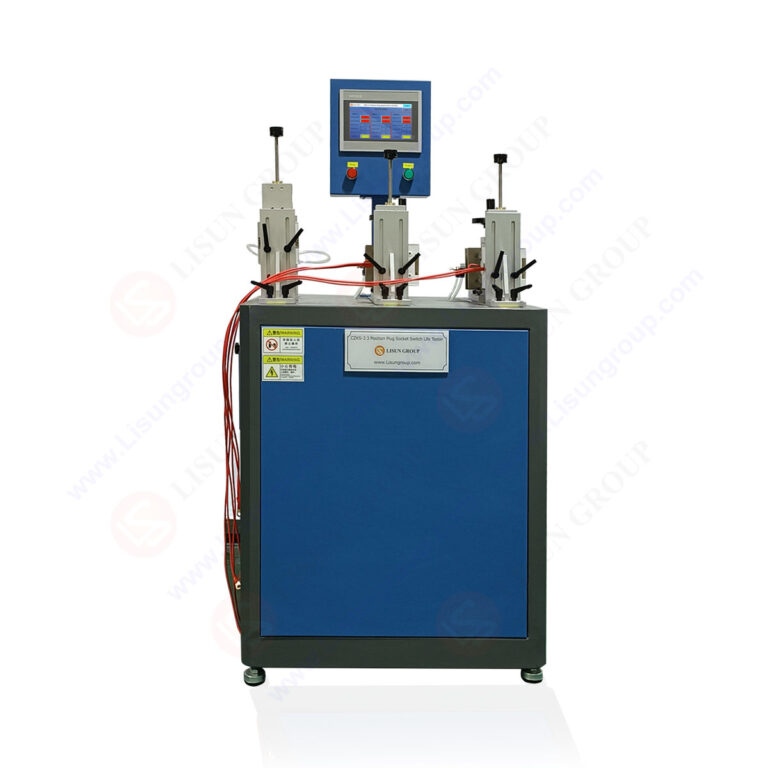
The LISUN CZKS-3 series switch durability testers integrate modular mechanical actuation systems with advanced PLC control units. Each test station employs pneumatic or electric cylinder-driven mechanisms capable of applying precise forces between 1 N and 50 N, adjustable in 0.1 N increments. The system supports simultaneous testing of multiple switch samples with independent cycle counters and failure detection sensors. The control interface allows programming of complex test sequences including variable actuation speeds from 10 to 60 cycles per minute, adjustable dwell times from 0.5 to 10 seconds, and configurable load parameters for resistive, inductive, and capacitive test circuits.
2.2 Model Variants and Specification Comparison
The CZKS-3 series includes four primary configurations designed for different testing applications. The following table provides comparative specifications:
| Parameter | CZKS-3 | CZKS-3P | CZKS-3S | CZKS-3A |
|---|---|---|---|---|
| Maximum Test Stations | 3 | 3 | 3 | 4 |
| Actuation Force Range | 1-30 N | 1-50 N | 1-30 N | 1-50 N |
| Stroke Length | 0-50 mm | 0-100 mm | 0-50 mm | 0-100 mm |
| Cycle Rate Range | 10-60 cycles/min | 10-45 cycles/min | 10-60 cycles/min | 10-45 cycles/min |
| Load Current Capacity | 16 A max | 32 A max | 16 A max | 32 A max |
| Supported Standards | IEC 60669-1 | IEC 60669-1, IEC 60884-1 | IEC 60669-1, IEC 61058-1 | IEC 60669-1, IEC 60884-1, IEC 61058-1 |
The CZKS-3P variant includes extended force range for heavy-duty industrial switches, while the CZKS-3S incorporates specialized gripping fixtures for rocker and push-button switch types. The CZKS-3A provides maximum flexibility for testing combinations of switches, plugs, and sockets in a single test setup.
2.3 Control Systems and Data Acquisition
Each CZKS-3 variant uses a PLC-based control system with touchscreen human-machine interface for test parameter configuration. The system records real-time data including actuation force profiles, contact resistance measurements, cycle completion status, and failure events. Data acquisition samples at rates up to 100 Hz, enabling detection of transient contact bouncing or intermittent electrical failures. The integrated alarm system automatically pauses testing when predefined thresholds for contact resistance, actuation time deviation, or mechanical displacement errors are exceeded.
3.1 Mechanical Endurance Testing Protocol
Mechanical endurance testing per Clause 19.1 of IEC 60669-1 requires operating switches through 10,000 cycles for normal use devices and up to 100,000 cycles for switches intended for frequent operation. The LISUN CZKS-3 series executes this protocol by applying controlled actuation forces at specified rates, typically 30 cycles per minute for standard switches. During the IEC 60669-1:2017 switch testing process, the system monitors actuation force consistency and detects mechanical degradation such as spring fatigue, hinge wear, or housing deformation. The PLC logic records force profiles for each cycle and generates statistical analysis of force deviation trends.
3.2 Electrical Endurance and Breaking Capacity Testing
Electrical endurance testing under Clause 19.2 applies rated voltage and current while the switch is operated through its mechanical cycle. For resistive loads, the test current is maintained at the rated value with a power factor of 0.95 minimum. Inductive load testing requires a power factor of 0.6 to 0.7, simulating motor or transformer loads. The CZKS-3A variant supports programmable load banks that automatically switch between resistive and inductive configurations based on the test protocol. Breaking capacity verification involves measuring arc duration and extinction time during switch opening, with maximum allowable arcing times specified in Clause 20.2.
3.3 Failure Mode Detection and Analysis
The CZKS-3 series incorporates multiple failure detection mechanisms critical for compliance with IEC 60669-1 acceptance criteria. Contact welding detection monitors current continuity during the switch open state; any current flow exceeding 5 mA indicates weld formation. Contact resistance measurement uses four-wire Kelvin sensing to detect increases beyond 50% of initial value, signaling contact degradation. Mechanical failure detection tracks actuation force deviations exceeding 30% from nominal values, indicating spring fatigue or mechanism binding. These detection systems operate continuously during the full test duration, providing comprehensive failure logging.
4.1 Combined Testing for Multi-Component Assemblies
Modern electrical installations increasingly use integrated switch-socket combinations requiring simultaneous compliance verification. The LISUN CZKS-3A enables concurrent testing of switch mechanisms and socket outlets within a single assembly, per IEC 60884-1 and IEC 60669-1 requirements. The system applies coordinated actuation sequences that simulate real-world usage patterns, including switch operation followed by plug insertion and withdrawal cycles. This integrated approach reduces total test time by 40-60% compared to sequential testing of individual components.
4.2 Breaking Capacity Testing for Socket Outlets
Socket breaking capacity testing per IEC 60884-1 Clause 21 requires verifying that contacts can interrupt rated current without excessive arcing or contact welding. The CZKS-3P variant with extended force and current capacity supports tests up to 32 A, covering the full range of household and commercial socket ratings. The system uses precision-machined test plugs with wear-resistant contacts that maintain consistent insertion force over thousands of cycles. Real-time current and voltage monitoring during breaking events enables calculation of arc energy and duration for compliance documentation.
4.3 Automotive Component Testing Adaptations
Automotive switches and sockets require testing under environmental stress conditions including vibration, temperature cycling, and voltage fluctuation. While the standard CZKS-3 series operates at ambient conditions, the system can be integrated with environmental chambers for combined temperature-humidity testing. The PLC control architecture supports communication with external chambers, enabling synchronized test sequences that apply switch operation cycles during thermal transitions from -40°C to +85°C. This capability addresses automotive standards referencing IEC 60669-1 test methodologies for vehicle interior switches.
5.1 IEC 60669-1 Clause-by-Clause Testing Alignment
The LISUN CZKS-3 series test protocols map directly to specific clauses of IEC 60669-1:2017. Clause 17 temperature rise testing uses the system’s integrated thermocouple inputs to monitor switch housing temperature during continuous current flow. Clause 18 insulation resistance and dielectric strength tests are supported through the system’s integrated high-voltage test module, applying 1500 V to 2500 V depending on switch rated voltage. Clause 20 mechanical and electrical endurance testing uses the primary cycle control system with programmable test sequences that match standard requirements.
5.2 Multi-Standard Compliance Capabilities
Beyond IEC 60669-1, the CZKS-3 series supports testing per IEC 61058-1 for appliance switches, IEC 60884-1 for plugs and sockets, and GB/T 2099.1 for Chinese market compliance. The system stores pre-configured test protocols for each standard, ensuring proper parameter settings and acceptance criteria. This multi-standard capability is particularly valuable for testing laboratories serving manufacturers exporting to multiple regions, as it eliminates the need for separate test equipment investments.
5.3 Calibration and Traceability Requirements
Maintaining compliance requires regular calibration of force sensors, current measurement circuits, and timing systems. The CZKS-3 series includes self-diagnostic routines that verify measurement accuracy before each test sequence. Recommended calibration intervals follow ISO 17025 practices, with force sensors calibrated at 6-month intervals and electrical measurement systems calibrated annually. The system generates calibration certificates documenting measurement uncertainty and traceability to national standards, essential for accredited testing reports.
6.1 Household Switch Manufacturing Quality Control
Switch manufacturers implement the CZKS-3 series in production quality control lines for batch sampling of finished products. Typical testing protocols involve 1,000-cycle endurance tests on samples from each production batch, verifying contact resistance stability and actuation force consistency. The system’s fast setup time enables testing of 10-15 samples per hour, providing statistical process control data for manufacturing adjustments.
6.2 Third-Party Testing Laboratory Operations
Testing laboratories serving the electrical component industry use the CZKS-3 series for certification testing services. The system’s multi-station design allows simultaneous testing of up to 4 switch samples, maximizing throughput for laboratory workloads. Data export capabilities in CSV and PDF formats simplify creation of test reports for submission to certification bodies such as TÜV, UL, or CCC.
6.3 Automotive Electronics Component Verification
Automotive tier-1 suppliers use the CZKS-3A variant for testing interior switches including window lift controls, light switches, and steering column controls. The system’s ability to test multiple switch types with different actuation forces and travel distances makes it suitable for mixed-component test batches. Automotive testing typically requires 50,000 to 100,000 cycle endurance verification with in-process monitoring of electrical continuity.
7.1 Load Capacity and Current Rating Requirements
Selecting the appropriate CZKS-3 variant depends on the maximum current rating of switches under test. For residential switches rated up to 16 A, the CZKS-3 or CZKS-3S provides adequate capacity. Commercial and industrial switches rated to 32 A require the CZKS-3P or CZKS-3A variants with higher load current capabilities. The system’s load bank design includes protective circuits that prevent damage from sustained arcing or short-circuit conditions during breaking capacity tests.
7.2 Actuation Mechanism Configuration
The choice between pneumatic and electric actuation depends on testing volume and force precision requirements. Pneumatic actuation provides faster cycle rates suitable for high-volume testing, while electric servo actuation offers superior force control for precision measurement applications. The CZKS-3 standard configuration uses pneumatic actuation, while the CZKS-3P offers electric servo actuation as an option for applications requiring force profiling during switch operation.
7.3 Integration with Laboratory Information Management Systems
Modern testing laboratories require integration between test equipment and laboratory information management systems (LIMS) for data management and audit trail compliance. The CZKS-3 series supports network connectivity via Ethernet, enabling automatic data transfer to LIMS databases. Test results include unique identifiers, timestamps, operator information, and sample traceability data, meeting requirements for compliant data management under ISO 17025.
The LISUN CZKS-3 series switch durability testers provide comprehensive solutions for IEC 60669-1:2017 switch testing compliance, addressing mechanical endurance, electrical breaking capacity, and failure detection requirements. By integrating PLC-controlled actuation with real-time monitoring, the CZKS-3, CZKS-3P, CZKS-3S, and CZKS-3A variants enable precise, repeatable testing for household, commercial, and automotive switch applications. These systems facilitate compliance with multiple international standards including IEC 60884-1 and IEC 61058-1, making them suitable for manufacturers and testing laboratories serving global markets. The technical architecture supports detailed data acquisition for certification documentation, while the modular design allows configuration for specific testing needs. For organizations seeking to validate switch performance and achieve market access through standards compliance, the LISUN CZKS-3 series delivers the accuracy, reliability, and efficiency required for rigorous electrical durability testing programs.
Q1: What is the difference between mechanical endurance and electrical endurance testing under IEC 60669-1:2017?
A: Mechanical endurance testing involves operating the switch without electrical load to verify structural integrity and actuation mechanism durability over thousands of cycles. Per Clause 19.1, this test applies specified actuation forces at controlled rates while monitoring mechanical degradation such as spring fatigue or hinge wear. Electrical endurance testing under Clause 19.2 applies rated voltage and current during switch operation, verifying that contacts can interrupt the circuit without welding, excessive arcing, or contact resistance increase beyond 50% of initial value. The CZKS-3 series supports both test types with programmable sequences that can apply or remove electrical load at specific points in the actuation cycle.
Q2: How does the CZKS-3 series detect contact welding during switch testing?
A: The CZKS-3 series employs continuous current monitoring during the switch open state as the primary method for contact welding detection. During normal operation, when the switch is in the open position, current flow should be zero. If the system detects current flow exceeding 5 mA during the open state, it immediately identifies a contact welding condition and logs the cycle number at which the failure occurred. The PLC control system automatically pauses the test sequence to prevent further damage to the test sample or equipment. This detection method complies with IEC 60669-1 Clause 20 acceptance criteria requiring identification of contact welding failures during endurance testing.
Q3: Can the CZKS-3 series test both rocker switches and push-button switches simultaneously?
A: Yes, the CZKS-3 series supports simultaneous testing of different switch types when equipped with appropriate actuation fixtures. The CZKS-3S variant includes interchangeable gripping fixtures for rocker, toggle, push-button, and rotary switch mechanisms. Each test station operates independently, allowing different actuation profiles including force, stroke length, and cycle rate for each sample. The PLC control system manages independent test sequences for each station, enabling a single test run to evaluate up to 3 rocker switches and 3 push-button switches concurrently, maximizing testing throughput while maintaining individual parameter control.
Q4: What maintenance is required for the CZKS-3 series to maintain testing accuracy?
A: The CZKS-3 series requires regular maintenance including pneumatic system filter replacement every 2,000 operating hours, force sensor calibration verification at 6-month intervals, and electrical measurement system calibration annually. Contactors and relays in the load circuit should be inspected after 50,000 cycles for contact wear and replaced if resistance exceeds manufacturer specifications. The actuation mechanism bearings require lubrication every 1,000 hours of operation. The self-diagnostic routine, included with each system, performs automated verification of force accuracy, timing precision, and electrical measurement accuracy before each test sequence, alerting operators when recalibration is needed.
Q5: What standards beyond IEC 60669-1 does the CZKS-3 series support for switch testing?
A: The CZKS-3 series supports multiple international standards through pre-configured test protocols. These include IEC 61058-1 for appliance switches used in household appliances, IEC 60884-1 for plugs and socket-outlets, and GB/T 2099.1 for products entering the Chinese market. For automotive applications, the system supports testing per ISO 10605 for electrostatic discharge testing and can be integrated with environmental chambers for combined temperature-humidity testing per ISO 16750. The multi-standard capability allows testing laboratories to serve diverse client requirements without procuring separate equipment for each standard.