Abstract
This technical article provides an in-depth examination of the LISUN CZKS-3 series switch durability testers, specifically engineered to meet the rigorous requirements of IEC 60669-1:2017 testing standards for switches, plugs, and sockets. The IEC 60669-1:2017 testing standard governs the performance and safety verification of electrical switches, demanding precise mechanical and electrical endurance testing under defined load conditions. The LISUN CZKS-3 series, including variants CZKS-3P, CZKS-3S, and CZKS-3A, offers automated, PLC-controlled actuation systems capable of replicating tens of thousands of operational cycles with repeatable accuracy. This article explores the technical architecture, compliance parameters, application scenarios, and comparative advantages of these systems for manufacturers and testing laboratories requiring verifiable electrical durability data.
1.1 Scope and Applicability of the Standard
IEC 60669-1:2017 establishes minimum performance and safety criteria for manual switches used in household, commercial, and light-industrial electrical installations. The standard defines test conditions for mechanical operation, electrical endurance, and thermal behavior under rated voltage and current loads. Clause 18 specifically addresses mechanical endurance, requiring switches to withstand 10,000 to 40,000 cycles depending on the switch category, while Clause 19 mandates electrical endurance tests with defined resistive and inductive loads. Compliance with IEC 60669-1:2017 testing standards is mandatory for CE marking in European markets and for certification to national standards such as GB/T 16915.1 in China.
1.2 Critical Test Parameters and Pass/Fail Criteria
The IEC 60669-1:2017 testing standard specifies that during electrical endurance testing, switches must maintain contact continuity without welding, excessive arcing, or insulation breakdown. The standard requires a test rate of 30 operations per minute for mechanical endurance and 15 operations per minute for electrical endurance, with tolerance levels of ±10%. Contact resistance measurements must not exceed 30 milliohms for rated currents up to 16A. The LISUN CZKS-3 series directly addresses these requirements through programmable cycle counters, adjustable actuation speeds, and real-time contact resistance monitoring capabilities.
2.1 Core Components and Mechanical Configuration
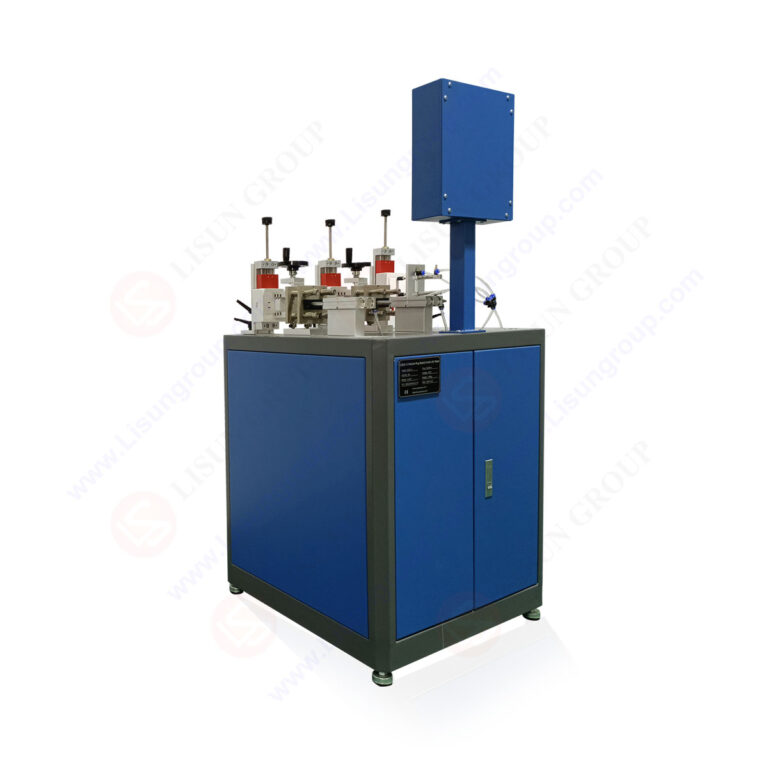
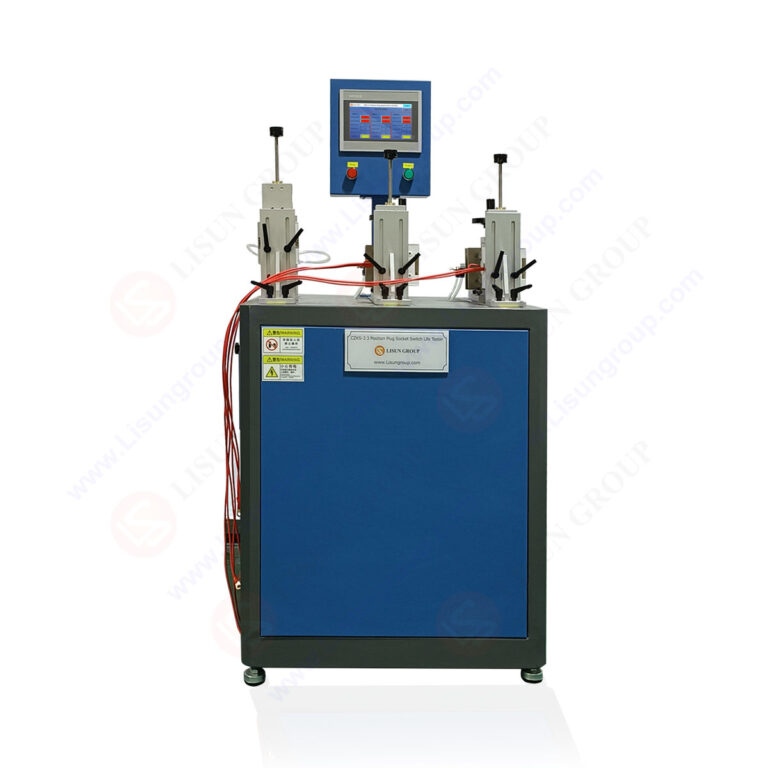
The LISUN CZKS-3 series integrates a servo-motor-driven actuation head with pneumatic damping to eliminate mechanical shock that could artificially influence test results. Each unit incorporates an industrial-grade PLC control system with touch-screen interface for programming test sequences. The CZKS-3 variant features a single-station configuration for sequential testing, while the CZKS-3P introduces a parallel testing architecture capable of simultaneously evaluating three switches. The CZKS-3A variant is optimized for automotive-grade switches with higher force tolerances and extended temperature range capabilities. The CZKS-3S model adds integrated safety enclosures and emergency stop mechanisms for high-voltage applications up to 690V.
2.2 PLC Control and Data Acquisition Systems
The control architecture of the LISUN CZKS-3 series employs a Siemens S7-1200 PLC with expandable I/O modules for auxiliary sensor integration. Test parameters including cycle count, actuation force, dwell time, and travel distance are programmable in increments of 0.1N and 0.1mm. The system logs each test cycle with timestamp, force profile, and contact state data, storing results in internal memory for export to CSV or database formats. This data acquisition capability directly supports traceability requirements specified in ISO 17025 for testing laboratory accreditation.
2.3 Cycle Rate and Force Control Mechanisms
The CZKS-3 series achieves cycle rates from 1 to 60 operations per minute with force control ranging from 0.5N to 50N, adjustable in 0.1N increments. A closed-loop force feedback system ensures consistent actuation force within ±2% of the setpoint across the full operating range. This precision is critical for replicating the mechanical stress patterns defined in IEC 60669-1:2017 testing standards, where Clause 18.2 specifies the actuation force must be applied perpendicular to the switch actuator within ±5° angular tolerance.
3.1 Model-Specific Parameter Comparison
The following table presents the technical specifications for each CZKS-3 series variant, highlighting their distinct capabilities for different testing applications:
| Parameter | CZKS-3 | CZKS-3P | CZKS-3S | CZKS-3A |
|---|---|---|---|---|
| Test Stations | 1 | 3 | 1 | 1 |
| Max Test Voltage | 250V AC | 250V AC | 690V AC | 48V DC |
| Max Test Current | 16A | 16A | 32A | 50A |
| Cycle Rate Range | 1-30 ops/min | 1-30 ops/min | 1-60 ops/min | 1-45 ops/min |
| Actuation Force Range | 0.5-20N | 0.5-20N | 1-50N | 1-50N |
| Force Accuracy | ±2% | ±2% | ±1.5% | ±1.5% |
| Data Logging Channels | 2 | 6 | 4 | 4 |
| PLC Controller | S7-1200 | S7-1200 | S7-1500 | S7-1200 |
| Safety Enclosure | Optional | Optional | Standard | Optional |
3.2 Compliance Metrics for International Standards
The CZKS-3 series meets or exceeds the measurement accuracy requirements of multiple international standards. For IEC 60669-1:2017 testing standards, the ±2% force accuracy exceeds the ±5% tolerance specified in Clause 13.2. The CZKS-3S variant provides voltage testing capability up to 690V, covering the extended range required for IEC 60947-1 low-voltage switchgear standards. Contact resistance measurement resolution of 0.1 milliohm enables detection of early degradation patterns before failure occurs, supporting predictive analysis in quality assurance programs.
4.1 Household Switch Life Cycle Verification
For residential switch manufacturers, the LISUN CZKS-3 series enables full compliance verification with IEC 60669-1:2017 testing standards. Typical test protocols for single-pole light switches require 20,000 mechanical cycles followed by 10,000 electrical cycles at rated load. The CZKS-3P variant reduces total test time by 66% through parallel testing of three samples simultaneously, maintaining individual logging for each channel. Testing engineers can program sequence pauses for thermal imaging inspection at predetermined intervals, correlating contact temperature rise with mechanical wear progression.
4.2 Automotive and Industrial Switch Applications
The CZKS-3A variant addresses the specialized requirements of automotive switch testing, where rated currents can reach 50A for power window or seat adjustment controls. These applications demand testing per ISO 8820-3 for DC circuit durability, requiring cycle counts up to 100,000 operations. The extended force range of 1-50N accommodates heavy-duty push-button switches and rotary actuators with high actuation torques. The system’s ability to maintain ±1.5% force accuracy during 24-hour continuous operation makes it suitable for accelerated life testing protocols in automotive Tier-1 supplier laboratories.
4.3 Breaking Capacity and Overload Testing
Clause 19.3 of IEC 60669-1:2017 testing standards requires switches to interrupt rated current at 1.1 times rated voltage for 50 operations. The LISUN CZKS-3 series integrates with external resistive and inductive load banks to simulate realistic electrical stress conditions. The system’s PLC controller coordinates load engagement timing with mechanical actuation, ensuring complete synchronization within ±50 milliseconds as specified in the standard. Test engineers can capture oscilloscope waveforms of voltage and current during contact separation to analyze arc duration and extinction characteristics.
5.1 Mechanical Insertion and Withdrawal Cycles
Plug and socket testing per IEC 60884-1 requires verification of insertion force, withdrawal force, and contact retention after repeated use. The LISUN CZKS-3 series, when configured with appropriate fixture adapters, performs automated insertion and withdrawal cycles at rates up to 10 cycles per minute. Force transducers mounted on the actuation head measure peak insertion and withdrawal forces, recording data for statistical analysis. The CZKS-3P variant can test three different plug/socket combinations simultaneously, enabling comparative evaluation of construction quality across product batches.
5.2 Electrical Endurance Under Load Conditions
The combined requirements of IEC 60884-1 Clause 20 (mechanical endurance) and Clause 21 (electrical endurance) demand 5,000 insertion/withdrawal cycles under rated current conditions. The CZKS-3 series maintains current flow during the entire insertion cycle, with a programmable delay before current interruption to simulate real-world arcing conditions. Contact resistance degradation is monitored every 500 cycles, with automatic test termination if resistance exceeds 100 milliohms threshold. This feature prevents catastrophic damage to test fixtures while collecting failure point data for root cause analysis.
5.3 Temperature Rise Measurement Integration
Temperature rise testing per IEC 60884-1 Clause 22 requires continuous temperature monitoring at rated current for four hours. The CZKS-3 series accommodates K-type thermocouple inputs for direct connection to plug pins and socket contacts. The PLC system records temperature data at 1-second intervals, generating automated test reports with pass/fail evaluation against the standard’s 45°C maximum temperature rise limit. This integration eliminates the need for separate temperature logging equipment, reducing test setup complexity and potential data synchronization errors.
6.1 Switch and Connector Testing for Small Appliances
Household appliance manufacturers require compliance with IEC 61058-1 for switches integrated into products such as blenders, coffee makers, and power tools. The LISUN CZKS-3 series supports testing of rocker switches, push-button switches, and slide switches with custom fixture adapters. The system’s programmable dwell time (0.1 to 99.9 seconds) enables simulation of both momentary and sustained switch operations, essential for testing switch functions in power tools with trigger-operated controls. Cycle count capabilities up to one million operations accommodate the extended life testing requirements for high-reliability appliance switches.
6.2 Electrical Durability Verification for Lighting Controls
Dimming switches and electronic light controls require testing per IEC 60669-2-1, which adds specific requirements for semiconductor switch components. The CZKS-3 series can be programmed to vary actuation speed and force to simulate user interaction patterns, including partial actuation for dimming controls. The system’s data acquisition module captures contact voltage drop during each cycle, providing early indicators of wear in electromechanical contacts. For electronic switches with logic-level control inputs, the CZKS-3 series can be configured with auxiliary signal generators to simulate control voltage application during testing.
7.1 Calibration and Traceability Protocols
The LISUN CZKS-3 series includes calibration certificates traceable to national metrology institutes, with recommended recalibration intervals of 12 months. Force measurement systems are calibrated using certified load cells with 0.1g resolution, while cycle count accuracy is verified against NIST-traceable frequency standards. The system’s built-in self-diagnostics perform daily verification routines, checking actuation force, cycle rate, and data logging integrity before test commencement. These features support ISO 17025 accreditation requirements for testing laboratories conducting third-party certification testing.
7.2 Multi-User Access and Report Generation
Enterprise laboratory deployments benefit from the CZKS-3 series network connectivity, enabling central management of test protocols and results across multiple test stations. The system supports up to 50 user profiles with customizable access levels for operators, engineers, and quality managers. Automated report generation compiles test parameters, statistical analysis, and pass/fail determination into PDF or XML formats compatible with laboratory information management systems (LIMS). The reporting module automatically references the applicable standard clauses, reducing documentation errors in certification submissions.
7.3 Preventive Maintenance and System Longevity
The LISUN CZKS-3 series incorporates wear-compensating mechanical components designed for 500,000 cycle operation between major maintenance interventions. Pneumatic actuation components are equipped with moisture separators and automatic lubrication systems to extend seal life. The PLC controller maintains a component life tracking log, alerting operators when actuator bearings or guide rails reach recommended replacement thresholds. This predictive maintenance capability minimizes unplanned downtime in high-throughput testing environments.
The LISUN CZKS-3 series represents a significant advancement in automated electrical durability testing, providing comprehensive compliance verification for IEC 60669-1:2017 testing standards and related international requirements. The series’ modular architecture, encompassing the CZKS-3, CZKS-3P, CZKS-3S, and CZKS-3A variants, enables testing laboratories and manufacturers to select the optimal configuration for their specific application needs, from household switch testing to automotive-grade component evaluation. The integration of PLC control, closed-loop force feedback, and multi-channel data acquisition ensures test repeatability within ±2% accuracy, exceeding the tolerance requirements of current international standards. The system’s ability to perform mechanical endurance, electrical endurance, temperature rise, and breaking capacity tests in a single platform reduces capital equipment costs while improving testing throughput through parallel testing capabilities. For organizations committed to rigorous quality assurance and international market access, the LISUN CZKS-3 series provides the technical precision, data traceability, and operational flexibility required for certification compliance.
Q1: What is the maximum number of test cycles the LISUN CZKS-3 series can perform continuously, and how does this align with IEC 60669-1:2017 testing standards requirements?
A: The LISUN CZKS-3 series is designed to perform up to one million continuous test cycles, far exceeding the 40,000-cycle maximum required by IEC 60669-1:2017 testing standards for Category 2 switches. The mechanical actuation system incorporates hardened steel guide rails and sealed ball bearings rated for 500,000 cycles before requiring preventive maintenance. For extended testing programs, the PLC controller can be programmed to execute multiple test sequences automatically, with intermediate data logging intervals every 100 cycles. The system automatically pauses if contact resistance exceeds predefined thresholds, preventing damage to test fixtures while preserving cumulative cycle count data for analysis. This capability supports accelerated life testing protocols where manufacturers evaluate switch design margins beyond minimum compliance requirements.
Q2: How does the LISUN CZKS-3 series ensure accurate force application during switch durability testing?
A: The force control system utilizes a high-precision load cell with 0.05N resolution mounted directly on the actuation rod, providing real-time feedback to the PLC controller every 10 milliseconds. A proprietary PID algorithm adjusts the servo motor torque 200 times per second to maintain the programmed force setpoint within ±2% tolerance. The actuation head incorporates a spring-loaded compliance mechanism that compensates for switch actuator height variations up to 5mm, ensuring consistent force application throughout the switch’s travel range. Before each test sequence, the system performs a self-calibration routine using a certified reference load cell, verifying force accuracy across the entire measurement range. This closed-loop architecture eliminates force drift caused by mechanical wear or temperature variations, ensuring test reproducibility across multiple test runs.
Q3: Can the LISUN CZKS-3 series be integrated with existing laboratory load banks and monitoring equipment?
A: Yes, the CZKS-3 series provides multiple integration interfaces including RS-485, Ethernet/IP, and discrete I/O connections for external equipment control. The PLC controller supports MODBUS TCP protocol for seamless communication with programmable AC/DC load banks commonly used in electrical endurance testing. For oscilloscope trigger synchronization, the system provides a TTL-level output signal synchronized to the actuation start point within ±5 milliseconds. The data acquisition module includes four analog input channels (0-10V, 4-20mA) for integrating external sensors such as infrared temperature cameras or acoustic emission detectors. All integration parameters are configurable through the touch-screen interface, eliminating the need for custom programming for standard laboratory equipment configurations.
Q4: What maintenance procedures are recommended for the LISUN CZKS-3 series to ensure consistent performance over extended operation?
A: The recommended maintenance schedule includes daily visual inspection of actuation rod seals and pneumatic connections, with weekly verification of the force calibration using the built-in reference load cell. Monthly maintenance involves cleaning guide rails and applying lithium-based grease to linear bearings, while quarterly procedures include replacing pneumatic filter elements and checking electrical connections for thermal damage. The system’s maintenance log automatically tracks component life and alerts operators when major components such as servo motor couplings or PLC battery backup units require replacement. For laboratories operating at maximum throughput (24/7 testing), LISUN recommends annual preventive maintenance visits by certified technicians to replace wear items and verify system accuracy against certified calibration standards. The CZKS-3 series design facilitates rapid component replacement, with typical maintenance downtime of less than four hours for major service intervals.
Q5: What reporting capabilities does the LISUN CZKS-3 series offer for audit compliance and certification submissions?
A: The system generates comprehensive test reports in compliance with ISO 17025 and IEC 60669-1:2017 testing standards documentation requirements. Each report includes test identification parameters (sample description, test date, operator name), programmed test conditions (voltage, current, cycle count, actuation force), and measured results with statistical analysis (mean, standard deviation, minimum/maximum values). Reports automatically reference applicable standard clauses and provide graphical representations of key performance metrics such as contact resistance progression over test cycles. For certification submissions requiring raw data, the system exports time-stamped cycle-by-cycle data files in CSV format compatible with Excel and statistical software packages. Multiple report templates can be customized to meet specific certification body requirements, with automatic email distribution to designated recipients upon test completion.