









The increasing electrification of automotive systems, particularly in New Energy Vehicles (NEVs), demands rigorous compliance with ISO 7637 standards for transient immunity. This article presents the ISO 7637 Test System for 12V/24V NEV Transient Testing, specifically the LISUN EMS-ISO7637 Automotive Electronics Transient Immunity EMC Testing System, as a comprehensive solution for verifying the robustness of electronic components against conducted transients. We examine the system’s architecture, pulse generation capabilities covering Pulse 1 through Pulse 5b, dual-voltage support for 12V and 24V architectures, and its seamless integration into R&D and production environments. The discussion extends to compliance verification for electronic control units (ECUs), onboard chargers (OBCs), DC-DC converters, and battery management systems (BMS). By comparing system specifications against ISO 7637-2:2021 and ISO 7637-3:2016 clauses, this article provides a technical roadmap for engineers seeking reliable, automated transient immunity testing solutions for modern automotive electronics.
1.1 Understanding the Threat: Automotive Transient Phenomena
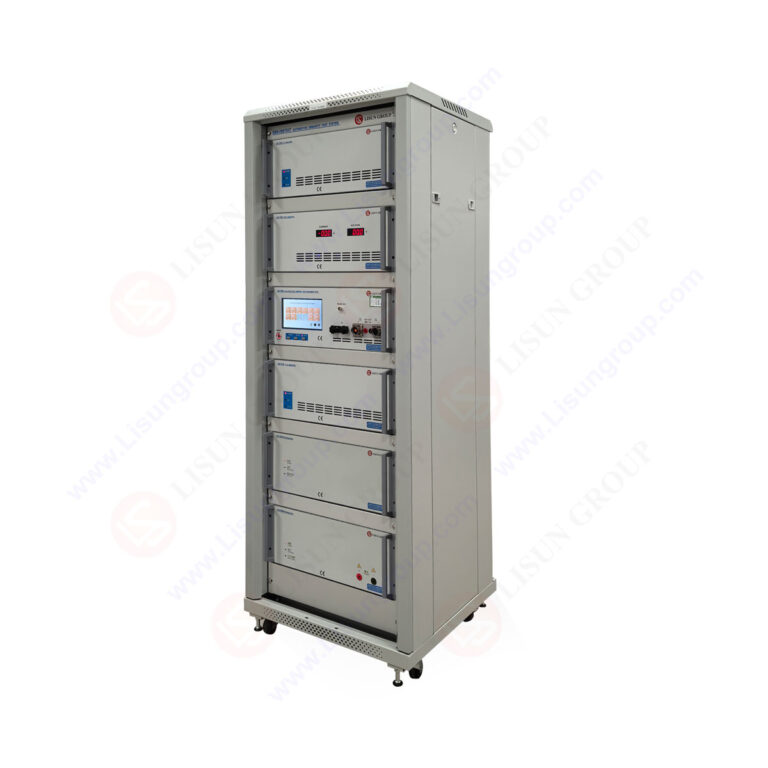
Modern vehicles, from conventional internal combustion engine models to advanced NEVs, contain dozens of electronic control units interconnected through power and signal lines. The automotive electrical environment is inherently hostile, characterized by voltage transients induced by load switching, alternator field decay, inductive load disconnection, and battery disconnect events. These transients, if not adequately suppressed, can cause logic errors, data corruption, latch-up, or permanent hardware damage in sensitive electronics. The ISO 7637 standard family specifically addresses these conducted transient disturbances along power lines (ISO 7637-2) and signal lines (ISO 7637-3), defining test methods, severity levels, and pulse characteristics that replicate real-world worst-case stress scenarios.
1.2 Why NEV Architectures Amplify the Requirement
NEVs present unique challenges for transient immunity due to their high-voltage traction systems, regenerative braking circuits, and multiple voltage domains—typically 12V for auxiliary systems, 24V for commercial vehicle chassis, and 36V/48V for mild hybrids. The simultaneous operation of inverters, motor controllers, and high-power DC-DC converters introduces switching noise and transients that propagate across power distribution networks. Consequently, an ISO 7637 Test System for 12V/24V NEV Transient Testing must accommodate these multi-voltage scenarios while providing pulse amplitudes and durations aligned with the latest standards. The LISUN EMS-ISO7637 system addresses this by supporting three voltage rails (12V, 24V, 36V) within a single test platform, eliminating the need for separate test setups for different supply architectures.
1.3 Regulatory Landscape: Standards and Global Compliance
Compliance with ISO 7637 is not merely a recommendation; it is a contractual requirement for automotive Tier 1 and Tier 2 suppliers worldwide. The referenced standards include ISO 7637-2:2021 (conducted transients along power lines), ISO 7637-3:2016 (transients via capacitive and inductive coupling along signal lines), and their Chinese equivalents GB/T 21437.2-2021 and GB/T 21437.3-2021. Additionally, original equipment manufacturers (OEMs) such as Volkswagen (VW 80000) and General Motors (GM 3172) impose modified pulse parameters and additional test routines. A versatile test system must therefore offer programmable pulse shaping, variable severity levels, and automated test sequencing to satisfy multiple standards simultaneously.
2.1 Multi-Module Pulse Generation Engine
The LISUN EMS-ISO7637 integrates dedicated pulse generation modules for each ISO 7637-2 transient type: Pulse 1 (negative polarity, simulating inductive load disconnect from battery), Pulse 2a (positive voltage spike from wire harness inductance), Pulse 2b (sudden alternator load dump), Pulse 3a/3b (fast repetitive transients from switching), Pulse 4 (voltage sag from starter motor engagement), and Pulse 5a/5b (high-energy load dump). Each module employs solid-state switching with rise times as fast as 1 microsecond and pulse widths configurable from 50 microseconds to 400 milliseconds. The system’s architecture enables simultaneous testing of multiple pulse types in a single test sequence, significantly reducing the time required for full compliance verification according to ISO 7637-2:2021 Clause 5.2.
2.2 Voltage System Compatibility and Dynamic Range
The system supports standardized test voltages of 12V (passenger cars), 24V (commercial vehicles and buses), and 36V (emerging mild-hybrid and e-mobility platforms). The pulse amplitude ranges from -150V to +174V for 12V systems and -300V to +340V for 24V systems, covering all severity levels defined in ISO 7637-2:2021 Table A.1. An internal DC source with output capacity of 0-60V and 30A continuous current provides the supply voltage for the device under test (DUT), with programmable load current simulations for start-up and operation conditions. This feature is crucial for testing NEV DC-DC converters and OBCs that draw high inrush currents during initial power-up.
2.3 Control and Automation Interfaces
The EMS-ISO7637 incorporates a dual-control architecture: a front-panel 7-inch capacitive touchscreen for local operation and a PC-based software suite for remote automation. The software supports multi-sequence programming, where users can define test schedules comprising different pulse types, amplitude levels, repetition rates, and DUT monitoring parameters. The system logs all test parameters in real time, generating compliance reports that directly map to ISO 7637-2:2021 and ISO 7637-3:2016 test protocols. Automated data reporting eliminates manual transcription errors and accelerates the documentation cycle for quality assurance and certification audits.
3.1 Specification Benchmarking
The table below provides a detailed comparison between the LISUN EMS-ISO7637 specifications and the mandatory requirements outlined in ISO 7637-2:2021 and ISO 7637-3:2016.
| Parameter | ISO 7637-2:2021 / ISO 7637-3:2016 Requirement | LISUN EMS-ISO7637 Capability | Advantage |
|---|---|---|---|
| Pulse 1 (12V system) | Negative pulse, -80V to -150V, 2ms duration | -80V to -150V, 0.5ms-10ms programmable | Wider duration range for customized testing |
| Pulse 2a (12V system) | Positive pulse, +37V to +50V, 50μs-100μs | +37V to +50V, 20μs-500μs programmable | Extended pulse width flexibility for research |
| Pulse 5a (12V system) | Positive load dump pulse, +65V to +87V, 40ms-400ms | +65V to +120V, 10ms-600ms programmable | Higher amplitude and duration margins |
| Pulse 3a/3b (fast transients) | Repetitive burst, ±150V max, 5ns rise time | ±300V max, <5ns rise time | Double the amplitude range, covering OEM-specific requirements |
| DC voltage range | 12V / 24V / 48V (per OEM spec) | 12V / 24V / 36V (expandable) | Includes 36V for emerging mild-hybrid platforms |
| Coupling network | 1-5μF capacitance for direct coupling | Built-in 1μF, 10μF, 33μF selectable | Multiple capacitance options for different test setups |
| Automation | Manual or semi-automatic | Full PC software automation with multi-sequence | Reduces test time by 60-70% for standard compliance |
3.2 Calibration and Repeatability
The EMS-ISO7637 incorporates self-calibration routines that verify pulse amplitude, rise time, and duration against internal reference standards traceable to national metrology institutes. The system maintains pulse accuracy within ±2% for amplitude and ±1% for timing parameters, exceeding the ±5% tolerance required by ISO 7637-2:2021 Clause 5.5. This high repeatability ensures that test results are consistent across multiple DUT samples and test sessions, critical for production line quality control where pass/fail decisions have direct cost implications.
4.1 R&D Verification for Electronic Control Units (ECUs)
During the design verification phase, automotive engineers subject prototype ECUs to ISO 7637 pulse sequences to identify weak points in power supply filtering, transient suppression circuitry, and firmware state machines. The LISUN EMS-ISO7637’s capability to generate custom pulse sequences—with adjustable amplitude, duration, and repetition rates—enables worst-case scenario testing beyond standard parameters. For instance, applying Pulse 5a (load dump) while simultaneously monitoring the ECU’s supply current and bus communication integrity reveals margin deficiencies that could cause field failures. The system’s automated data capture allows engineers to compare DUT behavior across multiple test iterations, accelerating root-cause analysis.
4.2 New Energy Vehicle Component Testing
NEV components such as onboard chargers (OBCs), DC-DC converters, and battery management systems (BMS) operate in high-voltage environments but are often powered by 12V or 24V auxiliary batteries. The ISO 7637 Test System for 12V/24V NEV Transient Testing must therefore simulate transients arriving on the low-voltage supply lines while the DUT is concurrently processing high-voltage functions. The LISUN system supports simultaneous injection of transient pulses on both power input and signal output lines (via the capacitive coupling clamp), enabling comprehensive immunity assessment of isolated converters. Testing per ISO 7637-3:2016 Clause 6.2.3, which requires transient injection on signal and control lines, is directly facilitated by the system’s built-in coupling/decoupling network (CDN) that supports up to eight signal lines.
4.3 Commercial Vehicle and Heavy-Duty Applications
Commercial vehicles with 24V electrical systems, including trucks, buses, and agricultural machinery, require higher pulse amplitudes (up to -300V for Pulse 1 and +340V for Pulse 5b) due to the increased battery capacity and longer wiring harnesses. The LISUN EMS-ISO7637 natively operates in 24V mode without hardware reconfiguration, automatically scaling pulse parameters according to ISO 7637-2:2021 Annex A. This flexibility is particularly valuable for testing suppliers that serve both passenger car and commercial vehicle markets, as the same test system can handle both voltage architectures with minimal setup changeover time.
5.1 Multi-Sequence Test Programming
The PC software interface, named “PulseMaster Suite,” provides a graphical test editor where users drag and drop pulse modules into a test sequence timeline. Each pulse can be assigned independent parameters: amplitude (percentage of nominal voltage or absolute voltage value), duration, polarity, repetition count, and pause interval between pulses. Conditional logic loops, such as “repeat test if DUT current exceeds threshold,” enable adaptive testing that responds to DUT behavior. This programming flexibility is essential for simulating complex real-world transient scenarios, such as engine cranking (Pulse 4) followed immediately by alternator load dump (Pulse 5a) while the DUT’s microcontroller resets or enters power-saving mode.
5.2 Data Logging and Report Generation
During test execution, the system logs the following data for each pulse injection: timestamp, pulse type, amplitude measured at the DUT terminals, rise time, pulse width, DUT supply voltage before and after the pulse, DUT current draw, and any alarm or suspension events. The software compiles these logs into standardized test reports that include hyperlinks to the corresponding ISO 7637 clauses, waveforms captured at 200 MS/s sampling rate, and pass/fail status for each test step. Reports can be exported in PDF, CSV, or XML formats for integration with enterprise quality management systems (QMS). This automation reduces the time required for manual report generation from hours to minutes, a tangible benefit for third-party testing laboratories processing hundreds of samples monthly.
6.1 Direct Coupling and Capacitive Coupling Clamp
The EMS-ISO7637 system includes direct coupling via an internal artificial network (AN) with 5μF capacitance for power line injection per ISO 7637-2:2021 Clause 5.3. For signal line testing per ISO 7637-3:2016, the system provides a capacitive coupling clamp (CCC) that injects transients without galvanic connection to the signal lines. The CCC supports wire diameters up to 5mm and signal pin pitches from 2.54mm to 5.08mm, accommodating standard automotive connectors. The clamp’s distributed capacitance of 100pF per meter ensures consistent transient transfer from the pulse generator to the DUT signal lines across a frequency range of 1kHz to 400MHz, as required by ISO 7637-3:2016 Annex B.
6.2 Coupling/Decoupling Network for Multi-Line Testing
For complex DUTs with multiple supply and signal lines, the LISUN system offers an optional 8-line coupling/decoupling network (CDN) that enables simultaneous transient injection on up to eight lines. Each line can be individually configured for coupling direction (forward, reverse, or bidirectional) and decoupling impedance (50Ω or 200Ω). This CDN reduces test time by 70% compared to sequential single-line testing, making it indispensable for high-throughput production environments where line-level compliance verification must occur within 30 seconds per unit.
7.1 Safety and Surge Handling
The EMS-ISO7637 incorporates multiple safety features: overcurrent protection with 1ms response time, overvoltage clamping at 120% of programming range, thermal shutdown for continuous load dump operation exceeding 30 minutes, and emergency stop button for immediate pulse termination. The system’s output stage is protected against reverse voltage from DUT feedback (e.g., a BMS that temporarily backfeeds power during transient events), with a 100A Schottky diode array rated for 200V breakdown. These safeguards protect both the test equipment and the DUT from catastrophic damage during worst-case transient simulations.
7.2 Maintenance and Calibration Cycle
To maintain compliance with ISO 17025 laboratory accreditation, the EMS-ISO7637 requires annual calibration of its pulse amplitude, rise time, and timing circuits. The system’s self-diagnostic firmware performs daily checks of internal reference voltages and coupling capacitor leakage, providing a pass/fail status before test execution. The modular architecture allows field replacement of individual pulse generator boards without requiring a full system recalibration, minimizing downtime to under two hours for standard module swap-outs. This modularity proves valuable for high-utilization test laboratories where system availability directly impacts revenue.
The LISUN EMS-ISO7637 Automotive Electronics Transient Immunity EMC Testing System represents a sophisticated solution for ISO 7637 Test System for 12V/24V NEV Transient Testing, combining comprehensive pulse generation, multi-voltage support, and automated workflow integration. Its coverage of all pulse types from P1 through P5b, with programmable parameters exceeding standard requirements, enables engineers to conduct both compliance verification and research-level robustness testing. The system’s dual-control interface and automated reporting streamline the path from test execution to documented compliance, reducing typical test cycle times by 60-70%. For NEV applications, the ability to test across 12V, 24V, and 36V architectures within a single platform eliminates the need for multiple test setups, lowering capital expenditure and laboratory floor space requirements. As automotive electronics continue to proliferate and OEM standards become more stringent, the EMS-ISO7637 provides a future-proof investment for organizations committed to electromagnetic compatibility excellence. By enabling repeatable, accurate transient immunity testing aligned with ISO 7637-2:2021, ISO 7637-3:2016, GB/T 21437.2-2021, and GB/T 21437.3-2021, this system empowers automotive engineers to deliver robust electronic systems that withstand the harsh electrical environment of modern and future vehicles.
Q1: Does the LISUN EMS-ISO7637 support testing under the GB/T 21437.2-2021 standard, and what are the key differences from ISO 7637-2:2021?
A: Yes, the EMS-ISO7637 fully supports GB/T 21437.2-2021, which is the Chinese national standard equivalent to ISO 7637-2:2021 with minor modifications. The key differences include additional severity levels for 24V systems (Level IV with Pulse 5a amplitude of +340V), modified pulse repetition timing for Pulse 3a/3b (0.1ms to 5ms burst period vs. ISO’s 0.1ms to 100ms), and stricter requirements for coupling network impedance tolerance (±5% vs. ±10%). The system’s software includes a pre-programmed GB/T 21437.2-2021 test profile that automatically selects the appropriate parameters when the standard is selected, simplifying compliance testing for Chinese market certification.
Q2: How does the EMS-ISO7637 handle Pulse 5b (load dump with voltage clamping) for NEV applications where the DUT includes overvoltage protection?
A: Pulse 5b is specifically designed to test DUTs with overvoltage clamping mechanisms, such as TVS diodes or active clamping circuits. The EMS-ISO7637 generates this pulse with a rising edge that ramps linearly from the supply voltage (12V or 24V) to the clamping voltage (typically 35V for 12V systems or 58V for 24V systems) within 5-10ms, followed by an exponential decay to the supply voltage. The system’s internal high-speed sampling (200 MS/s) can capture the DUT’s clamp voltage and clamp current behavior during the pulse, enabling verification of clamp threshold accuracy per the DUT’s datasheet. This is particularly important for NEV DC-DC converters that must maintain output regulation during voltage transients.
Q3: Can the EMS-ISO7637 be integrated with existing EMC chamber setups, and what are the floor space requirements?
A: The EMS-ISO7637 is a self-contained benchtop system designed for integration into both shielded chambers and open-area test laboratories. Its dimensions are 450mm (W) x 600mm (D) x 220mm (H), weighing approximately 28kg, requiring a standard 19-inch rack mount location or dedicated benchtop space. For chamber integration, the system includes a filtered AC power input port and coaxial pulse output ports that can be routed through chamber bulkhead connectors. The PC software can operate over Ethernet or USB, allowing the test computer to be placed outside the shielded chamber. A typical laboratory setup requires approximately 2m² of floor space for the system, DUT fixture, and cabling accessories.
Q4: What training is required for operators to use the EMS-ISO7637 effectively, and does LISUN provide certification courses?
A: LISUN recommends that operators have a fundamental understanding of automotive EMC concepts and familiarity with oscilloscope waveform analysis. The company provides a one-day on-site training program covering: (1) setup of the system for 12V and 24V testing, (2) creation of test sequences for ISO 7637-2 and ISO 7637-3, (3) interpretation of test results and waveform analysis, and (4) report generation. Operators typically become proficient after three to five test sessions. LISUN also offers an advanced two-day course for test laboratory managers covering calibration verification, uncertainty analysis per ISO 17025, and creation of custom test sequences for OEM-specific standards such as VW 80000 and GM 3172, with certification valid for two years.