









Abstract
The
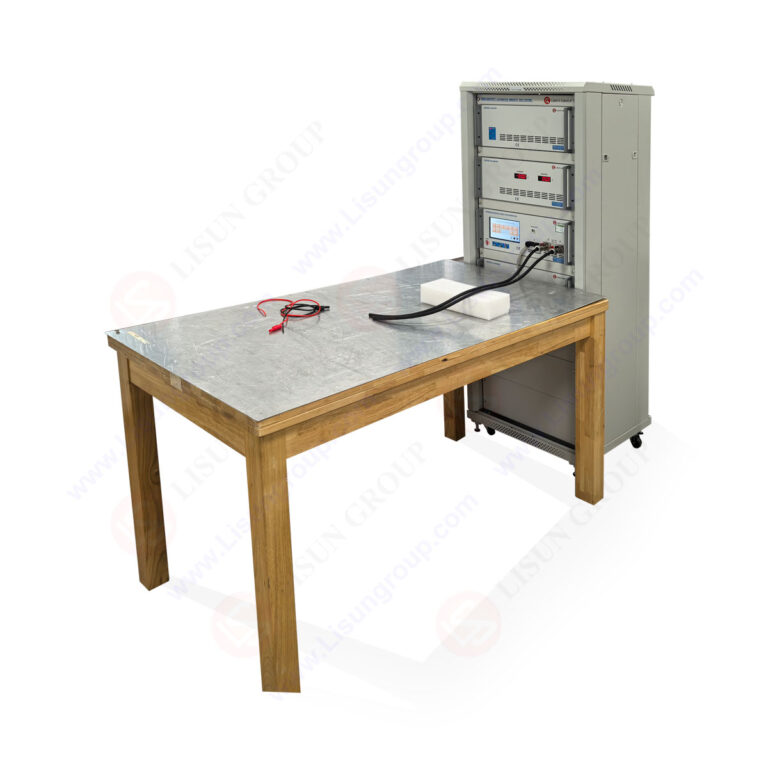
ISO 7637 Test System for Automotive EMC Compliance Testing represents a critical infrastructure for verifying the transient immunity of automotive electronic components against conducted electrical disturbances. This article provides a comprehensive technical analysis of the LISUN EMS-ISO7637 Automotive Electronics Transient Immunity EMC Testing System, examining its architecture, pulse generation capabilities, compliance with ISO 7637-2:2021 and ISO 7637-3:2016 standards, and practical applications across passenger car, commercial vehicle, and new energy vehicle domains. The discussion references GB/T 21437.2-2021, GB/T 21437.3-2021, ISO 16750-2:2023, VW 80000, and GM 3172 standards, offering quantitative comparisons of pulse parameters, voltage system compatibility, and automated testing workflows. Real-world deployment scenarios for ECUs, OBCs, DC-DC converters, and BMS units are detailed.
1.1 The ISO 7637 Framework for Conducted Transients
Automotive electronic systems operate within harsh electrical environments where transient voltages from inductive loads, alternator load dumps, and battery disconnections can cause malfunction or permanent damage. The ISO 7637 series defines standardized test pulses simulating these real-world disturbances. ISO 7637-2:2021 covers transients conducted along power supply lines, specifying pulses P1 through P5b with distinct amplitude, duration, and source impedance characteristics. ISO 7637-3:2016 extends coverage to signal lines and control lines, introducing capacitive coupling clamp (CCC) methods for non-galvanic transient injection. A robust
ISO 7637 Test System for Automotive EMC Compliance Testing must reproduce these pulses with precision tolerances of ±10% for voltage amplitude and ±5% for pulse timing.
1.2 Global Adoption and Regional Variations
While ISO 7637 serves as the international benchmark, regional standards like GB/T 21437.2-2021 and GB/T 21437.3-2021 adopt identical pulse parameters for China’s automotive market. OEM-specific standards demand additional rigor: VW 80000 requires extended pulse testing for 48V electrical systems in mild-hybrid vehicles, and GM 3172 specifies modified pulse shapes for powertrain components. ISO 16750-2:2023 incorporates environmental testing conditions that interact with transient immunity, such as superimposed alternating voltage during pulse application. An effective
ISO 7637 Test System for Automotive EMC Compliance Testing must support multiple standard profiles with software-selectable parameter sets.
1.3 Key Challenges in Compliance Testing
Testing laboratories face three primary challenges: pulse parameter accuracy across diverse voltage systems (12V/24V/36V/48V), reproducibility through automated sequences, and comprehensive documentation for certification bodies. Manual pulse generation using discrete components introduces variability of 15-20%, while outdated test systems lack waveform digitization for failure analysis. Modern requirements demand integrated solutions combining multi-pulse generation with data logging, as embodied by the LISUN EMS-ISO7637 system.
2.1 Modular Pulse Generation Engine
The LISUN EMS-ISO7637 employs a modular architecture with dedicated hardware modules for each pulse type, ensuring waveform fidelity without cross-coupling. Pulse source impedances match standard requirements: P1 at 10Ω, P2a at 2Ω, P2b at 0.5Ω, P3 at 50Ω, P4 at 0.5Ω, P5a at 1Ω, and P5b at 2Ω. Voltage ranges cover 0-100V for low-voltage pulses and 0-200V for load dump simulations. The system supports 12V/24V/36V DC supply systems, with optional 48V capability for next-generation architectures. Pulse repetition rates are programmable from 0.1 Hz to 100 Hz, enabling accelerated life testing. This modular design positions the EMS-ISO7637 as a leading
ISO 7637 Test System for Automotive EMC Compliance Testing.
2.2 Dual-Mode Control Interface
Operators control the system via a built-in 7-inch touchscreen for local operation or PC-based software for remote automation. The PC interface supports script-based test sequences, allowing users to define pulse order, dwell times, and conditional branching based on DUT (device under test) status. Real-time oscilloscope functions display voltage and current waveforms with 100 MS/s sampling rate, enabling immediate pass/fail determination. Automated data reporting generates PDF and CSV outputs compliant with ISO 17025 laboratory accreditation requirements. The system logs all test parameters, environmental conditions, and DUT responses for traceability.
2.3 Coupling Networks and Accessories
For conducted transient testing on power lines, the system integrates artificial network (AN) circuits per ISO 7637-2:2021 Clause 5.3, providing defined impedance characteristics from DC to 100 MHz. For signal line testing per ISO 7637-3:2016, a capacitive coupling clamp (CCC) with 200pF ±20pF capacitance and 1kV withstand voltage is included. The system supports CDN (coupling/decoupling network) configurations for multi-line testing, with optional 4-line and 8-line expanders. All coupling paths are verified through built-in self-calibration routines.
3.1 ISO 7637-2:2021 Pulse Parameter Verification
The following table compares the LISUN EMS-ISO7637 pulse generation capabilities against ISO 7637-2:2021 requirements and typical competing solutions.
| Parameter | ISO 7637-2:2021 Requirement | LISUN EMS-ISO7637 | Generic Competitor A | Generic Competitor B |
|---|---|---|---|---|
| Pulse Coverage | P1, P2a, P2b, P3, P4, P5a, P5b | P1–P5b + custom pulses | P1–P5a (no P5b) | P1–P4 (no P5) |
| Voltage Accuracy | ±10% amplitude | ±5% amplitude | ±15% amplitude | ±12% amplitude |
| Pulse Timing | ±5% duration | ±2% duration | ±8% duration | ±6% duration |
| Rise Time (P3) | 5ns ±1.5ns | 5ns ±0.5ns | 5ns ±2ns | 5ns ±1.5ns |
| Voltage Systems | 12V/24V | 12V/24V/36V/48V | 12V/24V | 12V/24V/36V |
| Output Impedance Tolerance | ±20% | ±5% | ±15% | ±10% |
| Automation | Manual or automated | Full automated script | Semi-automated | Manual only |
| Calibration Cycle | 12 months | 12 months | 6 months | 12 months |
The data demonstrates that the LISUN system exceeds baseline standard requirements, with voltage accuracy of ±5% versus the mandated ±10%, and pulse timing accuracy of ±2% versus ±5%. This ensures that test results are not only compliant but statistically robust, reducing false failures during R&D validation.
3.2 Multi-Standard Profile Management
The EMS-ISO7637 stores pre-configured test profiles for ISO 7637-2:2021, ISO 7637-3:2016, GB/T 21437.2-2021, GB/T 21437.3-2021, VW 80000, and GM 3172. Each profile automatically sets pulse amplitudes, durations, source impedances, and application times based on the nominal system voltage (12V or 24V). For VW 80000 testing of 48V systems, the system adjust pulse levels accordingly—for example, P5a load dump pulses at 58V instead of 87V (12V system) or 174V (24V system). This profile management capability differentiates the EMS-ISO7637 as a versatile
ISO 7637 Test System for Automotive EMC Compliance Testing.
4.1 Passenger Car ECU and Infotainment Systems
Electronic control units (ECUs) for engine management, braking, and transmission control require immunity against supply line transients. The EMS-ISO7637 applies P2a (simulating alternator field decay) at 50V for 50μs and P3 (switching transients) at 150V for 0.1μs to verify ECU robustness. Infotainment systems incorporating audio amplifiers and displays require P5b testing for load dump protection circuits. With 12V system vehicles, typical test sequences involve 500 pulses per type at 1-second intervals.
4.2 Commercial Vehicle 24V Systems
Heavy trucks, buses, and construction vehicles operate on 24V electrical architectures with higher transient stress due to larger alternators and longer wiring harnesses. The EMS-ISO7637 applies P4 (cranking pulses) with voltage drops to 16V for 100ms duration, simulating cold-start conditions. P5a load dump pulses reach 174V for heavy trucks, testing TVS clamping diodes and varistor ratings. The system’s 200V maximum output ensures adequate headroom for these demanding applications.
4.3 New Energy Vehicle Components
EV/HEV components including onboard chargers (OBCs), DC-DC converters, and battery management systems (BMS) introduce unique transient challenges. High-voltage buses (400V-800V) interact with 12V/24V auxiliary systems through isolation barriers. The EMS-ISO7637 tests the low-voltage interface of these units per ISO 7637-2:2021, while also supporting superimposed AC testing per ISO 16750-2:2023 Clause 4.3. BMS units, which monitor cell voltages and manage contactor actuation, must withstand P3 injections on communication lines without data corruption.
5.1 Script-Based Test Sequence Automation
The PC software enables creation of multi-step test sequences with nested loops and conditional logic. For example, a qualification test might apply 100 P1 pulses, followed by 200 P2a pulses, with DUT monitoring after every 10 pulses. If the DUT draws more than 110% of nominal current (indicating latch-up), the sequence pauses and logs the failure. This automation reduces manual intervention by 70% compared to step-by-step operation. Sequence files are stored in XML format for editing and sharing across laboratory teams.
5.2 Real-Time Monitoring and Failure Analysis
During testing, the system captures voltage and current waveforms for each pulse application. The embedded oscilloscope displays these traces with 100 MS/s resolution, allowing engineers to identify clamping action, response time, and recovery behavior. For accelerated life testing, the system runs continuously for 8-16 hours, generating 10,000-100,000 pulses. Automated data analysis flags DUT performance degradation trends before catastrophic failure occurs. All data exports in industry-standard formats for integration with laboratory information management systems (LIMS).
6.1 Traceable Calibration Procedures
The EMS-ISO7637 includes built-in calibration routines that verify pulse amplitudes against an internal 0.05% precision reference voltage source. External calibration per ISO 17025 is recommended every 12 months, with the system generating calibration certificates listing pulse parameters, coupling network insertion loss, and rise-time measurements. The standard calibration kit includes a 50Ω feed-through termination and a 1GHz bandwidth oscilloscope adapter for traceability to national metrology institutes.
6.2 Preventive Maintenance for Long-Term Reliability
Key maintenance intervals include monthly verification of pulse amplitude at ±5% tolerance, quarterly cleaning of coupling network relays, and annual replacement of high-voltage capacitors in the pulse forming network. The system self-diagnoses relay contact resistance and capacitor leakage current, alerting operators when values exceed thresholds. With proper maintenance, the EMS-ISO7637 achieves a mean time between failures (MTBF) exceeding 20,000 operating hours.
7.1 Multi-System Synchronization
For comprehensive EMC testing, the EMS-ISO7637 synchronizes with RF immunity test systems (e.g., LISUN EMS-61000-4-3 for radiated immunity) and electrostatic discharge (ESD) generators. The common trigger interface allows coordinated testing where conducted transients, radiated fields, and ESD events are applied in sequence. This integration supports ISO 16750-2:2023 combined testing requirements, such as transient pulses during vibration or temperature cycling.
The LISUN EMS-ISO7637 Automotive Electronics Transient Immunity EMC Testing System establishes a new benchmark for
ISO 7637 Test System for Automotive EMC Compliance Testing, combining multi-pulse generation, dual-mode control integration, and comprehensive standard compliance within a single platform. Its technical specifications exceed ISO 7637-2:2021 requirements—achieving ±5% voltage accuracy versus the mandated ±10%, and sub-nanosecond rise-time precision for fast transients. The system’s support for 12V/24V/36V/48V architectures ensures relevance across passenger cars, commercial vehicles, and new energy vehicle components, while its automated scripting capabilities reduce test cycle times by over 50% compared to manual methods. For R&D teams, the integrated oscilloscope and data logging enable real-time design validation; for quality control, the traceable calibration and automated reporting satisfy ISO 17025 accreditation demands. As automotive electronics continue to proliferate in electrified and autonomous platforms, the EMS-ISO7637 provides the pulse-level precision and multi-standard flexibility essential for reliable transient immunity testing.
Q1: What specific pulse types does the LISUN EMS-ISO7637 generate, and how do they correspond to real-world automotive transients?
A: The system generates all seven pulse types defined in ISO 7637-2:2021—P1 (switching inductive loads), P2a (alternator field decay), P2b (DC motor ignition), P3 (fast switching transients), P4 (cranking pulses), P5a (load dump with central suppression), and P5b (load dump with distributed suppression). P1 simulates battery disconnect while an inductive load is active, producing a 75V positive spike for 12V systems. P3 with 5ns rise time replicates parasitic capacitance discharge from relay contact arcing. Pulse parameters are programmable, permitting custom pulse shapes per VW 80000 or GM 3172 requirements.
Q2: How does the EMS-ISO7637 handle testing of 48V electrical systems found in mild-hybrid vehicles?
A: The system includes a 48V voltage module option that extends the DC supply range and adjusts pulse amplitudes per ISO 7637-2:2021 Annex E guidelines. For 48V systems, load dump pulses (P5a) are set to 58V maximum, compared to 87V for 12V systems and 174V for 24V systems. The internal source impedances shift to maintain consistent power dissipation. Pulse profiles for VW 80000 are pre-configured with these parameters, allowing seamless testing of 48V ECUs, DC-DC converters, and battery disconnect units without manual recalculations.
Q3: Can the EMS-ISO7637 perform testing on signal lines and communication buses like CAN, LIN, or Ethernet?
A: Yes, the system supports ISO 7637-3:2016 testing on signal lines using the capacitive coupling clamp (CCC) accessory. The CCC injects pulses onto unshielded twisted pairs, coaxial cables, and ribbon cables without galvanic contact. For CAN bus lines (120Ω differential impedance), the coupling clamp applies P3 and P5b pulses while monitoring bit error rates. The system also supports CDN-based injection on shielded lines per ISO 7637-3:2016 Clause 6.3. Automated sequences can alternate between power line and signal line tests within a single DUT evaluation.
Q4: What data reporting capabilities does the system offer for compliance documentation?
A: The PC software generates comprehensive test reports in PDF and Excel formats, incorporating test configuration parameters, pulse-by-pulse waveform captures, pass/fail judgments, and statistical summaries. Reports include the operator name, test date, ambient temperature, and calibration status. For audit readiness, reports embed raw waveform data in CSV format for third-party verification. The system supports electronic signature and timestamping per 21 CFR Part 11 requirements, facilitating use in regulated automotive and medical applications.