









This technical article provides a comprehensive analysis of the LED Burn-in Test Chamber for Reliability Standards Compliance, focusing on LISUN’s LEDLM series optical aging test instruments. Designed for LED manufacturing engineers, third-party testing labs, and R&D specialists, this article examines how these chambers enable precise lumen maintenance testing aligned with IES LM-80, IES LM-84, TM-21, and TM-28 standards. The dual-system variants—LEDLM-80PL for LM-80/TM-21 testing and LEDLM-84PL for LM-84/TM-28 applications—offer customizable configurations, Arrhenius Model-based software for accelerated aging predictions, and dual testing modes. Supporting up to three connected temperature chambers and 6000-hour test durations, these systems deliver L70/L50 metrics critical for reliability validation. Readers will gain technical insights into hardware specifications, software capabilities, and compliance workflows essential for robust LED burn-in testing.
1.1 The Role of Burn-in Testing in LED Reliability
LED burn-in testing is a critical process for identifying early-life failures and validating long-term lumen maintenance. This accelerated aging method exposes LED samples to elevated temperatures and controlled currents, simulating years of operation within weeks. The LED Burn-in Test Chamber for Reliability Standards Compliance must precisely control thermal and electrical conditions to ensure repeatable results. Without standardized burn-in protocols, manufacturers risk field failures that undermine product warranties and brand reputation.
1.2 Overview of IES Standards for Lumen Maintenance
The Illuminating Engineering Society (IES) provides foundational standards for LED lifetime prediction. IES LM-80-21 specifies methods for measuring lumen depreciation of LED light sources at defined case temperatures (typically 55°C, 85°C, and a third temperature chosen by the manufacturer). IES LM-84-21 extends this to LED luminaires and integral LED lamps. Both standards require 6000-hour minimum test durations with periodic photometric measurements. The TM-21 standard extrapolates LM-80 data to predict L70 (time to 70% lumen maintenance) and L50 (time to 50% lumen maintenance) metrics, while TM-28 applies similar extrapolation for LM-84 data.
1.3 Relevance of CIE Standards for Photometric Accuracy
The International Commission on Illumination (CIE) standards CIE 084 (Measurement of Luminous Flux), CIE 70 (Absolute Methods for Measurement of Luminous Flux), and CIE 127 (Measurement of LEDs) establish protocols for photometric measurements within burn-in chambers. CIE 127-2007, in particular, defines standard measurement conditions for LED intensity and flux, ensuring that integrating sphere measurements in LISUN chambers are traceable and reproducible across laboratories.
2.1 LEDLM-80PL System for Component-Level Testing
The LISUN LEDLM-80PL is specifically designed for LM-80 testing of LED packages, arrays, and modules. This system integrates multiple temperature chambers capable of maintaining ±1°C accuracy across 0°C to 100°C ranges, supporting up to three connected chambers for simultaneous testing at different temperatures. The system includes a DC power supply with 0.1% accuracy for current stability and an integrating sphere (0.3m, 0.5m, or 1.0m diameter options) coupled with a spectrometer for spectral and photometric measurements. The LED Burn-in Test Chamber for Reliability Standards Compliance within this system ensures that 6000-hour tests run uninterrupted, with automated data logging every 1000 hours per standard requirements.
2.2 LEDLM-84PL System for Luminaire-Level Testing
For testing complete luminaires and integrated LED lamps, the LEDLM-84PL system accommodates larger samples within temperature chambers that support up to 50°C ambient conditions. This variant uses larger integrating spheres (2.0m diameter) and higher-current power supplies (up to 10A) to match IES LM-84-21 requirements. Both systems share the same software platform, enabling seamless data analysis for TM-21 and TM-28 extrapolations. The dual-system design allows manufacturers to test components and luminaires under identical environmental protocols, ensuring correlation between sub-assembly and final product reliability.
2.3 Comparative Analysis of System Specifications
The following table highlights key differences between the LEDLM-80PL and LEDLM-84PL systems, assisting engineers in selecting the appropriate configuration for their testing needs.
| Parameter | LEDLM-80PL | LEDLM-84PL |
|---|---|---|
| Target Standard | IES LM-80-21, TM-21 | IES LM-84-21, TM-28 |
| Sample Type | LED packages, arrays, modules | LED luminaires, integral lamps |
| Temperature Chamber Range | 0°C to 100°C (±1°C) | Ambient to 50°C (±1°C) |
| Number of Connected Chambers | Up to 3 | Up to 2 |
| Integrating Sphere Diameter | 0.3m, 0.5m, 1.0m | 1.0m, 2.0m |
| Maximum Test Current | 2A | 10A |
| Typical Test Duration | 6000 hours minimum | 6000 hours minimum |
| Data Points per Test | 7 (0, 1000, 2000, 3000, 4000, 5000, 6000 hours) | 7 (0, 1000, 2000, 3000, 4000, 5000, 6000 hours) |
| Software Extrapolation | TM-21 (L70, L50) | TM-28 (L70, L50) |
3.1 Temperature Chamber Design for Accelerated Aging
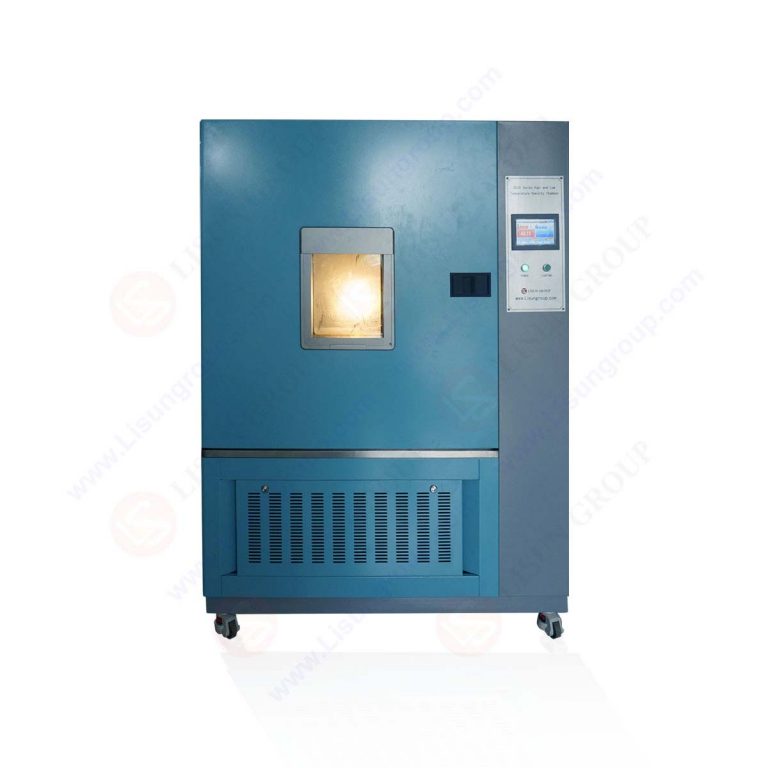
The LED Burn-in Test Chamber for Reliability Standards Compliance from LISUN features modular temperature chambers with independent PID controllers. Each chamber accommodates up to 20 test samples on customized PCBs or mounting fixtures. The chambers use forced-air convection heating with internal fans ensuring temperature uniformity within ±2°C across the sample area. Optional humidity control (20% to 80% RH) is available for testing LEDs in high-moisture environments, aligning with automotive and outdoor lighting specifications. The chambers are constructed with stainless steel interiors and double-walled insulation to minimize thermal gradients during long-duration tests.
3.2 Power Supply and Current Control Systems
Precision DC power supplies are integral to the LEDLM series, offering current ranges from 0.1mA to 10A with 0.1% accuracy and 0.05% stability. For LEDLM-80PL applications, multiple independent channels allow simultaneous testing of up to 30 LED packages at different drive currents. The system includes overcurrent and reverse polarity protection, critical for protecting samples during unattended 6000-hour runs. Engineers can program current profiles that simulate real-world dimming cycles or transient events, adding flexibility to the burn-in process.
3.3 Integrating Sphere and Spectrometer Integration
LISUN chambers incorporate a high-reflectivity barium sulfate (BaSO4) coating in integrating spheres with reflectance >95% across 380-780nm. The spectrometer offers 0.2nm wavelength resolution and 5% photometric measurement uncertainty, compliant with CIE 127 and LM-79-19 requirements. Automated baffles and auxiliary lamps enable self-absorption correction for each measurement interval, ensuring that lumen maintenance data is accurate even as samples age. The system measures not only total luminous flux but also correlated color temperature (CCT), color rendering index (CRI), and chromaticity coordinates, providing comprehensive degradation analysis.
4.1 Arrhenius Model-Based Lifetime Prediction
The LEDLM software implements the Arrhenius model for accelerated aging data analysis, calculating activation energy (Ea) from test data at multiple temperatures. This model predicts lifetime under normal operating conditions by establishing the relationship between temperature and degradation rate. Standard Ea values for LED packages range from 0.3eV to 1.0eV, depending on phosphor composition and package materials. The software automatically fits the Arrhenius equation to test data, generating L70 and L50 metrics with 90% confidence intervals per TM-21 guidelines. The LED Burn-in Test Chamber for Reliability Standards Compliance software outputs these predictions in standardized report formats accepted by Energy Star and CEC.
4.2 Dual Testing Modes: Constant and Cyclic Operation
The software supports two primary testing modes: constant current mode, where samples operate at fixed drive current throughout the test, and cyclic mode, where current and temperature follow programmed on/off cycles (e.g., 2 hours on, 0.5 hours off). Cyclic mode simulates the thermal stress of real-world operation, exposing potential failure mechanisms like solder joint fatigue and phosphor thermal degradation. The system can switch between modes during a single test run, allowing engineers to compare constant versus cyclic degradation rates on identical sample sets. This flexibility is essential for compliance with application-specific standards, such as those for automotive forward lighting or outdoor architectural lighting.
4.3 Data Export and Reporting Features
The software automatically generates test reports compliant with IES LM-80-21 and IES LM-84-21 formats, including raw data tables, lumen depreciation curves, and TM-21/TM-28 extrapolation results. Data export options include CSV, XML, and PDF formats, enabling integration with laboratory information management systems (LIMS). Users can configure automated email alerts for test completion or anomaly detection (e.g., sudden flux drop >5%). The software also supports batch processing of multiple test runs, allowing quality managers to compare reliability metrics across production lots.
5.1 Automotive LED Component Validation
Automotive-grade LEDs require testing under extreme conditions per AEC-Q102 guidelines. The LED Burn-in Test Chamber for Reliability Standards Compliance with temperature chambers operating from 0°C to 100°C and optional humidity control supports these requirements. Engineers can program temperature cycling profiles (e.g., -40°C to 125°C) while maintaining constant current, identifying failures related to thermal expansion mismatch. The system’s 0.1% current accuracy ensures that drive conditions match automotive ECU outputs, producing reliable lifetime predictions for headlamp, taillight, and interior lighting applications.
5.2 General Lighting and SSL Product Qualification
For solid-state lighting (SSL) manufacturers, the LEDLM-84PL system facilitates Energy Star and Title 24 compliance by providing LM-84 data for luminaires. The 2.0m integrating sphere accommodates large troffers, high-bays, and floodlights while maintaining measurement accuracy. Testing at multiple ambient temperatures (25°C, 35°C, 45°C) reveals the impact of thermal management design on L70 lifetime. Engineers use this data to optimize heat sink size, LED density, and driver placement, ensuring that products meet 25,000-hour warranty claims. The software’s TM-28 extrapolation provides certified metrics for regulatory submissions.
5.3 Third-Party Laboratory Accreditation Support
Independent testing laboratories require equipment with traceable calibration and documented uncertainty budgets. LISUN’s LEDLM series includes calibration certificates with NIST-traceable references for photometric, electrical, and temperature measurements. The system’s measurement uncertainty of 5% for luminous flux (k=2) complies with ISO 17025 requirements for testing laboratory accreditation. Automated self-diagnostics and daily calibration checks ensure ongoing data integrity during multi-month test campaigns.
6.1 Automated Data Logging and Validation
During a 6000-hour test, the system logs photometric and electrical data at user-defined intervals (typically every 1000 hours per LM-80 requirements) and continuously monitors temperature and current stability. The software validates each data point against user-defined tolerance limits (e.g., current deviation >1% triggers a warning). Historical data comparisons allow engineers to detect long-term drift in measurement equipment, ensuring the LED Burn-in Test Chamber for Reliability Standards Compliance maintains its specified accuracy over years of use. The system stores raw data in non-volatile memory, preventing data loss during power outages.
6.2 Statistical Process Control for Production Consistency
LED manufacturers use the LEDLM series to implement statistical process control (SPC) for production lots. By testing 20-30 samples per batch per LM-80 recommendations, engineers calculate population-level L70 values and confidence intervals. The software generates x-bar and R charts for lumen flux at each measurement interval, identifying shifts in degradation rates that indicate process or material changes. This proactive quality management reduces warranty claims and supports continuous improvement initiatives in LED manufacturing.
6.3 Compliance Documentation and Auditing
The system automatically archives all test data, software settings, and calibration records in a tamper-proof audit trail. This documentation is critical for regulatory audits by agencies such as DOE (Department of Energy) or CEC (California Energy Commission). Users can generate compliance certificates that include the specific test durations, temperatures, drive currents, and sample sizes used. The LED Burn-in Test Chamber for Reliability Standards Compliance thus serves as both a testing tool and a compliance documentation system.
7.1 Calibration and Verification Schedules
Photometric measurements require regular calibration verification using standard lamps traceable to NIST. LISUN recommends monthly flux calibration checks and annual full system recalibration. The LED Burn-in Test Chamber for Reliability Standards Compliance includes built-in calibration standards that automate drift detection. Temperature sensors should be verified quarterly against a calibrated reference thermometer, with chamber uniformity checks performed after any maintenance or relocation. Proper calibration schedules ensure that LM-80 and LM-84 test results remain defensible during regulatory reviews.
7.2 Sample Preparation and Mounting Guidelines
Consistent sample mounting is essential for accurate lumen maintenance testing. For LEDLM-80PL applications, LED packages should be soldered to standardized PCBs with thermal management materials matching production specifications. The integrating sphere’s sample holder must center the LED in the sphere’s reference plane, with cables and thermocouples routed through designated ports to minimize light obstruction. Each sample should have an individual thermocouple attached to the package’s thermal pad to record actual junction temperature. These guidelines minimize measurement variability and ensure that the LED Burn-in Test Chamber for Reliability Standards Compliance delivers reproducible results across testing runs.
7.3 Troubleshooting Common Issues
Common issues include temperature chamber overshoot (corrected by PID tuning), spectrometer signal saturation (adjusted by integration time), and power supply drift (verified against calibration standards). The software includes diagnostic wizards that identify drift or instability. LISUN’s technical support team provides remote access for troubleshooting, reducing downtime for critical test campaigns. Regular software updates incorporate improvements based on user feedback and evolving industry standards.
The LED Burn-in Test Chamber for Reliability Standards Compliance from LISUN, represented by the LEDLM-80PL and LEDLM-84PL systems, provides a comprehensive solution for lumen maintenance testing aligned with IES LM-80, LM-84, TM-21, and TM-28 standards. With dual-system architecture supporting component-level and luminaire-level testing, customizable hardware configurations including up to three temperature chambers and integrating spheres from 0.3m to 2.0m diameter, and Arrhenius Model-based software for accelerated aging predictions, these systems address the full spectrum of LED reliability validation needs. The dual testing modes (constant and cyclic) enable engineers to simulate real-world operating conditions, while automated data logging and statistical process control support production quality assurance. Third-party laboratories benefit from NIST-traceable calibration and ISO 17025 compliance, ensuring test results are defensible for regulatory submissions. By integrating precision photometry, thermal control, and advanced analytics, LISUN’s LEDLM series empowers engineers to make data-driven decisions about LED lifetime performance, ultimately reducing warranty risks and supporting the development of more reliable lighting products. The system’s adherence to CIE 127, CIE 084, and CIE 70 standards further reinforces its suitability for global applications in automotive, general lighting, and specialty solid-state lighting markets.
Q1: What is the minimum test duration required for IES LM-80 compliance using the LED Burn-in Test Chamber for Reliability Standards Compliance?
A: The IES LM-80-21 standard requires a minimum test duration of 6000 hours for lumen maintenance testing. LISUN’s LEDLM-80PL and LEDLM-84PL systems are designed to support this duration continuously, with automated data logging at 0, 1000, 2000, 3000, 4000, 5000, and 6000-hour intervals. For projects requiring accelerated lifetime predictions, the Arrhenius Model-based software can extrapolate data from shorter tests (e.g., 3000 hours) to estimate L70 and L50 metrics, though standard compliance generally requires the full 6000-hour dataset. The system’s temperature chambers maintain ±1°C stability throughout the test period, ensuring data integrity.
Q2: How does the dual testing mode (constant versus cyclic) affect TM-21 extrapolation results?
A: Constant current mode produces lumen depreciation data that reflects steady-state thermal conditions, which is the standard method for LM-80/TM-21 compliance. Cyclic mode introduces thermal stress that can accelerate degradation mechanisms such as solder joint fatigue and phosphor thermal quenching. TM-21 extrapolation from cyclic mode data may predict shorter lifetimes than constant mode because the software models the cumulative damage from temperature cycling. Engineers should specify the test mode in compliance reports and consider both results when setting warranty periods. LISUN’s software supports separate TM-21 analyses for each mode, enabling direct comparison.
Q3: Can the LED Burn-in Test Chamber for Reliability Standards Compliance accommodate non-standard sample sizes or shapes?
A: Yes, LISUN’s LEDLM series offers customizable sample mounting fixtures and integrating spheres in diameters from 0.3m to 2.0m. For irregularly shaped luminaires or high-power arrays, the 2.0m sphere ensures complete optical integration without shadowing effects. Temperature chambers have adjustable shelving heights and sample holding frames that can be modified for specific geometries. LISUN’s engineering team provides custom fixture design services for unique applications, such as automotive headlamp modules or horticultural LED panels, ensuring that the LED Burn-in Test Chamber for Reliability Standards Compliance meets all photometric and thermal requirements.