









Abstract
This comprehensive technical article examines the critical role of LED climatic test chambers in performing IEC 60068 temperature cycling for solid-state lighting reliability validation. We explore how the LED Climatic Test Chambers: IEC 60068 Temperature Cycling methodology integrates with photometric measurement systems to quantify lumen depreciation under thermal stress. The LISUN LEDLM-80PL and LEDLM-84PL systems represent a paradigm shift in accelerated aging testing, combining temperature-controlled environments with integrating sphere photometry and Arrhenius model-based predictive software. These systems support up to 3 connected temperature chambers and execute 6000-hour test protocols aligned with IES LM-80, TM-21, IES LM-84, and TM-28 standards. For LED manufacturers and testing laboratories, understanding the synergy between thermal cycling profiles and optical measurement accuracy is essential for producing reliable, market-ready lighting products with defensible lifetime claims.
1.1 IEC 60068 Temperature Cycling Principles
IEC 60068 provides the foundational environmental testing procedures that govern how LED components and luminaires respond to temperature variations. The standard delineates test methods for cold, dry heat, and damp heat conditions, with damp heat being particularly relevant for assessing LED package integrity under condensation and humidity. Temperature cycling profiles within IEC 60068 specify ramp rates, dwell times, and the number of cycles required to simulate years of field operation. For LED climatic test chambers, these profiles must be executed with precision—typically maintaining chamber temperature uniformity within ±2°C and achieving ramp rates between 1°C/min and 5°C/min depending on the test severity class. When combined with continuous photometric monitoring, IEC 60068 testing reveals not only catastrophic failures but also subtle degradation in luminous flux that correlates with junction temperature history.
1.2 The Convergence of Thermal Stress and Photometric Assessment
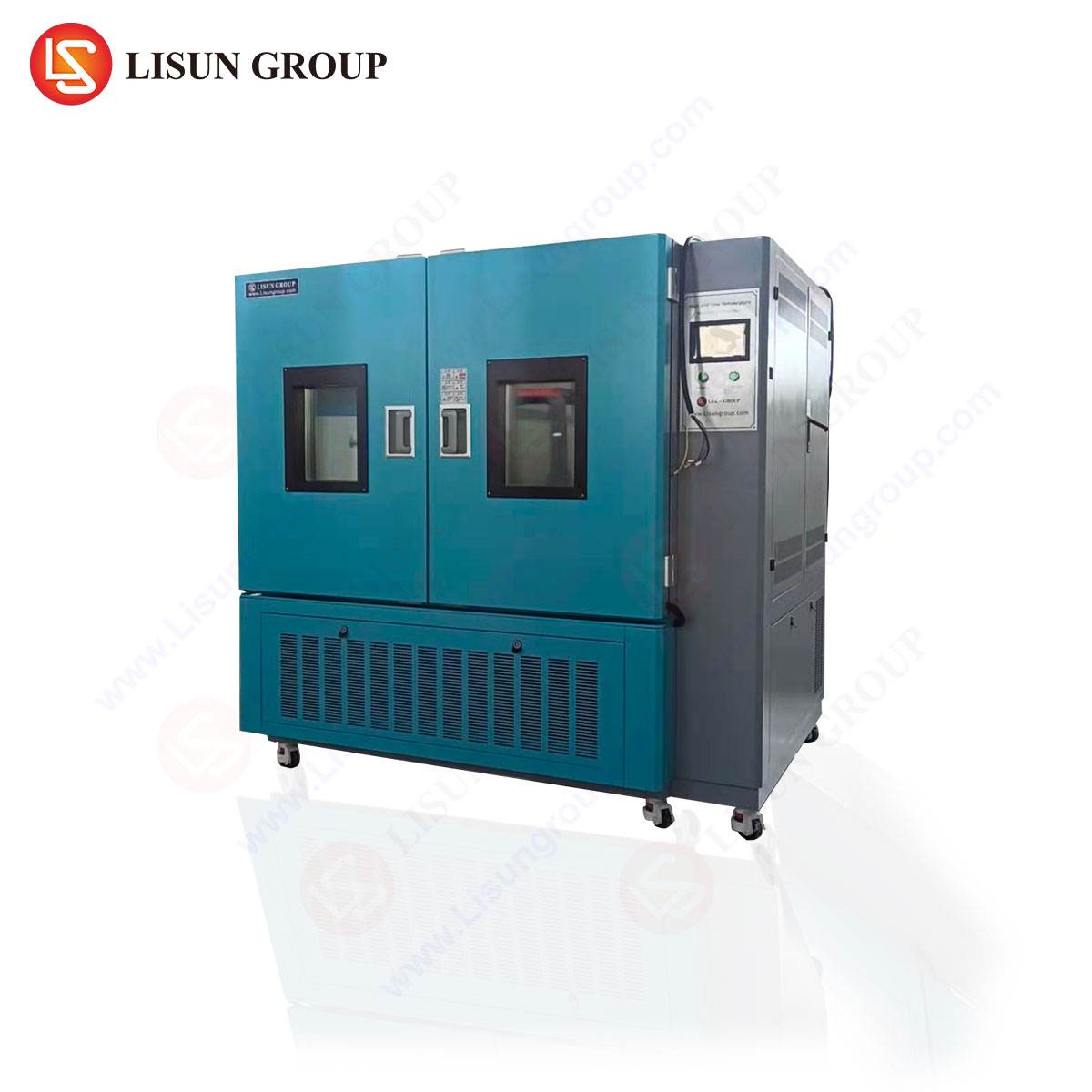
Traditional environmental chambers merely subject LEDs to temperature extremes without integrated optical measurement capabilities. Modern LED climatic test chambers bridge this gap by housing integrating spheres or spectroradiometers within the thermal environment or by routing light from the device under test to external measurement optics. This convergence allows engineers to capture lumen depreciation data at specified intervals—typically every 1000 hours up to 6000 hours or more—without removing samples from the thermal stress environment. The LISUN LEDLM-80PL system exemplifies this integration, offering dual test modes that accommodate both in-situ measurement and sample-repositioning protocols. The temperature chamber‘s internal volume, often spanning 225 liters to 800 liters, must accommodate both the LED samples and the measurement apparatus while maintaining the required thermal gradients and air circulation patterns specified by IEC 60068.
2.1 System Variants and Their Target Standards
The LISUN LEDLM-80PL is engineered specifically for compliance with IES LM-80-15 and subsequent TM-21-19 extrapolation methods, while the LEDLM-84PL addresses the newer IES LM-84-14 protocol with TM-28-14 data projection. These instruments are not simple temperature chambers but complete photometric aging systems. Each variant includes:
- Temperature-controlled chambers with ranges from -40°C to +100°C or ambient to +100°C configurations
- A 2-meter integrating sphere or benchtop sphere (0.5m to 2m options) coupled with a CDS-1000 spectroradiometer
- Constant current DC power supplies with programmable output from 10mA to 10A
- Automated data acquisition logging lumen output, chromaticity coordinates, and correlated color temperature (CCT)
The LM-80PL system can simultaneously manage up to 3 temperature chambers, enabling parallel testing at 55°C, 85°C, and an additional user-defined temperature point. This parallel capability directly aligns with IES LM-80 requirements for testing at three case temperatures.
2.2 Dual Testing Modes for IEC 60068 Compliance
LISUN’s LED climatic test chambers operate in two distinct photometric measurement modes. Mode 1 (in-situ measurement) maintains the LED array within the temperature chamber at the test temperature while the integrating sphere captures flux data through optical fibers—this mode is ideal for detecting transient thermal effects on luminous output. Mode 2 (ex-situ measurement) requires transferring samples to a room-temperature measurement station at each data collection interval, which eliminates thermal expansion artifacts in the photometric readings. For IEC 60068 temperature cycling tests, Mode 2 is often preferred because it isolates the temperature-cycling degradation from the instantaneous temperature-dependent luminous efficacy variation. The dual-mode design accommodates the specific requirements of both CIE 127 (LED measurement) and IES LM-79-19 (electrical and photometric measurements of solid-state lighting products), ensuring traceability across different measurement philosophies.
3.1 Mathematical Foundations for L70/L50 Projection
The Arrhenius equation underpins the accelerated aging methodology used in LISUN’s temperature chambers, providing a scientifically defensible extrapolation of lumen depreciation from elevated temperatures to field operating conditions. The governing equation is:
[
k = A cdot e^{-frac{E_a}{RT}}
]
Where k represents the reaction rate constant for lumen depreciation, A is the pre-exponential factor, E_a is the activation energy (typically 0.2 to 0.7 eV for LED failure mechanisms), R is the gas constant, and T is the absolute temperature in Kelvin. In the context of LEDLM-80PL software, the Arrhenius model transforms the 6000-hour test data—collected at 55°C, 85°C, and optionally 105°C case temperatures—into projected L70 (time to 70% lumen maintenance) and L50 (time to 50% lumen maintenance) metrics. Table 1 illustrates representative extrapolation parameters derived from a typical LM-80 dataset.
3.2 Software Integration for TM-21 and TM-28 Compliance
The LISUN software package automates the TM-21 exponential decay fitting procedure, applying either single-exponential or double-exponential curve-fitting algorithms to the collected lumen maintenance data. For LM-80PL, the software calculates the projected lumen maintenance as:
[
Phi(t) = alpha cdot e^{-beta t} + (1 – alpha) cdot e^{-gamma t}
]
Where (Phi(t)) is the lumen maintenance at time t, and α, β, γ are fitting coefficients subject to TM-21 reporting constraints. The system generates comprehensive reports that include the L70(6K) metric—the extrapolated time to 70% lumen maintenance derived from 6000 hours of testing—alongside confidence intervals. This capability streamlines the transition from “test data” to “manufacturer-declared lifetime” required for ENERGY STAR submissions and DLC (DesignLights Consortium) qualified products list applications.
Table 1: Representative TM-21 Extrapolation Parameters
| Parameter | Test Temperature 55°C | Test Temperature 85°C | Test Temperature 105°C |
|---|---|---|---|
| Test Duration (hours) | 6000 | 6000 | 6000 |
| Fitted Exponential Coefficient (β) | 0.000032 | 0.000058 | 0.000091 |
| Activation Energy (eV) | 0.31 | 0.31 | 0.31 |
| Calculated L70 (hours) | 72,400 | 39,800 | 25,300 |
| TM-21 Reported L70 | 54,300 | 29,800 | 18,960 |
4.1 Customizable Thermal Profiles for IEC 60068 Tests
IEC 60068-2-14 defines the temperature cycling test (Test Nb), specifying parameters including temperature extremes, number of cycles, and duration of exposure at each extreme. LISUN’s LED climatic test chambers feature programmable controllers that support:
- Ramp rates from 1.0°C/min to 5.0°C/min (selectable per test phase)
- Dwell times adjustable from 15 minutes to 24 hours at each temperature setpoint
- Multiple soak cycles (typically 10 to 100 cycles) with automatic cycle counting
- Humidity control in select models, enabling combined temperature-humidity cycling (IEC 60068-2-38)
These profiles are critical for testing LED driver electronics, solder joint integrity, and thermal interface material performance. The controller maintains temperature uniformity within ±1.5°C across the chamber working space when configured with appropriate air circulation baffles, and the chamber’s refrigeration system ensures rapid transition between hot and cold extremes without overshoot.
4.2 Monitoring and Data Acquisition During Cycling
During IEC 60068 temperature cycling, the LEDLM-80PL system’s data acquisition unit continuously logs:
- Chamber temperature (multiple RTD sensors positioned at sample plane)
- LED case temperature (thermocouple attached to the MCPCB)
- Forward voltage and forward current
- Luminous flux (at measurement intervals)
The high-speed sampling rate (up to 1 kHz for transient analysis) captures thermomechanical stress events that might otherwise be missed. The software incorporates alarms for out-of-tolerance conditions, pausing the test if deviations exceed ±3°C from the programmed profile. This level of monitoring distinguishes research-grade testing from simple pass/fail screening, enabling engineers to correlate specific cycling events with changes in optical output.
5.1 Illumination and Measurement Geometry
The LISUN LED climatic test chambers integrate a benchtop integrating sphere (0.5m, 1m, or 2m diameter) for luminous flux measurement, following the geometry prescribed by CIE 84 and CIE 127. The sphere’s interior coating—typically barium sulfate or PTFE with 97% reflectance—ensures spatially uniform illuminance at the detector port. For LED modules with directional emission patterns, the sphere’s baffle system prevents direct illumination of the detector, ensuring measurement of total flux only. The system compensates for self-absorption using the auxiliary lamp method as specified in IES LM-79-19 Annex A, with absorption correction factors automatically applied during data reduction. When temperature cycling is active, the sphere may be maintained at ambient temperature while optical fibers convey the signal, or the sphere itself may be temperature-stabilized when operating in extended high-temperature ranges.
5.2 Spectral Measurement Capabilities and CIE Compliance
The CDS-1000 spectroradiometer provides spectral power distribution (SPD) analysis across the 380nm to 780nm visible spectrum with a wavelength resolution of 0.5nm. This capability allows simultaneous computation of:
- Correlated color temperature (CCT) and Duv (distance from the Planckian locus)
- Color rendering index (CRI Ra and extended CRI R1-R15)
- Chromaticity coordinates (x, y) per CIE 1931 and (u’, v’) per CIE 1976
- Scotopic/photopic (S/P) ratio for circadian lighting assessments
During IEC 60068 testing, phosphor degradation in white LEDs can cause chromaticity shift even when total flux remains stable. The spectral measurement capability detects these shifts early, providing insight into the dominant degradation mechanism—whether phosphor conversion losses, LED chip efficiency reduction, or encapsulant yellowing. This information is invaluable for process engineers addressing root cause failure analysis.
6.1 Automated Report Generation for IEC 60068 and LM-80
The data management software within LEDLM-80PL/LEDLM-84PL automatically generates test reports that align with the documentation requirements of IEC 60068, IES LM-80, and IES LM-84. Each report includes:
- Test chamber calibration certificates and traceability records
- Sample identification and mounting configuration details
- Complete temperature profile logs with timestamps
- Photometric data tables at each 1000-hour interval
- Statistical analysis (mean, standard deviation, coefficient of variation) for sample populations
The report generator uses a template-based approach, ensuring consistency across test batches while accommodating laboratory-specific formatting requirements. Data export is available in CSV, Excel, and PDF formats, with options for direct integration with third-party statistical analysis tools such as Minitab or JMP.
6.2 Multi-Chamber Synchronization and Data Reconciliation
When testing at multiple temperatures simultaneously (55°C, 85°C, and 105°C), the system’s synchronization function ensures that data collection across chambers occurs within a 1-second window. This temporal alignment is crucial for comparative analyses where identical test durations must be maintained across all conditions. The management interface displays a unified dashboard showing:
- Real-time status of each temperature chamber (current temperature, humidity, cycle count)
- Historical lumen maintenance curves for each sample group
- Projected L70/L50 values with confidence intervals
This centralized approach reduces the risk of operator error when managing multiple concurrent tests and expedites the review process for quality assurance managers overseeing compliance submissions.
7.1 Thermal Shock Chambers vs. Programmable Temperature Cycling
Thermal shock testing (dual-zone chambers with rapid transfer) differs fundamentally from temperature cycling in that it focuses on catastrophic failure mechanisms—delamination, solder joint fracture, and package cracking—rather than gradual lumen depreciation. While thermal shock chambers achieve transition rates up to 50°C/min, they do so at the expense of sample quantity (typically fewer than 10 modules per run) and lack integrated photometric measurement. The LED climatic test chamber approach with IEC 60068 cycles provides a more balanced assessment, detecting both physical integrity failures and optical degradation in a single test run. For manufacturers evaluating LED tubes against EN 60598-1 requirements, temperature cycling with continuous optical monitoring offers more actionable data than thermal shock alone.
Table 2: Comparison of LED Testing Approaches
| Parameter | IEC 60068 Temperature Cycling (LISUN) | Thermal Shock (Dual Zone) | Oven Aging (No Optical Measurement) |
|---|---|---|---|
| Transition Rate | 1-5°C/min (controlled) | 20-50°C/min (rapid) | N/A (constant temperature) |
| Photometric Integration | Yes (integrating sphere) | No | No |
| Sample Capacity | Up to 100 modules | <10 modules | 50-200 modules |
| Measurement Frequency | Continuous/interval | End-of-test only | End-of-test only |
| Standard Compliance | IEC 60068, LM-80, LM-84 | IEC 60068 (limited) | LM-80 (partial) |
| L70/L50 Extrapolation | Yes (TM-21/TM-28) | Limited | Partial |
7.2 Cost-Benefit Analysis for Laboratory Implementation
For third-party testing laboratories and in-house quality facilities, the investment in a full LISUN system—comprising the LEDLM-80PL, multiple temperature chambers, and integrating sphere—must be justified through testing throughput. The modular architecture allows for staged deployment: initial acquisition with one temperature chamber and subsequent expansion as test demand grows. The 6000-hour standard test duration means a single chamber can process approximately 1.5 test batches per year (allowing for setup and teardown time). With typical commercial testing fees ranging from $5,000 to $12,000 per LM-80 report, the return on investment for a multi-chamber configuration is typically achieved within 18-24 months. Additionally, the automation features reduce operator labor costs by up to 60% compared to manual measurement intervals, which is particularly significant for overnight and weekend data collection.
In summary, the LED Climatic Test Chambers: IEC 60068 Temperature Cycling protocols executed through LISUN’s LEDLM-80PL and LEDLM-84PL systems provide the comprehensive, standards-aligned testing framework necessary for modern LED product development. By integrating IEC 60068 temperature cycling with IES LM-80/LM-84 photometric measurement, Arrhenius model-based lifetime projection, and automated reporting, these instruments transform raw test data into actionable engineering insights and defensible compliance documentation. The capability to manage multiple temperature chambers concurrently, support 6000-hour test protocols, and derive L70/L50 metrics with TM-21/TM-28 extrapolation directly addresses the critical needs of LED manufacturers, third-party testing laboratories, and regulatory compliance specialists. As the demand for validated LED product lifetimes intensifies in energy-efficiency programs and building codes, the robust integration of thermal and optical testing represents not just an industry best practice but an essential element of market competitiveness.
Q1: What is the difference between IEC 60068 temperature cycling and standard LM-80 thermal testing? Does one replace the other?
A: These protocols serve complementary but distinct purposes. IEC 60068 temperature cycling (specifically Test Nb per IEC 60068-2-14) subjects components to repeated temperature transitions between hot and cold extremes, evaluating thermomechanical robustness—solder joint integrity, delamination resistance, and thermal interface stability. IES LM-80 testing, conversely, maintains LEDs at constant case temperatures (typically 55°C, 85°C, and a third user-defined temperature) for extended durations up to 10,000 hours, measuring lumen depreciation over time. LM-80 provides the basis for TM-21 lifetime extrapolation, while IEC 60068 ensures the product can survive real-world thermal cycling without physical failure. Neither test replaces the other; comprehensive LED qualification programs should include both. The LISUN LEDLM-80PL system, with its dual testing capabilities, accommodates both constant-temperature LM-80 protocols and programmable cycling profiles, enabling laboratories to conduct both assessments within a single integrated platform.
Q2: How does the Arrhenius model in LEDLM-80PL software handle the transition from 6000-hour test data to L70 lifetimes exceeding 50,000 hours?
A: The Arrhenius model, as implemented in LISUN’s software, uses the thermal acceleration factor to extrapolate degradation rates measured at high temperatures to those expected at lower operating temperatures. During testing at 85°C and 105°C, the system measures the lumen depreciation rate (β coefficient in the exponential decay equation). For a 55°C test temperature, the extrapolation is more direct since 55°C often approaches actual operating conditions. The software estimates activation energy (Ea) using the ratio of degradation rates at different temperatures, then applies the Arrhenius equation to calculate the degradation rate at the target field temperature (e.g., 35°C or 45°C). For L70 values exceeding 50,000 hours, the extrapolation length—the ratio of projected lifetime to test duration—is constrained per TM-21 limits (maximum 6 times the test duration for 6000-hour tests, yielding a maximum 36,000-hour extrapolation). For longer projections, extended testing to 10,000 hours is recommended, which the LEDLM-80PL system supports through its continuous monitoring capability.
Q3: What are the critical factors in selecting between the LEDLM-80PL and LEDLM-84PL for a testing laboratory?
A: The selection hinges on the target standards and customer base. The LEDLM-80PL is designed for IES LM-80-15 compliance, which aligns with TM-21-19 extrapolation—the most widely accepted method for LED lifetime claims in North American energy programs (ENERGY STAR, DLC). If your laboratory primarily serves LED package and module manufacturers requiring LM-80 reports for component qualification, the LEDLM-80PL is the appropriate choice. The LEDLM-84PL, conversely, addresses the newer IES LM-84-14 standard, which focuses on sample-level testing of LED light engines, lamps, and luminaires, with TM-28-14 providing the corresponding extrapolation methodology. LM-84 is gaining adoption in Europe and in programs emphasizing the “end product” rather than the component. Additionally, consider sample throughput: if your lab handles diverse product types including both components and full luminaires, investing in both systems—or expanding the LEDLM-80PL with modular LM-84 software upgrades—offers maximum flexibility. Both systems share the same integrating sphere and spectroradiometer infrastructure, reducing capital costs when acquiring both standards capabilities.
Q4: How many temperature chambers can be connected to a single LISUN LEDLM-80PL system, and what are the advantages?
A: The LISUN LEDLM-80PL supports up to 3 connected temperature chambers running simultaneously. This configuration directly addresses the IES LM-80 requirement for testing at three case temperatures (often 55°C, 85°C, and 105°C). Running all three temperatures concurrently reduces total test time from 18,000 operating hours (3 sequential 6000-hour tests) to just 6000 wall-clock hours—a 3x reduction in test duration. This parallel testing capability also ensures consistent measurement conditions across all temperature groups since the same spectroradiometer and integrating sphere are used for all measurements. Additionally, having a spare chamber slot allows the laboratory to begin a new test campaign while the previous one is in its final 1000-hour phase, maximizing equipment utilization and revenue generation. Each chamber can be independently programmed with different temperature profiles, enabling testing under IEC 60068 cycling conditions in one chamber while LM-80 constant-temperature tests run in the others.
Q5: Can the LISUN LED climatic test chamber system perform measurements during temperature cycling without moving the samples, or is sample transfer always required?
A: The system offers dual testing modes to accommodate different measurement philosophies. In the in-situ mode (Mode 1), optical fibers transmit light from LED samples inside the temperature chamber directly to the integrating sphere and spectroradiometer positioned outside or inside the chamber enclosure. This allows lumen flux and spectral measurements to be taken while samples remain at their test temperature—whether at high temperature during soak periods or during transitions. In-situ measurement detects thermally-induced luminous changes immediately but introduces potential artifacts from thermal expansion affecting the optical path. The ex-situ mode (Mode 2) requires samples to be transferred to a calibrated room-temperature measurement station for each reading, which typically occurs at 1000-hour intervals. Ex-situ eliminates thermal artifacts but introduces potential errors from handling and requires a thermal stabilization period before measurement. For IEC 60068 temperature cycling, the recommendation is to use Mode 1 for continuous degradation tracking and Mode 2 for final verification at the 6000-hour point. The automated transfer mechanism available as an option maintains sample orientation and electrical connections during the transfer process, minimizing placement reproducibility errors to within ±0.5%.