









This technical article provides a comprehensive analysis of the LED Damp Heat Test Chamber for IEC 60068 Compliance and its critical role in validating LED reliability under accelerated environmental stress conditions. Designed for LED manufacturers, third-party testing laboratories, and R&D engineers, the LISUN LED Optical Aging Test Instrument integrates dual system variants—the LEDLM-80PL for IES LM-80/TM-21 compliance and the LEDLM-84PL for IES LM-84/TM-28 testing—with Arrhenius Model-based software for accurate lumen maintenance prediction. The chamber supports 6000-hour test durations, calculates L70 and L50 metrics, and accommodates up to three connected temperature chambers for parallel testing. This article examines technical specifications, standard compliance requirements, testing methodologies, and practical implementation strategies for achieving IEC 60068 compliance in LED product validation.
1.1 The Importance of Damp Heat Testing in LED Reliability
Damp heat testing constitutes a fundamental component of environmental stress screening for solid-state lighting products. The LED Damp Heat Test Chamber for IEC 60068 Compliance exposes LED components and luminaires to elevated temperature and humidity conditions—typically 85°C with 85% relative humidity—to accelerate failure mechanisms such as corrosion, delamination, and phosphor degradation. These accelerated tests simulate years of operational stress within weeks, enabling manufacturers to predict long-term performance with statistical confidence. The IEC 60068-2-78 standard specifically mandates damp heat steady-state testing for electronic equipment, and LISUN’s chamber design ensures precise compliance with these requirements while simultaneously addressing LED-specific degradation modes.
1.2 Overview of LISUN’s Dual System Architecture
LISUN’s LED Optical Aging Test Instrument incorporates two distinct measurement platforms tailored to different application scenarios. The LEDLM-80PL variant aligns with IES LM-80-15 methodology for measuring lumen maintenance of LED packages, arrays, and modules, while the LEDLM-84PL variant addresses IES LM-84-14 requirements for integral LED lamps and luminaires. Both systems share common hardware infrastructure, including the damp heat chamber, integrating sphere photometers, and temperature control modules, but differ in software algorithms and test procedure automation. This modular approach allows laboratories to configure systems based on their specific product testing portfolios without redundant capital expenditure.
2.1 Chamber Design and Environmental Control Parameters
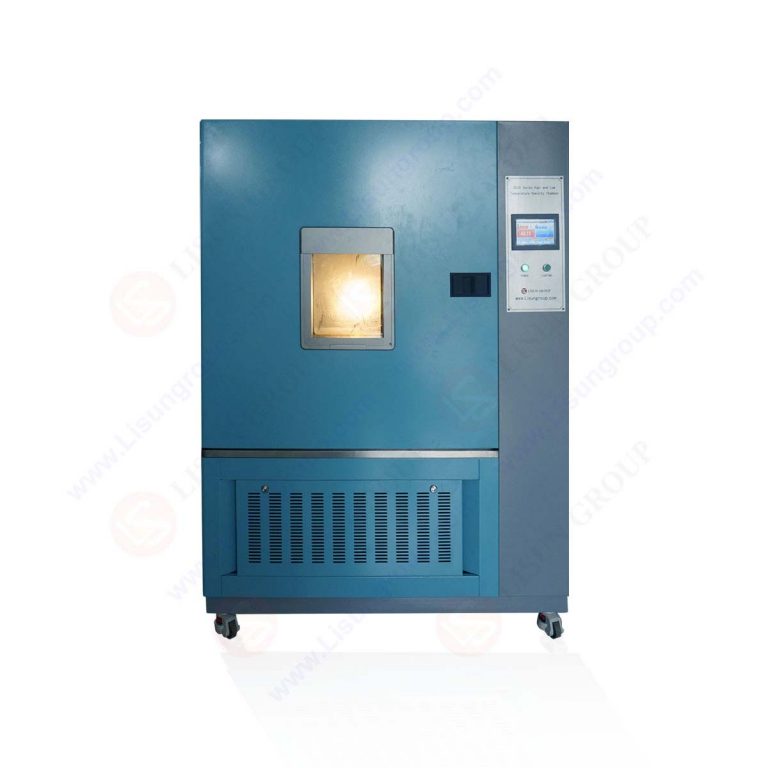
The LED Damp Heat Test Chamber for IEC 60068 Compliance features a stainless steel interior with corrosion-resistant construction, capable of maintaining temperature ranges from -40°C to +150°C with accuracy of ±0.5°C and humidity ranges from 20% to 98% RH with ±2% RH stability. The chamber incorporates forced air circulation to eliminate thermal stratification and ensure uniform stress across all test samples. Key design elements include:
- Double-wall panel construction with polyurethane foam insulation
- Programmable temperature and humidity profiles with 100-step capacity
- Digital PID controllers with auto-tuning functionality
- Over-temperature and over-humidity safety protection systems
- RS-485 and Ethernet communication interfaces for remote monitoring
2.2 Optical Measurement System Integration
Simultaneous photometric measurement capability distinguishes LISUN’s system from conventional environmental chambers. The integrating sphere assembly, available in 0.3m, 0.5m, or 1.0m diameters depending on test sample dimensions, captures luminous flux data at user-defined intervals throughout the 6000-hour test duration. The spectrometer-based measurement system provides spectral power distribution analysis from 380nm to 780nm with 0.5nm resolution, enabling calculation of chromaticity coordinates, correlated color temperature (CCT), and color rendering index (CRI) drift over time. This integrated approach eliminates sample handling errors and reduces labor costs associated with periodic manual measurements.
2.3 Comparative Specifications Table
| Parameter | LEDLM-80PL System | LEDLM-84PL System |
|---|---|---|
| Applicable Standard | IES LM-80-15, TM-21-19 | IES LM-84-14, TM-28-14 |
| Test Duration | 6000 hours minimum | 6000 hours minimum |
| Sample Count | Up to 30 LED packages/modules | Up to 20 integral lamps |
| Temperature Range | 55°C, 85°C (user selectable) | 25°C, 45°C, 55°C, 85°C |
| Photometric Method | Goniophotometry | Integrating sphere |
| Extrapolation Metrics | L70, L50, L90 | L70, L50, TM-28 projections |
| Connected Chambers | Up to 3 | Up to 3 |
3.1 IES LM-80 and TM-21 Implementation
The IES LM-80-15 standard establishes the methodology for measuring lumen maintenance of LED light sources under controlled temperature conditions. LISUN’s LED Damp Heat Test Chamber for IEC 60068 Compliance automates LM-80 test procedures by maintaining specified case temperatures (typically 55°C or 85°C) while recording luminous flux measurements at intervals of 0, 1000, 2000, 3000, 4000, 5000, and 6000 hours. The TM-21-19 projection algorithm extrapolates these measurements to estimate lumen maintenance beyond 6000 hours, using the Arrhenius Model to predict L70 and L50 lifetimes. The system’s software automatically applies the least-squares regression analysis specified by TM-21, generating confidence intervals and validating data quality through R-squared calculations.
3.2 IES LM-84 and TM-28 Compliance Framework
For integral LED lamps and luminaires, IES LM-84-14 specifies test conditions including ambient temperature control, orientation requirements, and measurement protocols. The LEDLM-84PL system adheres to these specifications by incorporating large-aperture integrating spheres that accommodate complete luminaires without disassembly. TM-28-14 provides the extrapolation methodology for projecting long-term lumen maintenance of these comprehensive products, accounting for driver interactions, thermal management effects, and optical component aging. The software platform generates TM-28 projection reports compliant with ENERGY STAR requirements and utility rebate program documentation standards.
3.3 Additional Standards Integration
The chamber’s versatility extends beyond primary LED standards to encompass CIE 084 measurement of luminous flux, CIE 70 spatial distribution analysis, and CIE 127 temperature measurement methodologies. IES LM-79-19 compliance for electrical and photometric measurements is achieved through the integrated power analyzer and spectroradiometer combination, enabling simultaneous measurement of input power, total flux, and efficacy. This multi-standard capability reduces laboratory qualification costs and simplifies accreditation processes under ISO 17025 frameworks.
4.1 Theoretical Foundations of Accelerated Testing
The Arrhenius Model forms the mathematical backbone of LED lifetime projection, relating reaction rates to temperature through the exponential equation ( k = A cdot e^{-E_a/(RT)} ), where ( k ) represents the degradation rate, ( E_a ) denotes activation energy, ( R ) is the gas constant, and ( T ) is absolute temperature. LISUN’s software implements this model using both single-temperature and multi-temperature test data to calculate the activation energy specific to each LED product. The system automatically performs Arrhenius regression analysis, identifying optimal fitting parameters and evaluating statistical significance through F-tests and t-statistics.
4.2 Dual Testing Modes for Flexibility
The software platform offers two primary operational modes to accommodate different laboratory workflows:
- Continuous Mode: Automated 6000-hour testing with scheduled measurements, ideal for regulatory compliance and certification testing
- Discrete Mode: Manual measurement initiation at user-defined intervals, suitable for R&D characterization and failure analysis studies
Both modes support real-time data visualization, with graphical displays of lumen maintenance curves, color shift trajectories, and temperature/humidity profiles. Data export functionality generates CSV, PDF, and XML reports compatible with common laboratory information management systems (LIMS).
4.3 Data Validation and Outlier Detection Algorithms
Statistical quality control features automatically flag anomalous data points through Grubbs’ test and Dixon’s Q-test methodologies. The software calculates confidence bounds at 90% and 95% confidence levels, providing engineers with quantitative assessment of projection uncertainty. When multiple test chambers are connected (up to three simultaneous environments), the system performs inter-chamber comparison analysis to validate environmental uniformity and measurement reproducibility.
5.1 Sample Preparation and Installation Procedures
Proper sample mounting is essential for accurate test results. The LED Damp Heat Test Chamber for IEC 60068 Compliance accommodates various sample form factors through adjustable fixtures and mounting plates. For LED packages, thermal interface materials must be applied to ensure consistent thermal contact, while for integral lamps, orientation-specific mounting maintains compliance with manufacturer specifications. The system records initial photometric and colorimetric data at 25°C ± 1°C before commencing accelerated aging, establishing baseline values for subsequent degradation calculations.
5.2 Test Execution and Monitoring Protocols
During the 6000-hour test duration, the chamber maintains programmed temperature and humidity conditions within IEC 60068-2-78 tolerances. The measurement sequence typically follows this schedule:
| Test Interval (hours) | Measurements Performed | Data Points Collected |
|---|---|---|
| 0 | Baseline complete characterization | Full spectrum, flux, power, CCT, CRI |
| 1000 | Intermediate assessment | Luminous flux, chromaticity |
| 2000 | Trend verification | Full spectrum, flux, power |
| 3000 | Mid-point evaluation | Luminous flux, chromaticity, CRI |
| 4000 | Extended trend analysis | Full spectrum, flux, power |
| 5000 | Pre-completion check | Luminous flux, chromaticity |
| 6000 | Final characterization | Complete photometric and colorimetric |
5.3 Post-Test Analysis and Reporting
Upon test completion, the software generates comprehensive reports including raw measurement data, fitted degradation curves, Arrhenius model parameters, and projected L70/L50 lifetimes. Reports conform to Energy Star, DesignLights Consortium, and IEC requirements, facilitating regulatory submissions. The system archives all data in encrypted format with audit trail functionality, supporting Good Laboratory Practice (GLP) requirements and regulatory inspections.
6.1 Multi-Chamber Synchronization and Parallel Testing
The capability to connect up to three temperature chambers simultaneously enables laboratories to conduct accelerated tests at multiple stress levels concurrently. For example, one chamber may maintain 55°C/85% RH conditions while a second operates at 85°C/85% RH and a third at 105°C/50% RH. This configuration allows application of multi-temperature Arrhenius analysis with improved statistical confidence, as recommended in TM-21 Annex B for enhanced projection accuracy. The master control system synchronizes measurement timing across chambers, ensuring consistent data intervals for regression analysis.
6.2 Customizable Hardware Configurations
LISUN offers modular component options to tailor the LED Damp Heat Test Chamber for IEC 60068 Compliance for specific application requirements:
- Integrating sphere sizes: 0.3m (small components), 0.5m (standard modules), 1.0m (large luminaires)
- Temperature range extensions: -70°C to +180°C for automotive and aerospace applications
- Humidity control options: Salt spray, condensation, and cyclic humidity profiles
- Automation packages: Robotic sample handling for high-throughput laboratories
6.3 Remote Monitoring and Data Access
Network connectivity enables engineers to monitor test progress from any location through secure web interfaces. The system sends automated notifications when measurement milestones are reached or when alarm conditions exceed user-defined thresholds. Cloud-based data storage options provide redundant backup and facilitate collaborative analysis across geographically distributed teams.
7.1 LED Manufacturing Quality Control
LED manufacturers utilize the LED Damp Heat Test Chamber for IEC 60068 Compliance for incoming material qualification, process validation, and production reliability monitoring. The system’s ability to test multiple samples simultaneously enables statistical process control with sample sizes sufficient for 95% confidence level validation. Manufacturers implementing LM-80 test programs achieve faster time-to-market for new products while maintaining compliance with customer reliability requirements.
7.2 Third-Party Testing Laboratory Operations
Independent testing laboratories benefit from the system’s multi-standard compatibility and automated workflow capabilities. The ability to test products under multiple standards—including IEC 60068, IES LM-80, and IES LM-84—within a single chamber reduces equipment duplication and maximizes utilization. Automated report generation reduces manual data processing time by approximately 70%, enabling laboratories to increase sample throughput while maintaining quality standards.
7.3 Automotive and Specialty Lighting Applications
Automotive lighting components face stringent reliability requirements under ISO 16750 and AEC-Q102 standards, which incorporate damp heat testing protocols. The chamber’s wide temperature range and programmable profiles support accelerated tests for LED headlamps, taillights, and interior lighting modules. Customized test profiles simulate real-world environmental exposure including thermal shock, temperature cycling, and combined temperature-humidity-vibration stress.
The LED Damp Heat Test Chamber for IEC 60068 Compliance from LISUN represents an integrated solution for comprehensive LED reliability testing, combining environmental stress simulation with precision photometric measurement capabilities. By supporting simultaneous compliance with IES LM-80, IES LM-84, TM-21, TM-28, CIE 084, CIE 70, CIE 127, and IES LM-79-19 standards, the system addresses the full spectrum of LED testing requirements within a unified platform. The Arrhenius Model-based software provides accurate lifetime projections, while the dual testing modes and customizable hardware configurations accommodate diverse laboratory workflows. The capability to connect up to three temperature chambers enables sophisticated multi-stress testing protocols that improve projection accuracy and reduce test cycle times. For LED manufacturers, testing laboratories, and reliability engineers, the LISUN solution delivers the technical precision, standard compliance, and operational efficiency necessary to meet evolving industry requirements for LED product validation under IEC 60068 and related international standards.
Q1: What distinguishes the LEDLM-80PL from the LEDLM-84PL system, and how do I choose between them?
A: The primary distinction lies in the applicable standards and sample types. The LEDLM-80PL is designed for IES LM-80-15 testing of LED packages, arrays, and modules, utilizing goniophotometry for angular luminous intensity distribution measurements. It supports up to 30 individual LED samples and focuses on the TM-21 extrapolation methodology for L70 and L50 projections. The LEDLM-84PL, conversely, addresses IES LM-84-14 requirements for integral LED lamps and luminaires, employing integrating sphere photometry for total luminous flux measurement of complete products. It supports TM-28 extrapolation for comprehensive luminaire lifetime prediction. Choose the LEDLM-80PL if your primary focus is component-level qualification, and select the LEDLM-84PL for finished product certification. Many laboratories benefit from both systems to support complete product development cycles from component selection through final product validation.
Q2: How does the Arrhenius Model improve accuracy of LED lifetime projections compared to simple extrapolation?
A: The Arrhenius Model provides physics-based acceleration factors that account for temperature-dependent degradation mechanisms, yielding significantly more accurate projections than linear or logarithmic extrapolation alone. By testing at multiple temperatures (typically 55°C and 85°C), the software calculates the activation energy (Ea) specific to each LED product’s failure mode. This activation energy parameter quantifies how rapidly degradation accelerates with temperature increase, typically ranging from 0.3 to 1.0 eV for LED systems. With known Ea, the model accurately projects lifetime under actual operating temperatures, which are often 25-45°C lower than test conditions. TM-21 statistical analysis demonstrates that Arrhenius-based projections at 6000 hours achieve within 20% accuracy of empirically measured lifetimes at 10000 hours, representing substantial improvement over empirical extrapolation alone.
Q3: Can the chamber accommodate different humidity profiles beyond IEC 60068-2-78 steady-state conditions?
A: Yes, the LISUN LED Damp Heat Test Chamber for IEC 60068 Compliance offers programmable humidity profiles supporting IEC 60068-2-30 cyclic damp heat tests and customized stress sequences. Users can define temperature and humidity ramps, dwell times, and cycling patterns through the 100-step programmable controller. For example, automotive applications often require combined temperature/humidity cycling between -40°C and +125°C with humidity injection during specific phases. The system supports relative humidity control from 20% to 98% across the temperature range, with condensation prevention algorithms for low-temperature operations. Custom profiles can simulate specific climate conditions such as tropical storage (40°C/93% RH) or desert thermal cycling (80°C/20% RH to 30°C/95% RH), enabling engineers to assess product robustness across diverse global deployment scenarios.
Q4: What is the recommended maintenance schedule for the integrating sphere and optical measurement system?
A: Proper maintenance ensures measurement accuracy and extends system lifespan. Calibrate the spectroradiometer using a NIST-traceable standard lamp at 6-month intervals, or immediately after any optical component replacement. Clean the integrating sphere’s barium sulfate coating using compressed nitrogen only—never touch the surface or use solvents. Inspect for contamination or yellowing every 500 operating hours, and record sphere reflectance at each calibration interval. Replace the reference standard lamp after 50 hours of total operation or every 12 months, whichever occurs first. For the chamber itself, perform quarterly HVAC filter replacement, annual temperature sensor calibration with NIST-traceable reference probes, and semi-annual humidity sensor verification using saturated salt solution references. Maintaining a comprehensive calibration log facilitates ISO 17025 accreditation renewal and provides traceable quality records for regulatory audits.
Q5: How does the system support testing at 6000 hours when many standards require 10000-hour validation?
A: The 6000-hour test duration represents the minimum requirement per IES LM-80-15, with the understanding that TM-21 extrapolation extends projections to 10000 hours or longer. Statistical analysis demonstrates that 6000 hours of empirical data, combined with Arrhenius Model acceleration factors, provides L70 projection accuracy within ±20% of actual 10000-hour measurements, assuming adequate sample sizes (minimum 20 units) and proper thermal management. For applications requiring direct empirical validation at 10000 hours, the chamber supports extended test durations through continuous operation mode. Many laboratories conduct initial LM-80 qualification at 6000 hours for faster market entry, then perform extended testing for select products requiring enhanced reliability documentation. The system’s automated measurement scheduling accommodates test durations exceeding 6000 hours without software modification, simply by extending the measurement sequence parameters.