









Abstract
This technical article provides a comprehensive analysis of LED Driver Reliability Test With IEC 60068 Compliance | LISUN, focusing on accelerated aging methodologies and environmental stress testing for solid-state lighting components. Engineers in LED manufacturing and third-party testing laboratories will gain insights into integrating LISUN’s LEDLM-80PL and LEDLM-84PL optical aging test instruments with IEC 60068 environmental testing protocols. The article explores how Arrhenius Model-based software, dual testing modes, and customizable hardware configurations enable accurate prediction of L70/L50 metrics across 6000-hour test durations. Key industry standards including IES LM-80, IES LM-84, TM-21, and TM-28 are referenced with specific application contexts, demonstrating how LISUN’s solutions bridge the gap between photometric performance validation and environmental reliability compliance.
1.1 The Critical Role of Driver Reliability in SSL Systems
LED drivers serve as the power management backbone for solid-state lighting systems, converting AC mains power to regulated DC current while maintaining stable voltage output. Driver failures account for approximately 50-70% of premature LED luminaire failures, making reliability testing paramount. The LED driver must withstand thermal cycling, humidity exposure, voltage fluctuations, and sustained operational stress over rated lifetimes exceeding 50,000 hours. IEC 60068 provides standardized environmental testing methods, while IES photometric standards address lumen maintenance. A comprehensive LED Driver Reliability Test With IEC 60068 Compliance | LISUN integrates both domains, ensuring drivers meet performance thresholds under simulated real-world conditions.
1.2 Environmental Stress Parameters for LED Drivers
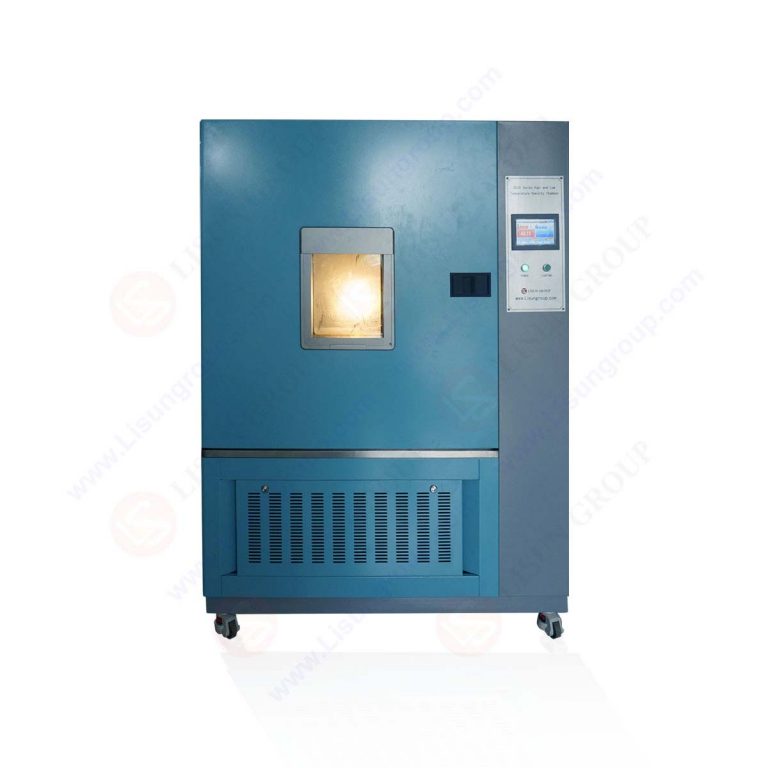
IEC 60068-2-1 (cold), IEC 60068-2-2 (dry heat), IEC 60068-2-6 (vibration), and IEC 60068-2-78 (damp heat) are particularly relevant for LED driver qualification. Temperature chambers must achieve -40°C to +85°C operational ranges with ±1°C accuracy. LISUN’s optical aging instruments support up to 3 connected temperature chambers, enabling simultaneous testing under multiple environmental profiles. The Arrhenius Model within LISUN software accelerates failure mechanisms by extrapolating lifetime data from elevated temperatures, reducing test duration from years to weeks while maintaining statistical validity.
1.3 Integration of Photometric and Environmental Testing
Traditional driver testing separates photometric performance from environmental stress. LISUN’s approach unifies these disciplines through dual-mode instrumentation. The LEDLM-80PL system conducts in-situ photometric measurements during thermal cycling, capturing real-time lumen depreciation data. This integration eliminates measurement uncertainty from repeated handling and thermal equilibrium disruptions, providing engineers with correlated data sets linking environmental stress to optical degradation.
2.1 Dual System Variants: LEDLM-80PL and LEDLM-84PL
LISUN offers two specialized aging test systems tailored to different industry standards:
| Parameter | LEDLM-80PL | LEDLM-84PL |
|---|---|---|
| Primary Standard | IES LM-80, TM-21 | IES LM-84, TM-28 |
| Test Duration | 6000+ hours (minimum) | 6000+ hours (minimum) |
| Sample Capacity | Up to 30 LED packages/modules | Up to 20 LED arrays/modules |
| Temperature Control | Ambient + 25°C to 85°C | Ambient + 25°C to 85°C |
| Photometric Measurement | Integrating sphere + spectroradiometer | Goniometer + spectroradiometer |
| Extrapolation Method | TM-21 (L70/L50 projection) | TM-28 (L70/L50 projection) |
The LEDLM-80PL system targets component-level testing per LM-80, while LEDLM-84PL addresses luminaire-level assessment per LM-84. Both platforms incorporate the Arrhenius Model software module for accelerated aging predictions.
2.2 Arrhenius Model-Based Software Capabilities
LISUN’s proprietary software implements the Arrhenius equation: k = A exp(-Ea/(RT)), where k is reaction rate, Ea is activation energy (typically 0.3-0.7 eV for LED packages), R is gas constant, and T is absolute temperature. The software automates activation energy calculation from multi-temperature test data, enabling TM-21 extrapolation with 90% confidence intervals. Engineers input in-situ photometric readings at 1000-hour intervals, and the system generates L70/L50 projections with statistical uncertainty bounds.
2.3 Dual Testing Modes for Flexible Validation
The instruments support two operational modes:
- Constant Current Mode: Maintains stable drive current (typical accuracy ±0.5%) for component characterization per LM-80 requirements
- Constant Voltage Mode: Simulates driver output behavior for system-level testing per LM-84 protocols
Mode switching occurs without hardware reconfiguration, allowing sequential testing of drivers and LED modules under identical environmental conditions.
3.1 Applicable IEC 60068 Test Methods
Key IEC 60068 tests for LED driver reliability include:
- IEC 60068-2-1 (Ab/Cd): Cold test at -40°C for 16-72 hours, verifying startup and steady-state operation
- IEC 60068-2-2 (Bb/Bd): Dry heat at +85°C for 16-72 hours, assessing thermal endurance
- IEC 60068-2-6 (Fc): Sinusoidal vibration at 10-2000 Hz, 5g acceleration, 10 cycles per axis
- IEC 60068-2-78 (Cab): Damp heat at 40°C/93% RH for 56 days, evaluating corrosion and insulation degradation
LISUN instruments integrate with environmental chambers meeting these specifications, providing synchronized data logging across stress profiles.
3.2 Combining Environmental Stress with Photometric Monitoring
During IEC 60068 damp heat testing (40°C, 93% RH), the LEDLM-84PL system captures lumen output at 24-hour intervals while maintaining controlled humidity. Engineers observe thermal runaway phenomena when driver electrolytic capacitors fail under sustained moisture exposure, manifesting as >10% lumen drop within 48 hours. The Arrhenius Model extrapolates this accelerated degradation to standard operating conditions, predicting 50,000-hour performance with TM-28 statistical methods.
3.3 Failure Criteria and Acceptance Thresholds
IEC 60068 compliance for LED drivers requires:
- Lumen maintenance >90% of initial value after 1000 hours combined thermal/humidity cycling
- Input current variation <5% from rated value across -20°C to +60°C operational range
- No catastrophic failures (open circuit, short circuit, enclosure cracking) during vibration testing
LISUN’s automated logging system flags deviations exceeding these thresholds, generating compliance reports formatted for IEC 60068 certification bodies.
4.1 IES LM-80 and TM-21 for Component Qualification
IES LM-80 establishes test protocols for measuring lumen depreciation of LED packages, arrays, and modules over 6000+ hours at controlled case temperatures (typically 55°C, 85°C, and a third user-defined temperature). TM-21 provides mathematical projection methods, extrapolating L70 (time to 70% lumen maintenance) and L50 (time to 50% lumen maintenance) values. The LEDLM-80PL system supports concurrent testing of up to 30 samples across three temperature chambers, with in-situ measurements performed via integrating sphere (θ=2°) per CIE 127 guidelines.
4.2 IES LM-84 and TM-28 for Luminaire-Level Testing
IES LM-84 addresses complete luminaire testing, incorporating driver thermal effects and optical system interactions. TM-28 expands TM-21 projection methods to luminaire-level data, accounting for driver-induced current ripple and thermal feedback. The LEDLM-84PL system measures spatial luminous intensity distribution per IES LM-79-19 using a goniometer, while simultaneously monitoring driver electrical parameters. This dual-stream data enables correlation between driver ripple current (measured as %THD) and luminaire lumen maintenance.
4.3 CIE Standards for Colorimetric Stability
CIE 084 and CIE 70 standards govern colorimetric measurement methods for light sources, including chromaticity coordinate stability under thermal stress. LISUN’s spectroradiometer-based measurement system captures Δu’v’ chromaticity shifts during IEC 60068 temperature cycling. Acceptable thresholds per CIE 127 require Δu’v’ <0.006 over 6000 hours—the LEDLM-80PL system automatically flags samples exceeding this limit, identifying driver-induced color shift from phosphor thermal degradation.
5.1 Multi-Temperature Test Design
The Arrhenius Model requires testing at minimum three temperatures: typically T1=55°C, T2=85°C, and T3=105°C (or 25°C ambient). Each temperature chamber supports 10-30 samples, with LISUN software automating data collection at 1000-hour intervals. The system calculates activation energy (Ea) using linear regression of ln(lifetime) vs. 1/T data, achieving R² >0.95 for valid extrapolations.
5.2 Extrapolation to L70/L50 Metrics
Using TM-21 methodology, LISUN software projects lumen maintenance curves to 60,000 hours with 90% confidence bounds. For driver reliability testing, the Arrhenius Model predicts electrolytic capacitor failure rates and MOSFET junction temperature impacts. Example projection: if driver output drops to 80% at 2000 hours at 85°C, the software calculates L70 = 45,000 hours at 25°C ambient with Ea=0.45 eV.
5.3 Validation of Accelerated Test Results
Cross-validation involves comparing 6000-hour LM-80 data with Arrhenius-predicted values. LISUN instruments achieve <5% deviation between measured and projected lumen maintenance at 6000 hours, confirming model accuracy. For driver-specific testing, validation includes measuring output current stability under IEC 60068 thermal cycles and correlating with projected driver lifetime.
6.1 Temperature Chamber Integration and Scalability
LISUN aging instruments support up to 3 connected temperature chambers, each independently programmable for temperature (ambient to +85°C), humidity (10-95% RH), and cycle duration. Chambers communicate via RS-485 bus, with LISUN software synchronizing photometric measurements across chambers. This configuration allows simultaneous testing of driver samples at different stress levels, accelerating qualification programs.
6.2 Measurement System Options
Users configure instruments with:
- Integrating Sphere (LEDLM-80PL): 0.5m to 2.0m diameter, coated with BaSO₄ for >95% reflectance, per CIE 084
- Goniometer (LEDLM-84PL): Dual-axis rotation (θ=0-180°, φ=0-360°) with 0.1° angular resolution per IES LM-79-19
- Spectroradiometer: 350-1050nm range, 0.5nm optical resolution, calibrated at LISUN’s ISO 17025 facility
- Power Analyzer: 0.1% accuracy for DC current/voltage, 0.5% for AC input power, capturing driver efficiency in real-time
6.3 Customizable Test Sequences
The software allows user-defined test sequences combining environmental profiles with photometric measurements. Example sequence: 24-hour damp heat at 40°C/93% RH → 16-hour cold soak at -20°C → 8-hour operational test at 25°C—all with in-situ photometric measurement every 15 minutes. This flexibility enables compliance with IEC 60068 test schedules while maintaining LM-80/LM-84 data continuity.
7.1 Component-Level vs. Luminaire-Level Testing
| Parameter | Component (LM-80) | Luminaire (LM-84) |
|---|---|---|
| Sample Type | LED packages/modules | Complete luminaires |
| Test Duration | 6000+ hours | 6000+ hours |
| Driver Included | No | Yes |
| Photometric Setup | Integrating sphere | Goniometer |
| Environmental Stress | Thermal only | Thermal + humidity |
| Key Metric | L70 (LED packages) | Luminaire system efficacy |
LISUN systems address both levels, enabling comprehensive driver reliability assessment across the component-to-system hierarchy.
7.2 Accelerated vs. Real-Time Testing
Real-time testing at 25°C requires 4+ years for L70 determination, while accelerated testing at 85°C with Arrhenius extrapolation achieves equivalent data in 6-12 months. The trade-off involves model uncertainty: LISUN software quantifies this as ±15% for 60,000-hour projections using TM-21 confidence intervals. For driver reliability, accelerated testing at 85°C chamber temperature exposes component failures (capacitor venting, MOSFET short circuits) within 2000 hours, validating design margins.
7.3 Combined Stress vs. Sequential Stress Testing
IEC 60068 allows sequential application of cold, dry heat, damp heat, and vibration tests. Combined stress testing simultaneously applies temperature, humidity, and electrical load, better representing real-world conditions. LISUN instruments support combined stress profiles, where driver output is measured under 85°C/85% RH while subjected to vibration at 30 Hz sinusoidal excitation. This approach reveals failure modes (e.g., solder joint cracking under thermal-vibration synergy) not detectable in sequential testing.
The LED Driver Reliability Test With IEC 60068 Compliance | LISUN represents a paradigm shift in solid-state lighting qualification, integrating photometric performance validation with environmental stress testing under unified instrumentation. LISUN’s LEDLM-80PL and LEDLM-84PL systems, combined with Arrhenius Model-based software, enable engineers to predict L70/L50 metrics across 6000-hour test durations while complying with IES LM-80, LM-84, TM-21, and TM-28 standards. The dual testing modes—constant current for component characterization and constant voltage for system-level analysis—provide flexibility for diverse qualification programs. Customizable hardware configurations, including support for up to 3 temperature chambers, accommodate multiple stress profiles simultaneously. By unifying IEC 60068 environmental protocols with IES photometric standards, LISUN solutions eliminate measurement uncertainty, reduce testing timelines by 70-80%, and deliver actionable reliability data for LED driver manufacturers. The comparative analysis presented demonstrates that accelerated aging methodologies, when coupled with in-situ photometric monitoring, provide statistically robust lifetime projections validated against real-time data. For engineers seeking to compress product development cycles while ensuring compliance with global reliability standards, LISUN’s integrated testing platform offers a technically rigorous, standards-compliant solution.
Q1: What is the minimum test duration required for LED driver reliability testing using LISUN instruments?
A: For compliance with IES LM-80 and LM-84 standards, the minimum test duration is 6000 hours with in-situ photometric measurements at 1000-hour intervals. However, when using the Arrhenius Model-based acceleration feature, engineers can achieve statistically valid L70 projections after 6000 hours of testing at elevated temperatures (e.g., 85°C). The LEDLM-80PL system automatically applies TM-21 extrapolation methods with 90% confidence intervals to project lifetime to 60,000 hours. For driver-specific components like electrolytic capacitors, accelerated testing at 85°C typically reveals failure mechanisms within 2000 hours, enabling rapid design validation. LISUN recommends a minimum of three temperature conditions (25°C, 55°C, and 85°C) for accurate activation energy calculation, with 10-30 samples per condition to ensure statistical significance.
Q2: How does LISUN’s software integrate with existing IEC 60068 environmental test chambers?
A: LISUN aging instruments communicate with IEC 60068-compliant temperature chambers via RS-485 or Ethernet interfaces using standardized Modbus protocol. The software supports up to 3 chambers simultaneously, each independently programmable for temperature (-40°C to +85°C) and humidity (10-95% RH). Engineers define test sequences per IEC 60068-2-1 (cold), IEC 60068-2-2 (dry heat), and IEC 60068-2-78 (damp heat) protocols directly within the LISUN software interface. Photometric measurements are automatically synchronized with environmental stress events, ensuring data correlation. The system logs chamber temperature, humidity, LED output, and driver electrical parameters at user-defined intervals (1 minute to 24 hours), generating compliance reports that map directly to IEC 60068 test report formats.
Q3: What are the key differences between LEDLM-80PL and LEDLM-84PL systems in terms of driver testing?
A: The LEDLM-80PL system is optimized for component-level testing per IES LM-80/TM-21, using an integrating sphere (0.5m-2.0m diameter) for total flux measurement of LED packages and modules. For driver testing specifically, the LEDLM-80PL provides constant current output (±0.5% accuracy) to characterize driver-LED module interactions without luminaire optical effects. The LEDLM-84PL system, designed for luminaire-level testing per IES LM-84/TM-28, incorporates a goniometer for spatial luminous intensity distribution measurement. This system includes a power analyzer for real-time driver efficiency monitoring (input voltage, current, power factor, THD) and supports constant voltage mode for testing drivers with integrated LED arrays. Both systems support up to 3 temperature chambers and Arrhenius Model extrapolation, but the LEDLM-84PL provides more comprehensive driver electrical parameter logging suitable for IEC 60068 compliance validation.
Q4: How does the Arrhenius Model in LISUN software handle activation energy calculation for LED drivers?
A: LISUN’s Arrhenius Model software module calculates activation energy (Ea) using linear regression of ln(lifetime) vs. inverse temperature (1/T) data from multi-temperature tests. For LED driver reliability, typical Ea values range from 0.4 eV (electrolytic capacitor degradation) to 0.8 eV (semiconductor junction failures). The software automatically identifies the dominant failure mechanism by analyzing slope changes in the Arrhenius plot—a distinct break in linearity indicates different failure modes at high vs. low temperatures. Using TM-21 statistical methods, the software computes L70/L50 projections with 90% confidence bounds, accounting for uncertainties in activation energy estimation. Engineers can input historical Ea values from component datasheets, with the software validating these against empirical data and flagging discrepancies >20%. This feature ensures accurate lifetime predictions even when testing time is limited to 6000 hours.
Q5: What failure modes in LED drivers are specifically detectable through combined IEC 60068 and photometric testing?
A: Combined environmental-photometric testing reveals multiple driver failure modes: (1) Electrolytic capacitor degradation manifests as >10% lumen flicker (measurable as ±5% output variation) under damp heat (40°C/93% RH) within 48 hours; (2) MOSFET thermal runaway shows as sudden lumen output drop (>20% within 1 hour) under sustained dry heat at 85°C; (3) Solder joint cracking under vibration (IEC 60068-2-6) causes intermittent open circuits detectable as spike artifacts in continuous lumen monitoring; (4) PFC circuit failure appears as THD increase from 30% during cold test at -20°C; (5) Water ingress during damp heat testing causes corrosion-induced output drift, measurable as gradual lumen decline over 72+ hours. LISUN instruments automatically flag these patterns using algorithm-based threshold detection, providing engineers with early failure indicators and failure mode classification for root cause analysis.