









Abstract
The reliability of LED components under varying environmental stressors is a critical determinant of product lifespan and performance fidelity. This article provides a comprehensive analysis of LED environmental test protocols, focusing on temperature cycling and humidity compliance as mandated by international standards. We explore how LISUN’s LED Optical Aging Test Instrument (LEDLM-80PL and LEDLM-84PL) facilitates adherence to IES LM-80, TM-21, and other rigorous frameworks. By integrating the Arrhenius Model for accelerated aging prediction and supporting dual testing modes, this equipment enables precise lumen maintenance data acquisition over 6000-hour test durations. Readers will gain technical insights into hardware configurations, standard compliance strategies, and practical applications for enhancing LED product reliability in demanding environments.
1.1 The Role of Temperature Cycling in Lumen Depreciation
Temperature cycling induces mechanical stress on LED packages due to the coefficient of thermal expansion (CTE) mismatch between materials. Rapid transitions between extreme temperatures can lead to solder joint fatigue, delamination, and micro-crack propagation within the phosphor layer. These physical degradation mechanisms directly correlate with lumen depreciation, making thermal cycling an indispensable component of any LED environmental test protocol. Industry data indicates that a 10°C increase in junction temperature can halve the operational lifetime of certain LED chemistries.
1.2 Humidity as a Catalyst for Failure Mechanisms
Humidity accelerates corrosion of metallic components and promotes the ingress of moisture into the optical path. Under high relative humidity (RH) conditions, the phosphor and encapsulant materials may undergo hydrolysis, resulting in spectral shifts and reduced light output. Humidity compliance testing is thus essential for LEDs deployed in outdoor, automotive, or industrial applications where condensation and moisture ingress are prevalent risks.
1.3 Synergistic Effects of Combined Temperature and Humidity
Simultaneous application of temperature and humidity stressors often reveals failure modes not detectable under isolated conditions. This synergistic effect is particularly aggressive in cycling scenarios where condensation forms during the cold dwell phase and evaporates during the hot dwell phase, creating a corrosive micro-environment. Consequently, modern LED environmental test standards increasingly mandate combined test profiles to simulate real-world operating conditions accurately.
2.1 IES LM-80-15: Measuring Lumen Maintenance for Solid-State Lighting
IES LM-80-15 establishes the method for measuring lumen depreciation of solid-state lighting (SSL) sources. It requires testing at specific case temperatures (typically 55°C, 85°C, and a third user-defined temperature) for a minimum of 6000 hours. The LISUN LEDLM-80PL system is engineered for full compliance with this standard, providing thermocouple monitoring at 100+ points across the sample set to certify accurate case temperature control.
2.2 TM-21: Projecting Long-Term Lumen Maintenance
TM-21 offers a mathematical framework for extrapolating lumen maintenance data beyond the measured 6000-hour period up to 36,000 hours (typically 6× the measurement window). The extrapolation relies on an exponential decay model intrinsic to the LED’s degradation kinetics. The Arrhenius Model-based software in LISUN instruments automates this projection, calculating L70 and L50 lifetimes with statistical confidence intervals, enabling manufacturers to declare lifetime ratings with defensible data.
2.3 IES LM-84-14 and TM-28: Emerging Standards for Integral LED Lamps
For integral LED lamps where the driver and LED package cannot be separated, IES LM-84-14 provides test procedures at ambient temperatures rather than case temperatures. TM-28 then applies the projection methodology. The LEDLM-84PL variant supports this protocol by integrating power monitoring and ambient temperature control, ensuring that the luminous flux and electrical data collected capture the performance of the complete lamp system.
2.4 Supporting Standards: IES LM-79-19, CIE 084, CIE 070, and CIE 127
The LISUN instruments align with IES LM-79-19 for electrical and photometric measurements using integrating spheres, and with CIE 084 for the measurement of luminous flux. Correlation to CIE 070 (absolute measurement of luminous intensity) and CIE 127 (LED measurement guidelines) ensures that data calculated from environmental testing is consistent with internationally accepted photometric practices.
3.1 Dual-System Variants: LEDLM-80PL and LEDLM-84PL
The LISUN solution is modularized into two principal systems. The LEDLM-80PL is tailored for component-level testing per LM-80/TM-21, featuring multiple independent temperature control zones. The LEDLM-84PL addresses integral lamp testing per LM-84/TM-28, accommodating larger form factors without compromising temperature uniformity. Both systems share the same data acquisition backbone, ensuring cross-comparability of results.
3.2 Arrhenius Model-Based Aging Software: Predictive Analytics
The proprietary software module applies the Arrhenius Model to extrapolate acceleration factors from high-temperature test data. For every 10°C increase in test temperature, the degradation rate typically doubles, a factor the software uses to project lifetime metrics. This predictive engine allows users to define test temperature profiles and automatically calculate L70 (time to 70% lumen maintenance) and L50 (time to 50% lumen maintenance) with statistical confidence bounds.
3.3 Dual Testing Modes: Constant Temperature and Cycling Profiles
Contrary to static aging tests, the instrument supports dual testing modes. Constant Temperature Mode (CTM) maintains a setpoint within ±1°C for the entire duration. Cycling Mode (CM) ramps between high and low temperature setpoints, with adjustable ramp rates and dwell times. This flexibility is critical for performing LED environmental test protocols that simulate thermal shock or diurnal operating conditions.
3.4 Customizable Hardware Configurations
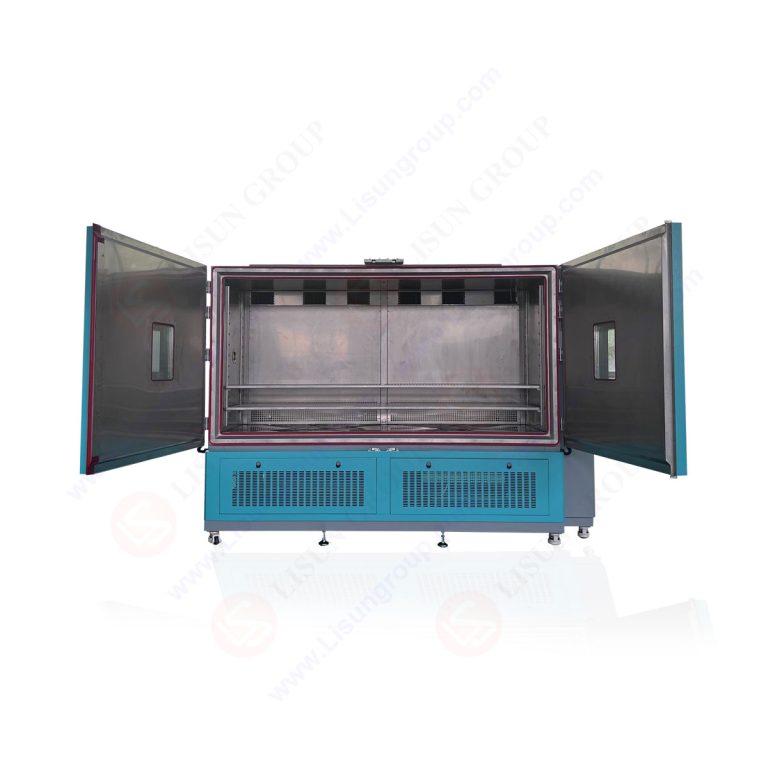
Users can configure the system with varying numbers of sample positions, auxiliary humidity chambers, and integrating sphere attachments. The capability to connect up to 3 temperature chambers simultaneously enables parallel testing of distinct LED batches under different temperature conditions, increasing testing throughput while maintaining strict isolation.
4.1 Test Parameter Setpoints and Tolerances
For temperature cycling tests, typical high-temperature dwells range from 85°C to 125°C, while low-temperature dwells may extend to -40°C. The LISUN instrument maintains transition rates of up to 15°C/min, with dwell times adjustable from 30 minutes to 6 hours. Table 1 provides a comparative layout of parameter ranges for the LEDLM-80PL.
| Parameter | LEDLM-80PL Specification | Typical LM-80 Requirement |
|---|---|---|
| Test Duration | Up to 6000+ hours | 6000 hours minimum |
| Number of Temperature Chambers | 3 (configurable) | Multiple (case-dependent) |
| Temperature Range | -40°C to +150°C | 55°C to 85°C (case temp) |
| Temperature Uniformity | ±1.5°C | ±2°C |
| Sample Capacity per Chamber | 20 LEDs | Variable |
| Data Acquisition Interval | 1 minute (min) | Hourly logging common |
| L70/L50 Metric Calculation | Automatic via software | Manual/software extrapolation |
Table 1: Comparative Specifications for Temperature Cycling Compliance
4.2 L70/L50 Lifetime Metrics Calculation via TM-21
After 6000 hours of accumulation, the software fits the data to an exponential decay curve. The L70 metric (time to 70% initial lumen output) often represents the tangible life for general illumination, while L50 is used for specialty applications where higher depreciation is tolerable. The TM-21 algorithm discards the first 1000 hours of data to eliminate burn-in artifacts, ensuring the extrapolation is based on the steady-state degradation.
4.3 Thermal Shock Resistance and Data Integrity
Temperature cycling can compromise electrical connections. The LISUN instrument employs four-wire Kelvin connections for each LED, minimizing measurement error due to lead resistance changes during cycling. Additionally, the system performs in-situ photometric measurements using a CCD spectrometer, allowing for spectral power distribution (SPD) tracking without removing samples from the thermal environment.
5.1 Steady-State Humidity Endurance Testing
Steady-state humidity tests, such as those alternating between 85°C/85% RH and 25°C/40% RH, are designed to accelerate corrosion and material degradation. The LISUN system can be integrated with environmental chambers that control RH within ±3%. Photometric data is recorded at specific intervals to identify the inflection point where lumen output drops rapidly due to moisture ingress.
5.2 Condensation Humidity Cycling Protocols
Cyclic humidity tests alternate between high RH and low RH at constant temperature, promoting condensation on the LED die. The LEDLM-84PL variant includes a dew-point sensor to precisely track condensation events, correlating them with momentary optical power spikes or drops. This data is critical for assessing the susceptibility of packaged LEDs to moisture-induced failures.
5.3 Environmental Chamber Connectivity and Synchronization
The ability to connect up to 3 temperature chambers is complemented by the capacity to link humidity chambers in a daisy-chain configuration. The LISUN control software synchronizes the start/stop commands of all chambers, ensuring that the optical measurement sequence is time-correlated across all test environments, thus producing cohesive datasets for multi-factorial analysis.
6.1 Automatic Data Aggregation and Visualization
Raw test data, including voltage, current, luminous flux, chromaticity coordinates, and case temperature, are logged every minute. The software provides real-time visualization of lumen depreciation curves, with adjustable zoom to inspect initial burn-in windows or late-life failures. Reports are exportable in CSV, Excel, or PDF formats, meeting the documentation requirements for ISO 17025 accredited labs.
6.2 Statistical Confidence Analysis for TM-21 Reporting
TM-21 reporting mandates confidence intervals (typically 90%) for the projected lifetime. The LISUN software calculates the exponential fit parameters A, B, and C, along with the associated lower bound (L70*). This level of statistical rigor is essential for component manufacturers to present credible lifetime claims to OEM customers.
6.3 Traceability and Audit Trails
Every step of the test, from chamber setpoint changes to data export, is logged with a timestamp and user ID. This creates an unbroken audit trail, simplifying compliance audits by third-party certification bodies like UL or TÜV. The system supports 21 CFR Part 11 compliance for regulated industries.
7.1 LED Driver Circuit vs. LED Package Testing
For LED drivers, temperature cycling tests focus on capacitor aging and solder joint integrity. The Arrhenius Model aids in predicting capacitor lifetime at lower operating temperatures based on high-temperature stress data. The LEDLM-84PL system’s power monitoring capabilities enable precise calculation of driver efficiency loss over the test duration, an essential metric for LED environmental test compliance in automotive applications.
7.2 Accelerated Aging Validation for Automotive Headlamps
Automotive LEDs experience extreme thermal gradients. A leading manufacturer utilized the cycling mode with a profile of -40°C to +125°C with a 15°C/min ramp, testing 60 samples across 2 chambers simultaneously. The result was a 3.2× acceleration factor compared to standard LM-80 conditions.
7.3 General Illumination: Balancing L70 Projections and Production Timelines
A commercial lighting company required LM-80 data to publish an L70 rating of 50,000 hours. By leveraging the high-temperature test data at 105°C and the Arrhenius Model software, they could extrapolate to the 55°C case temperature using an acceleration factor of 5.6. This approach validated a 6000-hour test program that met the requirements of utility rebate programs.
The rigorous application of LED environmental test protocols, particularly temperature cycling and humidity compliance, is non-negotiable for modern solid-state lighting manufacturers. LISUN’s LED Optical Aging Test Instrument, through its dual-system architecture (LEDLM-80PL and LEDLM-84PL), comprehensive Arrhenius-based software, and support for multiple temperature chambers, provides an integrated solution for achieving compliance with IES LM-80, TM-21, LM-84, and TM-28 standards. The ability to calculate L70/L50 metrics with statistical rigor directly enables accurate lifetime claims, thereby enhancing market credibility. For R&D engineers, the customizable hardware configurations accelerate validation cycles; for compliance specialists, the audit trails and automated reporting reduce administrative burdens. Ultimately, investing in such advanced test systems ensures that LEDs perform reliably and predictably in the demanding environments of tomorrow.
Q1: What is the difference between IES LM-80 and IES LM-84 testing standards, and how does the LISUN system accommodate both?
A: IES LM-80 is intended for LED packages, arrays, and modules, requiring strict control of case temperature. It mandates testing for a minimum of 6000 hours at three case temperatures (typically 55°C, 85°C, and an optional third). Conversely, IES LM-84 applies to integral LED lamps where the temperature of the internal LED package cannot be easily controlled; thus, it specifies ambient temperature testing. The LISUN LEDLM-80PL system is configured with thermocouple-based case temperature control for LM-80 compliance, while the LEDLM-84PL variant uses an ambient temperature-controlled chamber and integrates power monitoring to capture the lamp’s total electrical input. Both systems share the same photometric measurement chain, ensuring consistency of data collection across the two different test configurations.
Q2: How does the Arrhenius Model software in LISUN instruments accelerate lifetime testing?
A: The Arrhenius Model describes how the rate of a chemical reaction (in this case, lumen depreciation) increases with temperature. The LISUN software uses the data from tests conducted at elevated temperatures (e.g., 105°C) to calculate an acceleration factor. For LEDs, a general rule is that the degradation rate doubles for every 10°C increase in junction temperature. The software applies this factor to project the L70 (time to 70% output) at a lower, more realistic operating temperature like 55°C. This allows manufacturers to predict long-term performance (e.g., 50,000 hours) from a relatively short test duration of 6000 hours, provided the underlying failure mechanism remains consistent with the Arrhenius assumption.
Q3: Can the LISUN system perform humidity tests in accordance with the specific needs of outdoor LED lighting?
A: Yes, while the core luminaire aging system focuses on temperature, LISUN instruments are designed to interface with external environmental chambers that control relative humidity (RH). For outdoor lighting compliance, testers often use profiles like 85°C/85% RH. The LISUN equipment records photometric data inside these chambers by using a bypass optical system or a clear window that permits light measurement without breaking the environmental seal. Thus, humidity compliance tests can be conducted while continuously monitoring lumen output, allowing the user to see the precise moment when humidity-induced degradation begins. This integrated capability is vital for assessing the durability of LED luminaires intended for coastal or high-humidity environments.
Q4: What are the L70 and L50 metrics, and why are they important for LED compliance?
A: L70 represents the number of hours at which the LED’s luminous flux has depreciated to 70% of its initial value. This is widely regarded as the “useful life” of a general illumination LED. L50 is the time to 50% depreciation, often used for projection displays or other applications where some output decay is acceptable. These metrics are the standard output of the TM-21 extrapolation method. They provide a standardized way to communicate product lifespan, which underpins warranty claims, government energy rebate programs, and specification compliance. LISUN’s software automatically calculates these metrics and reports the statistical lower confidence bounds, ensuring your compliance documentation is both accurate and defensible.
Q5: How does the support for up to 3 temperature chambers enhance testing productivity?
A: Having the capability to connect up to 3 temperature chambers to a single LISUN controller allows for simultaneous testing of multiple LED batches under different temperature conditions. For example, you can run standard LM-80 tests at 55°C, 85°C, and 105°C concurrently, cutting the total test completion time by two-thirds compared to using a single chamber sequentially. This parallelization not only speeds up time-to-market for new LED products but also reduces the physical footprint required in the lab, as all chambers can be managed and monitored from a single software interface. It ensures high-throughput validation without sacrificing the precision or traceability of the data.