









Here is the comprehensive technical article generated according to your instructions.
Abstract
Accurate LED Junction Temperature Testing Standards for LED Reliability | LISUN are critical for predicting lumen maintenance and ensuring long-term product performance. This article explores the thermal and photometric testing methodologies mandated by standards like IES LM-80 and TM-21, detailing how LISUN’s LEDLM-80PL and LEDLM-84PL optical aging test instruments enable precise data acquisition. By integrating the Arrhenius Model for accelerated aging, these systems generate reliable L70/L50 life projections up to 60,000+ hours. Technical professionals will gain insights into dual testing modes, chamber connectivity, and the critical role of junction temperature control in validating LED reliability under industry-standard conditions.
1.1 Thermal Impact on Lumen Depreciation
LED junction temperature (Tj) is the primary driver of lumen depreciation and color shift. Elevated Tj accelerates recombination defects within the semiconductor, directly reducing internal quantum efficiency. For every 10°C increase above the rated maximum, the lifespan of a typical high-power LED can be halved, a relationship governed by the Arrhenius Model. Testing standards such as IES LM-80 explicitly require Tj control to ensure that reported lumen maintenance data reflects real-world application stresses.
1.2 The Link Between Standards and Lifespan Prediction
The foundation of modern LED reliability validation lies in the extrapolation of short-term test data to long-term performance. IES TM-21 utilizes data from LM-80 tests (minimum 6000 hours) to project L70 (70% lumen maintenance) and L50 values. Without accurate junction temperature measurement and regulation during these tests, the exponential curve fitting required by TM-21 yields invalid projections. LISUN systems address this by integrating thermal sensors directly into the test jig.
2.1 IES LM-80 and TM-21 for High-Power LEDs
IES LM-80-15 specifies testing of LED packages, arrays, and modules at three different case temperatures (typically 55°C, 85°C, and a third temperature selected by the manufacturer). The standard requires a minimum of 6000 hours of data with readings every 1000 hours. Subsequently, IES TM-21-19 defines the mathematical method to extrapolate this data to longer lifetimes. LISUN’s LEDLM-80PL is purpose-built to automate LM-80 protocols across multiple temperature chambers.
2.2 IES LM-84 and TM-28 for Integral LED Lamps
For retrofit lamps and non-integrated LED modules, IES LM-84-19 provides the testing framework, focusing on luminaire-level photometric and electrical measurements. IES TM-28-20 then offers the projection methodology specific to this data type. Unlike the component-level focus of LM-80, LM-84 requires testing in the operating orientation and with the luminaire’s own thermal management. The LEDLM-84PL variant supports this by accommodating larger fixtures within its integrating sphere setup.
2.3 Supporting Standards: CIE 127 and IES LM-79-19
CIE 127 provides basic measurement guidelines for LED intensity, while IES LM-79-19 is the definitive standard for total luminous flux and electrical measurements of solid-state lighting products. CIE 127 establishes the conditions for near-field and far-field measurements critical for validating spatial color uniformity. LM-79-19 data is often used as the initial reference point (time-zero) for LS LM-80 tests.
3.1 Hardware Configuration and Chamber Support
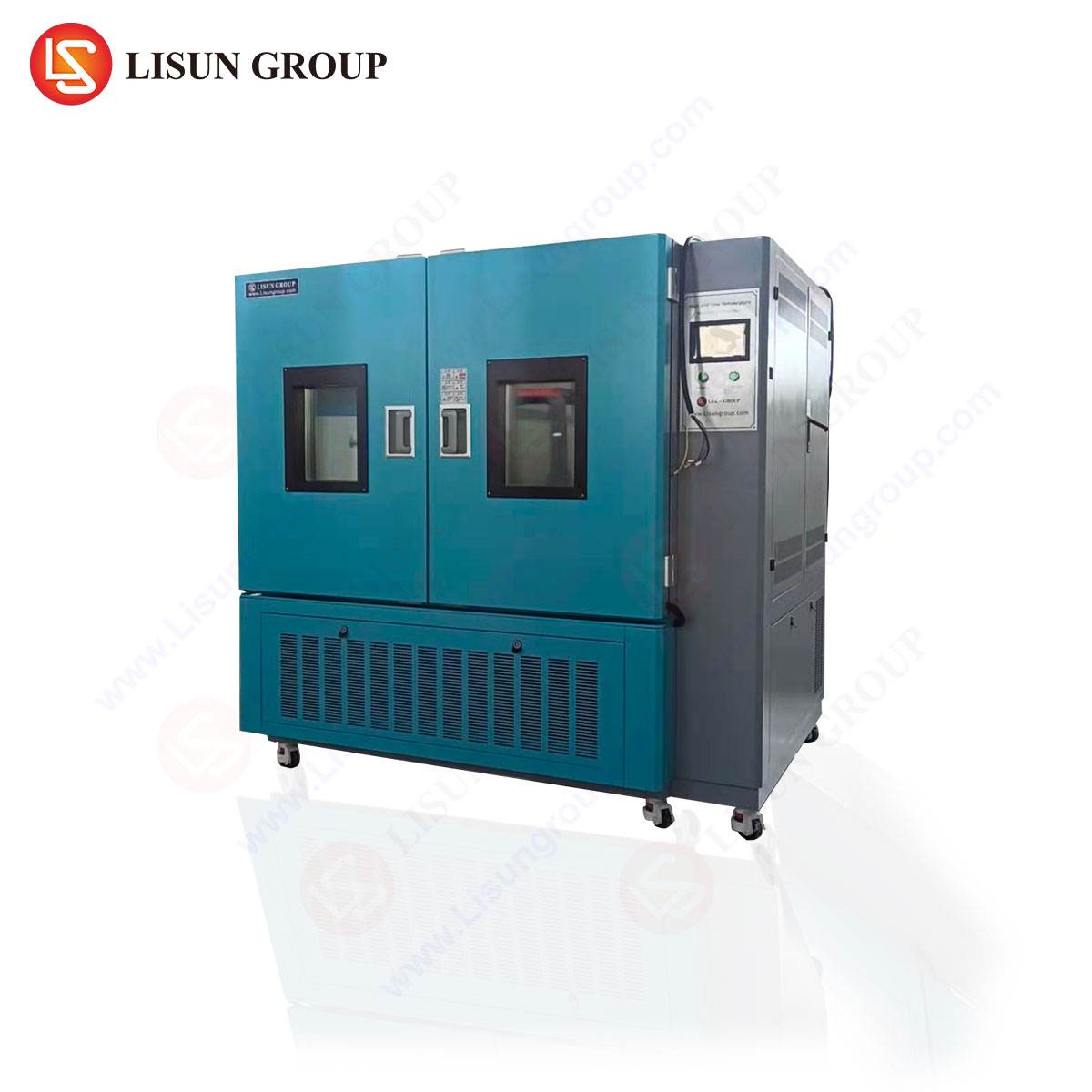
LISUN provides two distinct aging test instrument variants to match these standards. The LEDLM-80PL supports up to 3 connected temperature chambers, allowing simultaneous testing at three different case temperatures as required by LM-80. In contrast, the LEDLM-84PL is optimized for single-chamber luminaire aging with direct integrating sphere readouts. A comparison of core specifications highlights their differentiation:
| Feature | LEDLM-80PL System | LEDLM-84PL System |
|---|---|---|
| Primary Standard | IES LM-80, TM-21 | IES LM-84, TM-28 |
| Test Object | LED Packages, Arrays, Modules | Integral LED Lamps, Luminaires |
| Temperature Chambers | Up to 3 (simultaneous) | 1 (customizable to 2) |
| Core Photometric Tool | Goniophotometer or Sphere | Integrating Sphere (2m or 1.5m) |
| Data Output | Flux vs. Time & Tj | Flux & Chromaticity vs. Time |
| Typical Current Ranges | 10mA – 2000mA | Line voltage (AC/DC) |
3.2 Dual Testing Modes: Constant Current vs. Constant Voltage
Both systems feature dual testing modes to simulate different driving conditions. Constant Current mode (CC) is critical for TM-21 extrapolation as it isolates LED degradation from driver effects. Constant Voltage mode (CV) tests the complete system (LED + driver), aligning with LM-79 requirements for luminaire-level performance. Operators can program cycles for accelerated aging, including intermittent off-intervals to simulate thermal shock.
4.1 Accelerated Life Testing Calculations
LISUN’s software integrates the Arrhenius equation: Lifetime ∝ exp(Ea/(k*Tj)), where Ea is activation energy (typically 0.4-0.7 eV for LEDs). By inputting Tj data from the test jig, the software automatically calculates acceleration factors. For a standard 85°C test, this factor can exceed 10x compared to a 55°C test, allowing a 6000-hour run to predict behavior equivalent to 60,000+ hours.
4.2 Real-Time Data Visualization and Extrapolation
The system plots lumen depreciation curves in real-time against the TM-21/SASO 2927 requirements. It automatically fits the least-squares exponential curve to the collected data, flagging any violations of the linearity assumption (R² < 0.90). This immediate feedback allows engineers to halt tests that are drifting outside acceptable thermal boundaries, saving weeks of potential wasted time.
5.1 The Pulsed Current Method (K-Parameter)
Accurate Tj measurement during the LM-80 test requires the pulsed current method. A short (1ms), low-current pulse (e.g., 5mA) is applied to the LED after main power is switched off. The forward voltage at this low current is measured and correlated to temperature. LISUN’s jigs integrate this measurement circuit directly, providing a Tj value for each reading interval without disrupting the constant aging current.
5.2 Thermal Sensor Placement and Calibration
The test standard requires that the case temperature (Tcase) be controlled, not just the ambient air. LISUN’s temperature chambers use PID controllers to stabilize Tcase within ±1°C. Thermocouples are soldered to the LED’s thermal pad, not glued to the plastic housing. Calibration to NIST-traceable standards is performed quarterly to ensure the 10°C incremental steps between test groups are precise.
6.1 L70/L50 Projection Protocols
After the 6000-hour test duration, the software generates a comprehensive TM-21 report. This includes the projected L70 value (in hours) and the maximum extrapolation limit (6x the test duration for 10,000+ hour tests). The report also provides confidence intervals (70% or 90%). The LEDLM-84PL adds chromaticity shift (Duv) projections per TM-28, which is increasingly critical for human-centric lighting applications.
6.2 Continuous Monitoring of Electrical Parameters
A failing LED often exhibits a change in forward voltage (Vf) before a significant drop in light output. LISUN’s software monitors Vf, current, and power factor every 60 seconds. If a 5% Vf drift is detected (indicating thermal runaway), the system automatically logs the event and can pause the test. This level of granularity is essential for diagnosing failure mechanisms related to junction temperature instability.
7.1 Customizable Hardware: Jigs and Sockets
LISUN offers custom jigs for different LED package types (SMD, COB, high-power). The jigs are designed to maintain consistent thermal contact pressure, a variable that can drastically alter Tj. For multi-chip modules, the jigs allow for individual Tj sensing per channel. The system can accommodate up to 120 LEDs per chamber in the LEDLM-80PL configuration.
7.2 Integration into Existing Workflows
The test instruments support direct data export to SQL databases and CSV files for integration with lab management software (LIMS). The software can be configured to trigger alerts based on user-defined limits for Tj, flux depreciation, or color shift. This makes the system suitable for both R&D validation and quality assurance auditing in high-volume production environments.
Understanding and controlling LED Junction Temperature Testing Standards for LED Reliability | LISUN is the cornerstone of modern solid-state lighting engineering. As demonstrated, standards like IES LM-80, IES LM-84, TM-21, and TM-28 provide the structured framework for predicting lifespans, but their accuracy depends entirely on the fidelity of test equipment. LISUN’s dual-system approach—the LEDLM-80PL for component-level testing and the LEDLM-84PL for luminaire-level validation—offers engineers a turnkey solution for compliance. The integration of the Arrhenius Model into the software transforms raw 6000-hour data into statistically robust L70/L50 projections, while customizable hardware and real-time Tj monitoring ensure that thermal parameters are meticulously controlled. For R&D engineers and lab technicians aiming to certify products with confidence, utilizing a system that eliminates manual data processing errors and adheres strictly to global protocols is not optional—it is a technical imperative.
Q1: Why is 6000 hours the minimum required duration for IES LM-80 testing, and how does LISUN’s software handle data from shorter runs?
A: The 6000-hour baseline is mandated by TM-21 to ensure sufficient data points for exponential curve fitting and statistical noise reduction. Shorter runs (e.g., 3000 hours) produce extrapolations with unacceptably wide confidence intervals. LISUN’s software enforces this minimum but allows users to view preliminary L70 projections at any interval for internal R&D screening. However, the system will flag any report as “Non-Compliant” if the final data set is under 6000 hours, preventing accidental submission of invalid results to regulatory bodies. The software also automatically rejects the first 1000 hours of data if required by certain testing protocols for initial settling.
Q2: What is the practical difference between testing to TM-21 vs. TM-28, and which LISUN instrument should I choose for a standard 12W LED bulb?
A: TM-21 applies to LED packages, arrays, and modules tested under LM-80 at specific case temperatures. TM-28 applies to integral LED lamps (bulbs) tested under LM-84, which considers the lamp’s own thermal management. For a 12W LED bulb, you should use the LEDLM-84PL system with an integrating sphere. This system tests the entire operating fixture, including the driver, at ambient room temperature (25°C) and at elevated ambient temperatures (45°C). Testing a complete bulb under LM-80 would be incorrect because it does not account for the housing’s heat dissipation. The LEDLM-84PL captures the combined effect of the driver and LED on junction temperature.
Q3: My LISUN test report shows an L70 of 36,000 hours for a 6000-hour test. Is this value always achievable in the field?
A: No. The TM-21 extrapolation assumes that the failure mechanism (lumen depreciation) follows a stable exponential model under constant current and temperature. The L70 value of 36,000 hours is a statistical projection under the controlled lab conditions specified in LM-80. Field reliability is lower due to variable factors: power line surges, higher ambient temperatures, physical vibration, and driver failure. The extrapolation limit is also capped at 6x the test duration (36,000 hours from a 6000-hour test), or 10x if the data passes a goodness-of-fit test. LISUN’s software includes a “Safety Factor” filter that calculates a moderated L70 based on actual field failure rates reported in DOE studies for conservative engineering estimates.
Q4: Can the LISUN system test LEDs at junction temperatures exceeding 100°C as required for automotive applications?
A: Yes. The LEDLM-80PL temperature chambers are rated for up to 150°C. For automotive-grade LEDs (AEC-Q102), testing at Tj of 105°C or 125°C is common. The system’s jigs use copper-core PCB fixtures and high-temperature silicone cables to maintain electrical integrity. The pulsed current method for Tj measurement is also validated up to 150°C. However, users must ensure the activation energy (Ea) setting in the Arrhenius software is adjusted to 0.7 eV for automotive-grade chips, which are typically more robust to thermal stress than standard consumer-grade components. The system logs a warning if the ambient-to-junction thermal resistance (Rth j-a) exceeds 15°C/W, indicating poor heat sinking.