









Abstract
This technical article provides a comprehensive examination of LED module test methodologies utilizing IEC 60068 compliant environmental test chambers, with specific focus on LISUN’s advanced LED Optical Aging Test Instrument systems. The article integrates critical industry standards including IES LM-80, IES LM-84, TM-21, and TM-28 to establish rigorous reliability validation protocols. Engineers will gain insights into Arrhenius Model-based accelerated aging software, dual testing modes, and customizable hardware configurations supporting up to 6000-hour test durations with L70/L50 metric calculations. The discussion emphasizes how IEC 60068 compliant chambers enable precise temperature and humidity profiling essential for LED module lifetime prediction and lumen maintenance compliance in automotive, general lighting, and display applications.
1.1 Environmental Stress Testing Principles for Solid-State Lighting
IEC 60068 establishes the international standard framework for environmental testing of electrotechnical products, providing systematic procedures for simulating temperature extremes, humidity variations, and thermal shock conditions. For LED module test applications, compliance with IEC 60068 ensures that test chambers deliver reproducible environmental conditions with temperature stability within ±0.5°C and relative humidity control accuracy of ±2.0% RH. These parameters are critical because LED lumen depreciation accelerates exponentially with temperature increases, as described by the Arrhenius Model, making precise thermal profiling essential for valid lifetime extrapolations. LISUN’s environmental test chambers integrate IEC 60068-2-1 (cold) and IEC 60068-2-2 (dry heat) standards to create comprehensive stress profiles that accurately simulate real-world operating conditions for LED modules.
1.2 Correlation Between IEC 60068 and IES Standards for Lumen Maintenance
The intersection of IEC 60068 environmental protocols with IES LM-80 (Lumen Maintenance Testing for LED Light Sources) creates a robust framework for LED module qualification. While LM-80 specifies test durations of 6000 hours minimum at defined case temperatures (typically 55°C, 85°C, and a customer-specified temperature), IEC 60068 compliant chambers extend capabilities by enabling dynamic temperature cycling that mimics field stress scenarios. This synergy allows engineers to apply TM-21 extrapolation algorithms to data collected under IEC 60068 profiled conditions, producing L70 (time to 70% lumen maintenance) and L50 metrics that account for both thermal aging and environmental degradation. LISUN’s LEDLM-80PL system directly addresses this integration by supporting up to three connected temperature chambers, enabling simultaneous multi-temperature testing per LM-80 requirements while maintaining IEC 60068 compliance for each chamber’s environmental control.
2.1 Dual System Variants: LEDLM-80PL and LEDLM-84PL
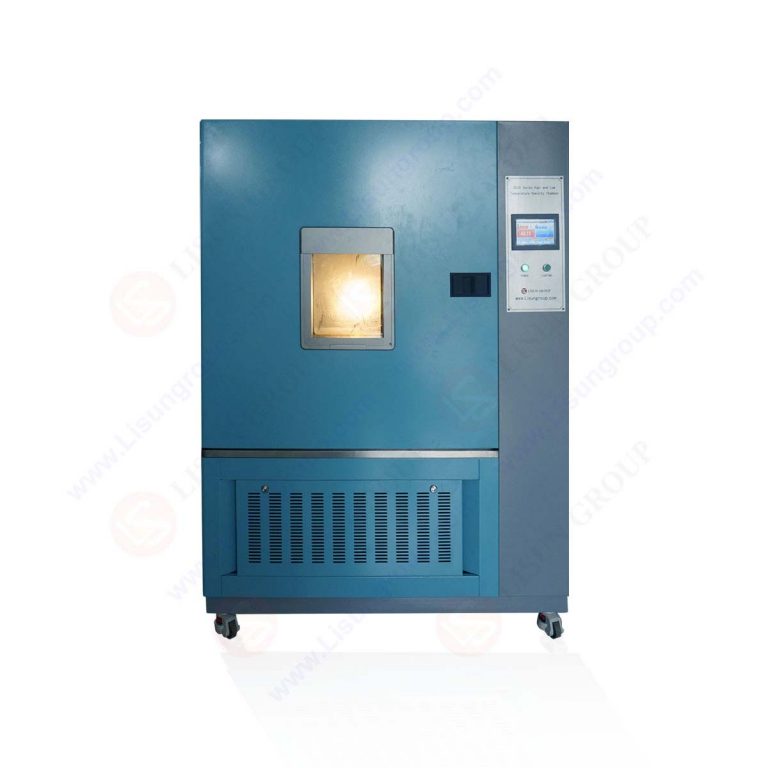
LISUN’s LED Optical Aging Test Instrument encompasses two distinct system variants tailored to specific testing standards and application requirements. The LEDLM-80PL system is purpose-built for IES LM-80 and TM-21 compliance, supporting standard 6000-hour test durations with automated data logging at user-defined intervals. In contrast, the LEDLM-84PL system addresses IES LM-84 and TM-28 standards for integral LED lamps and luminaires, incorporating integrating sphere compatibility for total luminous flux measurements. Both variants share core hardware architecture including high-precision DC power supplies, temperature-controlled test boards, and photometric measurement integration. The key differentiator lies in the measurement approach: LEDLM-80PL focuses on component-level testing with socketed test boards, while LEDLM-84PL accommodates complete luminaire assemblies within environmental chambers.
2.2 Customizable Hardware Configurations and Multi-Chamber Support
The modular design of LISUN’s test instruments supports extensive customization to match specific LED module test requirements. Key hardware options include:
- Test board configurations accommodating up to 48 LED sockets per board with independent current control
- Temperature chamber interfaces supporting thermal ranges from -40°C to +150°C with ramp rates up to 5°C/min
- Integrated photometric sensors with spectral range of 380-780nm and resolution of 0.5nm
- Multiple chamber synchronization capability enabling simultaneous testing of up to 3 environmental chambers
This flexibility ensures that manufacturers can configure systems for production quality control, accelerated life testing, or research and development validation without hardware redundancy.
2.3 System Specifications Comparison Table
| Parameter | LEDLM-80PL | LEDLM-84PL |
|---|---|---|
| Primary Standard | IES LM-80 / TM-21 | IES LM-84 / TM-28 |
| Test Duration | 6000+ hours (minimum) | 6000+ hours (minimum) |
| Temperature Chambers Supported | Up to 3 | Up to 3 |
| Measurement Method | Socket-mounted photometry | Integrating sphere (optional) |
| Lumen Metrics | L70, L50, L90 | L70, L50, L90 |
| Data Logging Interval | User-defined (1-999 minutes) | User-defined (1-999 minutes) |
| Arrhenius Model Software | Included (TM-21 extrapolation) | Included (TM-28 extrapolation) |
| Test Mode Options | Constant Current / Pulse Operation | Constant Current / Pulse Operation |
3.1 Mathematical Framework for Lifetime Prediction
The Arrhenius Model serves as the foundational mathematical framework for accelerated aging calculations in LED module test protocols, relating reaction rates to temperature through the equation: k = A × exp(-Ea/(R×T)), where k represents the degradation rate, A is the pre-exponential factor, Ea denotes activation energy, R is the gas constant, and T represents absolute temperature. For LED reliability testing, the model enables engineers to predict L70 lifetimes at use temperatures (typically 25-55°C) from accelerated test data collected at elevated temperatures (85-105°C). LISUN’s software implements this model with automated activation energy calculation from multi-temperature test data, typically yielding Ea values between 0.3-1.2 eV for phosphor-converted white LEDs. The software then extrapolates lumen maintenance curves to 6000 hours minimum per TM-21 guidelines, providing statistically valid L70 projections with 90% confidence intervals.
3.2 Software Implementation for TM-21 and TM-28 Extrapolation
LISUN’s proprietary software integrates directly with hardware measurement systems to automate the complex extrapolation process per TM-21 (for LM-80 data) and TM-28 (for LM-84 data) standards. Key software capabilities include:
- Automatic curve fitting using non-linear least squares regression to lumen maintenance data points
- Exponential decay model selection based on statistical goodness-of-fit criteria (R² > 0.95 typically required)
- 90% lower confidence bound calculation for reported L70 values
- Data export in IESNA standard formats for third-party verification
The software supports both single-temperature and multi-temperature extrapolation methods, with the latter providing more robust predictions by accounting for temperature-dependent degradation mechanisms. Engineers can generate comprehensive test reports including raw data, fitted curves, extrapolated lifetimes, and uncertainty analysis within minutes of completing the final measurement cycle.
4.1 Constant Current Mode for Steady-State Characterization
Constant current test mode represents the traditional approach for LED module test according to LM-80 protocols, maintaining fixed drive current throughout the 6000-hour duration while monitoring lumen depreciation under continuous operation. This mode provides baseline degradation data essential for assessing intrinsic LED reliability, as it eliminates variability from current fluctuations. For typical power LEDs tested at 350mA or 700mA, constant current mode reveals degradation rates primarily driven by junction temperature and phosphor thermal quenching. LISUN’s systems achieve current stability within ±0.1% over the 6000-hour test period, ensuring that measured lumen depreciation accurately reflects material and package degradation rather than test equipment drift. This mode is particularly suitable for component qualification testing where manufacturers need to validate LED performance against datasheet specifications.
4.2 Pulse Operation Mode for Thermal Management Assessment
Pulse operation mode introduces periodic current cycling to simulate real-world LED module applications such as automotive lighting, traffic signals, and display backlighting where duty cycles vary. In this mode, LISUN’s systems can program current pulses with variable duty cycles from 1-100% and frequencies from 0.1Hz to 10kHz, enabling engineers to assess:
- Thermal fatigue effects from repeated heating and cooling cycles
- Phosphor degradation under transient thermal stress
- Solder joint reliability under power cycling conditions
- Color shift variations during warm-up and cool-down phases
The combination of constant current and pulse operation data provides a comprehensive understanding of LED reliability under both steady-state and transient conditions, supporting more accurate lifetime predictions for diverse application environments.
5.1 IES LM-80 and TM-21: Component-Level Lumen Maintenance
IES LM-80 establishes the standardized test method for measuring lumen maintenance of LED light sources at specified drive currents and case temperatures over a minimum of 6000 hours. This standard requires photometric measurements at 0, 1000, 2000, 3000, 4000, 5000, and 6000 hours with temperature monitoring at the LED case (Tc point). LISUN’s LEDLM-80PL system automates these measurements with integrated thermocouple interfaces at each test socket position, ensuring accurate temperature correlation. TM-21 then provides the mathematical framework for extrapolating LM-80 data to predict L70 lifetimes, with specific guidelines for projection duration limits (6× the test duration maximum). For a 6000-hour LM-80 test, TM-21 allows extrapolation up to 36,000 hours, providing manufacturers with practical reliability projections for warranty and specification purposes.
5.2 IES LM-84 and TM-28: Integral Lamp and Luminaire Testing
IES LM-84 extends testing to integral LED lamps and luminaires, measuring total luminous flux rather than component-level light output. This standard incorporates integrating sphere photometry to capture the complete angular light distribution, essential for assessing optical system degradation including reflector aging and diffuser yellowing. TM-28 provides the corresponding extrapolation methodology for LM-84 data, accounting for the additional degradation mechanisms present in complete luminaire systems. LISUN’s LEDLM-84PL system supports LM-84 testing with optional integrating sphere integration (0.3m, 0.5m, or 1.0m diameter spheres), enabling simultaneous thermal aging and photometric measurement without removing samples from environmental chambers. This integrated approach reduces measurement uncertainty and provides more representative aging data for finished products.
6.1 Spectral and Colorimetric Measurement Capabilities
Accurate LED module test requires comprehensive photometric characterization beyond simple luminous flux measurements. LISUN’s systems incorporate array spectroradiometers capable of measuring spectral power distribution (SPD) across 380-780nm with 0.5nm resolution, enabling calculation of:
- Correlated color temperature (CCT) shifts over aging periods
- Color rendering index (CRI) degradation patterns
- Duv (distance from Planckian locus) stability
- Chromaticity coordinate drift (Δu’v’)
These colorimetric parameters are critical for applications such as architectural lighting and display backlighting where color consistency over lifetime is essential. The spectroradiometer calibration follows CIE 127 and CIE 084 guidelines, with traceability to national standards through NIST-certified reference lamps.
6.2 Calibration Protocols and Measurement Uncertainty
Maintaining measurement accuracy over 6000-hour test durations requires rigorous calibration protocols. LISUN’s systems implement automated calibration verification at user-defined intervals, comparing against internal reference standards with NIST traceability. The measurement uncertainty budget includes:
- Photometric uncertainty: ±1.5% (k=2) for luminous flux measurements
- Colorimetric uncertainty: ±25K for CCT at 3000K, ±50K at 6500K
- Spectral uncertainty: ±0.5nm wavelength accuracy
- Current measurement uncertainty: ±0.05% of reading
These uncertainty levels comply with IES LM-79-19 requirements for electrical and photometric measurements of solid-state lighting products, ensuring that test results are defensible for regulatory submissions and customer qualifications.
7.1 Temperature and Humidity Profiling Capabilities
LISUN’s IEC 60068 compliant environmental test chambers provide precise thermal and humidity control essential for LED module test reproducibility. Key specifications include:
- Temperature range: -40°C to +150°C with ±0.5°C uniformity
- Humidity range: 10-98% RH with ±2.0% RH stability
- Ramp rates: up to 5°C/min for thermal cycling profiles
- Chamber volume: 225L to 1000L configurations available
The chambers support both steady-state and dynamic environmental profiles, enabling engineers to simulate conditions from desert daytime heat (85°C, 20% RH) to tropical humidity (55°C, 95% RH) within a single test sequence. Temperature cycling profiles following IEC 60068-2-14 (change of temperature) can be programmed with defined dwell times, number of cycles, and transition rates.
7.2 Multi-Chamber Synchronization for LM-80 Compliance
IES LM-80 requires testing at three case temperatures: 55°C, 85°C, and a customer-specified temperature (typically 105°C for high-performance LEDs). LISUN’s systems support simultaneous connection of up to three environmental chambers, each independently controlled to maintain the specified temperature while the central control unit coordinates measurement timing. This configuration enables parallel testing at all required temperatures within the same 6000-hour test window, reducing total test time by 66% compared to sequential testing. The software automatically correlates measurement data from each chamber, applying the appropriate temperature for Arrhenius Model calculations and TM-21 extrapolation.
8.1 Automated Data Collection and Trend Analysis
LISUN’s data management system automates the collection, storage, and analysis of photometric and environmental data throughout the LED module test duration. Key features include:
- Real-time visualization of lumen maintenance curves with rolling averages
- Automatic detection of anomalous data points exceeding 3σ thresholds
- Comparative analysis across multiple test conditions and batches
- Export functionality for CSV, PDF, and IESNA standard formats
The system maintains complete audit trails including timestamped measurements, environmental conditions, and operator actions, supporting ISO 17025 laboratory accreditation requirements. Engineers can configure automated alerts for specified degradation thresholds (e.g., L70 reached at 85°C), enabling immediate investigation of early failures.
8.2 Report Generation for Regulatory Compliance
Comprehensive test reports meeting IES LM-80 and TM-21 documentation requirements are generated automatically upon test completion. Reports include:
- Executive summary with L70/L50 projections and confidence intervals
- Raw data tables with all measurement points
- Fitted decay curves with statistical goodness-of-fit metrics
- Environmental chamber temperature and humidity logs
- Colorimetric data tables showing CCT, CRI, and chromaticity trends
This automation significantly reduces engineering labor costs while ensuring consistency and completeness required for regulatory submissions to organizations such as Energy Star, DLC (DesignLights Consortium), and IECEE CB Scheme.
The integration of IEC 60068 compliant environmental test chambers with LISUN’s LED Optical Aging Test Instrument systems provides a comprehensive solution for LED module test requirements across component and luminaire levels. By combining Arrhenius Model-based accelerated aging software, dual testing modes (constant current and pulse operation), and support for up to three temperature chambers, engineers can achieve statistically valid L70 and L50 lifetime projections within practical test durations. The alignment with critical industry standards including IES LM-80, LM-84, TM-21, and TM-28 ensures that test results meet global regulatory acceptance for applications ranging from automotive lighting to architectural installations. LISUN’s customizable hardware configurations and automated data management capabilities reduce testing complexity while improving measurement accuracy and reproducibility. For lighting manufacturers seeking to validate product reliability, comply with evolving regulatory requirements, and minimize warranty risk, the adoption of IEC 60068 compliant LED module test methodologies with LISUN’s specialized instrumentation represents a technically sound investment.
Q1: What is the minimum test duration required for IES LM-80 compliance, and how does accelerated aging reduce this timeframe?
A: IES LM-80 mandates a minimum test duration of 6000 hours (approximately 8.3 months) at specified case temperatures to generate baseline lumen maintenance data. While this duration cannot be reduced for LM-80 compliance, accelerated aging using Arrhenius Model-based extrapolation allows engineers to make L70 lifetime predictions at use temperatures from elevated temperature test data. For example, testing at 85°C with an activation energy of 0.5 eV can accelerate degradation by approximately 10× compared to 55°C operation, enabling meaningful lifetime projections within the 6000-hour test window. LISUN’s software automates this extrapolation per TM-21 guidelines, providing statistically valid predictions without extending test durations.
Q2: How does pulse operation mode differ from constant current mode in LED reliability testing?
A: Pulse operation mode introduces periodic current cycling to simulate real-world applications with variable duty cycles, while constant current mode applies continuous drive current throughout the test duration. The key difference lies in the stress mechanisms evaluated: constant current tests primarily assess thermal aging and phosphor degradation under steady-state conditions, while pulse testing reveals solder joint fatigue, wire bond degradation, and phosphor cracking under thermal cycling stress. LISUN’s systems support pulse frequencies from 0.1Hz to 10kHz with duty cycles from 1-100%, enabling comprehensive characterization of LED modules for applications such as automotive lighting where thermal cycling is a dominant failure driver.
Q3: What measurement uncertainty should be expected for L70 lifetime predictions using TM-21 extrapolation?
A: TM-21 extrapolation uncertainty depends on several factors including test duration, data quality, and activation energy determination. For a standard 6000-hour LM-80 test with data collected at three temperatures, typical L70 prediction uncertainty ranges from ±15-25% (90% confidence interval). This uncertainty arises from measurement noise (±1.5% photometric uncertainty), activation energy variability (±0.1 eV typical), and the inherent limitations of exponential decay models. LISUN’s software calculates and reports these confidence intervals automatically, allowing engineers to make informed decisions about safety margins in warranty projections. Testing to extended durations (e.g., 10,000 hours) and using multi-temperature data significantly reduces prediction uncertainty.
Q4: Can LISUN’s LED Optical Aging Test Instrument be calibrated for different LED package sizes and phosphor configurations?
A: Yes, LISUN’s systems feature configurable test boards accommodating various LED package sizes from 2835 through COB (Chip-on-Board) configurations. The test boards incorporate adjustable socket positions, thermocouple mounting points for Tc measurement, and current control circuits that can be calibrated for drive currents from 10mA to 5A. For different phosphor configurations (e.g., YAG-based white, RGB, or UV), the integrated spectroradiometer automatically adjusts measurement parameters including integration time and dark current compensation. Calibration verification protocols support periodic re-measurement using NIST-traceable reference LEDs to maintain accuracy across diverse device types and testing campaigns.
Q5: What environmental conditions can be simulated using IEC 60068 compliant chambers with LISUN’s system?
A: LISUN’s environmental chambers support a wide range of conditions per IEC 60068, including steady-state temperature from -40°C to +150°C with humidity from 10-98% RH, and dynamic profiles such as temperature cycling (IEC 60068-2-14), damp heat cycling (IEC 60068-2-30), and thermal shock (IEC 60068-2-14). Common LED module test profiles include: storage conditions (-40°C, non-operational), high-temperature operation (85°C, 85% RH), thermal cycling (-40°C to +85°C with 1-hour dwell), and accelerated aging (105°C, dry). These conditions allow manufacturers to validate LED reliability for automotive exterior applications, outdoor lighting, and indoor general lighting across diverse climate zones and installation environments.