









Here is the comprehensive technical article based on your instructions.
Abstract
This article provides a comprehensive technical analysis of the LED Package Test: Ensure IEC 60068 Compliance with Thermal Cycling, specifically focusing on the integration of LISUN’s LED Optical Aging Test Instrument (LEDLM-80PL and LEDLM-84PL) into accelerated reliability protocols. We delve into how this equipment bridges the gap between photometric performance measurement (LM-80/LM-84) and environmental stress testing (IEC 60068) to identify failure mechanisms in LED packages and modules. By analyzing the Arrhenius Model-based predictive software and dual-mode capabilities, we demonstrate how engineers can accurately extrapolate L70/L50 lifespan data under thermal cycling. The discussion provides critical insights for R&D and QC professionals aiming to validate component robustness against thermomechanical fatigue while ensuring compliance with IES and CIE standards.
1.1 The Thermo-Mechanical Stress Profile
LED packages are heterogeneous structures containing semiconductor dies, silicone encapsulants, ceramic/sapphire substrates, and metal lead frames. These materials exhibit varying Coefficients of Thermal Expansion (CTE). During a thermal cycling test per IEC 60068-2-14, the package undergoes repeated thermal shock, inducing shear stress at material interfaces. This stress accelerates failure mechanisms such as die attach delamination, bond wire fatigue, and encapsulant cracking—none of which are adequately triggered by constant high-temperature aging alone. Consequently, a comprehensive LED Package Test: Ensure IEC 60068 Compliance with Thermal Cycling integrates thermal dynamics with photometric monitoring to quantify lumen depreciation caused by mechanical degradation, not just chemical decay.
1.2 Distinction Between Thermal Cycling and Constant Aging
While IES LM-80 provides foundational data on lumen maintenance at stable temperatures (e.g., 55°C, 85°C), it does not simulate real-world power cycling or environmental temperature swings. IEC 60068 compliance necessitates exposure to predetermined temperature extremes with specific ramp rates (e.g., -40°C to +125°C). The LISUN system’s dual testing modes address this distinction. Engineers can run Type-C (constant temperature) for LM-80 data collection and Type-T (thermal cycling) for IEC 60068 degradation analysis. The ability to monitor flux and forward voltage during cycling, rather than only at endpoints, allows for the detection of intermittent opens caused by micro-cracks—a critical failure signature for automotive and outdoor lighting applications.
2.1 Hardware Architecture and Configuration
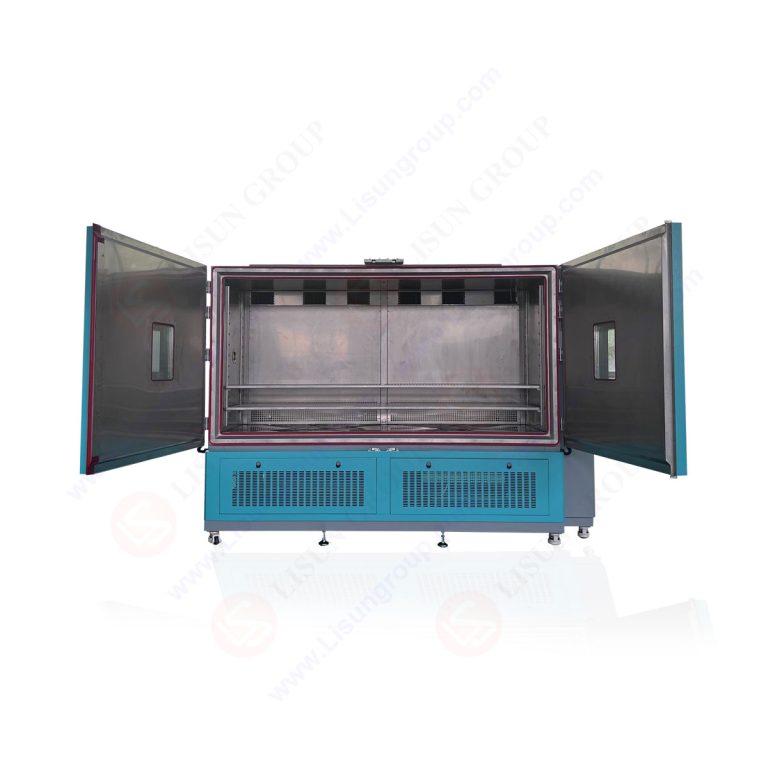
The LISUN LED Optical Aging Test Instrument is engineered to support stringent thermal cycling demands. It supports up to three connected temperature chambers, allowing for simultaneous testing of three distinct temperature conditions—a requirement for the multi-temperature matrix defined in IES LM-84. The system’s rugged design accommodates high current driving up to 8 channels, with a voltage measurement resolution of 0.1 mV and current accuracy of ±0.02%. When conFigured for thermal cycling, the software triggers the chamber’s ramp/soak profile while the measurement unit continuously records optical parameters. This setup ensures that the LED Package Test: Ensure IEC 60068 Compliance with Thermal Cycling captures the transient behavior of solder joints as they expand and contract.
2.2 System Variants: LM-80PL vs. LM-84PL
The choice between the LEDLM-80PL and LEDLM-84PL depends on the testing objective and sample geometry. The LM-80PL is optimized for LED packages and modules, strictly adhering to IES LM-80-15 for lumen maintenance. Conversely, the LM-84PL is designed for LED light engines and luminaires (high-power units up to 300W), aligning with TM-28 projections. For IEC 60068 analysis, the LM-84PL’s enhanced cooling systems are critical when cycling high-bay fixtures, whereas the LM-80PL is suitable for surface-mount package arrays. Table 1 provides a comparative specification breakdown for engineers selecting equipment for thermal cycling validation.
Table 1: Specification Comparison for Thermal Cycling Tests
| Parameter | LEDLM-80PL (LM-80 Focus) | LEDLM-84PL (LM-84 Focus) |
|---|---|---|
| Standards | IES LM-80, TM-21 | IES LM-84, TM-28 |
| Max Sample Power | 100W per channel | 300W per channel |
| Temperature Chambers | Up to 3 linked | Up to 3 linked |
| Test Duration (typ.) | 6,000 – 10,000 hours | 6,000 hours minimum |
| Data Acquisition | Continuous (per cycle) | Continuous (per cycle) |
| Key Metrics | L70/L50, Flux Depreciation | Luminaire Efficacy, L70 |
3.1 Decoding IEC 60068-2-14 and IEC 60068-2-6
For electronic components, the LED Package Test: Ensure IEC 60068 Compliance with Thermal Cycling primarily references IEC 60068-2-14 (Test N: Change of Temperature). This standard mandates specific test severities regarding the number of cycles (e.g., 100 cycles), high/low temperature durations, and transfer times. Additionally, IEC 60068-2-30 (Damp Heat) is often required after cycling to assess moisture ingress through cracked encapsulants. LISUN’s software allows pre-programming of these profiles, including controlled humidity levels if a compatible climatic chamber is connected. This integration ensures that the accelerated aging process accurately mirrors the IEC standard’s failure criteria, specifically guarding against catastrophic failures defined as a 10% sudden drop in light output.
3.2 Synergy with Photometric Standards (IES and CIE)
While IEC 60068 governs how to stress, IES dictates what to measure. The integration of these disciplines is shown by testing to IES LM-79-19 for initial electrical and photometric characterization of the LED package before and after IEC testing. Furthermore, CIE 127 (LED Measurement) is utilized to define the averaging sphere geometry and solid-angle measurement conditions necessary for accurate luminous flux readings during the ageing process. The LISUN system’s integrating sphere (compliant with CIE 084) minimizes absorptivity errors, ensuring that the data collected during the thermal cycles is not corrupted by measurement geometry drift, thereby providing trustworthy inputs for TM-21 extrapolation.
4.1 Implementing Acceleration Factors
The standard Arrhenius Model—k = Ae^(-Ea/kT)—is not strictly linear when temperature varies with time. In thermal cycling, the reaction rate is not constant; therefore, the LISUN software utilizes a “weighted average” approach. It breaks the thermal cycle into discrete time steps (e.g., 1-second intervals). For each step, the software calculates the instantaneous degradation rate based on the current temperature, assigning a higher acceleration factor to the soak periods at Tmax (e.g., 85°C) than to the ramp-up phases. This cumulative damage model is mathematically integrated over the 6000-hour test duration to provide a robust life prediction. This feature enhances the LED Package Test: Ensure IEC 60068 Compliance with Thermal Cycling by avoiding the over-conservative errors of assuming constant peak temperature, offering a more accurate L70 prediction than standard TM-21 methods alone.
4.2 From Data Points to L70/L50 Lifespan
The LISUN software exports the measured maintenance data to a nonlinear regression algorithm. For thermal cycling, the least-squares fit is applied using a simple exponential depreciation model or a bi-exponential model for multi-failure mechanisms. The software highlights the “knee” in the curve where solder fatigue becomes dominant over phosphor thermal quenching. In a standard LM-80 test, the 6000-hour data point is the prerequisite for 36,000-hour extrapolation. In cycling tests, the LISUN system correlates the amplitude of the temperature swing (ΔT) with the L70 metric. For scenarios where ΔT exceeds 100°C, the software effectively calculates the thermal resistance increase due to die delamination, providing the user with a distinct L70(B) (degradation based) vs. L70(C) (catastrophic) assessment.
5.1 Integrating Sphere vs. Radiometric Measurement
During the LED Package Test: Ensure IEC 60068 Compliance with Thermal Cycling, the challenge lies in measuring light output while the chamber alternates between extreme temperatures. The LEDLM-80PL utilizes a two-channel approach: a dedicated integrating sphere connected via an optical fiber for absolute flux, and a reference monitoring detector for relative drift tracking. Unlike bench-top measuring which requires shutting down the test, the in-situ method allows for the detection of transient recovery effects. When power is cycled per IEC 60068, the junction temperature (Tj) spikes; the LISUN system captures this data as a “spike” in the optical output graph, which is crucial for assessing thermal hysteresis.
5.2 Forward Voltage as a Health Indicator
Beyond lumen output, the instrument monitors forward voltage (Vf) with 0.1 mV resolution. Thermal cycling causes intermetallic growth and void formation in solder joints, which directly increases series resistance (Rs). By tracking Vf at a constant drive current (e.g., 350 mA), engineers can identify electromigration issues weeks before lumen output degrades. The LISUN software plots Vf versus time/cycle number, establishing a “Vf shift” threshold (typically 5-10%) which acts as an early failure alarm. This diagnostic capability transforms the system from a simple ageing rack into a comprehensive failure analysis tool for automotive-grade LED packages.
6.1 Standard Test Matrix Execution
To successfully execute an IEC 60068-aligned test, the user configures the LISUN system with specific parameters. The system supports a variety of hardware configurations, such as mounting boards for aluminum-core PCBs (MCPCB) or ceramic packages. Users can assign different drive currents to different channels within the same chamber. For example, Channel A may run at 700 mA (driving the package hard), while Channel B runs at 350 mA (nominal). This allows for the extrapolation of how current density accelerates thermal stress. The software adheres to the test matrix defined by the user, automatically pausing data recording during the “dwell” time if required, ensuring synchronization with the chamber’s controller.
6.2 Managing Long-Duration Tests (6000+ Hours)
The instrument is built for unattended operation. Data storage is managed on a solid-state drive with backup capabilities to prevent data loss during power outages—a critical feature for 6000-hour tests. The software provides a mission-time tracker allowing users to initiate the TM-21 extrapolation at 6000 hours without pausing the test. For IEC 60068, the thresholds are stricter; the software alerts the user when a sample reaches 70% of its initial flux (L70) during the cycling phase, flagging it for immediate mechanical failure analysis. This workflow minimizes cost and lab occupancy time.
7.1 Maintaining Traceability
Measurement traceability is the backbone of a valid LED Package Test: Ensure IEC 60068 Compliance with Thermal Cycling. The LISUN instrument is calibrated against standards traceable to NIST/CNAS. Optical calibration involves standard lamps connected to the integrating sphere; electrical calibration used calibrated shunt resistors. However, the thermal cycling environment introduces an uncertainty component: the optical fiber’s transmission changes with temperature. The LISUN system includes a calibration correction factor based on fiber temperature, reducing measurement uncertainty to ±1.5% for luminous flux readings—essential for clear pass/fail decisions on strict IEC standards.
7.2 Statistical Analysis of Reliability Data
The software performs Weibull analysis on the lifetime data obtained from the cycling tests. The Weibull slope (β) is crucial; a β > 1 indicates wear-out failures (fatigue dominant), a common observation in IEC 60068 thermal cycling. This analysis is exported as per TM-28 guidelines, allowing for the estimation of the time at which 10% of a batch will fail (B10 life). This provides the reliability engineer with the confidence intervals necessary to publish warranty claims. The system’s software integrates this Weibull plotting capability with the Arrhenius data, plotting lifetime versus temperature on a log-log scale to visualize the degradation slope.
The integration of IEC 60068 thermal cycling with IES LM-80/LM-84 lumen maintenance procedures represents the new frontier in LED reliability verification. The LED Package Test: Ensure IEC 60068 Compliance with Thermal Cycling using LISUN’s LEDLM-80PL/84PL platforms offers a viable, data-rich solution for manufacturers who need to validate products for harsh environments. By combining high-resolution in-situ photometric monitoring with a flexible Arrhenius-based predictive algorithm, the system effectively services both R&D failure analysis and QC lot validation. The capability to connect multiple temperature chambers enhances throughput, allowing for simultaneous testing of devices under different environmental severities. This approach provides engineers the confidence to guarantee L70 lifetimes despite real-world thermal stress, bridging the gap between accelerated testing and actual field performance. The system’s rigorous adherence to international measurement and testing standards ensures that compliance data is globally defensible, making it an essential tool for reliability labs seeking to push LED technology boundaries while mitigating product return risks.
Q1: How does thermal cycling in IEC 60068 affect the L70 lifetime prediction compared to constant temperature aging per LM-80?
A: Thermal cycling typically reduces the predicted L70 lifetime compared to constant high-temperature aging because it introduces thermomechanical stress independent of chemical degradation. In an LM-80 test at a constant 85°C, failure is driven by phosphor and silicone thermal degradation. In an IEC 60068 cycling test (e.g., -40°C to +125°C), the CTE mismatch between the die and the lead frame causes solder joint cracking and bond wire fatigue, which can abruptly increase thermal resistance and accelerate lumen depreciation. The LISUN system’s software, utilizing the Arrhenius model on segmented data, will show a faster depreciation rate during the high-temperature soak phases and transient flux dips during temperature ramps. Therefore, the TM-21 extrapolation yields a shorter lifespan, which is a more realistic figure for outdoor applications subjected to daily temperature variations.
Q2: Can the LISUN LEDLM-84PL perform tests on high-power luminaires, or is it limited to small packages?
A: The LISUN LEDLM-84PL is specifically scaled for high-power LED light engines and luminaires, handling voltages up to 300V and currents configurable for high-power drivers. This is necessary for testing complete modules that dissipate significant heat. Unlike the LEDLM-80PL (which typically uses a small integrating sphere for bare packages), the LM-84PL version can be paired with a large Integrating Sphere (e.g., 2m) to physically accommodate large fixtures. Its cooling system is more robust to manage the operational heat generated during the 6,000-hour test. This allows for compliance with IES LM-84, where the entire light engine’s performance is monitored, ensuring that the thermal cycling test (IEC 60068) stresses the driver and thermal management system of the whole luminaire, not just the LED die.
Q3: What is the practical maximum number of channels and temperature chambers supported, and how are they utilized in Testing?
A: The LISUN system is designed with a modular architecture. Technically, it supports up to 3 connected temperature chambers simultaneously, each capable of holding multiple test boards. Within those chambers, the system offers up to 8 independent power and measurement channels. In practice, this allows for 8 distinct DC currents or 8 different sample batches to be tested at the same chamber temperature. For example, to test the acceleration factor, Channel 1 might run at 350mA, Channel 2 at 500mA, and Channel 3 at 700mA—all within the same cycling environment. Alternatively, you can set up 3 chambers at different temperature floors (e.g., 0°C, -20°C, -40°C with the same ceiling) to map the impact of the temperature swing (ΔT) on lifespan, which is critical for IEC 60068 compliance.