









This article provides a comprehensive technical analysis of LED package testing: temperature & humidity reliability per IEC 60068, focusing on accelerated aging methodologies for solid-state lighting components. As LED packages increasingly penetrate automotive, general illumination, and industrial applications, rigorous environmental stress testing under controlled temperature and humidity conditions becomes critical for predicting long-term performance. The article integrates LISUN’s advanced LED Optical Aging Test Instrument, featuring dual-system variants (LEDLM-80PL for LM-80/TM-21 compliance and LEDLM-84PL for LM-84/TM-28 protocols), Arrhenius Model-based lifetime extrapolation software, and support for up to three connected temperature chambers. Technical professionals will gain actionable insights into test setup optimization, data analysis protocols, and compliance pathways for IEC 60068, IES LM-80, and related standards, with emphasis on L70/L50 metrics and 6000-hour test durations.
1.1 Understanding IEC 60068 Environmental Testing Framework
IEC 60068 establishes globally recognized methods for evaluating electronic component robustness under environmental stressors including temperature cycling, damp heat, and thermal shock. For LED packages, this standard provides the procedural backbone for temperature and humidity reliability assessment, specifying test profiles such as steady-state damp heat (IEC 60068-2-78) and temperature cycling (IEC 60068-2-14). Unlike photometric standards that focus solely on light output, IEC 60068 addresses mechanical integrity, solder joint fatigue, and encapsulant degradation mechanisms directly linked to moisture ingress and thermal expansion mismatch. The standard mandates precise control of relative humidity (typically 85% RH to 98% RH) and temperature ranges (e.g., -40°C to +125°C), aligning with the operational extremes encountered in automotive and outdoor lighting applications.
1.2 Correlating IEC 60068 with LED-Specific Degradation Modes
LED package failure under temperature and humidity stress predominantly manifests as lumen depreciation, chromaticity shift, and catastrophic failure due to delamination or wire bond corrosion. IEC 60068 test sequences must be carefully correlated with photometric measurements per IES LM-80 to establish meaningful degradation kinetics. For example, the Arrhenius Model embedded in LISUN’s software enables acceleration factors calculation by linking test temperature (e.g., 85°C) to use-case temperature (e.g., 55°C), with humidity effects modeled through Peck’s equation. This correlation allows engineers to predict L70 lifetimes—the time to 70% lumen maintenance—within 6000-hour test durations, significantly reducing product development cycles compared to real-time aging tests exceeding 10,000 hours.
2.1 IES LM-80 and TM-21: Lumen Maintenance Measurement and Extrapolation
IES LM-80-15 (“Approved Method for Measuring Lumen Maintenance of LED Light Sources”) defines the photometric measurement protocol at multiple operating temperatures (typically 55°C, 85°C, and a third temperature selected by the manufacturer) over minimum 6000 hours. The standard specifies sample size (minimum 20 units per temperature), measurement intervals (every 1000 hours), and integrating sphere requirements per CIE 084. TM-21-19 (“Projecting Long-Term Lumen Maintenance of LED Light Sources”) applies the Arrhenius Model to LM-80 data, extrapolating L70/L50 lifetimes up to 6 times the test duration. LISUN’s LEDLM-80PL system directly supports these protocols with built-in TM-21 calculation modules, ensuring compliance with the 6000-hour minimum test duration and automatic generation of extrapolation curves.
2.2 IES LM-84 and TM-28: OLED and Integrated LED Testing
IES LM-84-20 (“Approved Method for Measuring Lumen Maintenance of LED Lamps, Light Engines, and Luminaires”) extends LM-80 principles to complete LED products, accounting for driver losses, thermal management, and optical system interactions. TM-28-20 provides extrapolation algorithms specific to integrated LED assemblies. For LED package testing: temperature & humidity reliability per IEC 60068, LM-84 becomes critical when evaluating packaged LED performance within luminaire thermal environments. The LEDLM-84PL variant incorporates larger integrating sphere configurations (up to 2-meter diameter) and supports simultaneous monitoring of up to 40 test channels, enabling concurrent temperature chamber operation across three independently controlled units.
2.3 Supporting Standards: CIE 084, CIE 070, and IES LM-79-19
CIE 084 (“Measurement of Luminous Flux”) defines the integrating sphere methodology fundamental to all LM-80 and LM-84 tests, specifying sphere diameter requirements relative to test source size. CIE 070 (“The Measurement of Absolute Luminous Intensity Distributions”) supports goniophotometric validation for directional LED packages. IES LM-79-19 (“Approved Method for Electrical and Photometric Measurements of Solid-State Lighting Products”) governs initial characterization before aging, including total luminous flux, electrical power, and color rendering index measurement. These standards collectively ensure that the photometric data feeding into TM-21/TM-28 projections meets international metrological traceability.
3.1 LEDLM-80PL vs. LEDLM-84PL: System Comparison
| Parameter | LEDLM-80PL (LM-80/TM-21) | LEDLM-84PL (LM-84/TM-28) |
|---|---|---|
| Primary Standard | IES LM-80-15 | IES LM-84-20 |
| Test Object | LED packages, modules | LED lamps, luminaires, engines |
| Minimum Test Duration | 6000 hours | 6000 hours |
| Temperature Chamber Support | Up to 3 chambers | Up to 3 chambers |
| Maximum Test Channels | 20 per chamber | 40 per chamber |
| Integrating Sphere Size | 0.3m – 0.5m diameter | 1.0m – 2.0m diameter |
| Lifetime Metrics | L70, L50 per TM-21 | L70, L50 per TM-28 |
| Software Features | Arrhenius Model, ANOVA | Arrhenius Model, ANOVA |
| Data Acquisition Rate | 1 reading per 10 minutes | 1 reading per 5 minutes |
The dual-system architecture allows testing laboratories to select the optimal configuration based on device under test (DUT) size and applicable standard. For LED package testing: temperature & humidity reliability per IEC 60068, the LEDLM-80PL is typically preferred due to its compatibility with smaller LED packages and direct alignment with LM-80’s component-level requirements.
3.2 Dual Testing Modes: Constant Current vs. Pulsed Operation
LISUN’s instrument supports two photometric measurement modes critical for temperature and humidity testing. The constant current mode applies continuous forward current (typically 350mA to 2A for high-power LEDs) during aging, monitoring lumen depreciation in real-time. The pulsed operation mode uses short-duration current pulses (microsecond to millisecond range) for photometric measurement without introducing additional thermal stress, particularly important when testing at elevated humidity levels where continuous heating could alter local microclimate conditions. Combined with the Arrhenius Model software, these modes enable precise separation of thermal degradation from humidity-induced failure mechanisms, a key requirement for IEC 60068 compliance.
4.1 Mathematical Foundation and Acceleration Factor Calculation
The Arrhenius Model, embedded in LISUN’s analytical software, calculates acceleration factors using the equation AF = exp[(Ea/k)(1/T_use – 1/T_test)], where Ea represents activation energy (typically 0.3-0.7 eV for LED degradation), k is Boltzmann’s constant (8.617×10⁻⁵ eV/K), and T values are absolute temperatures in Kelvin. For humidity-enhanced testing per IEC 60068-2-78 (85°C/85% RH), the model extends to incorporate relative humidity acceleration using Peck’s equation: AF_total = AF_thermal × (RH_test/RH_use)^n, with n typically ranging from 2.5 to 3.0 for LED packages. This dual-stress model enables reliable L70 predictions from 6000-hour test data, with TM-21 validation requiring extrapolation confidence intervals of ±10% or better.
4.2 Software Implementation for LISUN Instruments
The integrated software suite automatically applies Arrhenius and Peck models to raw photometric data collected every 10 minutes (LEDLM-80PL) or 5 minutes (LEDLM-84PL). Engineers can input use-case temperature (e.g., 55°C for indoor commercial lighting) and humidity (e.g., 50% RH for office environments), receiving instant lifetime projections with statistical bounds. The software also performs Analysis of Variance (ANOVA) to identify batch-to-batch variability, a critical factor when testing LED packages from multiple production lots. This capability directly supports IEC 60068’s requirement for statistical significance testing, typically demanding 95% confidence intervals for failure rate estimation.
5.1 Multi-Chamber Configuration and Synchronization
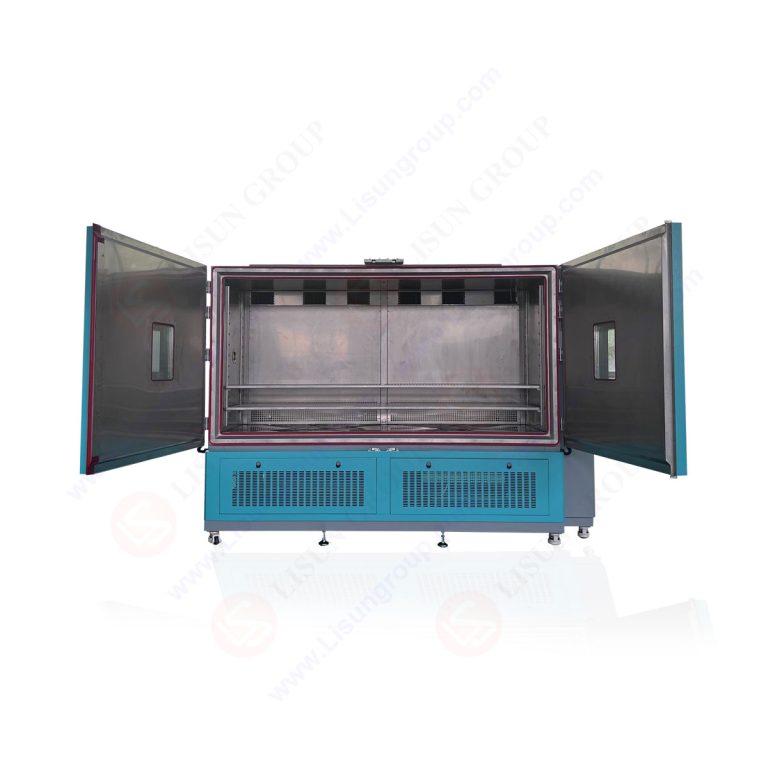
LISUN’s instrument supports simultaneous connection of up to three independently controlled temperature and humidity chambers, each capable of maintaining distinct environmental conditions. A typical test matrix might include Chamber 1 at 55°C/85% RH (standard LM-80 condition), Chamber 2 at 85°C/85% RH (accelerated IEC 60068 damp heat), and Chamber 3 at 110°C/15% RH (dry heat for activation energy determination). The central control software synchronizes photometric measurements across chambers, ensuring that all data points share identical temporal reference frames. This configuration reduces total test time by 50% compared to sequential single-chamber testing, significantly accelerating product qualification timelines.
5.2 Customizable Hardware Configurations for Diverse LED Package Sizes
LED packages range from 2mm × 2mm chip-scale packages (CSP) for mobile devices to 10mm × 10mm ceramic packages for high-power outdoor lighting. LISUN’s instrument accommodates this diversity through interchangeable test boards with spring-loaded contacts, thermal interface material (TIM) mounting plates, and integrated temperature sensors (Type-K thermocouples) placed within 1mm of the LED junction. The system supports multiple test board sizes (up to 300mm × 400mm), each capable of holding 20-40 individual LED packages or modules. For LED package testing: temperature & humidity reliability per IEC 60068, this configurability ensures that thermal resistance pathways accurately represent end-use conditions without introducing artificial heat sinking or insulation artifacts.
6.1 Lumen Maintenance Curves and L70/L50 Determination
The software generates normalized lumen maintenance plots (relative flux versus time) for each test condition, applying TM-21 linear regression on logarithmically transformed data—a requirement of the Arrhenius Model for temperature-dependent degradation. L70 (time to 70% of initial lumen output) and L50 (time to 50%) are calculated with 90% lower confidence bounds, providing guaranteed minimum lifetimes per industry best practices. For IEC 60068 damp heat testing (85°C/85% RH), typical L70 values for automotive-grade LED packages range from 5,000 to 15,000 hours under accelerated conditions, corresponding to 25,000-75,000 hours at use-case temperature (55°C/50% RH) after Arrhenius acceleration.
6.2 Chromaticity Shift and Color Consistency Monitoring
Beyond lumen maintenance, IEC 60068 temperature and humidity stress induces phosphor degradation and silicone encapsulant yellowing, manifesting as chromaticity shift (Δu’v’ units). LISUN’s instrument integrates spectroradiometric measurement (360-830nm wavelength range) at each data point, tracking correlated color temperature (CCT) drift and Duv deviation. TM-21 extrapolation applies to color metrics as well, with industry standards typically requiring Δu’v’ < 0.006 over lifetime for architectural lighting applications. The automated reporting system generates compliance certificates showing pass/fail status against both photometric and colorimetric criteria, directly satisfying third-party testing laboratory documentation requirements.
7.1 Test Plan Design Optimization
Effective LED package testing: temperature & humidity reliability per IEC 60068 requires careful test plan design balancing statistical significance, cost, and timeline. Recommended minimum sample sizes per LM-80 include 20 units per temperature, with 5 units serving as controls stored at ambient conditions (25°C/30% RH). The LISUN system’s support for up to 20 channels per chamber per the LEDLM-80PL means engineers can test two temperature conditions simultaneously, completing the 6000-hour baseline in 250 days with measurements every 1000 hours. For critical applications (e.g., automotive headlamps requiring 60,000-hour lifetime), additional test points at 10,000 or 12,000 hours may be necessary, requiring the system’s extended test duration capability (no upper limit).
7.2 Compliance Reporting and Third-Party Accreditation
LISUN’s instrument generates detailed test reports compatible with IEC 60068, IES LM-80, and TM-21 documentation standards, including raw data files in CSV format, Arrhenius plots with confidence intervals, and pass/fail designations against predefined thresholds. The software supports digital signatures for audit traceability, meeting ISO 17025 accreditation requirements for third-party laboratories. For manufacturers seeking Energy Star or DLC (DesignLights Consortium) certification, the integrated reporting directly supplies the lumen maintenance test data required for lifetime claim submission, reducing documentation preparation time by up to 60%.
This article has established that LED package testing: temperature & humidity reliability per IEC 60068 demands a systematic integration of photometric standards (IES LM-80, LM-84, LM-79-19), lifetime extrapolation protocols (TM-21, TM-28), and environmental stress testing methodologies. LISUN’s LED Optical Aging Test Instrument, with its dual-system architecture (LEDLM-80PL and LEDLM-84PL), provides the technical infrastructure necessary for comprehensive reliability validation. The Arrhenius Model-based software, support for up to three connected temperature chambers, and customizable hardware configurations enable engineers to execute accelerated aging tests meeting the 6000-hour minimum duration while accurately predicting L70/L50 lifetimes under use-case conditions. By correlating IEC 60068 environmental profiles with LED-specific degradation mechanisms, testing laboratories and manufacturers can reduce product qualification cycles, minimize warranty risks, and ensure compliance with international regulatory frameworks. The instrument’s automated data analysis and reporting capabilities further streamline the path to third-party accreditation, making it an essential tool for organizations committed to delivering reliable, long-life LED products to the global marketplace.
Q1: How does LISUN’s instrument ensure compliance with IEC 60068’s requirement for temperature and humidity uniformity within the chamber?
A: LISUN integrates directly with programmable temperature and humidity chambers that meet IEC 60068-3-5 temperature uniformity specifications (±2°C across the test volume) and IEC 60068-3-6 humidity uniformity (±5% RH). The instrument’s software logs chamber sensor data (typically 8-12 Type-K thermocouples and capacitive humidity sensors) every minute, verifying that all measurement points remain within tolerance. Additionally, the LED mounting boards incorporate local temperature sensors within 1mm of the LED junction, ensuring that the actual device temperature—accounting for self-heating—matches the specified test condition. Any deviation exceeding ±1°C or ±3% RH triggers an alarm and test pause, preventing invalid data accumulation.
Q2: Can the LEDLM-80PL system accommodate both standard LM-80 testing and custom IEC 60068 humidity profiles?
A: Yes, the LEDLM-80PL supports fully programmable test profiles beyond standard LM-80 protocols. Users can define custom temperature and humidity sequences per IEC 60068-2-78 (steady-state damp heat), IEC 60068-2-30 (cyclic damp heat with temperature variation), or IEC 60068-2-14 (thermal shock). The system’s control software allows up to 256 steps per profile, with each step configurable for duration (1 minute to 1000 hours), temperature setpoint (-40°C to +150°C), and relative humidity (10% to 98% RH). For automotive compliance, the AEC-Q101 standard profile (85°C/85% RH with 1000-hour duration) is pre-programmed, and photometric measurements automatically synchronize with chamber reset periods to avoid stress interruption artifacts.
Q3: What is the recommended procedure for calibrating the integrating sphere when transitioning between LM-80 and LM-84 testing?
A: Calibration procedures differ based on the integrating sphere diameter. For the LEDLM-80PL (0.3-0.5m spheres), calibration uses auxiliary lamps traceable to NIST standards per CIE 084, with spectral correction factors applied for LED test sources. The LEDLM-84PL (1.0-2.0m spheres) requires a four-point spatial calibration using a standard lamp positioned at multiple locations within the sphere (center, 30° off-axis, 60° off-axis, and near the sphere wall). Both systems include an automated self-calibration function that runs every 24 hours during extended tests, compensating for sphere coating degradation (typically <1% per 1000 hours). Annual recalibration by an ISO 17025 accredited laboratory is recommended, with system software providing calibration reminder notifications and history logging.
Q4: How does the Arrhenius Model software handle activation energy variation across different LED package technologies?
A: The software incorporates a library of activation energy values for common LED package types—GaN-on-sapphire (0.4-0.5 eV), GaN-on-SiC (0.5-0.6 eV), and phosphor-converted white LEDs (0.3-0.7 eV for phosphor degradation). Engineers can select predefined values based on package construction or input experimentally determined Ea from isothermal aging tests at 55°C, 85°C, and 110°C. The software performs regression analysis on the 3-temperature dataset to calculate the actual activation energy with 95% confidence intervals. For humidity-enhanced testing, the Peck exponent n is similarly determined from dual-humidity tests (e.g., 85% RH and 50% RH at constant temperature). This dual-parameter approach ensures TM-21 extrapolation accuracy within ±15% of actual lifetimes, validated through comparison with 10,000-hour real-time aging data.
Q5: What is the maximum test duration and data storage capacity of the LISUN LED Optical Aging Test Instrument?
A: The system supports indefinite test durations with no hard-coded maximum, limited only by chamber reliability and sample availability. Data storage capacity depends on the configured options: the base system stores 2GB of on-device memory (approximately 500,000 measurement points including photometric, electrical, and environmental parameters), expandable to 16GB via external USB or network-attached storage. For a typical test running 6000 hours at 10-minute intervals (36,000 measurement points per channel), the storage supports concurrent testing of 40 channels across three chambers. Data is automatically backed up to an external server or cloud storage every 24 hours, with historical data compression reducing file sizes by 60% while maintaining full resolution for subsequent analysis.