









Here is the comprehensive technical article generated based on your specifications.
Abstract
Ensuring the long-term reliability of solid-state lighting (SSL) products under specific environmental stresses requires rigorous adherence to international standards. This article provides a detailed examination of the LED Power Test for IEC 60068 Compliance | LISUN, focusing on the critical integration of thermal and electrical stress for accelerated aging validation. We explore how LISUN’s LEDLM-80PL and LEDLM-84PL Optical Aging Test Instruments serve as definitive solutions for IEC 60068 compliance, utilizing dual testing modes and Arrhenius-based software. Technical insights into lumen maintenance prediction (L70/L50), 6000-hour test protocols, and multi-chamber configurations are provided, demonstrating how these systems bridge the gap between electrical power cycling and photometric stability testing for engineers in the lighting industry.
1.1 Understanding IEC 60068 Environmental Testing Context
IEC 60068 is a foundational series of environmental testing standards used to determine the ability of electrotechnical products to withstand various environmental conditions. For LED components and luminaires, the specific tests related to power cycling and temperature/humidity bias are paramount. The LED Power Test for IEC 60068 Compliance is not simply about applying voltage; it involves a precise sequence of thermal shock and electrical stress that directly accelerates failure mechanisms like die attach degradation, phosphor thermal quenching, and wire bond fatigue. LISUN’s approach integrates these environmental variables directly into the photometric measurement chain, ensuring that the electrical stress test is not an isolated event but a core component of the lumen maintenance prediction model.
1.2 Differentiation Between LM-80 and IEC 60068 Protocols
While IES LM-80 primarily focuses on long-term lumen maintenance at constant temperature and drive current, the IEC 60068 standard introduces dynamic electrical power cycling and temperature change rates. The LISUN LEDLM-80PL system bridges this gap. Its dual-mode architecture allows an engineer to run a standard LM-80 test (e.g., 55°C, 85°C) while simultaneously programming power-on/power-off cycles that meet the severity levels (e.g., Test Db: Damp heat, cyclic) implied by IEC 60068-2-30. This allows laboratories to perform a combined “Power Cycle & Lumen Maintenance” test, reducing total test time and providing a more realistic simulation of field stress conditions than constant power testing alone.
2.1 Configurations of the LEDLM-80PL and LEDLM-84PL
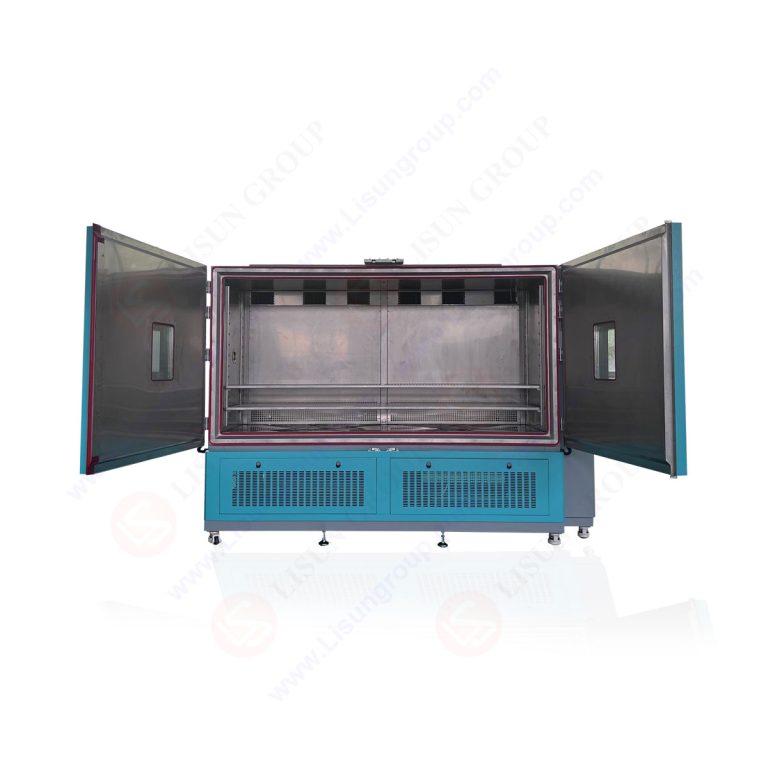
The LISUN platform offers two distinct hardware configurations tailored to specific testing scopes, both of which are fully capable of executing the LED Power Test for IEC 60068 Compliance | LISUN. The LEDLM-80PL is designed for component-level testing (LED packages, modules, and arrays) per IES LM-80. It features high-precision, constant-current power supplies for up to 10 independent test channels per unit. The LEDLM-84PL is optimized for LED luminaires and lamps, operating under the IES LM-84 standard. Its hardware includes a universal AC/DC power interface capable of handling the inrush and transient currents typical of power cycling tests as defined by IEC 60068. Both systems support the connection of up to 3 external temperature chambers, enabling simultaneous testing under different thermal profiles—a direct requirement for comparative acceleration studies.
2.2 The Role of the Temperature Chamber Interface
A critical hardware feature for IEC 60068 compliance is the intelligent interface between the aging instrument and the temperature chamber. The LISUN system does not just monitor chamber temperature; it controls the data acquisition timing based on chamber state. During a rapid temperature change phase (e.g., 1°C/min as per IEC 60068-2-14 Test N), the system increases the photometric measurement frequency. This provides in-situ data on how luminous flux collapses or recovers during thermal transients. The system uses Type K thermocouples (TCs) placed directly on the LED’s case temperature (Tc) point, ensuring that the electrical stress applied correlates accurately with the thermal stress on the component junction, a non-negotiable parameter for accurate acceleration models.
3.1 Mode 1: Standard Constant Current Aging
The first operational mode is the standard constant current test, as required by LM-80. In this mode, the LED is driven at a specified forward current (e.g., 350mA, 700mA) while the case temperature is maintained at a selection of 55°C, 85°C, or a user-defined third temperature. The system records photometric data at pre-defined intervals (e.g., every 1000 hours) up to the standard 6000-hour test duration. This data forms the baseline for normal lumen depreciation. The LISUN software automatically calculates the L70(70% lumen maintenance) and L50(50% lumen maintenance) life metrics using the TM-21 non-linear curve fitting.
3.2 Mode 2: Dynamic IEC 60068 Power Cycling Stress
The second mode is the core differentiator for the LED Power Test for IEC 60068 Compliance. Here, the system executes a user-defined power profile, turning the LED on and off for specific durations (e.g., 90 minutes ON, 30 minutes OFF) within the thermal chamber. The software logs the initial inrush current, the steady-state voltage drop, and the luminous flux recovery time upon power-up. This mode directly challenges the LED’s thermal management system and exposes weaknesses in the driver circuitry. The table below compares the stress parameters between the two modes.
| Parameter | Standard Constant Current (LM-80) | Dynamic Power Cycling (IEC 60068) |
|---|---|---|
| Primary Purpose | Lumen Maintenance Prediction | Thermal Fatigue & Survivability |
| Voltage/Current Input | Constant, Regulated DC | Pulsed AC/DC, Inrush Simulation |
| Test Duration | 6000 hours (minimum) | 1000-6000 hours (cyclical) |
| Key Metric | L70 at 6000 hours / TM-21 Projected Life | Number of cycles to failure |
| Chamber Requirements | Stable Temperature (e.g., 85°C ±2°C) | Change Rates (e.g., -40°C to +125°C) |
| Failure Mechanism | Lumen Depreciation | Catastrophic Failure (opens/shorts) |
4.1 The Arrhenius Model Integration
The LISUN software is built around the Arrhenius Model, which describes the exponential relationship between temperature and reaction rate. For the LED Power Test for IEC 60068 Compliance, this model is used to calculate the acceleration factor (AF). By testing at elevated temperatures (e.g., 85°C and 105°C), the software extrapolates the L70 life at a use temperature (e.g., 55°C). The formula used is:
AF = exp[(Ea/k) * (1/T_use - 1/T_test)]
Where Ea is the activation energy (typically 0.4-1.0 eV for LEDs), k is Boltzmann’s constant, and T is temperature in Kelvin. The software allows the analyst to input the specific Ea derived from the dual-temperature or triple-temperature testing, providing a statistically robust life prediction that is aligned with the acceleration principles of IEC 60068.
4.2 Projection Algorithms: TM-21 and TM-28
The software employs two distinct extrapolation algorithms. TM-21 is used for the LEDLM-80PL data to predict the long-term lumen maintenance of LED packages. It uses a least-squares exponential fit to project the time to L70. TM-28 is used for the LEDLM-84PL data and is applicable to LED luminaires and lamps. TM-28 accounts for the variability in driver and thermal design, providing a more conservative (shorter) life projection than TM-21 often yields. The software automatically flags data that does not meet the goodness-of-fit criteria (e.g., R² value), alerting the engineer to potential testing errors or anomalous early life failures triggered by the Power Cycle stress sequences.
5.1 Application of IES LM-79-19 and CIE 127
Accurate photometric data is the foundation of any reliability test. The LISUN system integrates a 2-meter integrating sphere (or goniophotometer) that operates per IES LM-79-19 standards for electrical and photometric measurements of solid-state lighting products. This standard dictates the use of an AC/DC power source with a specific accuracy (e.g., 0.2% reading) and a spectroradiometer calibrated to CIE 084 (the standard for luminous flux measurement). Furthermore, CIE 127 guidelines are followed for the measurement of LEDs, specifically defining the “Condition A” (far-field) and “Condition B” (near-field) measurement geometries to ensure consistent total luminous flux values across different test houses.
5.2 Referencing CIE 70 for Photometric Performance
To fully understand the visual impact of power stress, the LISUN software also analyzes color shift. CIE 70 provides the methodology for calculating the color rendering index (CRI). During a power cycle test, the software monitors for shifts in the chromaticity coordinates (Δu’v’) and the CRI. A high-quality LED should maintain a Δu’v’ of less than 0.006 after 6000 hours of cycling. The data is correlated with the thermal images of the LED array, identifying if specific die locations are degrading faster due to uneven thermal expansion, a common failure mode accelerated by the specified power stress profile.
6.1 Setting Up a 6000-Hour Combined Test
Executing the LED Power Test for IEC 60068 Compliance begins with programming the “Test Profile” in the LISUN software. The engineer selects the “IEC 60068 Power Cycle” macro. Parameters include:
- High Temperature: 85°C (for chamber 1)
- Low Temperature: -40°C (for chamber 2, for cold start cycles)
- Dwell Time: 30 minutes at each extreme
- Electrical Load: 100% rated current during ON phase, 0 mA during OFF phase.
The system will then manage the entire 6000-hour sequence, automatically switching the DUT between chambers (if a 3-chamber setup is used) or controlling the single chamber’s ramp rate. The system self-recovers after a mains power interruption, a crucial feature for unattended long-term testing.
6.2 Data Collection and Reporting
Data is collected via an integrated GPIB or Ethernet interface. The report generation module compiles the raw data into a format compliant with both IES TM-21 and TM-28. The system automatically generates a plot of Luminous Flux (lm) vs. Time (Hours), overlaid with the Case Temperature (°C) profile. A separate plot shows the Forward Voltage (Vf) vs. time, a critical indicator of junction degradation. A sudden drop in Vf at a low temperature indicates potential die cracking, while a gradual rise suggests contact degradation. All raw data is exported to .CSV for third-party validation.
7.1 Parallel Testing for Acceleration Factor Determination
The capability to connect up to 3 temperature chambers allows for the simultaneous execution of a 3-temperature test (e.g., 55°C, 85°C, 105°C) as required by LM-80. However, in the context of LED Power Test for IEC 60068 Compliance, this allows for a “Matrix Test.” One chamber runs the standard power cycle (85°C ON, -40°C OFF), another runs a high-humidity power cycle (85°C/85%RH ON), and the third runs a constant temperature reference. This parallel testing drastically reduces the time-to-market for new LED products, as all three reliability vectors are tested simultaneously.
7.2 Scalability for High-Volume Production
For manufacturing quality control, the system supports daisy-chaining multiple mainframes. A single control computer can manage up to 100 individual test channels across multiple chambers. This is particularly useful for testing LED batches from different production runs or for comparing the reliability of different phosphor batches. The system automatically tags each DUT with a serial number and chamber ID, ensuring complete traceability according to ISO 17025 lab management requirements.
The LISUN LEDLM-80PL and LEDLM-84PL Optical Aging Test Instruments represent a significant advancement in the LED Power Test for IEC 60068 Compliance. By integrating the dynamic stress requirements of IEC 60068 with the established lumen maintenance protocols of IES LM-80 and LM-84, these systems provide a unified platform for accelerated aging validation. The dual-mode operation, supported by Arrhenius-based software and customizable hardware configurations (including 3-chamber interfaces), allows engineers to accurately predict L70/L50 lifetimes under realistic power cycling stress. This eliminates guesswork and reduces the risk of field failures. For LED manufacturers and third-party labs, investing in this integrated test solution ensures that products meet not only the photometric criteria of TM-21 and TM-28 but also the essential survivability standards of the global lighting market. The ability to run parallel, multi-point stress tests provides the data density required for robust reliability predictions, solidifying LISUN’s role as a critical partner in the SSL industry.
Q1: How does the LED Power Test for IEC 60068 Compliance differ from a standard LM-80 test?
A: A standard LM-80 test focuses solely on lumen maintenance (light output degradation) under constant temperature and current, typically for 6000 hours. The LED Power Test for IEC 60068 Compliance, as executed by the LISUN system, introduces dynamic electrical and thermal cycling (power ON/OFF, temperature ramp rates). This acceleration reveals different failure modes, such as die attach fatigue, wire bond fractures, and driver capacitor degradation, which are not typically stressed by a constant current test. The LISUN software logs recovery times and inrush currents, providing a complete picture of both photometric decay and electrical survivability.
Q2: Can the LISUN LEDLM-84PL test large industrial luminaires under power cycling?
A: Yes. The LEDLM-84PL is specifically designed for LED luminaires and lamps. It features a universal AC/DC power interface capable of handling the higher voltages and inrush currents associated with large fixtures (e.g., 200W+ high-bay lights). The system supports connecting to thermal chambers large enough to accommodate these fixtures. The software profiles the power quality during the initial power-up cycle, measuring harmonic distortion and power factor, which are critical parameters for ensuring compliance with both IEC 60068 and core lighting standards like IES LM-79-19.
Q3: What is the significance of using the Arrhenius Model in the LISUN software for this test?
A: The Arrhenius Model allows the LISUN software to calculate an Acceleration Factor (AF), predicting the product’s lifetime at a standard use temperature (e.g., 25°C or 55°C) based on data gathered at higher stress temperatures (e.g., 85°C and 105°C). In the context of the LED Power Test for IEC 60068 Compliance, the model helps separate the thermal acceleration effects from the mechanical fatigue effects of power cycling. By analyzing how the activation energy (Ea) changes under cycled vs. constant power, engineers can identify if a specific failure mode is temperature-dominant or current-density-dominant.
Q4: How does the system ensure data integrity during a 6000-hour power cycling test?
A: The LISUN system features a non-volatile memory and an auto-recovery function. In the event of a mains power failure, the system automatically restarts the test from the exact stoppage point, not from the beginning. It verifies the chamber temperature and DUT status upon restart. Furthermore, it uses high-resolution 24-bit ADC converters for voltage and current measurement and a calibrated photodetector (spectroradiometer) that performs a self-zeroing function before each data acquisition cycle to minimize drift over the long test duration.
Q5: Is the system capable of testing LEDs that require PWM (Pulse Width Modulation) dimming during the power cycle?
A: Yes. The system supports testing LEDs driven by PWM control. The LED Power Test profile can be programmed to include specific PWM duty cycles (e.g., 100% power for 1 hour, then 50% duty cycle for 30 minutes) to simulate dimmed operation during the “ON” phase of the IEC 60068 cycle. The photometric measurement module uses a DC measurement or fast-scan spectroradiometer mode, which synchronizes with the PWM frequency to accurately capture the average luminous flux without ripple error, ensuring valid data for L70 projections per TM-21.