









This comprehensive technical article provides an in-depth LED Reliability Test Standards: IEC 60068 Compliance Guide for Engineers, focusing on the critical intersection of environmental stress testing and lumen maintenance validation. As LED technology dominates modern lighting applications, engineers must navigate complex international standards including IEC 60068, IES LM-80, and TM-21 to ensure product reliability and longevity. This guide examines the Arrhenius Model-based accelerated aging methodologies, dual testing configurations (LM-80PL for LM-80/TM-21 and LM-84PL for LM-84/TM-28), and customizable hardware solutions from LISUN’s LED Optical Aging Test Instrument. Key technical insights include 6000-hour test duration protocols, L70/L50 lifetime metrics, and integration with up to three temperature chambers for multi-condition testing. Practical applications span LED manufacturing, third-party testing laboratories, and automotive electronics component validation.
1.1 The Evolution of LED Reliability Testing Protocols
The rapid adoption of solid-state lighting has necessitated robust reliability testing frameworks that bridge environmental stress testing and photometric performance validation. IEC 60068 provides foundational environmental testing procedures, while specialized standards like IES LM-80 (Lumen Maintenance of LED Light Sources) and IES LM-84 (Lumen Maintenance of LED Lamps and Luminaires) address LED-specific degradation mechanisms. Engineers must understand how these standards interrelate to design comprehensive qualification programs. The LED Reliability Test Standards: IEC 60068 Compliance Guide for Engineers serves as a critical reference for aligning accelerated aging tests with real-world performance expectations.
1.2 Core Compliance Requirements for LED Manufacturers
LED manufacturers face stringent compliance requirements spanning multiple regulatory bodies. IEC 60068-2-1 (Cold) and IEC 60068-2-2 (Dry Heat) establish temperature cycling and steady-state heat testing parameters, while IEC 60068-2-78 (Damp Heat) addresses humidity-induced degradation. These environmental tests complement photometric standards like CIE 127 (Measurement of LEDs) and IES LM-79-19 (Electrical and Photometric Measurements), which define measurement protocols for luminous flux, color rendering, and chromaticity coordinates. Integrating these standards ensures that LED products meet both reliability and performance benchmarks.
2.1 Dual System Variants for Standard-Specific Testing
LISUN’s LED Optical Aging Test Instrument offers two specialized system configurations tailored to distinct testing standards. The LEDLM-80PL variant is optimized for IES LM-80 and TM-21 compliance, supporting up to 6000-hour test durations with continuous photometric monitoring. The LEDLM-84PL variant addresses IES LM-84 and TM-28 requirements, incorporating modifications for lamp and luminaire testing. Both systems feature high-precision integrating sphere assemblies (500mm or 1000mm diameter options) for accurate total luminous flux measurements, with spectral resolution of 1 nm and wavelength range spanning 380–780 nm.
2.2 Hardware Customization and Temperature Chamber Integration
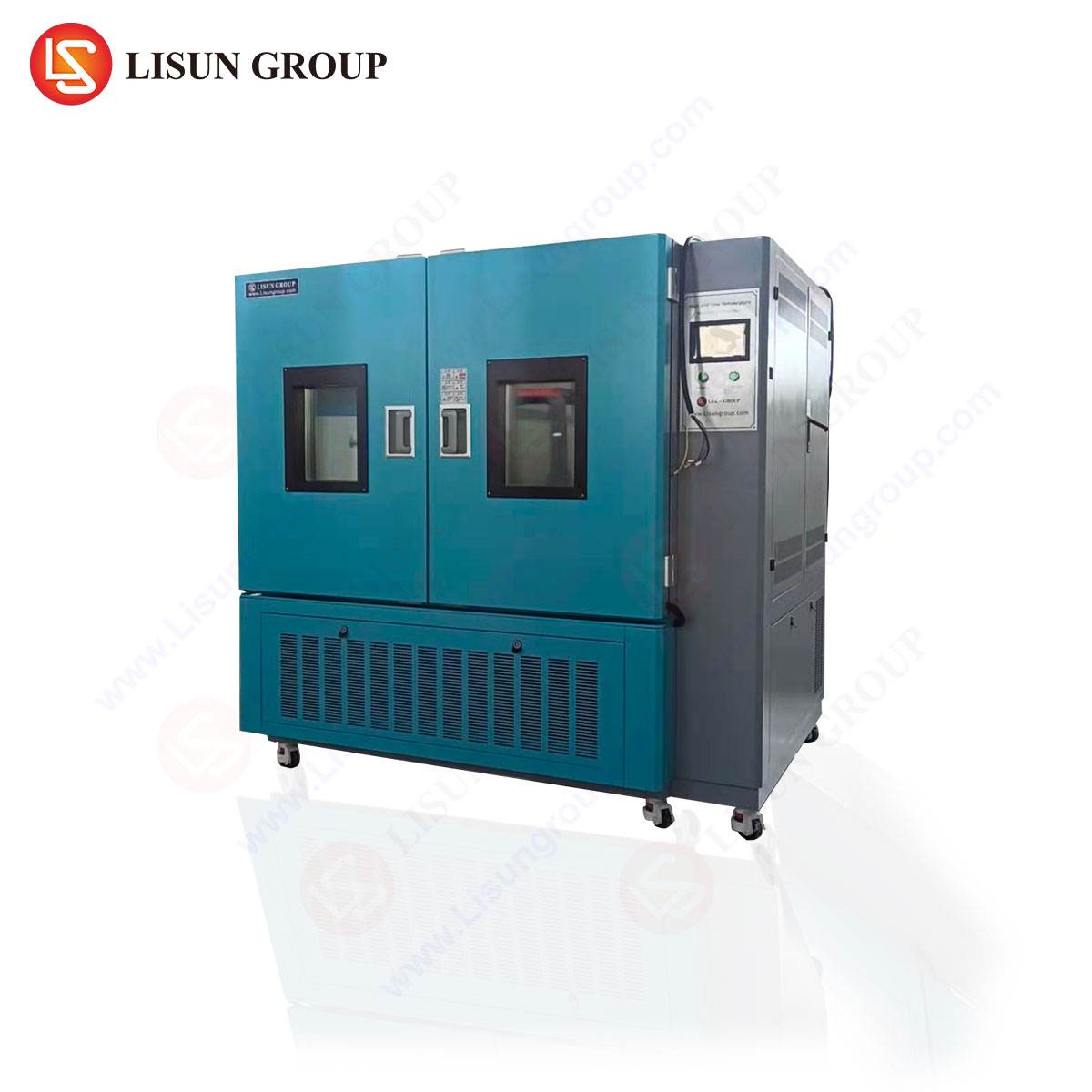
The instrument architecture supports extensive hardware customization to meet diverse testing environments. Engineers can configure up to three connected temperature chambers, enabling simultaneous testing at multiple temperature setpoints (typically 25°C, 55°C, and 85°C) as specified by IES LM-80 protocols. The system accommodates both constant current (0–3500 mA) and constant voltage (0–60 V) drive modes, with ±0.5% current accuracy. Thermal management includes forced air circulation and PID-controlled heating elements, maintaining chamber temperature stability within ±1°C across 6000-hour continuous operation cycles.
3.1 Mathematical Foundations of Accelerated Life Testing
The Arrhenius Model forms the theoretical backbone of accelerated aging analysis within LISUN’s software suite. This model relates degradation rate to temperature through the equation: ( text{Degradation Rate} = A cdot e^{-E_a/(k cdot T)} ), where (E_a) represents activation energy (typically 0.3–0.7 eV for LED systems), (k) is Boltzmann’s constant, and (T) is absolute temperature. The software automatically calculates acceleration factors based on user-defined temperature profiles, enabling engineers to predict lumen maintenance curves at use temperatures (e.g., 25°C–50°C) from elevated stress conditions (55°C–85°C). This methodology directly supports TM-21 extrapolation protocols for L70 and L50 lifetime projections.
3.2 Graphical Analysis and Lifetime Projection Capabilities
The comprehensive software package provides real-time graphical monitoring of luminous flux depreciation, chromaticity shift (Δu’v’), and color temperature drift. Engineers can visualize degradation trajectories across multiple temperature conditions simultaneously, with automatic curve fitting to exponential or polynomial models. The TM-21 extrapolation tool calculates L70 (time to 70% lumen maintenance) and L50 (time to 50% lumen maintenance) values with 6,000-hour minimum test data, providing both raw projections and confidence intervals. Regression analysis capabilities identify outlier data points and apply statistical weighting for robust lifetime predictions.
4.1 Photometric Mode: Integrating Sphere Configuration
The photometric testing mode employs a 500mm or 1000mm diameter integrating sphere with barium sulfate (BaSO₄) coating for diffuse spectral reflection. This configuration measures total luminous flux (lm), luminous efficacy (lm/W), correlated color temperature (CCT in K), color rendering index (Ra), and chromaticity coordinates (x, y) according to CIE 1931 and CIE 1976 standards. The spectroradiometer achieves ±0.3% measurement accuracy for luminous flux and ±0.0015 for chromaticity coordinates. This mode is essential for IES LM-79-19 compliance testing, providing as-measured performance data at each aging interval.
4.2 Reliability Mode: Constant Current Aging with In-Situ Monitoring
The reliability testing mode focuses on accelerated aging under controlled electrical and thermal stress. LEDs are driven at rated current (typically 350 mA or 700 mA) while maintaining constant junction temperature through PID-regulated thermal management. In-situ photometric measurements occur at user-defined intervals (e.g., every 1,000 hours) without removing samples from temperature chambers, minimizing measurement uncertainty from handling and repositioning. This mode automatically complies with IES LM-80 and IES LM-84 requirements for continuous monitoring, generating data sets suitable for TM-21 and TM-28 statistical analysis.
| Parameter | Photometric Mode (LEDLM-80PL) | Reliability Mode (LEDLM-84PL) |
|---|---|---|
| Primary Standard | IES LM-79-19, CIE 127 | IES LM-80, IES LM-84 |
| Measurement Scope | Total luminous flux, CCT, CRI, chromaticity | Lumen maintenance, Δu’v’, lifetime projections |
| Test Duration | Point measurement (1–5 minutes) | 6,000+ hours continuous aging |
| Temperature Control | Ambient (25°C) | 25°C–85°C with up to 3 chambers |
| Key Output Metrics | Luminous efficacy (lm/W), spectral distribution | L70, L50, TM-21 extrapolation |
| Sensor Technology | Spectroradiometer + integrating sphere | Photodetector + temperature sensors |
5.1 Temperature Cycling and Thermal Shock Protocols
IEC 60068-2-14 (Temperature Cycling) and IEC 60068-2-14 (Thermal Shock) specify test parameters for evaluating LED reliability under rapid temperature transitions. LISUN’s instrument supports programmable temperature profiles with ramp rates up to 15°C/min and dwell times configurable from 30 minutes to 24 hours. Engineers can simulate automotive applications (e.g., -40°C to +125°C cycles per AEC-Q102) or general lighting (0°C to +100°C per IEC 60068-2-14 Nb). The system logs photometric changes at each temperature extreme, identifying failure mechanisms such as solder joint fatigue, encapsulant cracking, or phosphor thermal degradation.
5.2 Humidity and Moisture Resistance Testing
IEC 60068-2-78 (Damp Heat, Steady State) and IEC 60068-2-30 (Damp Heat, Cyclic) address moisture-induced degradation pathways in LED packages and modules. LISUN’s temperature chambers integrate humidity control systems capable of maintaining 10%–98% relative humidity (RH) with ±3% accuracy. Testing at 40°C/93% RH for 56 days (per IES LM-80 recommendations) or 85°C/85% RH for 1,000 hours (per JEDEC JESD22-A101) provides data on moisture ingress effects on phosphor conversion efficiency and package delamination. The software correlates humidity exposure with chromaticity shift and luminous flux depreciation, enabling robust qualification decisions.
6.1 IES LM-80 and TM-21 Alignment
The LED Reliability Test Standards: IEC 60068 Compliance Guide for Engineers emphasizes alignment between environmental testing and photometric standards. IES LM-80-15 requires 6,000 hours of testing at three temperatures (e.g., 55°C, 85°C, and a user-defined Ts), with measurement intervals every 1,000 hours. LISUN’s LEDLM-80PL system automatically generates data tables compatible with TM-21-19 statistical analysis software, providing L70 and L50 projections with 95% confidence intervals. The software exports data in .csv and .xml formats for third-party validation, ensuring seamless integration with certification bodies like UL, TÜV, and CSA.
6.2 IES LM-84 and TM-28 for Lamp and Luminaire Testing
For complete LED lamp and luminaire qualification, IES LM-84-17 defines test protocols focusing on thermal management and driver interactions. LISUN’s LEDLM-84PL variant incorporates modified sample holders and drive circuit monitoring to capture driver degradation effects. TM-28-19 extrapolation methods account for both LED package and electronic driver aging, providing system-level lifetime predictions. The instrument supports 220–240 VAC primary power input (50/60 Hz) for international compliance, with optional DC power supply modules for automotive and specialty applications.
7.1 LED Manufacturing Quality Control Integration
In production environments, LISUN’s LED Optical Aging Test Instrument serves as a critical quality assurance tool. Engineers can implement lot-sample testing protocols where representative samples from each production batch undergo 1,000-hour accelerated aging at 85°C/85% RH, with pass/fail criteria based on luminous flux maintenance (≥95% at 1,000h) and chromaticity shift (Δu’v’ ≤ 0.003). The system’s batch management software tracks serial numbers, test conditions, and results for full traceability per ISO 9001 and IATF 16949 requirements. Automated alerts notify engineers when degradation exceeds predefined thresholds, enabling rapid corrective actions.
7.2 Third-Party Testing Laboratory Workflows
Third-party testing laboratories benefit from the instrument’s multi-chamber architecture and standard-specific software modules. Operators can configure simultaneous tests for multiple clients, each with unique temperature profiles and measurement frequencies. The system supports UL 8750 (LED Equipment) and ENERGY STAR qualification testing, generating reports formatted for submission to certification agencies. Calibration procedures comply with NIST-traceable standards, with annual recalibration intervals ensuring measurement accuracy over extended operational periods. The software’s audit trail functionality logs all parameter changes and measurement events, meeting ISO 17025 laboratory accreditation requirements.
The LED Reliability Test Standards: IEC 60068 Compliance Guide for Engineers underscores the critical importance of integrating environmental stress testing with photometric performance validation for modern LED products. LISUN’s LED Optical Aging Test Instrument provides engineers with a comprehensive solution spanning IES LM-80, LM-84, TM-21, and TM-28 standards, while maintaining full compliance with IEC 60068 environmental test protocols. The dual system variants (LEDLM-80PL and LEDLM-84PL) offer specialized configurations for different testing scopes, from LED packages to complete luminaires. The Arrhenius Model-based software enables accelerated aging analysis and lifetime projection, with support for up to three simultaneous temperature chambers and 6,000-hour test durations. Key technical capabilities include high-accuracy photometric measurements (luminous flux, CCT, chromaticity), customizable drive modes (constant current or voltage), and robust data export for certification submissions. By adopting these testing methodologies, engineers can ensure product reliability, accelerate time-to-market, and maintain compliance with evolving international standards. LISUN’s solutions represent a critical investment for quality assurance and regulatory compliance in the competitive LED lighting industry.
Q1: What are the minimum test duration requirements for TM-21 lifetime projections using LISUN’s LED Optical Aging Test Instrument?
A: According to IES TM-21-19 standards, minimum test durations for L70 and L50 lifetime projections are 6,000 hours for lumen maintenance data collected at three temperature conditions. LISUN’s software automatically validates compliance with these requirements, rejecting data sets shorter than 6,000 hours for extrapolation. For L70 projections, the extrapolation cannot exceed 6 times the test duration (e.g., 36,000 hours from 6,000 hours of data). For L50 projections, the limit extends to 7.5 times the test duration (45,000 hours). The software provides confidence interval calculations based on test data variability, enabling engineers to assess projection reliability.
Q2: How does LISUN’s instrument handle simultaneous testing at multiple temperatures per IEC 60068 and IES LM-80?
A: LISUN’s LED Optical Aging Test Instrument supports up to three independent temperature chambers, each programmable for specific temperature setpoints (e.g., 55°C, 85°C, and a user-defined Ts). The system manages concurrent tests with separate measurement schedules for each chamber, logging data to individual test files. The software automatically cross-references temperature profiles with IEC 60068-2-2 (Dry Heat) requirements, ensuring ramp rates and dwell times meet standard specifications. Synchronized time-stamping enables direct comparison of degradation rates across temperatures for Arrhenius Model activation energy calculations, facilitating accurate lifetime projections.
Q3: What measurement uncertainties should engineers expect for luminous flux and chromaticity measurements from LISUN’s integrating sphere configuration?
A: LISUN’s integrating sphere systems (500mm or 1000mm diameter) with BaSO₄ coating achieve measurement uncertainties of ±0.3% for total luminous flux (when calibrated against NIST-traceable standard lamps) and ±0.0015 for chromaticity coordinates (x, y) per CIE 127 guidelines. Color rendering index (Ra) measurements have an uncertainty of ±0.5 units for Ra values above 80. These specifications meet or exceed IES LM-79-19 requirements for laboratory-grade photometric testing. Regular calibration intervals of 12 months or 1,000 operating hours maintain these uncertainty levels, with automated calibration reminder functions in the software.
Q4: Can LISUN’s LEDLM-80PL system be upgraded to the LEDLM-84PL variant for lamp and luminaire testing?
A: Yes, LISUN offers field-upgradeable modules that convert LEDLM-80PL systems to LEDLM-84PL configurations. The upgrade includes modified sample holders with heat sink attachments for lamp testing, expanded power conditioning circuits for 220–240 VAC operation, and software license updates enabling TM-28 extrapolation algorithms. The upgrade process requires 2–3 days on-site by LISUN’s technical team, with full recalibration after installation. Engineers should verify chamber dimensions accommodate larger luminaire samples (typically up to 300mm diameter and 500mm length) before proceeding with upgrades.