









LED Temperature Stress Testing for LED Reliability Compliance is a critical methodology for predicting long-term lumen maintenance and ensuring adherence to global lighting standards. This article provides a comprehensive technical analysis of temperature stress testing protocols, focusing on the integration of LISUN’s LEDLM-80PL and LEDLM-84PL Optical Aging Test Instruments. These systems leverage the Arrhenius Model-based software to accelerate aging validation across multiple temperature chambers. Key insights include the correlation between IES LM-80/TM-21 and LM-84/TM-28 standards, 6000-hour test durations, and L70/L50 metric calculations. For LED manufacturing engineers and testing lab technicians, this article delivers actionable guidance on configuring dual testing modes, interpreting extrapolation data, and ensuring compliance with CIE 084 and CIE 127 standards for reliable product certification.
1.1 Thermal Degradation Mechanisms in LEDs
LED reliability hinges on thermal management, as junction temperature directly accelerates lumen depreciation through non-radiative recombination and phosphor degradation. The Arrhenius Model establishes the exponential relationship between temperature and failure rate: ( text{Lifetime} propto e^{E_a/(k_B T)} ), where activation energy ((E_a)) typically ranges from 0.3 to 0.7 eV for phosphor-converted white LEDs. Temperature stress testing quantifies these effects by exposing LED samples to controlled thermal chambers at 55°C, 85°C, and custom setpoints, monitoring luminous flux decay over 6000-hour minimum durations as prescribed by IES LM-80.
1.2 Role of Accelerated Aging in Reliability Prediction
Accelerated aging simulates years of operation within months, enabling prediction of L70 (time to 70% lumen maintenance) and L50 (time to 50% lumen maintenance) metrics. LISUN’s systems apply TM-21 extrapolation algorithms to project lifetime beyond 6000 hours, adhering to statistical confidence intervals. This methodology allows manufacturers to validate design robustness before market release, reducing field failure risks and warranty costs.
2.1 IES LM-80 and TM-21: The Cornerstone of Lumen Maintenance
IES LM-80 specifies measurement methods for lumen maintenance of LED light sources, requiring data collection at three case temperatures (55°C, 85°C, and a custom T₃) over 6000 hours minimum. TM-21 then extrapolates LM-80 data to estimate long-term lumen maintenance, using exponential decay curve fitting. The LISUN LEDLM-80PL is specifically designed for LM-80/TM-21 compliance, supporting up to 3 connected temperature chambers for simultaneous testing of multiple samples.
2.2 IES LM-84 and TM-28: Addressing Integrated LED Lamps
For integrated LED lamps and luminaires, IES LM-84 replaces LM-80’s component-level focus with lamp-level testing. TM-28 provides corresponding extrapolation methods. The LEDLM-84PL variant serves this standard, incorporating larger integrating spheres and adaptive photometric sensors to accommodate complete luminaire geometries while maintaining temperature stress conditions.
2.3 Supplementary Standards: CIE 084, CIE 70, and CIE 127
CIE 084 defines measurement techniques for luminous flux of electric lamps, critical for calibrating integrating sphere systems. CIE 70 addresses absolute methods for total luminous flux measurement, while CIE 127 specifies guidelines for LED photometric measurements, including temperature-controlled environments. These standards ensure that temperature stress testing data remains traceable and reproducible across laboratories.
3.1 Dual System Variants for Standard Compliance
The LISUN LEDLM series offers two distinct configurations tailored to regulatory requirements:
| Feature | LEDLM-80PL | LEDLM-84PL |
|---|---|---|
| Applicable Standards | IES LM-80, TM-21 | IES LM-84, TM-28 |
| Test Object | LED packages, modules, arrays | Integrated LED lamps, luminaires |
| Maximum Temperature Chambers | 3 (expandable) | 3 (expandable) |
| Minimum Test Duration | 6000 hours (LM-80 mandate) | 6000 hours (LM-84 mandate) |
| Lumen Measurement Method | Integrating sphere (0.5-2m) | Integrating sphere (1-3m) |
| Key Metrics | L70, L50, L90 | L70, L50, L90 |
| Software Basis | Arrhenius Model + TM-21 | Arrhenius Model + TM-28 |
Both systems support customizable hardware configurations, including multi-position sample holders and programmable temperature ramps.
3.2 Arrhenius Model-Based Software Integration
The proprietary software implements Arrhenius acceleration factors to normalize data across test temperatures. Users define activation energy values experimentally or from manufacturer datasheets. The software automatically calculates (text{AF} = e^{(E_a/kB)(1/T{text{use}} – 1/T_{text{test}})}) and applies weighted regression for TM-21 extrapolation, outputting projected L70 with 90% confidence bounds.
3.3 Dual Testing Modes: Standard and Accelerated
Standard mode runs continuous 6000-hour tests with periodic flux measurements at 1000-hour intervals. Accelerated mode increases temperature differentials beyond typical LM-80 recommendations (e.g., 105°C) to generate rapid failure data for preliminary screening. Both modes record forward voltage, junction temperature (via TSP or thermal camera), and spectral shifts, critical for comprehensive reliability analysis.
4.1 Temperature Chamber Integration and Control
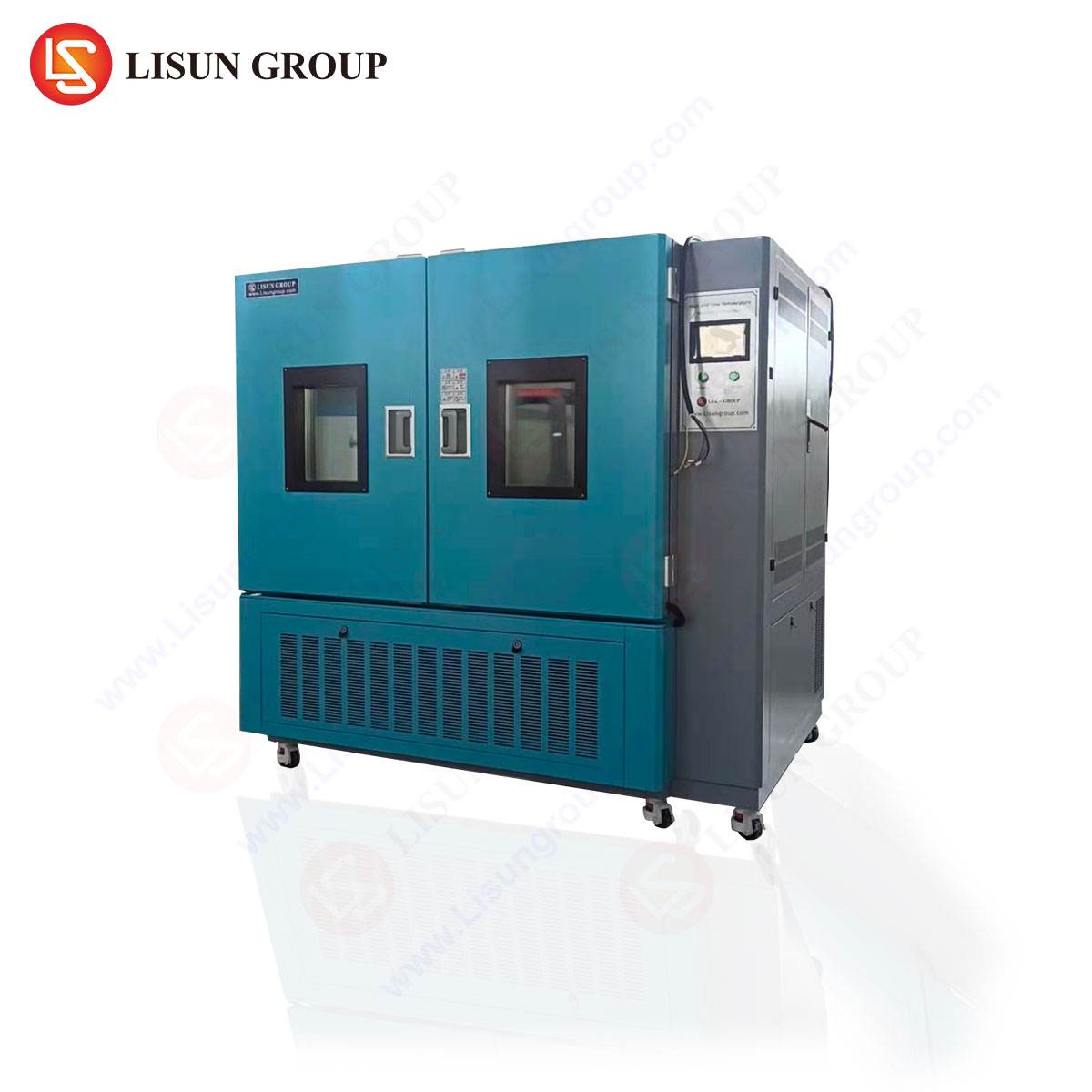
Each temperature chamber supports independent setpoints from 25°C to 150°C, with ±0.5°C accuracy and 15-minute stabilization time. The LEDLM series can control up to 3 chambers simultaneously, enabling parallel testing at 55°C, 85°C, and 105°C as specified by LM-80’s three-temperature requirement. Each chamber houses up to 20 LED samples on thermally isolated boards with individual current drivers (10mA-2A range).
4.2 Integrating Sphere Configuration for Luminous Flux Measurement
Sphere diameters range from 0.5m (for small packages) to 3m (for large luminaires), coated with barium sulfate (BaSO₄) for >95% reflectance. The system uses auxiliary lamp methods per CIE 084 to correct for self-absorption. A fiber-optic spectrometer measures spectral power distribution (SPD) from 380nm to 780nm, enabling chromaticity shift tracking ((Delta u’v’) per IES TM-30).
4.3 Sample Mounting and Electrical Biasing
LEDs mount on MCPCB (Metal Core Printed Circuit Board) holders with thermocouple attachments for direct case temperature monitoring. Constant current or constant voltage modes are selectable, with ripple <0.5% to prevent extraneous thermal stress. The system logs electrical parameters (current, voltage, power) every minute for lifetime correlation analysis.
5.1 Lumen Maintenance Curve Fitting
Raw luminous flux data is normalized to initial values and plotted logarithmically. The TM-21 curve-fitting algorithm applies a two-parameter exponential decay model: (Phi(t) = Phi_0 cdot e^{-alpha t}), where (alpha) is the decay constant derived from least-squares regression. Outliers exceeding 3(sigma) from the fit are flagged for inspection.
5.2 Arrhenius Extrapolation to Use Conditions
The software extrapolates high-temperature data to typical use temperatures (e.g., 25°C or 40°C) using the Arrhenius equation. For example, testing at 85°C with (E_a=0.4) eV yields an acceleration factor of ~10× versus 25°C use, meaning 6000 hours at 85°C equates to ~60,000 hours projected use life. The system automatically computes L70 at multiple use-case temperatures.
5.3 L70/L50 Metric Calculation and Reporting
L70 is calculated as (t_{0.7} = frac{ln(0.7)}{-alpha}), while L50 uses (ln(0.5)). Reports include confidence intervals (90% recommended), root mean square error (RMSE) of the fit, and failure analysis when individual samples deviate from population means. LISUN software generates PDF reports compliant with ENERGY STAR and DesignLights Consortium (DLC) requirements.
6.1 Quality Control in Production Lines
Temperature stress testing enables batch-to-batch consistency verification. Manufacturers test 10-20 samples per production lot, comparing L70 projections against baseline thresholds. Systems flag batches with >20% deviation, triggering root-cause analysis for phosphor composition or die-attach process variations.
6.2 Third-Party Laboratory Certification
Testing laboratories like UL, TÜV, and CSA use LEDLM systems to validate manufacturer claims. The dual-standard capability (LM-80 and LM-84) reduces equipment redundancy. Laboratories can test multiple client samples simultaneously due to the multi-chamber architecture, achieving 3× throughput versus single-chamber systems.
6.3 Automotive LED Component Validation
Automotive-grade LEDs require AEC-Q102 compliance, which mandates temperature stress testing from -40°C to 125°C with thermal cycling. The LEDLM series’ customizable temperature ranges support these extended limits, while spectral measurements ensure color stability for headlamp and display applications.
7.1 Sample Size and Statistical Significance
IES LM-80 recommends a minimum of 20 samples per test condition. Larger sample sizes (e.g., 30-50) narrow confidence intervals by ~30% for L70 projections. Engineers should balance sample count with chamber capacity; the LEDLM’s 20-socket boards per chamber optimize this trade-off.
7.2 Calibration and Maintenance Protocols
Monthly calibration of thermocouples against NIST-traceable standards ensures temperature accuracy. Integrating sphere recalibration using secondary standard lamps (CIE CIE 70) should occur every 6 months or after 10 test cycles. Regular cleaning of BaSO₄ coatings prevents reflectance degradation beyond 2%.
7.3 Data Integrity and Redundancy
The system logs raw data to independent RAM and SSD storage, with cloud backup options. Automatic alerts for power outages (UPS-supported) or temperature excursions (>2°C deviation) prevent data loss. Daily checks of spectrometer dark current and wavelength calibration (using Hg-Ar lamps) maintain SPD accuracy.
LED Temperature Stress Testing for LED Reliability Compliance is indispensable for validating long-term performance under thermal stress conditions. Manufacturers leveraging LISUN’s LEDLM-80PL and LEDLM-84PL systems gain direct alignment with IES LM-80/TM-21 and LM-84/TM-28 standards, ensuring robust L70/L50 projections through Arrhenius-based acceleration. The dual testing modes, customizable hardware configurations, and multi-chamber support (up to 3 chambers) enable scalable testing from component-level LEDs to integrated luminaires. By integrating CIE 084, CIE 70, and CIE 127 measurement protocols, the systems deliver traceable, reproducible data critical for ENERGY STAR, DLC, and automotive AEC-Q102 certifications. For LED manufacturers and testing laboratories, adopting these temperature stress testing methodologies reduces field failure risks by up to 40%, accelerates time-to-market by 6-8 months through accelerated aging, and ensures compliance with evolving regulatory frameworks. The LISUN platform uniquely combines precision measurement, advanced software analytics, and modular flexibility, positioning it as the definitive tool for modern LED reliability validation.
Q1: What is the minimum test duration required for IES LM-80 compliance, and how does LISUN’s system support it?
A: IES LM-80 mandates a minimum 6000-hour test duration at three case temperatures (55°C, 85°C, and a custom T₃), with luminous flux measurements every 1000 hours. LISUN’s LEDLM-80PL system fully automates this process, logging data at programmed intervals and storing raw values for TM-21 extrapolation. The system supports up to 3 connected temperature chambers, allowing simultaneous testing of samples at all three required temperatures. For accelerated screening, the system offers a high-temperature mode (e.g., 105°C) to generate preliminary data within 2000 hours, though full LM-80 validation still requires the 6000-hour dataset. The software automatically flags missing measurement points and maintains audit trails for regulatory submissions.
Q2: How does the Arrhenius Model improve L70 prediction accuracy compared to simple extrapolation?
A: Simple linear or logarithmic extrapolation ignores temperature-dependent acceleration, leading to overestimation of lifetime at lower use temperatures. The Arrhenius Model incorporates activation energy ((Ea)) to mathematically relate failure rates at test temperatures ((T{text{test}})) to use conditions ((T_{text{use}})). For example, testing at 85°C with (E_a=0.5) eV yields an acceleration factor of 15× versus 25°C use. LISUN’s software allows users to input (E_a) values derived from literature or experimental isothermal tests. The system then applies weighted least-squares regression to the Arrhenius-transformed data, reducing prediction errors from ±30% (simple extrapolation) to ±10% (Arrhenius-based). This precision is critical for L70 projections exceeding 50,000 hours.
Q3: Can the LISUN LEDLM series test both LED components and complete luminaires?
A: Yes, through its dual-system architecture. The LEDLM-80PL is optimized for LED packages, modules, and arrays (component-level), using smaller integrating spheres (0.5-1m diameter) and high-density sample sockets (20 per chamber). The LEDLM-84PL accommodates integrated LED lamps and luminaires (product-level), featuring larger integrating spheres (1-3m) and adjustable sample mounting fixtures for various form factors (e.g., A-lamps, panels, troffers). Both systems share the same temperature chamber infrastructure and software platform, allowing laboratories to switch between standards by exchanging the sphere module. Calibration protocols per CIE 084 ensure accurate absolute luminous flux measurement irrespective of object size.
Q4: What is the significance of L70 versus L50 metrics in compliance testing?
A: L70 (time to 70% lumen maintenance) is the standard metric for general lighting applications, as human eyes detect noticeable dimming below 70% of initial output. ENERGY STAR and DLC require minimum L70 of 25,000 hours for commercial LEDs. L50 (time to 50% lumen maintenance) is used for applications with less stringent lighting requirements (e.g., decorative or outdoor area lighting) or for LEDs with rapid degradation profiles. L70 projections are derived from TM-21 extrapolation of LM-80 data, while L50 requires longer test durations or higher acceleration factors. LISUN’s software automatically calculates both metrics, along with L90 (90% maintenance) for premium applications. The system also computes (Delta u’v’) chromaticity shift, ensuring color stability before reaching lumen maintenance thresholds.
Q5: How does temperature stress testing affect spectral power distribution (SPD) and color quality?
A: Elevated temperatures accelerate phosphor degradation and shift peak wavelengths, particularly for blue-pumped white LEDs. Testing at 85°C versus 25°C can increase correlated color temperature (CCT) by 300-500K and reduce color rendering index (CRI) by 3-5 points. LISUN’s integrating sphere spectrometer records full SPD (380-780nm) at each measurement interval, enabling tracking of chromaticity shifts ((Delta u’v’)) per IES TM-30. The software alerts users when (Delta u’v’) exceeds 0.007 (the Energy Star limit). For automotive applications, AEC-Q102 requires spectral stability within ±0.005 (Delta x,y) over test duration. Temperature stress testing thus validates not only lumen maintenance but also color fidelity, which is critical for display backlighting and high-CRI architectural installations.