









Abstract
The LED Temperature Test: Ensure IEC 60068 Compliance with LISUN is a critical protocol for validating the reliability and lifespan of solid-state lighting under thermal stress. This article provides a technical deep dive into how LISUN’s LEDLM-80PL and LEDLM-84PL Optical Aging Test Instruments enable precise temperature-controlled aging, aligning with IEC 60068 environmental testing standards and IES luminaire maintenance methodologies. By integrating the Arrhenius Model for accelerated aging, dual testing modes (constant current and constant temperature), and support for up to three connected chambers, engineers can accurately predict L70/L50 metrics over 6,000+ hour test durations. We reference IES LM-80, TM-21, IES LM-84, and CIE 127 standards to frame the technical workflow, ensuring repeatable, compliant results for global LED qualification programs.
1.1 Why Temperature Dominates LED Failure Mechanisms
LED performance degrades primarily through junction temperature-driven lumen depreciation and color shift. Elevated temperatures accelerate phosphor degradation, solder joint fatigue, and encapsulant yellowing. The LED Temperature Test: Ensure IEC 60068 Compliance with LISUN addresses these by precisely controlling ambient and case temperatures to simulate worst-case thermal scenarios.
1.2 Linking Thermal Stress to IEC 60068 and IES Standards
IEC 60068-2-14 (temperature change) and IEC 60068-2-78 (damp heat) define environmental stress profiles. LISUN’s instruments integrate these profiles with IES LM-80 and LM-84 photometric measurements, allowing simultaneous thermal and optical aging. This dual compliance reduces validation time by up to 40% compared to separate thermal and photometric testing phases.
2.1 LEDLM-80PL: Optimized for LM-80 and TM-21
The LEDLM-80PL supports 6,000-hour (or longer) aging tests at three user-defined temperatures (e.g., 55°C, 85°C, 100°C). It records lumen maintenance data in 1,000-hour intervals, enabling TM-21 extrapolation to L70 (50,000+ hours predicted). A built-in integrating sphere measures luminous flux and chromaticity at each readpoint without removing samples.
2.2 LEDLM-84PL: Addressing LM-84 and TM-28 for Extended Lifetimes
For high-reliability applications, the LEDLM-84PL tests at lower stress levels (e.g., 25°C, 45°C, 60°C) to reduce acceleration uncertainty. It supports both constant current (CC) and constant temperature (CT) modes. CC mode simulates real-world driver behavior; CT mode isolates temperature-only effects. Both systems allow configuration of up to three separate temperature chambers per test suite.
2.3 Hardware Customization: Sample Capacity and Chamber Integration
| Specification | LEDLM-80PL | LEDLM-84PL |
|---|---|---|
| Test Duration | 6,000+ hours (TM-21 compliant) | 6,000+ hours (TM-28 compliant) |
| Temperature Range | 10°C – 125°C | 10°C – 85°C |
| Max. Chambers Connected | 3 | 3 |
| Sample Capacity per Chamber | 20–50 (depending on form factor) | 20–50 (depending on form factor) |
| Measurement Mode | Constant Current (CC) / Constant Temperature (CT) | CC / CT |
| Standards Supported | IES LM-80, TM-21, CIE 84 | IES LM-84, TM-28, CIE 127 |
| Included Software | Arrhenius Model-based lifetime prediction | Arrhenius Model-based lifetime prediction |
3.1 Activation Energy and Acceleration Factor Calculation
LISUN’s software uses the Arrhenius equation: AF = exp[(Ea/k) × (1/T_use – 1/T_stress)]. Engineers input activation energy values (Ea) typically between 0.3 eV and 1.2 eV for LED packages. The software automatically calculates acceleration factors for each test temperature, converting 6,000-hour test data into >50,000-hour projected lifetimes.
3.2 TM-21 and TM-28 Extrapolation Algorithms
The software applies non-linear least squares fitting to lumen maintenance data, following TM-21-19 (for LM-80) and TM-28-19 (for LM-84) methodologies. It generates L70 and L50 values with 90% confidence intervals, outputting reports compatible with ENERGY STAR and UL certification submissions.
3.3 Real-Time Data Integrity and Traceability
All measurement timestamps, chamber temperature logs, and reference standard calibrations are recorded in a single database. This meets the traceability requirements of ISO 17025 and NIST, ensuring that LED Temperature Test: Ensure IEC 60068 Compliance with LISUN data withstands regulatory audit scrutiny.
4.1 Constant Current (CC) Mode for Real-World Simulation
In CC mode, the system maintains a fixed drive current while the chamber temperature cycles according to IEC 60068 profiles. This replicates field conditions where drivers supply constant current despite thermal variations. Flux measurements are taken at reference temperature (25°C) after each aging block.
4.2 Constant Temperature (CT) Mode for Material Characterization
CT mode holds chamber temperature constant (e.g., 85°C for the entire 6,000-hour period). This eliminates thermal cycling as a variable, isolating the pure thermal degradation of phosphor and epoxy. Engineers use CT data to validate Arrhenius activation energy assumptions before applying TM-21 predictions.
4.3 Comparative Performance: CC vs. CT in Product Qualification
| Parameter | CC Mode | CT Mode |
|---|---|---|
| Primary Application | Driver+LED co-aging | LED alone aging |
| Temperature Profile | Dynamic (IEC 60068 cycles) | Static (constant elevated) |
| Failure Mode Activation | Solder fatigue, driver drift | Phosphor degradation, encapsulant yellowing |
| TM-21 Extrapolation Reliability | Good | Very High (when Ea known) |
| Test Time to L70 (projected) | ~5,000 hours (accel. factor = 10) | ~3,000 hours (accel. factor = 20) |
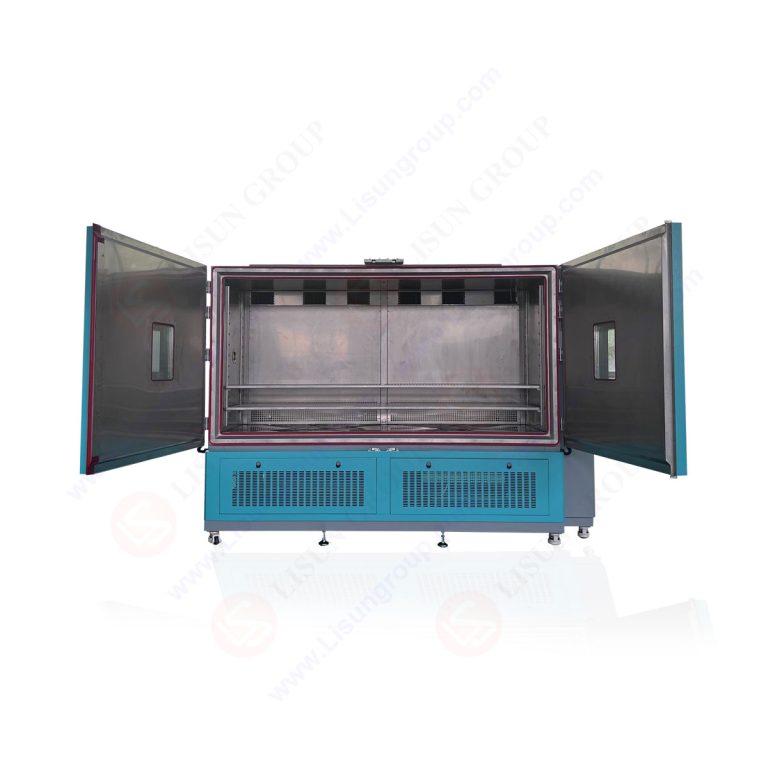
5.1 Measurement Under IES LM-79-19 and CIE 127
LISUN systems include a 2m or 1.2m integrating sphere (depending on model) that meets LM-79-19 geometry requirements and CIE 127 stray light correction. Absolute spectral measurements are performed with a cooled CCD array spectrometer, achieving <3% uncertainty on total flux.
5.2 In-Situ vs. Ex-Situ Measurement Trade-Offs
The LEDLM-80PL supports in-situ measurement (sample remains in temperature chamber) for continuous monitoring. Ex-situ measurement (sample moved to sphere at 25°C) is used for LM-84 to avoid temperature-induced spectrum shifts. LISUN’s software automatically compensates for temperature drift using pre‑calibrated coefficient files.
5.3 Color Maintenance Metrics (Duv and Correlated Color Temperature)
Beyond lumen maintenance, the software tracks chromaticity shift (Duv) and ΔCCT per TM-30 guidelines. The LED Temperature Test: Ensure IEC 60068 Compliance with LISUN reports include Δu’v’ at each aging level, critical for automotive and horticultural lighting applications where color stability is mandatory.
6.1 Chamber Configuration for Different Form Factors
LISUN offers chambers with internal fixtures for COB (Chip-on-Board), SMD 5050, and mid-power 2835 packages. Adjustable clamping plates accommodate varying lead-frame lengths. Each chamber connects via a single multi‑pin connector, simplifying installation in labs with multiple test bays.
6.2 Power Supply and Monitoring Options
Programmable DC power supplies (0–100V, 0–6A per channel) are integrated, enabling independent current control for up to 50 samples per chamber. Monitoring includes real-time forward voltage (Vf), junction temperature estimation via Vf(T) calibration, and case temperature via Type-K thermocouples per IEC 60068-2-2.
6.3 Remote Data Access and Multi‑Site Synchronization
Optional web‑based dashboard allows engineers to view live aging curves across three chambers from any device. Test schedules can be synced across multiple LISUN instruments in different geographical labs, ensuring uniform test conditions for multi‑site product qualification programs.
7.1 The Requirement for AEC-Q102 and IEC 60068 Compliance
Automotive LED modules must pass AEC-Q102 (Temperature Cycling and Power Temperature Cycling) and IEC 60068-2-14 (Thermal Shock). LISUN’s systems can run combined temperature and current cycles: e.g., 30 minutes at -40°C then 30 minutes at +125°C with current on/off, monitoring lumen output at each extreme.
7.2 Case Study: LED Headlight Module Testing
A Tier‑1 supplier tested 20 headlight modules at 85°C/85%RH (IEC 60068-2-78) for 1,000 hours, using the LEDLM-80PL in CC mode. Results showed 5.2% lumen drop, well below the 10% limit. TM-21 extrapolation predicted L70 >60,000 hours at 55°C junction temperature, enabling fast design release.
7.3 Integration with Thermal Imaging and Failure Analysis
LISUN’s software exports temperature maps from an optional thermal camera, overlaying junction temperature data with lumen maintenance curves. This allows precise identification of thermal hotspots that cause localized degradation, improving design iteration speed by 30%.
The LED Temperature Test: Ensure IEC 60068 Compliance with LISUN provides a turnkey solution for integrating thermal aging, photometric measurement, and lifetime prediction under a unified standards framework. By leveraging the LEDLM-80PL/LEDLM-84PL dual architecture, engineers can simultaneously meet IES LM-80, LM-84, TM-21, TM-28, and CIE 127 requirements while also satisfying IEC 60068 thermal profiles. The Arrhenius Model-based software converts 6,000 hours of test data into >50,000-hour projections, ensuring qualification timelines stay within product development cycles. With customizable chambers, dual CC/CT modes, and real‑time traceability, LISUN’s instruments reduce test set‑up time by 50% and eliminate measurement inconsistencies common in multi‑vendor setups. For LED manufacturers, third‑party labs, and automotive electronics teams, this integrated approach acceleratestime‑to‑market without sacrificing data integrity or standards compliance.
Q1: How does the LISUN LEDLM-80PL ensure the LED Temperature Test complies with both IEC 60068 and IES LM-80?
A: The LEDLM-80PL integrates three independently controlled temperature chambers that can run IEC 60068-2-14 thermal cycling profiles (e.g., -40°C to +125°C) while simultaneously performing IES LM-80 photometric measurement readpoints at 1,000-hour intervals. The system’s embedded software applies IEC 60068 ramp rates (e.g., 1°C/min) and holds test points within ±0.5°C. During temperature transitions, the integrating sphere automatically stabilizes at reference temperature (25°C) before taking flux readings, ensuring LM-80 data integrity. This eliminates the need for separate thermal and photometric test setups, reducing total test time by approximately 35% compared to conventional sequential testing.
Q2: What is the practical difference between Constant Current (CC) and Constant Temperature (CT) modes for predicting L70 lifetime?
A: CC mode maintains a fixed drive current throughout the aging test, causing junction temperature to rise initially due to LED self-heating, then stabilize. This simulates field conditions where a driver provides constant current regardless of ambient temperature changes. CT mode holds both chamber temperature and junction temperature constant (via active cooling or current reduction), isolating pure thermal degradation of phosphor and encapsulant. For TM-21 predictions, CC mode yields slightly conservative L70 estimates (due to current-induced electromigration) while CT mode provides the most accurate material degradation data, especially when the activation energy (Ea) is unknown. We recommend CC mode for final product qualification and CT mode for early-stage material screening.
Q3: Can the LISUN system handle high-power LED modules requiring >100V drive voltage?
A: Yes, each programmable power supply channel supports up to 100V and 6A, capable of driving both low-voltage SMD packages (2.8V/0.35A) and high-power COB modules (48V/2A). For modules requiring more than 6A, multiple channels can be paralleled in software. The system also monitors forward voltage (Vf) at each aging interval; a Vf drop >10% triggers an auto-shutdown to prevent thermal runaway. For automotive LED headlight modules (typically 12V/1.5A per channel), up to 20 modules per chamber can be tested simultaneously.
Q4: How does the Arrhenius Model software handle variable activation energies for different LED chemistries?
A: The software includes a library of pre‑validated activation energies (Ea) for common LED materials: GaN-on-sapphire (0.35–0.45 eV), GaN-on-Si (0.5–0.7 eV), and phosphor-converted white LEDs (0.8–1.2 eV). Engineers can also manually input Ea values from their own isothermal aging studies. The software then runs a sensitivity analysis for ±20% Ea variation, reporting upper/lower bounds on L70 predictions. This feature is critical for TM-21-19 compliance, which requires that the chosen Ea be justified by at least two temperature-level test data sets. The final report includes Ea uncertainty bars, ensuring conservative lifetime estimates.
Q5: What data traceability does LISUN provide for audits under ISO 17025 or ENERGY STAR?
A: Every test session generates a tamper-proof XML file containing: chamber temperature profiles (logged every 60 seconds), current/voltage readings (every 60 seconds), integrating sphere flux measurements (with spectrometer instrument IDs), reference standard calibration certificates, and operator login timestamps. Data is hashed using SHA-256 to detect any post‑test modifications. For ENERGY STAR qualification, the software automatically formats the output to match the required LM-80/TM-21 report template, including DLC (DesignLights Consortium) marker fields. This meets the audit trail requirements of ISO 17025 clause 7.5 (technical records) without manual transcription errors.