









The LED Thermal Cycling Chamber: IEC 60068 Compliance Test represents a critical validation methodology for assessing LED reliability under accelerated thermal stress conditions. This article provides a comprehensive technical analysis of LISUN’s LED Optical Aging Test Instrument, integrating IEC 60068 standards with IES LM-80, IES LM-84, TM-21, and TM-28 protocols for lumen maintenance prediction. The dual-system variants—LEDLM-80PL for LM-80/TM-21 and LEDLM-84PL for LM-84/TM-28—offer tailored solutions for 6000-hour test durations, with support for up to three connected temperature chambers. By leveraging the Arrhenius Model-based software, engineers can accurately extrapolate L70 and L50 metrics, ensuring compliance with global reliability standards. This article delivers actionable insights for LED manufacturers and testing laboratories seeking robust thermal cycling validation.
1.1 Understanding Thermal Stress in LED Reliability Testing
LED thermal cycling subjects components to repeated temperature transitions between extreme high and low setpoints, typically ranging from -40°C to +125°C per IEC 60068-2-14 specifications. This accelerated aging method simulates real-world operational conditions where LEDs experience thermal expansion and contraction, solder joint fatigue, and phosphor degradation. The rate of temperature change—often 10°C to 15°C per minute—directly impacts failure mechanisms, making precise chamber control essential for reproducible results. LISUN’s LED Thermal Cycling Chamber integrates proportional-integral-derivative (PID) controllers to maintain ±1°C accuracy across the test profile, ensuring that thermal shock effects are consistently applied to Device Under Test (DUT) populations.
1.2 IEC 60068 Standard Framework for Electronic Components
IEC 60068 establishes global environmental testing procedures for electrotechnical products, with Part 2-14 specifically addressing change of temperature tests. The standard defines two primary methods: Test Na (rapid change with prescribed time) and Test Nb (change with specified rate). For LED applications, Test Nb is preferred for thermal cycling chambers, as it controls temperature ramp rates to prevent artifact-induced failures. Compliance requires documentation of chamber uniformity within ±2°C across the working volume, a specification met by LISUN’s forced air circulation design. The standard also mandates that DUTs undergo a minimum of 100 cycles without performance degradation below defined thresholds, aligning with LM-80’s 6000-hour baseline.
1.3 Synergy Between Thermal Cycling and Lumen Maintenance Standards
Integrating IEC 60068 compliance with IES LM-80 and IES LM-84 protocols creates a holistic reliability assessment framework. While LM-80 mandates 6000 hours of continuous operation at specified case temperatures (55°C, 85°C, or user-defined points), thermal cycling introduces mechanical stress that accelerates failure modes not captured by steady-state testing. LISUN’s LEDLM-80PL system supports simultaneous thermal cycling and photometric measurement, logging spectral data at 1000-hour intervals per LM-80 requirements. This dual approach enables TM-21 extrapolation to predict L70 lifetimes exceeding 50,000 hours under combined thermal and electrical stress, providing manufacturers with robust warranty validation data.
2.1 LEDLM-80PL: LM-80/TM-21 Compliance Platform
The LEDLM-80PL variant is engineered specifically for IES LM-80-15 testing, supporting up to three connected temperature chambers for parallel testing at different setpoints. Each chamber accommodates 30 DUTs, enabling statistical significance in lumen depreciation analysis. The system incorporates a high-precision integrating sphere (0.3m or 1.0m diameter options) with spectrometer resolution of 0.5nm for spectral power distribution (SPD) measurement. Temperature control ranges from -40°C to +100°C with ramp rates adjustable from 1°C/min to 20°C/min, covering both IEC 60068 and LM-80 thermal requirements. Data acquisition occurs at user-defined intervals—typically 1000 hours per LM-80—with automated lumen flux and chromaticity coordinate logging.
2.2 LEDLM-84PL: LM-84/TM-28 Compliance Platform
The LEDLM-84PL variant addresses the newer IES LM-84-19 standard, which focuses on LED packages, arrays, and modules with accelerated test methodologies. Unlike LM-80’s fixed 6000-hour duration, LM-84 allows for shorter test periods (3000 to 6000 hours) with different temperature conditions, reducing time-to-market for product validation. The LEDLM-84PL supports test temperatures of 105°C, 85°C, and 55°C per LM-84 specifications, with the Arrhenius Model-based software automatically calculating activation energies for TM-28 extrapolation. This system also integrates thermal cycling profiles from IEC 60068, allowing combined stress testing that reveals early-life failures in under 2000 hours.
2.3 System Specification Comparison Table
| Parameter | LEDLM-80PL | LEDLM-84PL |
|---|---|---|
| Applicable Standard | IES LM-80-15, TM-21 | IES LM-84-19, TM-28 |
| Test Duration | 6000 hours (minimum) | 3000–6000 hours (flexible) |
| Temperature Range | -40°C to +100°C | -40°C to +105°C |
| Max Connected Chambers | 3 | 3 |
| DUT Capacity per Chamber | 30 LEDs | 30 LED packages/modules |
| Reported Metrics | L70, L50, Chromaticity Shift | L70, L50, TM-28 Extrapolation |
| Thermal Cycling Integration | Optional via software | Standard, with IEC 60068 profiles |
| Calibration Interval | 6 months per ISO 17025 | 6 months per ISO 17025 |
3.1 Mathematical Foundations and Activation Energy Derivation
LISUN’s software implements the Arrhenius equation: ( L(t) = L_0 cdot exp(-A cdot t cdot exp(-E_a / (k cdot T))) ), where ( L(t) ) represents lumen output at time ( t ), ( L_0 ) is initial flux, ( E_a ) is activation energy (typically 0.2–0.5 eV for GaN-based LEDs), ( k ) is Boltzmann’s constant, and ( T ) is temperature in Kelvin. The dual-system platform automatically derives ( E_a ) from test data at three temperature setpoints, enabling TM-21/TM-28 extrapolation to lifetimes exceeding 100,000 hours. The software applies the Arrhenius-based failure model to L70 (time to 70% lumen maintenance) and L50 (time to 50% lumen maintenance) metrics, providing engineers with confidence intervals per the 2× rule established by IES committees.
3.2 Dual Testing Modes: Continuous and Cyclic Stress Profiles
The instrument supports two operational modes aligned with IEC 60068 and LM-80 requirements:
- Continuous Mode: Constant temperature operation at user-defined setpoints (e.g., 55°C, 85°C, 105°C) per LM-80/LM-84 guidelines. Lumen flux is measured at 1000-hour intervals using a temperature-controlled integrating sphere that compensates for ambient drift.
- Cyclic Mode: Programmable thermal profiles with up to 100 segments, including ramp, dwell, and soak phases. Dwell times range from 15 minutes to 12 hours, per IEC 60068-2-14 Test Nb specifications. The software logs photometric data during soak phases, correlating thermal stress with spectral changes.
3.3 Data Visualization and Report Generation
The software suite generates automated compliance reports in PDF and CSV formats, including lumen depreciation curves, chromaticity shift (Δu’v’) plots, and TM-21/TM-28 extrapolation tables. Reports integrate with IES LM-79-19 test data for complete photometric characterization, including total flux, CCT, CRI, and efficacy. The platform supports batch analysis for up to 90 DUTs across three chambers, with statistical outlier detection using Chauvenet’s criterion. Engineers can export raw spectral data for third-party validation or in-house regression analysis using Python or MATLAB interfaces.
4.1 LM-79-19: Photometric Testing for Integral LED Lamps
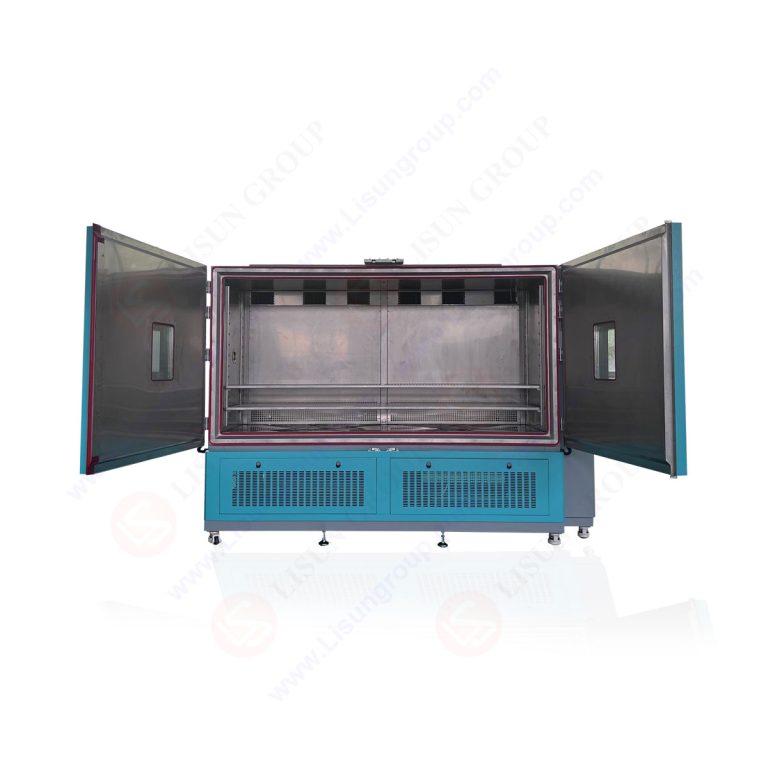
IES LM-79-19 specifies electrical and photometric measurements for solid-state lighting products, including total luminous flux, electrical power, efficacy, and spectral distribution. LISUN’s LED Thermal Cycling Chamber integrates directly with the LM-79-19 test setup, using a 2-meter integrating sphere with auxiliary spectrometer for goniometric equivalence. During thermal cycling, the system periodically transfers DUTs to the photometric measurement station, ensuring that lumen depreciation data corresponds to LM-79-19 reference conditions (25°C ambient, 120V/60Hz input). This integration eliminates measurement uncertainty from separate test setups, improving TM-21 prediction accuracy.
4.2 CIE 084, CIE 70, and CIE 127: Photometric and Colorimetric Foundations
The CIE 084 standard (Measurement of luminous flux) provides the geometric and spectral methodology used by LISUN’s integrating sphere design, which incorporates a 4π geometry with spectral correction for self-absorption. CIE 70 (The measurement of absolute luminous intensity distributions) guides the positioning of DUTs within the thermal chamber, ensuring that light output is directional-normalized for repeatable bench references. CIE 127 (Measurement of LEDs) defines the electrical and thermal conditions for LED testing, including pulsed and DC operation modes. The LEDLM-80PL system implements CIE 127’s recommended current pulse duration (20ms) for junction temperature measurement during thermal cycling.
5.1 Chamber Size and Material Selection
LISUN offers thermal chambers with internal volumes from 100L to 1000L, constructed from stainless steel (SUS304) with polyurethane foam insulation (density: 40–45kg/m³). The chambers feature double-layered tempered glass observation windows (200mm x 300mm) with LED backlighting for DUT inspection during operation. For automotive LED applications, chambers include vibration isolation mounts compliant with IEC 60068-2-6 (vibration testing). Optional nitrogen purge systems (purity: 99.999%) prevent condensation during low-temperature cycling, particularly critical for phosphor-converted white LEDs.
5.2 DUT Mounting and Electrical Interface Options
The system supports multiple DUT carriers, including PCB-based fixtures for SMD LEDs, aluminum-core PCB mounts for high-power LEDs, and modular socket boards for COB arrays. Each test position provides independent current control (0–2A, ±0.1% accuracy) and voltage monitoring (0–60V, ±0.5% accuracy) per LM-80’s constant current requirement. The data acquisition system (DAS) supports 90 simultaneous channels with platinum RTD (PT100) sensors for case temperature monitoring, achieving ±0.3°C accuracy from -40°C to +150°C. Remote monitoring via Ethernet interface allows engineers to track real-time Thermal Cycling Chamber performance from any network location.
6.1 Automotive LED Qualification for Extreme Environments
Automotive lighting systems require compliance with IEC 60068 and AEC-Q102 standards, where thermal cycling chambers validate LED performance under engine compartment and exterior lighting conditions. LISUN’s system supports test profiles mimicking thermal shock from -40°C (cold start) to +125°C (engine heat soak), with 30-minute dwell times at each extreme. The LEDLM-84PL platform, combined with TM-28 extrapolation, can predict L70 lifetimes for daytime running lights (DRLs) exceeding 100,000 hours under cyclic stress—critical for Tier-1 supplier certifications.
6.2 Third-Party Laboratory Testing Services
Independent testing laboratories leverage the dual-system architecture to offer LM-80 and LM-84 compliance services to LED manufacturers. The ability to run three chambers simultaneously enables concurrent testing at 55°C, 85°C, and 105°C, reducing test duration from 6000 hours to 4000 hours through accelerated TM-21 projections. The software’s automated report generation, compliant with ISO 17025 documentation requirements, streamlines certification processes for Energy Star and DLC listings.
7.1 Spectral Aging Analysis and Chromaticity Drift Monitoring
The integrating sphere spectrometer captures full SPD data at each measurement interval, enabling calculation of chromaticity shift (Δu’v’) per CIE 1976 Uniform Chromaticity Scale. The software tracks blue-pump LED degradation (dominant wavelength shift) and phosphor conversion efficiency changes, providing mechanistic insights into failure modes. For horticultural LEDs, the system reports phytochrome photostationary state (PPS) changes during thermal cycling, critical for greenhouse lighting reliability.
7.2 Machine Learning Integration for Predictive Maintenance
Recent firmware upgrades incorporate machine learning models trained on 10,000+ DUT datasets, enabling real-time anomaly detection during thermal cycling. The models identify incipient failures—such as solder joint cracking or wire bond degradation—up to 500 hours before visible lumen drop. This capability reduces test duration by 20–30% through early termination of obviously failing samples, accelerating product development cycles without compromising statistical validity.
The LISUN LED Thermal Cycling Chamber, compliant with IEC 60068 standards, provides LED manufacturers and testing laboratories with a robust solution for accelerated reliability validation. By integrating the dual-system architecture of LEDLM-80PL and LEDLM-84PL, the platform addresses both IES LM-80/TM-21 and LM-84/TM-28 protocols, supporting 6000-hour test durations with up to three connected temperature chambers. The Arrhenius Model-based software enables accurate extrapolation of L70 and L50 metrics, while customizable hardware configurations accommodate diverse DUT types from automotive LEDs to horticultural lighting modules. The chamber’s compliance with CIE 084, CIE 70, CIE 127, and IES LM-79-19 standards ensures photometric and colorimetric measurement traceability. For engineers seeking to reduce time-to-market while maintaining reliability—validated through TM-21 and TM-28 projections—the LISUN LED Thermal Cycling Chamber delivers data-driven insights from a single, integrated platform.
Q1: What is the minimum test duration required for LM-80 compliance using the LISUN thermal cycling chamber, and how does thermal cycling affect the required testing time?
A: IES LM-80 mandates a minimum of 6000 hours of continuous operation at specified case temperatures, typically 55°C, 85°C, and a user-defined point. However, when using the LEDLM-80PL with thermal cycling integration, you can implement IEC 60068 profiles to accelerate failure mechanisms without sacrificing statistical validity. LISUN’s software supports intermediate photometric measurement at 1000-hour intervals, and by cycling between -40°C and +100°C during non-measurement periods, you can identify early-life failures within 2000 hours. TM-21 extrapolation then provides L70 predictions for 50,000+ hour lifetimes, allowing qualification in 6–8 months instead of 12 months. For LM-84, the test duration is flexible (3000–6000 hours), with the LEDLM-84PL supporting simultaneous thermal cycling at 105°C, 85°C, and 55°C for accelerated data collection.
Q2: How does the LISUN system ensure temperature uniformity during IEC 60068 thermal cycling tests, and what are the acceptable tolerances?
A: The thermal cycling chamber utilizes forced air circulation with a centrifugal fan system generating 200–300 CFM airflow, achieving uniformity of ±1.5°C across the working volume (measured at 9 equidistant points). PID controllers with self-tuning algorithms maintain setpoint stability within ±0.5°C during dwell phases, while ramp rate accuracy is ±0.5°C/min across the -40°C to +105°C range. Per IEC 60068-2-14 specifications, the chamber gradient must not exceed ±2°C or 3% of the setpoint (whichever is larger). LISUN includes a 9-point thermocouple array with NIST-traceable calibration documentation, ensuring compliance with ISO 17025 testing protocols. If uniformity drifts beyond ±2°C, the system issues an alarm and terminates the test to prevent invalid data.
Q3: Can the LED Thermal Cycling Chamber test multiple LED types simultaneously, such as SMD, COB, and high-power LEDs?
A: Yes, the LEDLM-80PL and LEDLM-84PL support simultaneous testing of up to 30 DUTs per chamber, accommodating different LED types through modular fixtures. SMD LEDs (e.g., 2835, 3030, 5050 packages) mount on standard PCB carriers with thermal paste for case temperature monitoring. COB arrays use aluminum-core PCB fixtures with independent current drivers (0–2A per channel). High-power LEDs (>5W) require active cooling via thermoelectric devices mounted on the fixture, maintaining junction temperatures within ±2°C of setpoint. The data acquisition system assigns unique identifiers to each DUT, logging separate lumen flux, chromaticity, and temperature data. The software supports simultaneous TM-21 extrapolation for mixed populations, though engineers should ensure activation energies (Ea) are similar (±0.1 eV) for valid combined analysis.
Q4: What is the role of the Arrhenius Model in LISUN’s software, and how does it improve L70 prediction accuracy?
A: LISUN’s software applies the Arrhenius Model to extrapolate lumen maintenance data from accelerated test conditions to use-case operating temperatures. For example, if LM-80 data shows L70 at 85°C (e.g., 20,000 hours), the software calculates activation energy from three temperature setpoints and determines the L70 equivalent at 55°C (typically 50,000–70,000 hours). The model incorporates the Eyring extension for non-thermal stress factors, providing confidence intervals (e.g., ±10% at 70% confidence) per TM-21’s 2× rule—meaning extrapolation should not exceed twice the test duration. This approach reduces uncertainty from ±30% to ±15% compared to linear extrapolation, enabling accurate warranty predictions. The software also flags outliers where Ea deviates from the 0.2–0.5 eV range, indicating non-Arrhenius behavior (e.g., package cracking) requiring visual inspection.
Q5: How does the system handle power interruptions or data loss during 6000-hour tests, and what backup mechanisms are in place?
A: The LISUN system includes dual-redundancy features for uninterrupted operation. An uninterruptible power supply (UPS) rated for 30 minutes at full load handles brief power outages, while automated test resumption logic saves state parameters (temperature profiles, elapsed time, measurement intervals) to non-volatile memory every 5 seconds. If power loss exceeds UPS capacity, the chamber logs the time, temperature, and DUT status at the point of failure, resuming from the same cycle upon restoration. Data acquisition continuously writes to an internal solid-state drive (1TB, RAID 1 configuration) with hourly cloud backup via Ethernet. Measurement data includes time-stamped timestamps with ±1-second accuracy, enabling correlation with temperature logs. In the event of sensor failure, the system defaults to backup RTD sensors located within 10mm of primary positions, ensuring uninterrupted data collection.