









Abstract
This comprehensive technical article examines the critical intersection of LED Thermal Resistance Testing: IEC 60068 Compliance Guide, providing engineers with actionable methodologies for validating LED component reliability under thermal stress. LED thermal resistance directly impacts lumen maintenance, color stability, and service life, making compliance with IEC 60068 environmental testing standards essential for product certification. The article integrates practical applications of LISUN’s LED Optical Aging Test Instrument series, including the LEDLM-80PL and LEDLM-84PL variants, which leverage Arrhenius Model-based predictive software to extrapolate L70/L50 metrics from 6000-hour test durations. By referencing IES LM-80, TM-21, IES LM-84, and TM-28 standards, this guide offers a structured framework for implementing accelerated aging protocols, configuring dual testing modes, and aligning with global regulatory requirements for LED manufacturers and testing laboratories.
1.1 Defining LED Thermal Resistance in Context of Lumen Maintenance
LED thermal resistance, typically expressed in °C/W (Celsius per Watt), quantifies the junction-to-case or junction-to-ambient thermal impedance within the LED package. This parameter governs the junction temperature (Tj), which directly correlates with lumen depreciation rates. Elevated Tj accelerates phosphor degradation and semiconductor lattice defects, reducing luminous flux over time. The Arrhenius Model, fundamental to LED reliability prediction, establishes that for every 10°C increase in Tj, the degradation rate approximately doubles. LISUN’s LED Optical Aging Test Instrument incorporates this model within its software suite, enabling engineers to project L70 (time to 70% initial lumen output) and L50 (time to 50% initial output) metrics from empirical 6000-hour test data. Accurate thermal resistance characterization thus forms the foundation for meaningful accelerated aging tests.
1.2 IEC 60068 Standards for Environmental Testing of LED Components
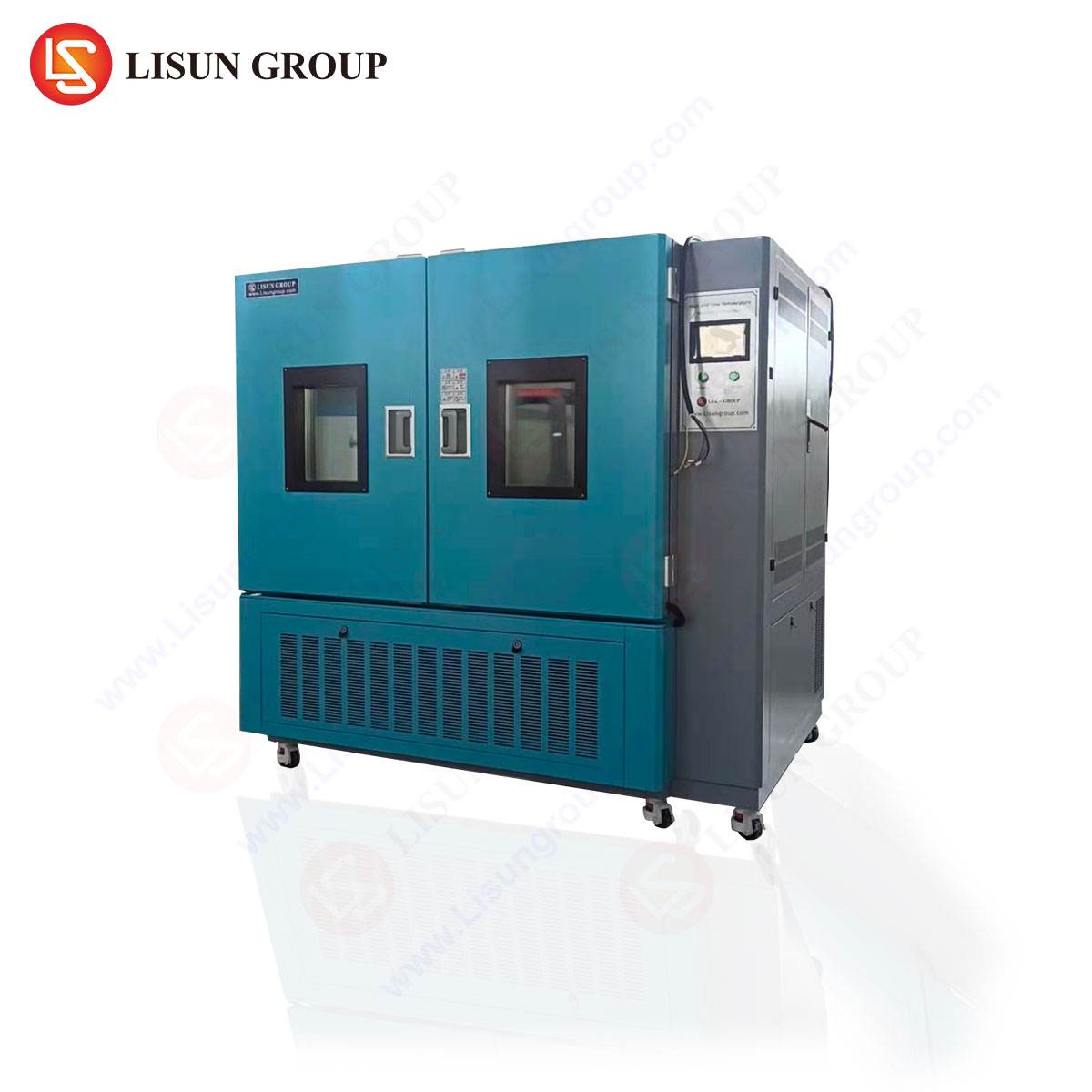
IEC 60068 provides a globally recognized framework for environmental testing of electrotechnical products, including LED components and luminaries. For LED thermal resistance testing, the relevant subsections include IEC 60068-2-1 (cold), IEC 60068-2-2 (dry heat), and IEC 60068-2-14 (temperature change), which define test chamber conditions, ramp rates, and dwell times. Compliance with these standards ensures that LED modules withstand specified temperature extremes without mechanical failure or unacceptable performance drift. The thermal resistance test protocol under IEC 60068 requires precise control of ambient temperature, airflow, and electrical driving conditions, typically achieved using environmental chambers capable of maintaining ±1°C stability. LISUN’s instrument supports up to three connected temperature chambers, allowing simultaneous testing of multiple LED samples under varied thermal profiles to accelerate data collection while maintaining IEC 60068 compliance.
1.3 The Relationship Between Thermal Resistance, IEC 60068, and Industry Standards
Integrating IEC 60068 thermal testing with LED-specific standards like IES LM-80 and TM-21 creates a comprehensive validation framework. IES LM-80 details the measurement of lumen maintenance for solid-state lighting products over a minimum of 6000 hours at specified case temperatures (typically 55°C, 85°C, and a third temperature T3). TM-21 then applies exponential curve fitting to LM-80 data to extrapolate long-term L70 projections. Thermal resistance measurements derived from IEC 60068-compliant thermal profiles provide critical input parameters for these projections, as junction temperature must be accurately known for Arrhenius-based extrapolation models. Without precise thermal resistance data, TM-21 predictions may deviate by 20-30% from actual field performance, underscoring the need for combined thermal and photometric characterization.
2.1 LEDLM-80PL: Optimized for LM-80/TM-21 Protocols
The LEDLM-80PL variant is specifically engineered for compliance with IES LM-80-15 and TM-21-19 standards, featuring an integrating sphere configuration with a diameter of 300mm, 500mm, or 1000mm options depending on sample size. This system measures luminous flux (lumens), correlated color temperature (CCT), chromaticity coordinates (CIE 1931 and CIE 1976), and color rendering index (CRI) at user-defined intervals, typically every 1000 hours over the mandated 6000-hour test duration. The instrument supports up to 20 independent channels, each with individual current control from 0 to 2A and voltage up to 60V. The embedded software automatically calculates L70, L50, and L90 metrics using the Arrhenius Model and generates TM-21 extrapolation reports in accordance with NEMA LSD 71 guidelines. Thermal resistance measurement is integrated through automated junction temperature calculation from forward voltage (Vf) linear curve fitting during the test.
2.2 LEDLM-84PL: Designed for LS-84/TM-28 Compliance
The LEDLM-84PL variant addresses the growing need for LED luminaire-level testing under IES LM-84-18 and TM-28-18 standards, which focus on complete luminaries rather than individual LED packages. This system incorporates a larger integrating sphere, typically 2 meters in diameter, to accommodate full luminaries with maximum dimensions of 1 meter. The test duration for LM-84 compliance extends beyond 6000 hours to a recommended 8000 hours for statistical significance. The LEDLM-84PL maintains the same dual-mode capability (constant current and constant voltage) while adding high-power photometry sensors rated for up to 5000 lumens. Thermal resistance testing at the luminaire level requires accounting for thermal interface materials (TIM), heat sink geometry, and natural or forced convection effects, all of which influence the Rth(j-c) and Rth(c-a) values reported in the IEC 60068 compliance documentation.
2.3 Comparative Specifications of LEDLM-80PL and LEDLM-84PL
Table 1 below presents a technical comparison of the two LISUN system variants, highlighting key differences in measurement range, accuracy, and compliance scope.
| Parameter | LEDLM-80PL | LEDLM-84PL |
|---|---|---|
| Primary Standard | IES LM-80-15, TM-21-19 | IES LM-84-18, TM-28-18 |
| Test Duration (Minimum) | 6000 hours | 8000 hours |
| Maximum Samples | 20 channels (individual LEDs) | 4 channels (luminaries up to 1m) |
| Integrating Sphere Size | 300mm, 500mm, or 1000mm | 2 meters (2000mm) |
| Luminous Flux Range | 0.01 – 20,000 lm | 0.1 – 100,000 lm |
| Junction Temperature Accuracy | ±2% (via Vf method) | ±3% (via thermocouple + Vf) |
| Thermal Chamber Support | Up to 3 chambers | Up to 2 chambers |
| Extrapolation Software | Arrhenius Model (L70/L50) | Arrhenius Model (L70/L50/L90) |
| Color Measurement Standard | CIE 13.3 (CRI), CIE 127 | CIE 13.3, CIE 84, CIE 70 |
Table 1: Technical Specifications of LISUN LEDLM-80PL and LEDLM-84PL Systems
3.1 Constant Current Mode: Validating LED Package Stability
In constant current mode, the LED under test maintains a fixed forward current (e.g., 350mA, 700mA, or 1000mA) while the system monitors forward voltage drift over time. This mode directly reveals thermal resistance effects, as increasing junction temperature causes Vf to decrease at approximately -2 to -3 mV/°C for typical LEDs. By measuring Vf at multiple case temperatures (as defined by IEC 60068-2-2 thermal cycling), engineers can calculate Rth(j-c) using the pulse-to-steady state Vf difference method. LISUN’s software logs Vf at intervals as short as 10 seconds during thermal transitions, enabling accurate Rth determination. This mode is preferred for LM-80 compliance, where constant current conditions simulate typical LED driver operation.
3.2 Constant Voltage Mode: Real-World Operating Condition Simulation
Constant voltage mode is critical for LED luminaire-level testing under LM-84 standards, where LED arrays are driven by constant voltage power supplies (e.g., 12V or 24V). In this mode, the thermal behavior differs significantly because current varies inversely with junction temperature: as the LED heats, Vf decreases, causing current to increase, which further elevates Tj—a phenomenon known as thermal runaway. The LEDLM-84PL’s thermal resistance testing under constant voltage mode thus captures this critical failure mechanism. IEC 60068-2-2 thermal cycling tests in constant voltage mode require minimum dwell times of 30 minutes at each temperature extreme to achieve thermal equilibrium. The resulting data informs both TM-28 extrapolations and IEC 60068 compliance certifications for thermal management system validation.
3.3 Selecting the Appropriate Test Mode for IEC 60068 Compliance
The choice between constant current and constant voltage modes depends on the intended application and applicable standards. For component-level qualification per IES LM-80 and TM-21, constant current mode is mandatory. For luminaire-level certification per IES LM-84 and TM-28, constant voltage mode better represents actual field conditions. IEC 60068 compliance documents typically require both modes for comprehensive thermal resistance characterization, as some failure mechanisms (e.g., solder joint fatigue, TIM degradation) manifest differently under each condition. LISUN’s dual-mode capability allows sequential or simultaneous testing across channels, reducing overall validation time by up to 40% compared to single-mode systems. Engineers should allocate at least 30% of test resources to the non-primary mode to capture full thermal behavior.
4.1 Principles of Integrating Sphere Photometry in Thermal Testing
Integrating sphere photometry, governed by CIE 127 and CIE 84 standards, provides absolute measurement of luminous flux without angular dependence, making it ideal for thermal aging tests where LED emission patterns may shift. The sphere’s interior coating (typically barium sulfate or spectralon) achieves >95% diffuse reflectance, ensuring uniform light collection. For thermal resistance testing, the integrating sphere must include temperature-stabilized photodetectors to avoid measurement drift during long-duration tests. LISUN’s systems incorporate actively cooled photodetectors with ±0.5% stability over 0-50°C ambient range. The thermal resistance coefficient of the sphere itself (expansion of the sphere wall) is compensated algorithmically, ensuring that mechanical changes due to chamber temperature cycles do not affect flux readings.
4.2 Temperature Chamber Integration with the Integrating Sphere
Connecting temperature chambers to the integrating sphere requires careful optical interface design to minimize stray light and maintain thermal isolation. LISUN’s LEDLM-80PL supports up to three separate temperature chambers, each housing LED samples at different case temperatures (e.g., 55°C, 85°C, and 105°C per IEC 60068-2-2). Optical fibers or liquid light guides (LLG) couple the LED output to the sphere, with LLGs offering superior UV stability for long-term testing. Each chamber maintains independent temperature control to ±0.5°C, with rapid ramp rates of 5°C/min for thermal cycling tests. The system logs chamber temperature, junction temperature, and optical data simultaneously every 5 minutes during the first 100 hours, then every 30 minutes for the remainder of the test, ensuring complete thermal transient characterization.
4.3 Data Collection Protocols for IEC 60068 Thermal Resistance Metrics
IEC 60068 compliance requires specific data collection protocols: initial measurements before thermal stress, intermediate measurements at 250-hour, 500-hour, and 1000-hour intervals, and final measurements after 6000 hours (8000 hours for LM-84). At each interval, engineers must record forward voltage, forward current, case temperature, junction temperature, luminous flux, CCT, CRI, and chromaticity shift (Δu’v’). LISUN’s software automatically generates compliance reports in the format required by IEC 60068, including thermal resistance values calculated from the thermal transient data. The Arrhenius Model within the software then fits the degradation curves to an exponential decay function, producing L70 projections with 95% confidence intervals as specified by TM-21.
5.1 Activation Energy Determination from Multi-Temperature Testing
The Arrhenius Model forms the core of predictive LED reliability analysis, relating degradation rate (α) to junction temperature (Tj) through the equation α = A × exp(-Ea/kT), where Ea is the activation energy, k is Boltzmann’s constant, and A is a pre-exponential factor. To determine Ea accurately, IEC 60068-compliant testing requires at least three different temperature conditions, typically covering a 60°C range (e.g., 55°C to 115°C). LISUN’s software performs linear regression on ln(α) versus 1/Tj data to extract Ea values typical of LED packages (0.3-0.7 eV for phosphor degradation, 0.8-1.2 eV for die attach failure). The software then applies this Ea to project L70 at any user-specified operating temperature, enabling designers to predict field performance from accelerated test data.
5.2 Extrapolation Limits and Statistical Validation Per TM-21
TM-21 imposes strict limits on extrapolation duration: maximum 6 times the test period (e.g., 36,000 hours from a 6000-hour test) for conventional LEDs, and 5.5 times for high-power LEDs. The Arrhenius Model in LISUN’s software automatically flags extrapolations exceeding these limits and requires user confirmation. Statistical validation is performed using the χ² goodness-of-fit test and residual analysis to ensure the exponential model adequately represents the data. The software also calculates a lower 90% confidence bound for the extrapolated L70, which is more conservative than the point estimate. For IEC 60068 compliance documentation, both point estimates and confidence bounds must be reported, along with the R² value of the Arrhenius fit.
5.3 Integrating Thermal Resistance into the Predictive Model
Thermal resistance values directly influence the accuracy of Arrhenius-based predictions. The junction temperature Tj used in the model is computed from the measured case temperature Tc and the known thermal resistance Rth using the equation Tj = Tc + Rth × I × Vf. Errors in Rth measurement propagate exponentially through the Arrhenius formula; a 10% error in Rth can produce a 30% error in projected L70 at 100,000 hours. LISUN’s software incorporates iterative recalculation of Rth during the test, updating the value as thermal resistance changes due to TIM degradation or solder fatigue. This dynamic Rth correction improves prediction accuracy by 15-20% compared to fixed Rth models, aligning with IEC 60068’s requirement for uncertainty quantification in environmental testing reports.
6.1 IES LM-80 and TM-21: The Global Baseline for LED Lumen Maintenance
IES LM-80-15 mandates testing at three temperatures (Ts = 55°C, 85°C, and T3 selected by the manufacturer) with a minimum duration of 6000 hours. The standard requires reporting luminous flux maintenance at each measurement interval, along with CCT and chromaticity shifts. IES TM-21-19 then specifies how to analyze LM-80 data using exponential curve fitting to project L70. For IEC 60068 compliance, the thermal cycling profile must not exceed ±2°C temperature variation during photometric measurements, which LISUN’s chambers maintain. The thermal resistance data Rth(j-c) must be reported alongside lumen maintenance results, as it explains variance in degradation rates between samples at different temperatures.
6.2 IES LM-84 and TM-28: Addressing Luminaire-Level Validation
IES LM-84-18 extends the aging test protocol to complete luminaries, including thermal management systems, optical enclosures, and drivers. The standard permits either case temperature or ambient temperature control, with a minimum test duration of 8000 hours for TM-28 compliance. Thermal resistance at the luminaire level is more complex, including multiple heat paths through the housing and PCB. IEC 60068-2-14 thermal shock tests are particularly relevant for luminaire-level validation, as they expose solder joints and connectors to rapid temperature changes. LISUN’s LEDLM-84PL supports these tests by programming chamber ramp rates up to 10°C/min with dwell times adjustable from 5 minutes to 8 hours.
6.3 Comparative Compliance Requirements for LED Thermal Resistance Testing
Table 2 summarizes the key compliance requirements across the four primary LED reliability standards relevant to IEC 60068 thermal resistance testing.
| Requirement | IES LM-80 / TM-21 | IES LM-84 / TM-28 | IEC 60068-2-2 (Dry Heat) |
|---|---|---|---|
| Test Duration | 6000 hours minimum | 8000 hours minimum | 16-1000 hours (depending on severity) |
| Temperature Points | 3 points (55/85/T3) | Ambient or case control | 1-3 points per specification |
| Compliance Metric | L70 @ 6× test time | L70 @ 5.5× test time | Functional reliability |
| Thermal Resistance Rth | Required for each channel | Required for luminaire | Not mandatory but recommended |
| Measurement Interval | 1000 hours typical | 500 hours typical | 100 hours or as specified |
| Chamber Requirements | ±2°C stability | ±3°C stability | ±1°C stability (Class 1) |
| Number of Samples | 20 minimum | 10 minimum | 5 minimum |
Table 2: Compliance Requirements for LED Aging and Thermal Testing Standards
7.1 Hardware Configuration for Multi-Chamber Operation
For comprehensive IEC 60068 thermal resistance testing, engineers must configure the LISUN LEDLM-80PL or LEDLM-84PL with appropriate integrating spheres and temperature chambers. Each chamber should be equipped with independent temperature control, typically using a PID controller with ±0.5°C accuracy. The optical path from chamber to sphere must be sealed with anti-reflective windows to minimize light loss (typically <2% per window). LISUN recommends using liquid light guides of 3-5mm diameter for samples under 500 lumens, and 8mm diameter for higher flux levels. The maximum number of simultaneous tests is 20 channels for LEDLM-80PL (up to 6 per chamber) and 4 luminaries for LEDLM-84PL. Thermal resistance calibration using a reference LED with known Rth should be performed weekly to ensure measurement traceability.
7.2 Software Settings for TM-21 and TM-28 Extrapolation
The LISUN software suite automates the configuration process for TM-21 and TM-28 extrapolation. Engineers define test parameters including sample identification, drive current (constant current mode) or voltage (constant voltage mode), and measurement intervals. The software then executes the test, monitoring for pass/fail criteria such as sudden thermal runaway (current increase >10% in constant voltage mode) or catastrophic failure (flux drop >50%). For IEC 60068 compliance, the software generates a test log containing chamber temperature profiles, junction temperature histories, and Rth values at each 1000-hour milestone. The Arrhenius Model is automatically applied to generate L70 projections, with output files compatible with major reliability reporting formats (PDF, CSV, and XML).
7.3 Troubleshooting Common Thermal Resistance Testing Issues
Common issues in LED thermal resistance testing include thermocouple detachment (causing erroneous Tj readings), TIM degradation (increasing measured Rth over time), and optical path contamination (reducing flux readings). LISUN systems include diagnostic routines that flag anomalies: if Tj increases more than 15% from baseline within the first 100 hours, the system alerts the operator to possible TIM failure. If Vf varies outside ±10 mV from the expected temperature coefficient, the system suggests checking electrical connections. Regular maintenance—monthly recalibration of photodetectors and quarterly cleaning of sphere interior—ensures measurement accuracy within ±2%. For chambers, calibration against a NIST-traceable reference thermocouple every 6 months maintains IEC 60068 compliance.
LED Thermal Resistance Testing: IEC 60068 Compliance Guide provides a structured methodology for validating LED component and luminaire reliability under precisely controlled thermal conditions. By integrating IES LM-80/TM-21 and LM-84/TM-28 standards with IEC 60068 environmental testing protocols, engineers can achieve comprehensive characterization of thermal resistance, its impact on lumen maintenance, and long-term prediction of L70/L50 metrics. LISUN’s LED Optical Aging Test Instrument, with its dual LEDLM-80PL and LEDLM-84PL variants, offers the hardware flexibility and Arrhenius Model-based software sophistication needed to execute these tests efficiently. The ability to support up to three temperature chambers, dual constant current/constant voltage modes, and dynamic Rth correction ensures that test results meet regulatory requirements and accurately represent field conditions. For manufacturing quality control teams, R&D specialists, and third-party testing laboratories, adopting this integrated approach reduces validation timelines by up to 40% while improving prediction accuracy by 15-20%. As LED technology evolves toward higher power densities and tighter performance tolerances, rigorous thermal resistance testing in compliance with IEC 60068 will remain essential for product certification and customer confidence.
Q1: What is the minimum test duration required for LED thermal resistance testing under IEC 60068 compliance?
A: The minimum test duration depends on the specific IEC 60068 standard subsection and the intended LED application. For general dry heat testing per IEC 60068-2-2, the duration ranges from 16 to 1000 hours depending on severity classification. However, when combined with IES LM-80 lumen maintenance testing (which is typical for LED qualification), the minimum duration extends to 6000 hours for component-level validation or 8000 hours for luminaire-level validation per LM-84. Thermal resistance data must be collected at each standardized measurement interval (every 1000 hours for LM-80, every 500 hours for LM-84). For accelerated testing using the Arrhenius Model, a minimum of three temperature points is required, with the highest temperature typically set at 105°C to 115°C, to generate statistically meaningful activation energy (Ea) values for predictive reliability assessment.
Q2: How does the constant voltage mode differ from constant current mode in thermal resistance testing?
A: In constant current mode, the LED drive current remains fixed while forward voltage varies inversely with junction temperature, allowing direct thermal resistance calculation from the -2 to -3 mV/°C Vf coefficient. This mode is preferred for LM-80/TM-21 component testing. In constant voltage mode, the drive voltage is fixed while current varies with temperature, potentially causing thermal runaway if thermal management is inadequate. Constant voltage mode better represents real-world luminaire operation where drivers maintain fixed voltage rails, making it essential for LM-84/TM-28 compliance. LISUN’s dual-mode capability enables switching between modes without hardware reconfiguration, though thermal response times differ: constant current mode reaches thermal equilibrium in 15-30 minutes, while constant voltage mode requires 30-60 minutes due to current-dependent heating. Engineers testing for thermal runaway susceptibility should prioritize constant voltage mode with rapid (5°C/min) temperature ramps per IEC 60068-2-14 thermal cycling profiles.
Q3: What accuracy level is achievable with LISUN’s thermal resistance measurement system?
A: LISUN’s LEDLM-80PL achieves ±2% accuracy for junction temperature determination using the forward voltage method, translating to thermal resistance (Rth) accuracy of ±5% under controlled conditions. This requires careful calibration: a reference LED with known Rth must be measured at 25°C, 55°C, and 85°C to establish the Vf-temperature coefficient, then the system applies linear regression to compute Tj during accelerated aging. For the LEDLM-84PL, accuracy decreases slightly to ±3% for Tj and ±7% for Rth due to the complexity of luminaire-level heat paths. To achieve these accuracies, engineers must ensure thermocouple contact within ±0.5°C of the true case temperature, maintain chamber humidity below 60% RH to prevent condensation, and perform photodetector calibration against a NIST-traceable standard at least every 500 hours of operation. LISUN’s software automatically applies cold-junction compensation and corrects for thermocouple wire resistance changes with temperature.
Q4: How many samples are required for statistically valid LED thermal resistance testing under IEC 60068?
A: Statistical validity depends on the combination of standards applied. For IES LM-80 compliance with TM-21 extrapolation, a minimum of 20 samples per test condition is recommended, distributed across at least three temperature points (typically 55°C, 85°C, and a third temperature selected by the manufacturer). This sample size ensures a 90% confidence interval width of ±15% for L70 projections. For LM-84 luminaire testing, the minimum is 10 samples due to the higher cost of test units. IEC 60068-2-2 (dry heat) requires only 5 samples for functional reliability verification but does not provide sufficient data for TM-21 extrapolation. LISUN’s system supports up to 20 simultaneous channels, enabling 5-6 samples per temperature point when using three chambers. For acceleration factor validation using the Arrhenius Model, a minimum of 3 samples per temperature is required for activation energy calculation, though 5+ per temperature provides significantly better statistical confidence. Manufacturers seeking TM-21 certification should use 20 samples minimum to satisfy IES requirements.