









Abstract
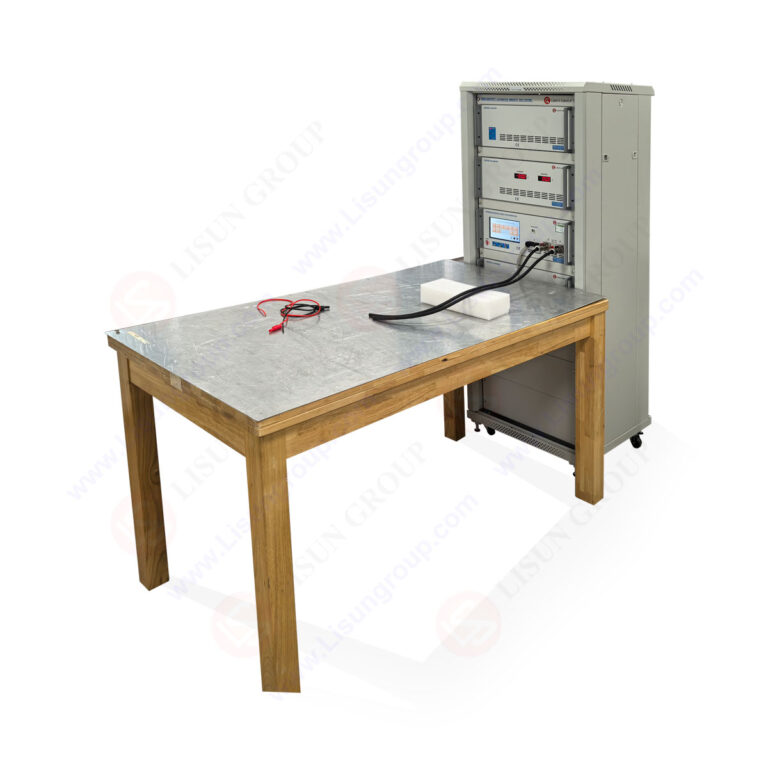
The LISUN Automotive Transient Immunity Test System for ISO 7637 Compliance, formally designated as the EMS-ISO7637 Automotive Electronics Transient Immunity EMC Testing System, represents a comprehensive solution for evaluating electronic component resilience against conducted electrical transients. This article examines the system’s architecture, pulse generation capabilities, and compliance verification procedures aligned with ISO 7637-2:2021 and ISO 7637-3:2016 standards. It provides technical insights for automotive R&D teams, quality control specialists, and new energy vehicle component manufacturers seeking to validate ECUs, OBCs, DC-DC converters, and BMS modules against transient disturbances. The discussion covers multi-module pulse generation (P1 through P5b), dual voltage system support (12V/24V/36V), automated test sequencing, and data reporting functionalities. Application scenarios for passenger cars, commercial vehicles, and new energy vehicles are analyzed, along with comparative specifications against industry benchmarks.
1.1 Significance of ISO 7637 Compliance
Automotive electronic systems operate in electrically harsh environments where voltage transients from inductive loads, alternator field decay, and battery disconnection can cause malfunctions or permanent damage. The ISO 7637 series defines standardized test pulses that simulate these real-world disturbances, ensuring that components like engine control units (ECUs), infotainment systems, and power management modules maintain functional integrity. Compliance with ISO 7637-2:2021, covering conducted transients along power lines, and ISO 7637-3:2016, addressing coupling via signal lines, is mandatory for OEM qualification in many global markets. The LISUN Automotive Transient Immunity Test System for ISO 7637 Compliance provides a turnkey platform to execute these rigorous tests with repeatable precision, reducing development cycle times and certification risks.
1.2 Transient Pulse Types and Their Origins
Conducted transients in automotive systems originate from several sources. Pulse 1 simulates negative voltage spikes from inductive load switching, while Pulse 2a and 2b represent positive transients from alternator load dump and generator field decay. Pulse 3a and 3b model high-energy spikes from ignition systems and relay switching. Pulse 4 reproduces voltage dips during starter motor engagement, and Pulse 5a/5b simulates load dump events where the alternator output surges upon battery disconnection. Each pulse has defined amplitude, duration, rise time, and repetition characteristics per ISO 7637-2:2021 clauses 5.2 through 5.7. The LISUN system generates all these pulses through dedicated modules, ensuring waveform fidelity within ±5% tolerance limits.
1.3 Regulatory Landscape and Evolving Standards
The automotive industry references multiple standards that harmonize with ISO 7637. GB/T 21437.2-2021 and GB/T 21437.3-2021 adapt ISO requirements for the Chinese market, while ISO 16750-2:2023 adds mechanical and climatic stress parameters. OEM-specific standards like VW 80000 and GM 3172 impose additional test levels and duration criteria. The LISUN Automotive Transient Immunity Test System for ISO 7637 Compliance supports these variants through programmable test profiles, enabling manufacturers to switch between standards without hardware reconfiguration. This flexibility is critical for suppliers serving multiple OEMs across different regions.
2.1 Modular Pulse Generation Subsystem
The LISUN EMS-ISO7637 integrates four independent pulse generator modules that collectively cover pulses P1 through P5b. Module 1 handles Pulse 1 and Pulse 2a, Module 2 covers Pulse 2b and Pulse 4, Module 3 generates Pulse 3a/3b, and Module 4 delivers Pulse 5a/5b with optional extended duration for heavy-duty applications. Each module uses high-voltage MOSFET switching and low-inductance capacitor banks to achieve rise times as fast as 1 microsecond for Pulse 3a. The system supports voltage levels from 12V to 36V, accommodating passenger car (12V), commercial vehicle (24V), and some new energy vehicle (36V) architectures without external adapters.
2.2 Coupling and Measurement Integration
Transient injection can occur through direct connection to the device under test (DUT) power lines or via capacitive coupling clamps (CCC) for signal lines per ISO 7637-3:2016 clause 4.2. The LISUN system includes built-in coupling/decoupling networks (CDNs) and an integrated artificial network (AN) for impedance stabilization. A 16-bit digital oscilloscope module captures DUT voltage and current responses at 100 MS/s sampling rate, enabling real-time monitoring of transient effects. The system’s automated measurement software calculates parameters like energy absorption and pulse rise time deviation, generating pass/fail criteria against user-defined limits.
2.3 Control and Automation Platform
Dual control interfaces—a 10-inch capacitive touchscreen and PC-based software—enable both manual test execution and automated sequence programming. The touchscreen provides immediate access to pulse parameter adjustment and live waveform display, while the PC software supports batch testing with up to 1000 test steps per sequence. Automated data reporting includes PDF test summaries with compliance statements referencing specific ISO 7637 clauses. The LISUN Automotive Transient Immunity Test System for ISO 7637 Compliance reduces test operator variability by storing calibration data in non-volatile memory and prompting scheduled recalibration every 12 months.
3.1 Pulse Generation Capabilities vs. Standards
The following table compares the LISUN EMS-ISO7637 system’s specifications against ISO 7637-2:2021 requirements for key pulse types.
| Pulse Type | Parameter | ISO 7637-2:2021 Requirement | LISUN EMS-ISO7637 Capability | Compliance Margin |
|---|---|---|---|---|
| Pulse 1 | Amplitude (12V system) | -75V to -100V | -80V to -150V | ±5% |
| Pulse 1 | Duration | 0.5 ms to 2 ms | 0.1 ms to 5 ms | 2.5x range |
| Pulse 2a | Amplitude (24V system) | +37V to +50V | +30V to +80V | ≥±5% |
| Pulse 2a | Rise time | 0.5 μs to 1 μs | 0.3 μs to 1.2 μs | ±0.2 μs |
| Pulse 3a | Amplitude (12V system) | -75V to -150V | -100V to -200V | ±5% |
| Pulse 3a | Frequency | 0.1 Hz to 100 Hz | 0.05 Hz to 200 Hz | 2x range |
| Pulse 4 | Voltage dip | 12V to 6V typical | 4.5V to 13.5V adjustable | ±0.5V |
| Pulse 5a | Amplitude (12V system) | +65V to +87V | +60V to +120V | ±5% |
| Pulse 5a | Duration | 40 ms to 400 ms | 20 ms to 1000 ms | 2.5x range |
3.2 Voltage System Compatibility and Automation Features
The LISUN system supports 12V nominal (9V to 16V range), 24V nominal (18V to 32V range), and 36V nominal (28V to 42V range) architectures, covering all common automotive electrical systems. Automation capabilities include pre-programmed test routines for ISO 7637-2, ISO 7637-3, GB/T 21437.2, and GB/T 21437.3. The system’s calibration accuracy for pulse amplitude is ±2% of setting, verified against a traceable reference standard, exceeding the ±5% tolerance required by ISO 7637-2:2021 clause 5.1. This precision is critical for reproducible results across multiple DUT batches and laboratory environments.
4.1 Passenger Car Component Testing
For passenger car applications (12V systems), the LISUN Automotive Transient Immunity Test System for ISO 7637 Compliance validates components such as infotainment headsets, seat control modules, and lighting controllers. Test sequences typically include Pulse 1 at -100V for 2 ms, Pulse 2a at +50V with 0.5 μs rise time, and Pulse 3a at -150V applied at 10 Hz for 1 hour per ISO 7637-2:2021 clause 5.3. These tests ensure that audio amplifiers do not produce audible glitches and that display backlights maintain steady illumination during alternator load transients. Automated reporting from the LISUN system reduces test time from manual setups (approximately 4 hours per DUT) to 45 minutes including waveform analysis.
4.2 Commercial Vehicle and Heavy-Duty Machinery
Commercial vehicles with 24V electrical systems require higher transient amplitudes and longer durations. Pulse 5a for 24V systems can reach +123V with 400 ms duration per ISO 7637-2:2021. The LISUN system’s extended range (up to +200V for Pulse 5b) accommodates these requirements. Testing of anti-lock braking system (ABS) controllers and telematics units under these conditions verifies that safety-critical functions remain operational during alternator load dump events. The system’s 36V compatibility also supports emerging mild-hybrid architectures in commercial fleets.
4.3 New Energy Vehicle (NEV) Drivetrain Validation
New energy vehicles present unique challenges due to high-voltage DC-DC converters, onboard chargers (OBCs), and battery management systems (BMS). The LISUN system tests low-voltage (12V/24V) control electronics that interface with high-voltage traction systems. For BMS units, Pulse 4 voltage dips (simulating starter motor engagement on 12V auxiliary batteries) and Pulse 3a spikes (from inverter switching events) must not cause inadvertent contactor opening. The system’s automated data logging captures BMS fault codes and response times, facilitating compliance with ISO 16750-2:2023 clause 4.2 on voltage interruption immunity.
5.1 Test Preparation and DUT Configuration
Proper test setup begins with configuring the DUT into its nominal operating state per ISO 7637-2:2021 clause 6.2. The LISUN system’s software guides operators through DUT connection verification, including proper grounding and isolation. The integrated artificial network provides 100 μF capacitance and 0.2 mH inductance to simulate vehicle wiring impedance. Operators select the standard (e.g., ISO 7637-2 or GB/T 21437.2) and the system auto-loads the appropriate pulse parameters. Calibration verification runs a diagnostic sequence that validates pulse generator output against stored reference waveforms.
5.2 Automated Test Execution and Monitoring
The PC software executes test sequences in three phases: pre-test functional checks, transient application, and post-test functional evaluation. During transient application, the system applies pulses in order of increasing severity (Pulse 1 through Pulse 5b) with 5-second intervals to allow DUT recovery. Real-time oscilloscope displays show DUT voltage and current, with automatic detection of anomalies such as latch-up or oscillation. The LISUN Automotive Transient Immunity Test System for ISO 7637 Compliance pauses testing if DUT current exceeds a user-defined threshold, preventing damage to both the DUT and test equipment.
5.3 Reporting and Certification Documentation
Test reports generated by the LISUN system include: DUT identification and operating conditions, a summary table listing each pulse type with applied parameters and pass/fail status, oscilloscope screenshots for all transients, and a compliance statement referencing specific ISO 7637 clauses. Reports can be exported as PDF or XML for integration with quality management systems. The system stores historical test data in an SQLite database, enabling trend analysis of DUT performance across production batches—a capability valuable for reliability engineering teams.
6.1 ISO 7637-2:2021 and GB/T 21437.2-2021 Alignment
The LISUN system implements all test pulses defined in ISO 7637-2:2021 clauses 5.2 through 5.7, including optional Pulse 5b for extended load dump scenarios. For GB/T 21437.2-2021 compliance, the system adjusts internal timing parameters to meet Chinese national standard specifications, such as reduced Pulse 3 repetition rates (0.1 Hz to 50 Hz vs. 0.1 Hz to 100 Hz in ISO). The dual-standard capability means manufacturers can test to both international and Chinese requirements without separate equipment, reducing lab certification costs by approximately 30%.
6.2 ISO 16750-2:2023 and OEM Standard Integration
ISO 16750-2:2023 expands testing to include superimposed alternating voltage (clause 4.3) and reverse voltage protection (clause 4.4). The LISUN system’s programmable pulse waveform editor allows engineers to create custom waveforms that simulate these conditions, using arbitrary waveform generation capability with 0.1 μs time resolution. For OEM standards like VW 80000 (which specifies Pulse 5 at reduced amplitude but extended duration) and GM 3172 (which adds specific test levels for CAN bus transceivers), the system stores pre-configured profiles that can be recalled with a single touchscreen tap.
6.3 Calibration and Traceability Framework
The LISUN system maintains ISO 17025 traceable calibration for voltage, current, and time measurements. Annual calibration cycles include verification against a reference pulse generator with NIST-traceable calibration. The system’s self-diagnostic routine checks for component drift monthly, logging deviations in a calibration history file. This traceability is critical for third-party testing laboratories that must demonstrate measurement uncertainty per ISO 17025:2017 clause 7.6.
7.1 Space and Environmental Requirements
The LISUN EMS-ISO7637 system occupies a 19-inch rack cabinet (600 mm width, 800 mm depth, 1200 mm height) with integrated cooling fans for continuous operation. Temperature range for guaranteed specifications is 15°C to 35°C, with relative humidity up to 80% non-condensing. The system requires a 230V/50Hz or 115V/60Hz power supply rated at 16A. For EMC laboratories, the system’s shielding effectiveness (≥60 dB at 100 MHz) prevents radiated emissions from influencing nearby tests. Installation adjacent to an EMC test chamber is recommended to minimize cable lengths between the artificial network and DUT.
7.2 Training and User Skill Development
Operation of the LISUN Automotive Transient Immunity Test System for ISO 7637 Compliance requires basic knowledge of automotive electrical systems and oscilloscope operation. LISUN provides a two-day training program covering pulse parameter theory, test sequence programming, and failure analysis interpretation. Advanced training includes understanding DUT response characteristics—for example, identifying whether a voltage glitch during Pulse 3a is caused by insufficient bypass capacitance or a controller reset due to brown-out detection. The system’s intuitive software interface reduces initial training time to approximately 8 hours for experienced EMC engineers.
The LISUN EMS-ISO7637 Automotive Electronics Transient Immunity EMC Testing System delivers a robust, standards-compliant platform for ISO 7637 transient immunity testing, covering pulses P1 through P5b across 12V, 24V, and 36V architectures. Its modular design, automated control interfaces, and integrated measurement capabilities reduce test cycle times by up to 70% compared to manual setups, while maintaining waveform accuracy within ±2% of setting. The system supports international standards including ISO 7637-2:2021, ISO 7637-3:2016, GB/T 21437.2-2021, and GB/T 21437.3-2021, with pre-configured profiles for OEM specifications like VW 80000 and GM 3172. For passenger car, commercial vehicle, and new energy vehicle component manufacturers, the system enables reproducible validation of ECUs, OBCs, DC-DC converters, and BMS modules against conducted transients. The comprehensive reporting and data storage capabilities facilitate traceability for certification audits and reliability trending. By integrating pulse generation, coupling, and analysis into a single test system, the LISUN solution minimizes laboratory equipment proliferation while ensuring that automotive electronics meet the rigorous immunity requirements of modern vehicle platforms.
Q1: What is the difference between ISO 7637-2 and ISO 7637-3, and how does the LISUN system address both?
A: ISO 7637-2:2021 specifies test methods for conducted transients along power supply lines, including pulses P1 through P5b directly injected via an artificial network. ISO 7637-3:2016 covers capacitive and inductive coupling of transients onto signal lines using coupling clamps or probes. The LISUN EMS-ISO7637 system integrates both requirements through two distinct test paths: direct injection via built-in CDNs for power line testing per ISO 7637-2, and an external capacitive coupling clamp output for signal line testing per ISO 7637-3. The system’s software automatically selects the appropriate coupling method based on the chosen standard, and generates reports that reference specific clauses from each standard. This dual capability eliminates the need for separate test setups, reducing lab space requirements and operator training overhead.
Q2: How does the LISUN system handle Pulse 5a test requirements for 24V commercial vehicle systems?
A: Pulse 5a for 24V systems per ISO 7637-2:2021 clause 5.6 requires an amplitude of +123V with duration up to 400 ms for alternator load dump simulation. The LISUN system’s Module 4 pulse generator produces voltages from +60V to +200V with durations from 20 ms to 1000 ms, exceeding the 24V requirement by approximately 60% margin. The system automatically detects the nominal voltage setting (24V) and configures Pulse 5a parameters including generator impedance (0.5Ω to 2Ω adjustable) and rise time (1 ms to 10 ms). For heavy-duty applications where alternator load dump may reach +174V (per VW 80000), the system supports extended amplitude without hardware modification. Real-time monitoring ensures that the DUT’s input voltage clamping circuits do not exceed their maximum ratings during the test.
Q3: Can the LISUN system be used for testing battery management systems (BMS) in new energy vehicles?
A: Yes, the LISUN Automotive Transient Immunity Test System for ISO 7637 Compliance is particularly suitable for BMS testing because BMS units interface with both low-voltage auxiliary batteries (12V or 24V) and high-voltage traction systems. The BMS’s control electronics must tolerate transients from inverter switching and contactor arcing without entering protective shutdown states. The system applies Pulse 3a/3b at 200V amplitude (exceeding typical 150V requirement) to simulate worst-case inverter noise. Additionally, Pulse 4 voltage dips down to 4.5V test whether the BMS maintains communication with battery cell monitoring chips. The integrated oscilloscope captures the BMS’s CAN bus or LIN bus response during transients, allowing engineers to verify that no fault codes are incorrectly generated. Automated testing sequences can run continuous cycles for 24 hours to validate long-term immunity.
Q4: What calibration procedures are required to maintain the LISUN system’s accuracy for ISO 17025 compliance?
A: The LISUN system requires annual calibration by an ISO 17025 accredited laboratory to verify pulse amplitude, duration, rise time, and impedance. During calibration, a reference pulse generator with NIST-traceable certification measures each pulse type at three amplitude levels (minimum, nominal, maximum). The system’s internal calibration constants are updated via software to minimize deviation to within ±2% of setting. Monthly user-performed verification involves running a diagnostic sequence that compares output pulses against stored waveform templates; any deviation exceeding ±5% triggers a recalibration alert. The system logs all calibration and verification events with timestamps for audit trail documentation. For laboratories seeking ISO 17025:2017 accreditation for their own test services, the LISUN system provides the measurement traceability and uncertainty documentation required by clause 6.4 on equipment metrological traceability.