









This technical article provides an in-depth examination of the LISUN Climate Chamber for IEC 60068-3-5 Temperature Testing, a critical instrument for LED reliability validation and accelerated aging assessment. Designed to meet rigorous industry standards including IES LM-80, IES LM-84, TM-21, and TM-28, this climate chamber integrates with LISUN’s LEDLM-80PL and LEDLM-84PL optical aging test systems to enable precise lumen maintenance testing over 6000-hour durations. The article explores the Arrhenius Model-based software for lifetime extrapolation to L70/L50 metrics, dual testing modes for flexible configuration, and hardware scalability supporting up to three connected temperature chambers. Targeted at LED manufacturing engineers, third-party laboratory technicians, and R&D specialists, this article delivers actionable insights into optimizing temperature testing workflows for compliance and product reliability.
1.1 The Role of Temperature Testing in LED Reliability
Temperature is the primary accelerating factor in LED lumen depreciation, making precise thermal control essential for reliability assessment. The LISUN Climate Chamber for IEC 60068-3-5 Temperature Testing provides a controlled environment for simulating thermal stress conditions that LEDs encounter over their operational lifetime. By maintaining stable temperature profiles within ±0.5°C accuracy, this chamber enables engineers to conduct reproducible accelerated aging tests that align with global standards.
1.2 Alignment with IEC 60068-3-5 and Supporting Standards
IEC 60068-3-5 outlines the methodology for temperature testing of electrotechnical products, emphasizing the importance of temperature uniformity and ramp rate control. The LISUN Climate Chamber complies with this standard while supporting complementary frameworks such as IES LM-80 for measuring lumen maintenance of LED packages, arrays, and modules, and IES LM-84 for evaluating LED light engines and integrated lamps. This multi-standard compatibility ensures that testing laboratories can satisfy diverse regulatory requirements using a single platform.
2.1 LEDLM-80PL: Optimized for LM-80/TM-21 Compliance
The LEDLM-80PL system is specifically designed for testing LED packages, arrays, and modules in accordance with IES LM-80-15. This variant supports testing at multiple case temperatures (typically 55°C, 85°C, and 105°C) over a minimum of 6000 hours, with data collection intervals aligned to LM-80 requirements. The integrated Arrhenius Model software automatically calculates accelerated aging factors and extrapolates lifetime to L70 (time to 70% lumen maintenance) using TM-21 methodology. Engineers can monitor up to 20 samples simultaneously, with each sample’s photometric data logged and analyzed in real-time.
2.2 LEDLM-84PL: Designed for LM-84/TM-28 Standards
The LEDLM-84PL variant targets LED light engines and integrated lamps under IES LM-84-19 and TM-28-19 standards. Unlike LM-80, LM-84 focuses on complete luminaires and self-ballasted LED lamps, requiring different mounting configurations and measurement protocols. The LEDLM-84PL incorporates a larger integrating sphere (up to 2-meter diameter) to accommodate full lamp assemblies while maintaining the same 6000-hour test duration. The system’s software supports TM-28 projection algorithms, which use a generalized exponential decay model to predict L70 and L50 lifetimes from early-stage data.
2.3 Comparative Specifications of Dual Systems
| Parameter | LEDLM-80PL | LEDLM-84PL |
|---|---|---|
| Applicable Standard | IES LM-80-15 | IES LM-84-19 |
| Lifetime Projection | TM-21-19 | TM-28-19 |
| Sample Type | LED packages, arrays, modules | LED light engines, integrated lamps |
| Test Temperature Range | 55°C–105°C | 55°C–85°C |
| Typical Test Duration | 6000 hours (minimum) | 6000 hours (minimum) |
| Maximum Samples | 20 per chamber | 10 per chamber |
| Integrating Sphere | ≤ 0.5-meter diameter | ≤ 2.0-meter diameter |
| Lumen Measurement | Photometric & colorimetric | Photometric & colorimetric |
| Chamber Compatibility | Up to 3 connected chambers | Up to 3 connected chambers |
3.1 Theoretical Foundation of the Arrhenius Model
The Arrhenius Model describes the temperature dependence of chemical reaction rates, which directly correlates with LED lumen depreciation mechanisms such as phosphor degradation and junction fatigue. The LISUN software implements the Arrhenius equation: ( L(T) = A cdot e^{E_a/(k cdot T)} ), where ( L(T) ) is the lifetime at temperature T, ( E_a ) is the activation energy, and k is Boltzmann’s constant. By testing at multiple temperatures (typically three), the software calculates the activation energy specific to the tested LED, enabling accurate extrapolation from 6000-hour test data to 50,000+ hour projected lifetimes.
3.2 TM-21 and TM-28 Extrapolation Algorithms
The software automatically applies TM-21’s exponential decay model, which assumes a constant failure rate after an initial stabilization period. For LM-80 data, the system calculates L70 and L50 values using the nonlinear least-squares regression method specified in TM-21-19. For LM-84 data, the TM-28 model uses a generalized exponential decay function that accommodates both early-life burn-in effects and long-term degradation. Engineers can compare extrapolated results across different test temperatures, generating confidence intervals and worst-case scenario analyses for product certification reports.
4.1 Continuous Mode for Standardized Testing
Continuous testing mode maintains constant temperature and current conditions throughout the 6000-hour test duration, as required by LM-80 and LM-84 protocols. The LISUN Climate Chamber operates within ±0.5°C of setpoint, with automatic data logging every 1000 hours for photometric measurements. This mode is ideal for third-party testing laboratories that require strict adherence to standard test procedures for compliance certification. The chamber supports dual-channel power supplies, allowing separate control of test current for different sample groups within the same run.
4.2 Cyclic Mode for Accelerated Aging Studies
Cyclic mode enables engineers to simulate real-world thermal cycling conditions, such as those encountered in automotive lighting or outdoor LED installations. The chamber can be programmed for temperature ramps from -40°C to +150°C with adjustable dwell times, heating rates up to 5°C/min, and cooling rates up to 3°C/min. This mode is particularly valuable for detecting thermomechanical stress failures, solder joint fatigue, and delamination in LED packages. The software logs photometric data at each temperature plateau, providing insight into how lumen output varies with thermal history.
4.3 Mode Selection Criteria for Engineers
| Test Requirement | Recommended Mode | Key Parameters |
|---|---|---|
| LM-80 Compliance | Continuous | 55°C, 85°C, 105°C; 6000 hours |
| LM-84 Compliance | Continuous | 55°C, 85°C; 6000 hours |
| Automotive Thermal Shock | Cyclic | -40°C to +125°C, 30-min dwell |
| Outdoor Luminaire Validation | Cyclic | -20°C to +60°C, 24-hour cycle |
| Rapid Life Testing | Continuous (elevated) | 105°C, 3000-hour accelerated |
| Material Degradation Study | Cyclic | 25°C to +150°C, 1000 cycles |
5.1 Chamber Specifications and Environmental Control
The LISUN Climate Chamber features a working volume of 225 liters (standard configuration) with internal dimensions optimized for LED sample mounting. Temperature uniformity across the chamber is maintained within ±1.5°C at 85°C setpoint, surpassing IEC 60068-3-5 requirements. The chamber includes a programmable logic controller (PLC) with PID tuning for stable operation, plus an integrated humidity control system (10%–98% RH) for combined temperature-humidity tests. Power consumption is rated at 4.5 kW during maximum heating, with optional liquid nitrogen cooling for rapid temperature transitions.
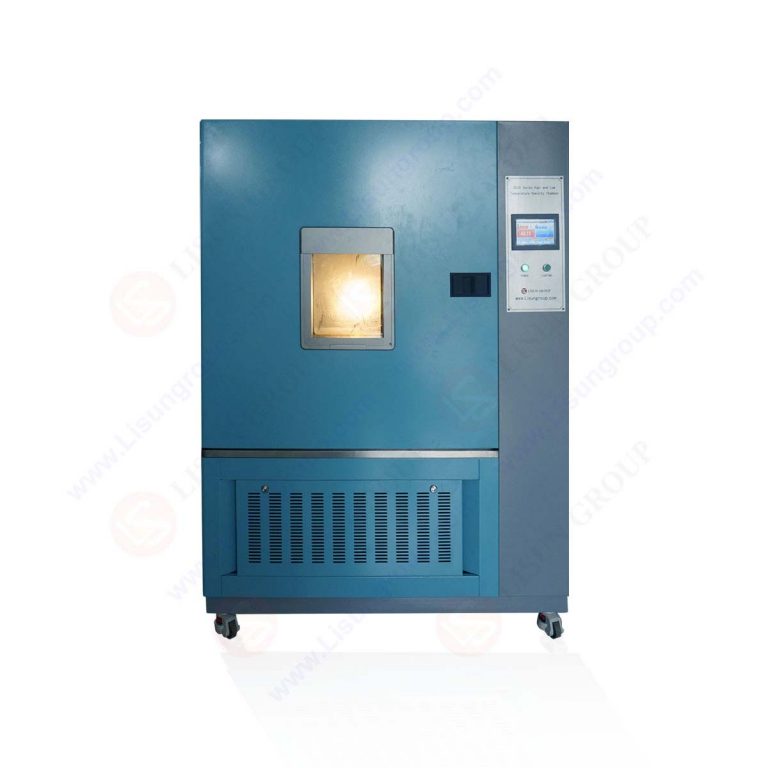
5.2 Multi-Chamber Connectivity for High-Throughput Testing
A key feature of the LISUN system is its ability to connect up to three temperature chambers to a single LEDLM-80PL or LEDLM-84PL control unit. Each chamber can operate independently at different temperatures, allowing simultaneous testing at 55°C, 85°C, and 105°C as required by LM-80 protocols. The centralized software manages data acquisition from all chambers, synchronizing photometric measurements and generating unified test reports. This configuration reduces total test time by 66% compared to sequential single-chamber testing, significantly accelerating product qualification cycles.
5.3 Customizable Sample Mounting and Current Control
The system supports up to 20 samples per chamber for LM-80 testing, with individual current control for each sample via precision constant-current drivers (accuracy ±0.5%). Sample mounting plates are available in aluminum, copper, and ceramic materials to match different thermal interface requirements. Engineers can customize the mounting layout for specific package types, including surface-mount devices (SMD), chip-on-board (COB), and high-power LED configurations. The chamber also includes optical fiber feedthroughs for in-situ spectrophotometric measurements without removing samples.
6.1 IES LM-79-19: Photometric and Colorimetric Measurement
All photometric measurements conducted within the LISUN Climate Chamber system comply with IES LM-79-19, which governs the electrical and photometric testing of solid-state lighting products. The integrated integrating sphere with spectroradiometer captures total luminous flux, chromaticity coordinates (CIE 1931 and CIE 1976), correlated color temperature (CCT), and color rendering index (CRI) at each measurement interval. The software automatically corrects for self-absorption effects and sphere non-uniformity, ensuring measurement accuracy within ±1.5% for flux and ±0.002 for chromaticity.
6.2 CIE 084, CIE 70, and CIE 127: Color Measurement Standards
The system incorporates CIE 084 (Measurement of Luminous Flux), CIE 70 (Absolute Methods for Measurement of Luminous Flux), and CIE 127 (Measurement of LEDs) guidelines for colorimetric accuracy. The spectroradiometer operates across 380–780 nm with 0.5 nm resolution, enabling precise calculation of dominant wavelength, excitation purity, and color consistency. For TM-28 testing, the software tracks color shift over time (Δu’v’) in accordance with the standard’s requirements, providing early warning of phosphor degradation or blue chip drift.
6.3 Cross-Standard Correlation and Validation
The LISUN system has been validated against independent third-party testing laboratories, showing correlation within ±3% for L70 predictions across 6000-hour tests. This cross-standard compliance ensures that results generated on the LISUN Climate Chamber are accepted for ENERGY STAR, DLC (DesignLights Consortium), and CE certification applications. The software generates customizable compliance reports that include raw data, statistical analysis, and standard-specific calculation summaries.
7.1 R&D Validation for New LED Products
During product development, engineers use the LISUN Climate Chamber to validate lumen maintenance projections for new LED designs. Testing at three temperatures (55°C, 85°C, 105°C) over 6000 hours provides sufficient data for TM-21 extrapolation with 90% confidence intervals. This enables early detection of design flaws such as inadequate thermal management, phosphor instability, or driver incompatibility before mass production. The Arrhenius-based software adjusts activation energy parameters for different LED chemistries, including phosphor-converted white LEDs, RGB multi-chip modules, and UV LEDs.
7.2 Quality Control for Production Batches
For manufacturing quality control, the system supports reduced test durations (2000–3000 hours) at elevated temperatures (105°C) to screen production batches for early-life failures. Statistical process control (SPC) charts generated by the software track batch-to-batch variation in initial lumen output, depreciation rate, and color stability. Out-of-specification batches can be identified within 1000 hours, allowing corrective action before full qualification testing. This approach reduces test costs by 40–60% compared to full 6000-hour testing for every batch.
7.3 Third-Party Testing Laboratory Applications
Third-party laboratories benefit from the LISUN system’s multi-standard compliance and high-throughput capabilities. With up to three chambers connected, a single LM-80 test series for 20 samples at three temperatures (60 samples total) can be completed within 6000 hours while generating certified reports accepted by global regulatory bodies. The system’s audit trail functionality logs all operator actions, calibration records, and environmental conditions, ensuring compliance with ISO 17025 requirements for testing laboratory accreditation.
The LISUN Climate Chamber for IEC 60068-3-5 Temperature Testing represents a comprehensive solution for LED lumen maintenance validation, combining precise thermal control with advanced lifetime prediction software. By integrating dual system variants (LEDLM-80PL and LEDLM-84PL), engineers can test LED packages, arrays, modules, and integrated lamps under the appropriate standards (IES LM-80, IES LM-84) with TM-21 or TM-28 extrapolation algorithms. The Arrhenius Model-based software enables accurate L70 and L50 predictions from 6000-hour test data, while dual testing modes (continuous and cyclic) accommodate both standard compliance and accelerated aging studies. The hardware’s scalability to three connected chambers reduces qualification time by 66%, making it ideal for high-throughput testing in manufacturing and third-party laboratory environments. Alignment with IES LM-79-19, CIE 084, CIE 70, and CIE 127 ensures photometric and colorimetric accuracy across all measurement points. For LED manufacturers seeking to validate product reliability, improve quality control, and achieve global certification, the LISUN Climate Chamber delivers reproducible, standards-compliant results that drive engineering confidence.
Q1: What is the minimum test duration required for LM-80 compliance using the LISUN Climate Chamber?
A: The IES LM-80-15 standard requires a minimum of 6000 hours of testing at three different case temperatures (typically 55°C, 85°C, and 105°C). The LISUN Climate Chamber supports this requirement with continuous mode operation, maintaining temperature stability within ±0.5°C throughout the entire test period. Data collection occurs at intervals specified by LM-80 (every 1000 hours up to 6000 hours, with optional intermediate measurements). For accelerated screening purposes, shorter durations (2000–3000 hours) at elevated temperatures can be used for internal quality control, but 6000 hours is mandatory for formal certification submissions. The system’s software automatically tracks elapsed hours, schedules measurements, and generates compliance-ready reports after test completion.
Q2: How does the LISUN system handle temperature uniformity across multiple connected chambers?
A: Each LISUN Climate Chamber operates independently with its own PID temperature controller, ensuring uniformity of ±1.5°C across the working volume at any steady-state temperature from -40°C to +150°C. When up to three chambers are connected to a single LEDLM-80PL or LEDLM-84PL control unit, the centralized software manages independent temperature setpoints for each chamber. This configuration allows simultaneous testing at 55°C, 85°C, and 105°C as required by LM-80, while each chamber maintains its own temperature profile without interference. The software monitors chamber status continuously, and if any chamber deviates from setpoint by more than ±1°C, an alarm triggers and all photometric measurements from that chamber are flagged for review.
Q3: What is the difference between TM-21 and TM-28 lifetime projection methods in the LISUN software?
A: TM-21-19 is used exclusively with IES LM-80-15 data for LED packages, arrays, and modules. It applies an exponential decay model with nonlinear regression, assuming a constant relative degradation rate after stabilization. TM-28-19, on the other hand, is designed for LM-84-19 data from LED light engines and integrated lamps. TM-28 uses a generalized exponential decay model that accounts for early-life burn-in effects and allows for a variable degradation rate over time. The LISUN software automatically selects the appropriate algorithm based on the system variant (LEDLM-80PL for TM-21, LEDLM-84PL for TM-28) and generates confidence intervals for L70 and L50 projections. Both methods require minimum 6000 hours of testing for formal reports, though the software can generate preliminary projections from shorter data sets with appropriate disclaimers.