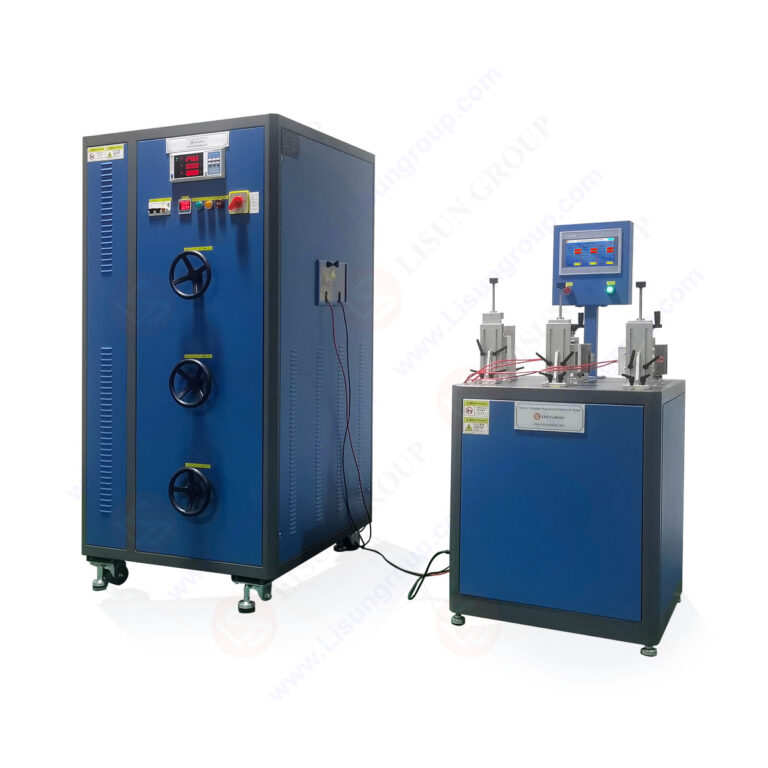
This article provides a comprehensive technical analysis of the LISUN CZKS-3 Three-Position Plug Socket Switch Life Tester, focusing on its role in automated electrical durability testing for plugs, sockets, and switches. The LISUN CZKS-3 series, including variants CZKS-3P, CZKS-3S, and CZKS-3A, is designed to simulate repetitive insertion, withdrawal, and mechanical actuation cycles essential for compliance with international safety standards. The core focus of this guide is to examine the tester’s engineering architecture, test parameter ranges, and application in verifying breaking capacity and contact endurance. By integrating PLC-controlled cylinder-driven actuation with real-time failure detection, the CZKS-3 series enables manufacturers to validate product reliability under accelerated life-cycle conditions. This article addresses technical specifications, standard compliance, operational considerations, and practical implementation strategies for quality assurance laboratories.
1.1 System Architecture and Core Components
The LISUN CZKS-3 Three-Position Plug Socket Switch Life Tester employs a modular mechanical design featuring three independent test stations, each equipped with pneumatic cylinder-driven actuators. The system utilizes a programmable logic controller (PLC) to govern actuation speed, dwell time, and stroke distance with precision tolerances of ±0.1 mm. Each test station accommodates different specimen geometries, enabling simultaneous testing of plugs, sockets, and rocker switches. The CZKS-3P variant includes an integrated power supply for load current monitoring, while the CZKS-3S model features enhanced stroke adjustment for switch durability testing. The CZKS-3A variant incorporates an auxiliary contact adhesion detection module, critical for identifying electrical fatigue failure mechanisms.
1.2 Test Parameter Configuration Capabilities
The CZKS-3 series supports programmable test parameters including insertion force ranging from 5 N to 150 N, withdrawal speed adjustable between 0.1 m/s and 1.5 m/s, and dwell time configurable from 0.5 seconds to 30 seconds. The system records cumulative cycle counts up to 1,000,000 cycles with automatic test termination upon failure detection. Parameter sets are stored in non-volatile memory, allowing recall of up to 50 predefined test protocols. The test platform interfaces with a 7-inch touchscreen HMI for real-time data visualization, including force-displacement curves and contact resistance trends.
1.3 Variant Differentiation and Application Scope
The base model CZKS-3 serves general-purpose plug and socket testing. The CZKS-3P adds power monitoring capability for breaking capacity verification under load conditions up to 250 V and 16 A. The CZKS-3S is optimized for switch life testing with a spring-loaded actuation mechanism that simulates tactile feedback. The CZKS-3A incorporates an electrical continuity check circuit capable of detecting contact welding or adhesion events within 5 milliseconds. These variants collectively address the testing requirements outlined in IEC 60884-1 and IEC 60669-1 for household electrical accessories.
2.1 Mechanical and Electrical Parameter Table
| Parameter | CZKS-3 | CZKS-3P | CZKS-3S | CZKS-3A |
|---|---|---|---|---|
| Test Stations | 3 | 3 | 3 | 3 |
| Max Cycle Count | 1,000,000 | 1,000,000 | 1,000,000 | 1,000,000 |
| Insertion Force Range | 5–150 N | 5–150 N | 5–150 N | 5–150 N |
| Withdrawal Speed | 0.1–1.5 m/s | 0.1–1.5 m/s | 0.1–1.5 m/s | 0.1–1.5 m/s |
| Load Current Capacity | N/A | 0–16 A | 0–10 A | 0–10 A |
| Voltage Rating | N/A | 250 V AC | 250 V AC | 250 V AC |
| Contact Detection | Force sensor | Force + Current | Force + Continuity | Force + Adhesion |
| Data Logging Interval | 100 cycles | 10 cycles | 10 cycles | 1 cycle |
2.2 Measurement Accuracy and Tolerance
The LISUN CZKS-3 series achieves force measurement accuracy within ±1% of full scale using precision strain gauge load cells. Contact resistance is monitored via four-wire Kelvin measurement with a resolution of 0.1 mΩ. The CZKS-3P variant includes a true-RMS current sensor with ±0.5% accuracy for breaking capacity tests. Stroke position feedback from linear encoders provides 0.01 mm resolution for insertion depth verification. These measurement capabilities align with the requirements specified in IEC 61058-1 for switch testing.
2.3 Environmental and Operational Limits
The test system operates within ambient temperature ranges of 10°C to 40°C and relative humidity up to 85% non-condensing. Compressed air supply requirements are 0.4–0.7 MPa at a flow rate of 50 L/min for pneumatic cylinder operation. Electrical input requires 220 V AC ±10%, 50/60 Hz, with a maximum power consumption of 500 W. The CZKS-3S variant includes an optional environmental chamber interface for temperature-conditioned testing from -10°C to 60°C.
3.1 IEC 60884-1 Application for Plugs and Sockets
The CZKS-3 series directly supports Clause 21 of IEC 60884-1, which specifies mechanical endurance testing for plugs and socket-outlets. The test protocol requires 10,000 cycles of insertion and withdrawal at a rate of 30 cycles per minute, with no electrical load for normal operation tests. The CZKS-3 system automates this process while recording contact resistance changes exceeding 1 Ω as failure indicators. Clause 22 verification for breaking capacity under load is enabled by the CZKS-3P variant, which can apply rated current during the withdrawal phase to simulate arc extinction conditions.
3.2 IEC 60669-1 Compliance for Switches
For switch durability testing, the CZKS-3S variant meets the requirements of IEC 60669-1 Clause 19, which mandates 20,000 cycles of mechanical operation under resistive or inductive loads. The system’s programmable dwell time allows simulation of momentary-contact and maintained-contact switch types. Clause 20 verification for electrical endurance at rated voltage and current is performed using the integrated load bank and real-time arc detection circuit.
3.3 IEC 61058-1 and GB/T 2099.1 Alignment
The CZKS-3 series also supports IEC 61058-1 for appliance switches, specifically Clause 15 for mechanical endurance and Clause 16 for electrical endurance testing. The GB/T 2099.1 Chinese national standard aligns closely with IEC 60884-1, and the CZKS-3 includes pre-programmed test protocols for both standards. The system’s data logging capabilities enable automatic generation of test reports formatted per the standard’s documentation requirements, including force-displacement curves at 10-cycle intervals during the first 100 cycles and every 1,000 cycles thereafter.
4.1 Insertion and Withdrawal Cycle Testing
The standard test procedure for plug and socket evaluation involves mounting the socket specimen on a fixed plate and the plug on a moving carriage driven by the pneumatic cylinder. The CZKS-3 series executes a complete insertion stroke of 25 mm at a controlled velocity, holds for a programmed dwell time, and then retracts at the specified withdrawal speed. Failure criteria include force exceeding the threshold of 150 N, contact resistance increasing by 50% from baseline, or physical damage detected by the vision system. The CZKS-3A variant additionally monitors for contact adhesion by detecting electrical continuity after the withdrawal stroke.
4.2 Switch Durability and Breaking Capacity Testing
Switch testing on the CZKS-3S variant uses a spring-loaded actuator that replicates human finger force profiles with adjustable peak force from 5 N to 50 N. The actuation stroke is configurable from 3 mm to 15 mm to accommodate different switch designs. Breaking capacity tests on the CZKS-3P variant involve applying rated voltage and current during the switch actuation cycle, with arc detection via photodiode sensors. The system records each cycle’s arc duration and energy to identify contact degradation trends.
4.3 Accelerated Life Testing Protocols
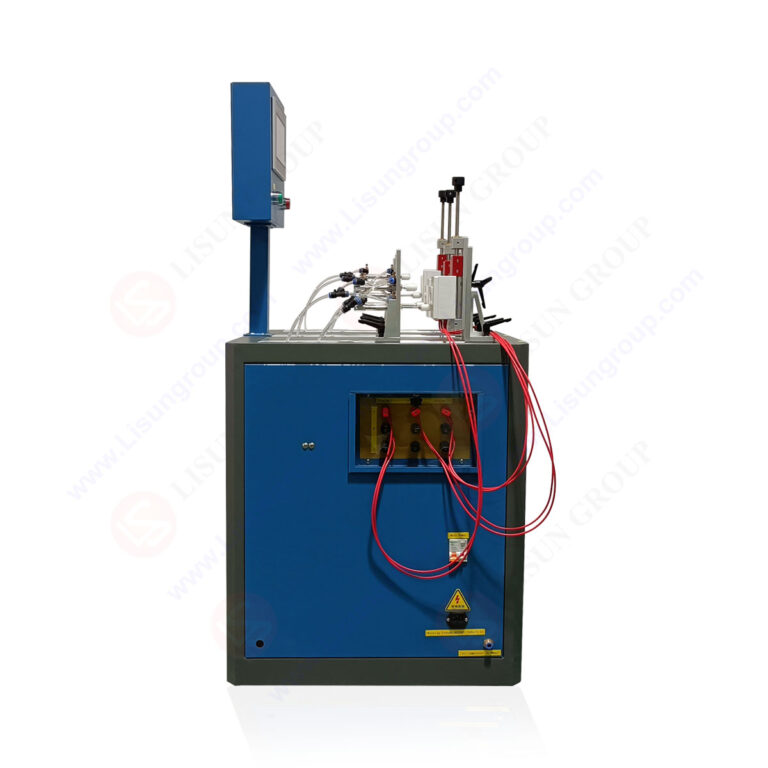
For accelerated aging studies, the LISUN CZKS-3 series can execute continuous operation at 60 cycles per minute for up to 72 hours without interruption. The system’s PLC controller implements adaptive cycle rate reduction when force thresholds exceed 80% of the specified limit, preventing mechanical overload. Temperature rise during accelerated testing is monitored via infrared sensors at each test station, with automatic shutdown initiated if surface temperatures exceed 85°C.
5.1 Electrical Fatigue Failure Identification
The CZKS-3 series employs multiple failure detection modalities. Contact resistance increase is detected in real-time using the four-wire measurement method, with alarms triggered for resistance values exceeding 100 mΩ. Arc detection through current waveform analysis identifies abnormal arcing events lasting longer than 5 milliseconds. The CZKS-3A variant’s adhesion detection circuit uses a low-voltage, low-current probe signal to verify contact separation within 2 milliseconds of actuator retraction.
5.2 Mechanical Wear Pattern Analysis
Force-displacement hysteresis curves generated by the CZKS-3 system provide insight into mechanical wear progression. Initial insertion force typically ranges from 30 N to 80 N for compliant specimens, increasing by 10–20% over 10,000 cycles due to surface wear. The system’s linear encoder data is used to calculate insertion depth loss, which should not exceed 0.5 mm over the specimen’s rated life. These parameters are documented in IEC 60884-1 Annex A for quality classification.
5.3 Data Logging and Report Generation
Each test cycle produces a data record including cycle number, insertion force peak, withdrawal force peak, contact resistance, and cumulative failure count. The LISUN CZKS-3 series stores up to 1,000,000 data points in internal memory and exports CSV files via USB or Ethernet for external analysis. The system generates trend graphs automatically, with moving average smoothing over 100-cycle windows for force and resistance parameters.
6.1 Household Electrical Component Manufacturing
Manufacturers of power cords, extension leads, and wall sockets utilize the CZKS-3 for production quality audits. The test system verifies that each production lot meets the 10,000-cycle requirement per Clause 21 of IEC 60884-1. The CZKS-3P variant is used for breaking capacity verification of fused plugs and switched sockets, ensuring compliance with Clause 22 arc extinction requirements.
6.2 Automotive Electronics Durability Verification
Automotive power connectors and control switches undergo testing on the CZKS-3S variant to simulate the 50,000-cycle durability requirements specified in automotive standards like LV 124. The system’s programmable force profiles replicate the mechanical loading conditions of vehicle installation environments. Salt spray preconditioning of specimens before CZKS-3 testing evaluates corrosion resistance effects on contact performance.
6.3 Third-Party Testing Laboratory Operations
Independent testing laboratories use the CZKS-3 series for certification testing of client products. The system’s ability to store 50 test protocols enables rapid switching between different standard requirements. The CZKS-3A variant is particularly valuable for testing safety-critical components where contact adhesion detection is mandatory for fail-safe certification.
7.1 Routine Maintenance Procedures
Weekly maintenance for the LISUN CZKS-3 series includes cleaning of pneumatic cylinder seals with isopropyl alcohol and verification of load cell zero offsets. Monthly calibration of force sensors uses certified weights from 10 N to 150 N, with drift correction applied if errors exceed 0.5%. The contact resistance measurement circuit is calibrated using precision resistors of 1 mΩ, 10 mΩ, and 100 mΩ values traceable to national standards.
7.2 Common Operational Issues
Force reading instability typically results from pneumatic pressure fluctuations or cylinder seal wear. The system’s diagnostics screen displays real-time pressure readings, and maintenance should be performed if supply pressure varies by more than 0.02 MPa. Cycle count accuracy errors may occur due to actuator limit switch misalignment; calibration of mechanical end stops every 100,000 cycles resolves this issue.
7.3 Software and Firmware Updates
The CZKS-3 series supports field-upgradeable firmware via USB connection. Updates include new test protocols aligned with evolving IEC and GB standards, improved failure detection algorithms for low-resistance contacts, and enhanced data export compatibility with laboratory information management systems (LIMS). Historical calibration data is preserved during firmware updates to maintain traceability.
The LISUN CZKS-3 Three-Position Plug Socket Switch Life Tester represents a robust solution for automated electrical durability testing across multiple product categories. Its technical architecture integrates PLC-controlled pneumatic actuation with precision measurement, enabling compliance verification for IEC 60884-1, IEC 60669-1, IEC 61058-1, and GB/T 2099.1 standards. The CZKS-3, CZKS-3P, CZKS-3S, and CZKS-3A variants provide tailored capabilities for plugs, sockets, switches, and contact adhesion detection, respectively. With force measurement accuracy of ±1%, contact resistance resolution of 0.1 mΩ, and support for up to 1,000,000 test cycles, the system delivers reliable data for product development and quality assurance. The inclusion of real-time failure detection, automated reporting, and accelerated life testing protocols positions the CZKS-3 series as a comprehensive tool for electrical component manufacturers and testing laboratories seeking to validate product durability and safety compliance. By addressing both mechanical and electrical failure modes, this test platform enables informed design improvements and certification readiness.
Q1: What is the primary difference between the LISUN CZKS-3 base model and the CZKS-3P variant in terms of testing capability?
A: The base model CZKS-3 is designed for mechanical endurance testing of plugs and sockets without electrical load, performing insertion and withdrawal cycles while monitoring force and displacement. The CZKS-3P variant adds an integrated power supply and load bank capable of delivering up to 250 V AC and 16 A during the testing cycle. This enables breaking capacity testing per IEC 60884-1 Clause 22, where the plug is withdrawn under load to simulate arc extinction conditions. The CZKS-3P also records true-RMS current and arc duration, providing comprehensive data for electrical endurance verification.
Q2: How does the CZKS-3A variant detect contact adhesion during durability testing?
A: The CZKS-3A incorporates an auxiliary electrical continuity detection circuit that operates independently of the main load current. After each withdrawal stroke, a low-voltage (5 V DC) and low-current (10 mA) probe signal is applied across the separated contacts. If electrical continuity is detected beyond 2 milliseconds after mechanical separation, the system flags a contact adhesion failure. This detection method is critical for identifying contact welding, which can occur due to arcing or material transfer during high-current switching. The CZKS-3A logs the adhesion event with the cycle number and stores the waveform for post-test analysis.
Q3: Can the CZKS-3 series test automotive connectors rated for high vibration environments?
A: Yes, the CZKS-3S variant can be configured for automotive connector testing by programming insertion force profiles that replicate vehicle installation conditions. The system supports test cycles up to 50,000 operations, which aligns with common automotive durability requirements such as LV 124. However, the CZKS-3 series is primarily designed for linear insertion and withdrawal motions. For vibration-specific testing, a separate vibration table may be required. The CZKS-3S’s programmable dwell time allows simulation of intermittent contact conditions that occur in automotive environments.
Q4: What calibration intervals are recommended for maintaining the CZKS-3’s measurement accuracy?
A: Routine calibration of force sensors should be performed monthly using certified test weights ranging from 10 N to 150 N, ensuring measurement accuracy remains within ±1% of full scale. Contact resistance measurement circuits require quarterly calibration using precision resistors with values of 1 mΩ, 10 mΩ, and 100 mΩ traceable to national standards. The linear encoder used for stroke position verification should be calibrated annually using a laser interferometer. Calibration certificates for the load cells and current sensors should be maintained for audit purposes per ISO 17025 requirements.
Q5: How many test protocols can be stored in the CZKS-3 system, and can custom standards be programmed?
A: The LISUN CZKS-3 series stores up to 50 user-defined test protocols in non-volatile memory, which includes pre-loaded profiles for IEC 60884-1, IEC 60669-1, IEC 61058-1, and GB/T 2099.1. Custom protocols for proprietary or specialized standards can be programmed through the touchscreen HMI interface, allowing parameter adjustments for insertion force, withdrawal speed, dwell time, load current, and failure thresholds. Protocol configuration changes are password-protected to prevent unauthorized modifications. All stored protocols can be exported and imported via USB for sharing between multiple test systems.