









Abstract
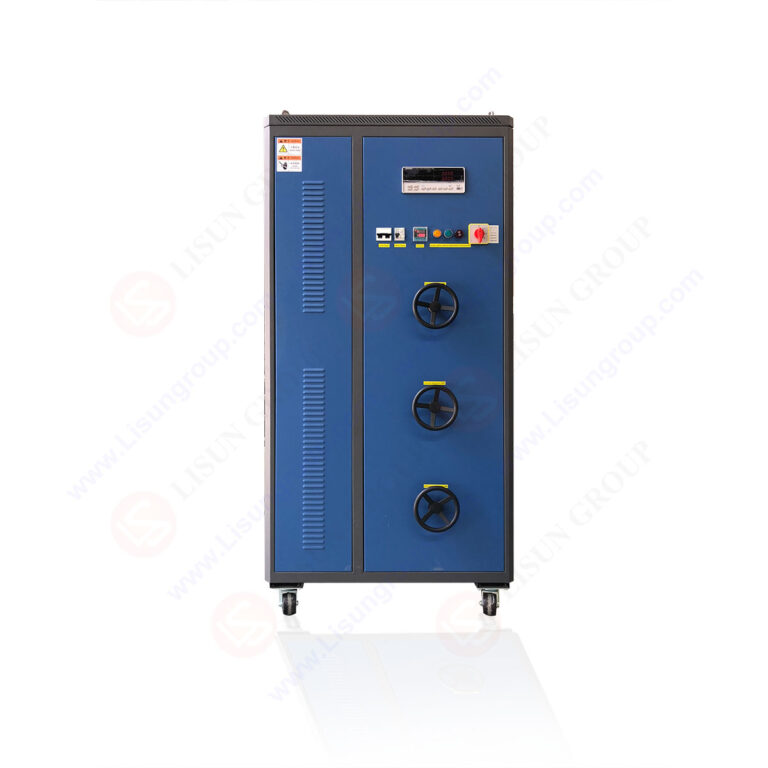
For electrical accessory manufacturers and compliance laboratories, validating the performance and safety of switches, dimmers, and other control gear under realistic load conditions is paramount. The LISUN DFX series Externally Ballasted Fluorescent Lamp Test Load Cabinet serves as a critical instrument in this process, providing a precise and programmable simulation of fluorescent lamp loads for rigorous compliance testing. This technical article explores the core capabilities of the DFX series, detailing its role in simulating complex load characteristics, ensuring adherence to international IEC and GB standards, and integrating seamlessly into comprehensive testing workflows. By offering a stable, repeatable, and highly configurable load test cabinet, it enables engineers to verify electrical accessory endurance, temperature rise, and operational safety with unparalleled accuracy and efficiency.
1.1 The Critical Role of Realistic Load Simulation
Electrical accessories, such as wall switches, dimmers, and socket-outlets, are not merely mechanical devices; they are components that must reliably manage electrical current under specific load types. Testing with simple resistive loads fails to replicate the inrush currents, harmonic content, and power factor characteristics presented by real-world devices like fluorescent lamp ballasts. Accurate simulation of these ballasted lamp load profiles is essential to uncover potential failure modes related to contact welding, insulation breakdown, and premature aging that would otherwise remain undetected until field failure.
1.2 Compliance-Driven Testing Requirements
Global safety and performance standards mandate specific test protocols for accessories controlling discharge lamp circuits. Standards such as IEC 60669-1 for switches and IEC 60884-1 for socket-outlets contain clauses that explicitly require testing with specified lamp ballast loads. The LISUN DFX series is engineered to meet and exceed these requirements, providing a standardized, laboratory-grade environment to execute tests like abnormal operation, endurance, and temperature rise under precisely defined inductive and capacitive load conditions, thereby generating defensible compliance data.
2.1 Programmable Load Characteristic Simulation
At the heart of the DFX series is its ability to emulate the complex electrical behavior of externally ballasted fluorescent lamps. The cabinet integrates high-precision, low-loss inductors and capacitors to construct programmable resistive/inductive/capacitive load simulation networks. Users can configure parameters to match the specific characteristics of the ballast under test, including its inherent power factor. This programmability ensures the test load accurately reflects the real application, moving beyond generic approximations to targeted, relevant stress testing.
2.2 Precision Measurement and Control Systems
The system employs high-accuracy digital power measurement technology to monitor test parameters in real-time. Key metrics such as output current (RMS), power, and power factor are displayed with high resolution on the intuitive human-machine interface (HMI). Closed-loop control systems maintain the set load current with high stability, even compensating for line voltage fluctuations. This measurement accuracy, typically within ±(0.5% reading + 0.2% range) for current, is fundamental for generating reliable and repeatable test data that stands up to audit scrutiny.
3.1 Key Performance Parameters
The LISUN DFX series is defined by several critical technical specifications that dictate its application scope. The output current range is a primary differentiator, with models covering from 0.10A to 80.00A. The load’s power factor is adjustable, typically within a range of 0.3 to 1.0, allowing simulation of both highly inductive ballast loads and purely resistive scenarios. Integrated load capacitance values are provided to simulate specific lamp starting conditions as required by standards. The cabinet operates from a standard AC supply and provides isolated, stable load output channels.
3.2 DFX Series Model Comparison
The series comprises multiple models to suit different laboratory throughput and current rating requirements. The following table provides a comparative overview of core specifications.
| Model | Output Current Range (AC) | Number of Independent Channels | Max. Current per Channel | Typical Input Supply |
|---|---|---|---|---|
| DFX-20 | 0.10A – 20.00A | 1 | 20.00A | 220VAC, 50/60Hz |
| DFX-20-3CH | 0.10A – 20.00A | 3 | 20.00A | 220VAC, 50/60Hz |
| DFX-40 | 0.10A – 40.00A | 1 | 40.00A | 220VAC, 50/60Hz |
| DFX-60 | 0.10A – 60.00A | 1 | 60.00A | 220VAC, 50/60Hz |
| DFX-80 | 0.10A – 80.00A | 1 | 80.00A | 220VAC, 50/60Hz |
Table 1: Comparison of LISUN DFX Series Load Cabinet Models.
4.1 Alignment with IEC and GB Standard Clauses
The design and function of the DFX cabinet are directly referenced to specific clauses within international and national standards. It is engineered to fulfill the load requirements for tests including, but not limited to:
- IEC 60669-1 Clause 19.2 (Endurance Test): Requires switches controlling discharge lamps to be tested with a representative ballast load.
- IEC 60884-1 Clause 20 (Temperature Rise Test): Specifies testing socket-outlets with the appropriate load, which for fluorescent lamp circuits, necessitates a ballasted load.
- IEC 61058-1 Clause 17 (Endurance Test): Details the load conditions for appliance switches, including those for fluorescent lamps.
- GB 16915.1 & GB 2099.1: The Chinese national standards harmonized with IEC 60669-1 and IEC 60884-1, containing identical load simulation requirements.
4.2 Exceeding Minimum Standard Requirements
While standards define minimum test conditions, the LISUN DFX load test cabinet offers capabilities that often exceed these baselines, enabling more rigorous quality verification.
| Test Requirement | Standard Minimum | LISUN DFX Series Capability |
|---|---|---|
| Current Regulation | Stable load as per ballast. | High-precision digital setpoint & closed-loop regulation. |
| Load Profile | Specified PF inductive load. | Programmable PF (0.3-1.0), simulating exact ballast characteristics. |
| Measurement | Verification of test conditions. | Integrated high-accuracy digital metering for real-time monitoring. |
| Test Automation | Manual operation possible. | Programmable cycles, counts, and integration with master testers. |
Table 2: Capability comparison between standard requirements and DFX series features.
5.1 Synergy with LISUN Life and Endurance Testers
The LISUN DFX series is not a standalone instrument but a core component of a holistic testing solution. It is designed for seamless integration with LISUN’s range of life and endurance test equipment. For example, it can be directly controlled by the LISUN CZKS series multi-station life testers. In this configuration, the CZKS tester automates the mechanical actuation (ON/OFF cycling) of the switch under test, while the DFX cabinet provides the precise electrical load. This integration fully automates complex endurance tests per IEC 60669-1 Clause 19, improving throughput, eliminating operator error, and ensuring perfect synchronization between mechanical action and electrical loading.
5.2 Complementary Testing Equipment Ecosystem
Beyond life testers, the DFX cabinet fits into a broader compliance lab ecosystem. It can be used in conjunction with equipment like the LISUN SW-6 cord and wire bending tester for tests on couplers, or with temperature rise test setups. The standardized electrical interface and control logic of LISUN equipment allow for the construction of customized, automated test benches that combine mechanical, environmental, and electrical stress factors, providing a complete picture of product reliability and compliance.
6.1 Intuitive Control and Parameter Setting
The cabinet features a user-friendly digital interface, typically a color touchscreen HMI. From this panel, engineers can directly set all critical test parameters: target current, test power factor, load capacitance (for specific models/configurations), and cycle counting for automated tests. The interface provides clear menu navigation, storing multiple preset test profiles for different product types or standard clauses, which streamlines lab operations and reduces setup time for recurring test programs.
6.2 Safety and Protection Mechanisms
Built with operator and device-under-test safety as a priority, the DFX incorporates multiple protection features. These include over-current protection, over-temperature monitoring for internal components, emergency stop circuits, and isolated output terminals. The robust design ensures safe operation during long-duration endurance tests that may run for tens of thousands of cycles. Safety interlocks and clear warning indicators contribute to a secure laboratory testing environment.
7.1 For Electrical Accessory Manufacturers
In-house R&D and quality labs within manufacturing facilities utilize the DFX cabinet for design validation, pre-compliance testing, and production batch sampling. It enables engineers to identify design weaknesses early, verify that products meet or exceed the rated electrical life, and ensure consistent quality before submitting samples to third-party laboratories. This reduces time-to-market and minimizes the risk of non-conformity during formal certification.
7.2 For Third-Party Testing and Certification Laboratories
For accredited test labs, the LISUN DFX Externally Ballasted Fluorescent Lamp Test Load Cabinet is an essential tool for performing certified compliance testing. Its traceable accuracy, alignment with standard clauses, and ability to generate repeatable results are critical for issuing test reports that are accepted by certification bodies globally. It enhances lab credibility, efficiency, and the scope of testing services offered for electrical accessories.
The LISUN DFX series represents a sophisticated, standards-aligned solution for a fundamental challenge in electrical accessory compliance: accurate load simulation. By providing a programmable, stable, and measurable source of ballasted fluorescent lamp load, it transforms subjective testing into a data-driven engineering process. Its direct relevance to key clauses in IEC 60669-1, IEC 60884-1, and related GB standards makes it an indispensable tool for generating defensible certification data. The practical value for end-users—manufacturers and laboratories alike—lies in its integration capability, which automates complex endurance tests, its operational safety, and its role in mitigating field failure risk by uncovering latent design flaws under realistic conditions. Ultimately, investing in a precise electrical accessory load tester like the DFX series is an investment in product reliability, regulatory compliance, and brand reputation.
Q1: What is the primary difference between the DFX-20 and DFX-20-3CH models, and when should I choose the 3-channel version?
A: The primary difference is the number of independent, simultaneously controllable load channels. The standard DFX-20 has a single output channel with a 0.10A-20.00A range. The DFX-20-3CH provides three identical, isolated channels, each capable of delivering up to 20.00A independently. You should choose the 3-channel version for laboratory efficiency when performing parallel testing. For instance, you can simultaneously conduct life tests on three separate switches or three poles of a multi-pole switch, tripling throughput without needing multiple load cabinets. It is ideal for high-volume production sampling or labs with space constraints seeking to maximize testing capacity.
Q2: Can the LISUN DFX cabinet simulate loads for LED drivers or electronic transformers, not just magnetic ballast fluorescent lamps?
A: The DFX series is specifically optimized to simulate the characteristic inductive load profile of externally ballasted fluorescent lamps as defined in standards like IEC 60669-1. While it can create a range of power factors (0.3-1.0), its core design centers on the stable, repetitive load pattern of magnetic ballasts. Modern electronic LED drivers or high-frequency electronic ballasts often present more complex, non-linear loads with significant harmonic content. For simulating these, a more advanced programmable AC/DC electronic load may be required. The DFX is the definitive solution for compliance testing against the classic fluorescent lamp load clauses in prevailing accessory standards.
Q3: How does the DFX cabinet integrate with an automated life tester like the LISUN CZKS, and what are the benefits?
A: Integration is achieved through a dedicated control communication interface (typically relay contacts or opto-isolated signals). The CZKS life tester controls the mechanical cycling of the switch under test. At the precise moment the CZKS closes the switch contacts, it sends a signal to the DFX cabinet to apply the full load current. When the CZKS opens the switch, it signals the DFX to remove the load. This synchronization ensures the switch is stressed under full load during the “ON” period, as required by standard, and protects contacts from arcing during closure. The benefit is full automation: the system can run unattended for tens of thousands of cycles, logging results and halting on failure, ensuring perfect test execution and freeing technician time.