Abstract
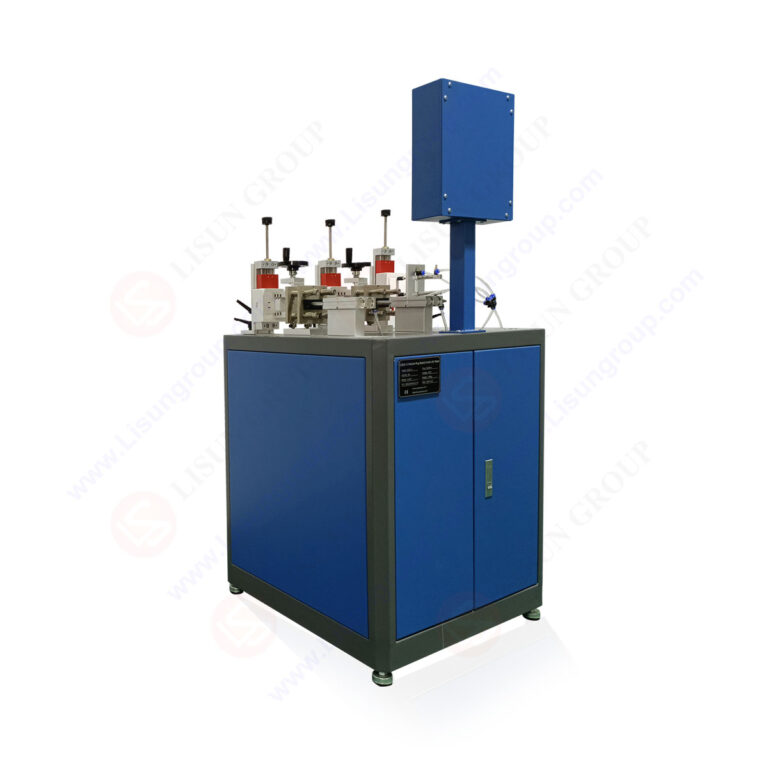
This technical article presents the LISUN CZKS-3 series plug, socket, and switch durability testing systems, focusing on their role in achieving IEC compliance for electrical safety testing laboratories. The CZKS-3 series comprises four variants—CZKS-3, CZKS-3P, CZKS-3S, and CZKS-3A—each designed to address specific requirements in electrical durability testing, breaking capacity verification, and mechanical endurance assessment. These systems support compliance with IEC 60884-1, IEC 60669-1, IEC 61058-1, and GB/T 2099.1 standards. The article examines design principles, test parameter configurations, application scenarios in household and automotive electronics components, and comparative performance data. Engineers and quality control professionals will gain insights into automated test system architecture, failure mode analysis, and regulatory compliance strategies using the CZKS-3 series.
1. System Architecture and Design Principles for Electrical Durability Testing
1.1 Core Mechanical and Control Framework
The LISUN CZKS-3 series employs a modular architecture integrating PLC control systems with cylinder-driven actuation mechanisms. The fundamental design prioritizes repeatable test cycles, precise timing control, and real-time fault detection. Each test station accommodates interchangeable fixtures for plugs, sockets, and switches, enabling rapid configuration changes without mechanical recalibration. The pneumatic actuation system delivers consistent insertion force profiles, with adjustable stroke lengths and dwell times programmable through the PLC interface. This architecture ensures that electrical durability testing parameters remain within ±1% tolerance across thousands of cycles, critical for validating contact wear characteristics and insulation degradation patterns.
1.2 Safety Interlock and Monitoring Systems
The test systems incorporate multi-layer safety interlock mechanisms, including emergency stop circuits, overcurrent protection, and thermal cutoff sensors integrated into the load test modules. Real-time monitoring captures voltage drop across contacts, leakage current variations, and mechanical force deviations at 10-millisecond intervals. The CZKS-3 series transmits this data to a central logging system that correlates electrical measurements with mechanical cycle counts. For switch life cycle verification, the monitoring system automatically detects contact welding events, abnormal arcing durations, and resistance drift beyond predefined thresholds. These capabilities are essential for detecting incipient failure modes during accelerated life testing.
2. Technical Specifications and Model Variants Comparison
2.1 Comprehensive Parameter Table
The CZKS-3 series offers four distinct configurations tailored to different testing requirements across household and automotive applications. The following table provides a technical comparison of the key performance parameters.
| Parameter | CZKS-3 | CZKS-3P | CZKS-3S | CZKS-3A |
|---|---|---|---|---|
| Maximum Test Voltage (V AC) | 250 | 250 | 250 | 300 |
| Rated Test Current (A) | 16 | 20 | 16 | 32 |
| Test Cycle Rate (cycles/min) | 5-30 | 5-30 | 5-60 | 5-20 |
| Number of Test Stations | 2 | 3 | 2 | 2 |
| Force Measurement Range (N) | 5-500 | 5-500 | 2-300 | 10-800 |
| Temperature Monitoring | Optional | Included | Included | Optional |
| Data Logging Channels | 4 | 6 | 4 | 8 |
2.2 Model-Specific Application Focus
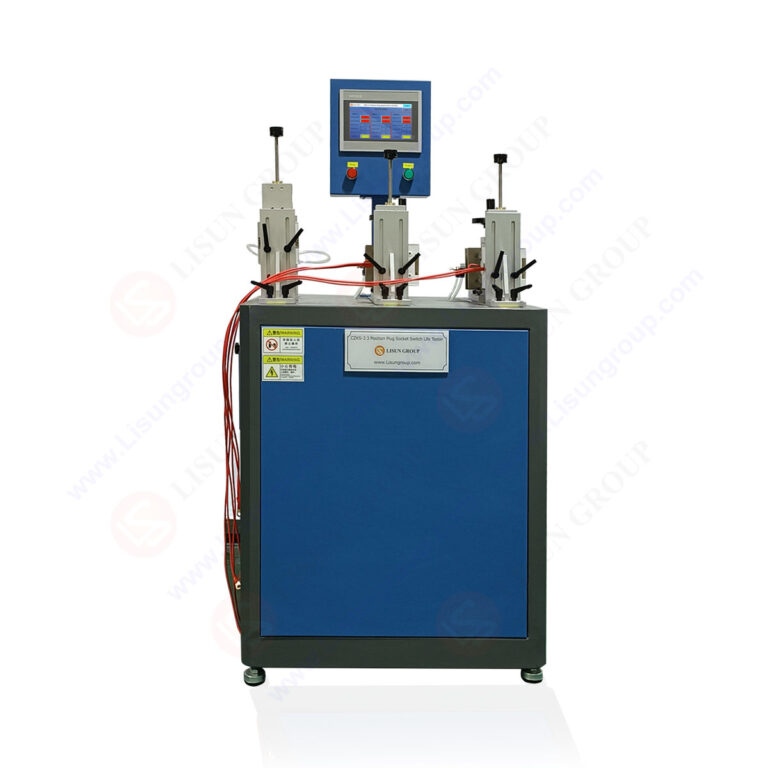
The CZKS-3P variant features three independent test stations, enabling simultaneous testing of multiple plug types under identical electrical load conditions. This design accelerates socket breaking capacity testing throughput for laboratory environments managing high-volume compliance verification. The CZKS-3S variant incorporates high-speed actuation capable of 60 cycles per minute, specifically optimized for switch durability testing where mechanical endurance exceeds 100,000 operations. The CZKS-3A configuration handles higher current ratings up to 32 amperes, making it suitable for automotive electronics components and industrial connectors. Each variant maintains IEC compliance parameters while offering specialized features for distinct testing protocols.
3. Compliance with International Standards: IEC 60884-1 and IEC 60669-1
3.1 Plug and Socket Testing Under IEC 60884-1 Clause 20 and 21
The CZKS-3 series directly addresses Clause 20 (Mechanical Strength) and Clause 21 (Resistance to Heat and Fire) of IEC 60884-1 for plugs and socket-outlets. For breaking capacity testing, the system applies rated voltage and current during insertion and withdrawal cycles, monitoring contact performance across 5000 to 15000 operations depending on the product category. The CZKS-3 and CZKS-3P models precisely control the insertion angle and force profile to simulate real-world usage patterns, including partial insertions and angled pulls that stress contact retention mechanisms. The automated system records contact resistance measurements after each 100-cycle block, providing granular data on degradation trends.
3.2 Switch Endurance Verification per IEC 60669-1 Clause 17
For switch durability testing, the CZKS-3S variant meets IEC 60669-1 Clause 17 requirements covering mechanical endurance and electrical endurance under inductive and resistive loads. The system programs load profiles including power factor variations from 0.6 to 1.0, enabling comprehensive evaluation of switch contact materials and arc suppression mechanisms. During tests exceeding 100,000 cycles for standard switches, the PLC control system dynamically adjusts actuation speeds to maintain consistent contact closing forces. The integrated temperature monitoring in the CZKS-3S detects abnormal heating patterns that often precede catastrophic contact failure, providing early warning for design optimization.
4. Breaking Capacity Testing for Plugs and Sockets
4.1 Test Protocol Design and Execution
The CZKS-3 series implements breaking capacity tests that simultaneously evaluate electrical and mechanical stress factors. During each test cycle, the system inserts a plug into the socket under test while applying the specified load current, then withdraws the plug while maintaining the load to create controlled arcing conditions. The cylinder-driven actuation ensures consistent withdrawal velocities between 0.5 and 2.0 meters per second, as specified in IEC 60884-1 Annex B. For automotive electronics components, the CZKS-3A variant applies additional vibration and temperature cycling to simulate under-dash mounting environments.
4.2 Failure Mode Analysis and Data Interpretation
Electrical fatigue failure patterns observed during breaking capacity tests include contact adhesion, material transfer between contacts, and carbon track formation on insulation surfaces. The CZKS-3 series captures voltage waveforms during each make-and-break operation, enabling engineers to quantify arc duration and energy dissipation. Contact resistance data typically shows a gradual increase over the first several thousand cycles, followed by rapid degradation as contact surfaces erode. The system’s analysis software automatically flags data points exceeding 50% resistance increase from baseline values, prompting detailed microscopic examination of contact surfaces.
5. Switch Durability Testing for Household and Industrial Applications
5.1 Mechanical Endurance Testing Protocols
The CZKS-3S system executes mechanical endurance tests per IEC 61058-1 Clause 16, applying 10,000 to 1,000,000 operational cycles depending on the switch classification. The PLC controller programs complex actuation sequences including slow make-and-break operations, rapid toggle cycles, and intermediate dwell periods that simulate typical user interaction patterns. Each test station accommodates rocker switches, push-button switches, rotary switches, and slide switches through interchangeable fixture plates. The system measures actuation force variations across the test duration, detecting changes in spring tension, contact wear, and housing deformation that affect switch performance.
5.2 Electrical Endurance Under Inductive and Resistive Loads
For electrical endurance verification, the CZKS-3S configures load banks to produce specified power factor values from 0.4 to 1.0, covering inductive loads typical of motor control applications and resistive loads for lighting circuits. The system applies these loads while cycling switches at rates between 5 and 30 operations per minute, maintaining IEC 60669-1 specified voltage levels. Real-time monitoring captures occurrence of contact welding, sustained arcing beyond 0.5 milliseconds, and leakage current exceeding 0.5 milliamperes. Test results from the CZKS-3S have demonstrated that contact material selection significantly influences failure rates under inductive loads, with silver-cadmium oxide alloys outperforming pure silver contacts by a factor of three in terms of cycle life.
6. Automotive Electronics Component Testing Capabilities
6.1 Connector and Switch Testing for Automotive Environments
The CZKS-3A variant extends testing capabilities to automotive electronics components, including power window switches, ignition connectors, and signal interface modules. These components require testing under extended temperature ranges from -40°C to +85°C, with the CZKS-3A’s optional environmental chamber integration enabling simultaneous thermal and electrical cycling. For high-current automotive connectors rated at 32 amperes, the system performs 5000 breaking capacity operations while monitoring voltage drop across contacts, which must remain below 50 millivolts per IEC 60512-2 requirements. The cylinder-driven actuation provides insertion forces up to 800 newtons, sufficient for testing sealed automotive connectors requiring high mating forces.
6.2 Specialized Test Sequences for Functional Safety
Automotive electronics components under ISO 26262 functional safety frameworks require testing protocols that include intermittent fault injection and single-point failure detection. The CZKS-3A programmable controller sequences test patterns that simulate partial connector seating, pin bending scenarios, and moisture ingress conditions. During these tests, the system monitors for transient resistance spikes exceeding 100 milliohms, which could indicate intermittent connectivity issues critical for safety-critical applications. The eight-channel data logging capability captures simultaneous measurements from multiple connector pins, providing comprehensive analysis of contact reliability under automotive vibration profiles.
7. Automated Test System Integration and Laboratory Workflow
7.1 Data Management and Reporting Architecture
The CZKS-3 series integrates with laboratory information management systems through standard communication protocols including Modbus TCP and RS-485 interfaces. Each test run generates structured data files containing cycle counts, electrical measurements, force profiles, and failure event logs. The analysis software produces compliance reports formatted per IEC requirements, including summary statistics, trend graphs, and pass/fail determinations based on user-defined thresholds. For laboratories managing multiple test systems, the centralized database enables cross-correlation analysis of failure modes across different product families and testing conditions.
7.2 Calibration and Maintenance Protocols
Regular calibration of the CZKS-3 series ensures measurement traceability to national standards. Force sensors require recalibration every 500,000 cycles or annually, whichever occurs first, using certified load cells with ±0.5% accuracy. Electrical measurement modules undergo verification against reference multimeters with traceability to ISO/IEC 17025 calibration laboratories. The pneumatic actuation system requires periodic inspection of cylinder seals, pressure regulators, and solenoid valves to maintain consistent operation. The manufacturer provides diagnostic software that performs automated verification of actuation timing, force output linearity, and data acquisition channel accuracy within 30 minutes.
8. Conclusion
The LISUN CZKS-3 series provides a comprehensive platform for plug, socket, and switch durability testing that meets the rigorous requirements of international electrical safety standards. The four model variants—CZKS-3, CZKS-3P, CZKS-3S, and CZKS-3A—address distinct testing needs from household switch life cycle verification to high-current automotive connector breaking capacity evaluation. The systems’ PLC-controlled pneumatic actuation, real-time monitoring capabilities, and multi-channel data logging enable engineers to detect incipient failure modes and optimize product designs before market introduction. Compliance with IEC 60884-1, IEC 60669-1, IEC 61058-1, and GB/T 2099.1 standards is validated through precise control of test parameters and comprehensive data documentation. For electrical safety testing laboratories seeking to enhance their testing capabilities, the CZKS-3 series offers the technical depth, flexibility, and reliability required for certification-grade performance evaluation. The integration of automated test sequences, failure analysis tools, and laboratory information system connectivity streamlines compliance workflows while maintaining the highest standards of measurement accuracy.
FAQ (Frequently Asked Questions)
Q1: What distinguishes the CZKS-3S variant from the standard CZKS-3 for switch durability testing?
A: The CZKS-3S variant is specifically optimized for high-speed switch life cycle verification, with actuation rates up to 60 cycles per minute compared to 30 cycles per minute on the standard CZKS-3. This higher cycle rate enables completion of 100,000-cycle endurance tests in approximately 28 hours instead of 56 hours, significantly accelerating testing throughput. Additionally, the CZKS-3S includes integrated temperature monitoring for each test station, which detects abnormal heating patterns during prolonged switch operation. The system also supports complex actuation sequences including slow make-and-break operations and variable dwell times, essential for thorough evaluation of switch contact behavior under IEC 60669-1 Clause 17 testing protocols.
Q2: How does the CZKS-3 series handle testing of automotive connectors with high mating forces?
A: The CZKS-3A variant addresses high-force automotive connector testing through its reinforced pneumatic actuation system capable of delivering insertion forces up to 800 newtons, significantly higher than the 500-newton limit of the standard CZKS-3. This capability is essential for testing sealed automotive connectors that require mating forces exceeding 100 newtons per pin. The system incorporates force feedback control that adjusts actuation parameters in real-time to maintain consistent insertion velocities despite variations in connector friction. The CZKS-3A also features eight-channel data logging for simultaneous measurement of contact resistance across multiple pins, essential for evaluating multi-pin connector reliability under ISO 26262 functional safety requirements.
Q3: What are the calibration requirements for maintaining measurement accuracy on the CZKS-3 series?
A: The CZKS-3 series requires force sensor recalibration every 500,000 test cycles or every 12 months, whichever occurs first, using certified reference load cells with calibration traceable to national standards. Electrical measurement modules, including voltage, current, and resistance channels, require verification every 6 months against reference multimeters with ISO/IEC 17025 calibration certification. The pneumatic system components, including pressure regulators and solenoid valves, require inspection every 100,000 cycles to ensure consistent actuation timing. The manufacturer provides a diagnostic software suite that performs automated verification of timing accuracy, force output linearity, and data acquisition channel precision within 30 minutes, allowing laboratories to perform intermediate checks between formal calibration intervals.
Q4: Can the CZKS-3 series simultaneously test multiple different switch or plug types in one run?
A: Yes, the CZKS-3P variant is specifically designed for simultaneous multi-type testing with three independent test stations, each accommodating different fixture configurations. Each station can be programmed with independent test parameters including voltage levels, current settings, cycle rates, and actuation profiles. This capability enables comparative testing of different switch designs or plug configurations under identical environmental conditions, providing direct comparison of performance characteristics. The independent station architecture also supports failsafe operation, where a failure in one station does not interrupt testing in the other stations, maximizing laboratory productivity for high-volume compliance verification programs.
Q5: What data logging and reporting capabilities are included with the CZKS-3 series?
A: The CZKS-3 series includes a comprehensive data management system that records cycle counts, electrical measurements at 10-millisecond intervals, force profiles, and failure event logs for each test run. The system generates structured data files in CSV and XML formats compatible with laboratory information management systems. The analysis software produces compliance reports formatted per IEC standards including summary statistics, trend graphs over cycle count, and pass/fail determinations based on user-defined thresholds for contact resistance, leakage current, and mechanical force parameters. For traceability, the system logs operator identification, test fixture configuration, calibration dates, and environmental conditions during testing. The eight-channel variant (CZKS-3A) supports simultaneous logging from multiple connector pins or multiple test specimens in parallel.