









Here is the technical article generated according to your specifications.
Abstract
Navigating the specifications for LED reliability testing requires a precise understanding of equipment capabilities, specifically regarding the LISUN Environmental Chamber vs Climate Chamber: Key Differences Explained. This article provides a technical deep dive for LED R&D and QC engineers, dissecting the functional, thermal, and application-specific distinctions between these two critical test systems. We focus specifically on LISUN’s integrated solutions, including the LEDLM-80PL and LEDLM-84PL instruments paired with temperature chambers for LM-80/TM-21 and LM-84/TM-28 compliance. By analyzing test modes, data interpretation using the Arrhenius Model, and hardware configurations, this piece offers a data-driven guide to selecting the correct system for accurate lumen maintenance validation, a cornerstone of modern SSL product certification.
1.1 The Fundamental Functional Distinction
In the context of LED testing, an “Environmental Chamber” is a broad term. However, within the LISUN Environmental Chamber vs Climate Chamber: Key Differences Explained framework, we define the Environmental Chamber (often paired with LISUN’s optical test systems) as a unit primarily designed for thermal-only stress testing at specific setpoints (e.g., 55°C, 85°C). Conversely, a “Climate Chamber” typically implies combined temperature and humidity control. For solid-state lighting (SSL) products, the standard LM-80 test mandates dry (non-condensing) thermal control, making the dedicated environmental chamber the standard tool, while climate chambers are reserved for corrosion or automotive component testing.
1.2 Hardware Topology and System Integration
LISUN’s solution separates the thermal stress source from the optical measurement system. The Environmental Chamber is a standalone forced-air convection oven, while the measurement is performed by the LEDLM series (80PL or 84PL). This decoupling is crucial. The LEDLM-80PL system supports up to 3 connected temperature chamber cabinets, allowing simultaneous testing of samples at 55°C, 85°C, and 105°C. This contrasts with a single-unit “climate chamber” that typically cannot accommodate an integrating sphere or spectroradiometer for in-situ measurement but relies on manual sample transfer.
1.3 Compliance with Industry Standards
The core difference dictates standard compliance. An Environmental Chamber used with the LEDLM-80PL is purpose-built for IES LM-80-15 and IES TM-21-19 protocols, which require a minimum of 6000 hours of testing at three case temperatures. A standard climate chamber, lacking controlled dry-air purge and specific internal mounting for LED modules, often fails to meet the strict photometric measurement requirements of CIE 127:2007.
2.1 Dual System Variants Explained
The LISUN Environmental Chamber vs Climate Chamber: Key Differences Explained is stark when analyzing the two primary variants. The LEDLM-80PL is designed for standard LED packages, modules, and arrays, strictly following IES LM-80. It measures luminous flux and color shift over a 6000-hour (minimum) to 10000-hour duration. The software then applies the Arrhenius Model for TM-21 extrapolation to predict L70 and L50 lifetimes. The LEDLM-80PL supports up to 2 pieces of 300mm integrating spheres per temperature chamber.
2.2 The Role of the Arrhenius Model Software
The primary output of the LISUN Environmental Chamber test is raw data. The proprietary software calculates the activation energy (Ea) from the thermal degradation slopes at different temperatures. Per CIE 70 (1987) , this mathematical model quantifies the acceleration factor. For example, a 10°C increase in case temperature typically halves the LED’s useful life. The software automatically generates the TM-21 report, providing L70(6k) figures—the projected lumen maintenance at 70% output after 6000 hours.
3.1 Application for Larger Luminaires
The LEDLM-84PL expands the capability of the Environmental Chamber to handle Integral LED Lamps and Luminaires, following IES LM-84-14. This standard requires testing using an integrating sphere with a larger diameter (e.g., 2m or 3m). While the Environmental Chamber maintains the thermal stress (TMPLED—Temperature Measurement Point for the LED), the LEDLM-84PL system uses a gonio-spectroradiometer or a larger sphere to measure total luminous flux. The LISUN Environmental Chamber vs Climate Chamber: Key Differences Explained here shows the Environmental Chamber is essential, as a climate chamber lacks the necessary optical ports and baffling for accurate goniometry or sphere measurement.
3.2 TM-28 Extrapolation vs. TM-21
Data from the LM-84 test is fed into TM-28 (for luminaires) rather than TM-21. TM-28 uses a non-Arrhenius, piecewise linear regression model. This distinction is critical. A climate chamber, which cannot control the specific TMP of the LED driver independently of the ambient air temperature, often invalidates TM-28 projections. The LISUN Environmental Chamber, however, allows precise control of the case temperature, ensuring the thermal node of the LED array is stable, a requirement for valid TM-28 extrapolation.
| Feature / Specification | LISUN Environmental Chamber (for LEDLM-80/84PL) | Standard Lab Climate Chamber |
|---|---|---|
| Primary Application | LED Lumen Maintenance (IES LM-80/LM-84) | Material aging, corrosion, humidity cycling |
| Temperature Range | 50°C to 120°C (Typical for LM-80) | -40°C to +150°C (Wider range, but less stable) |
| Humidity Control | Dry (Non-condensing, typically <20%RH) | 10% to 98%RH (Controlled) |
| Measurement Method | In-situ with Integrating Sphere & Spectroradiometer (LEDLM series) | Post-test removal for external measurement |
| Standards Compliance | IES LM-80, TM-21, CIE 084, IES LM-79-19 | ISO 16750, MIL-STD-810 (General electrical) |
| Key Hardware Limit | Up to 3 chambers can be daisy-chained to one LEDLM system | Single unit, limited optical feedthroughs |
| Data Output | L70/L50 lifetime projections, Chromaticity shift (Δuv) | Mechanical integrity, visual inspection |
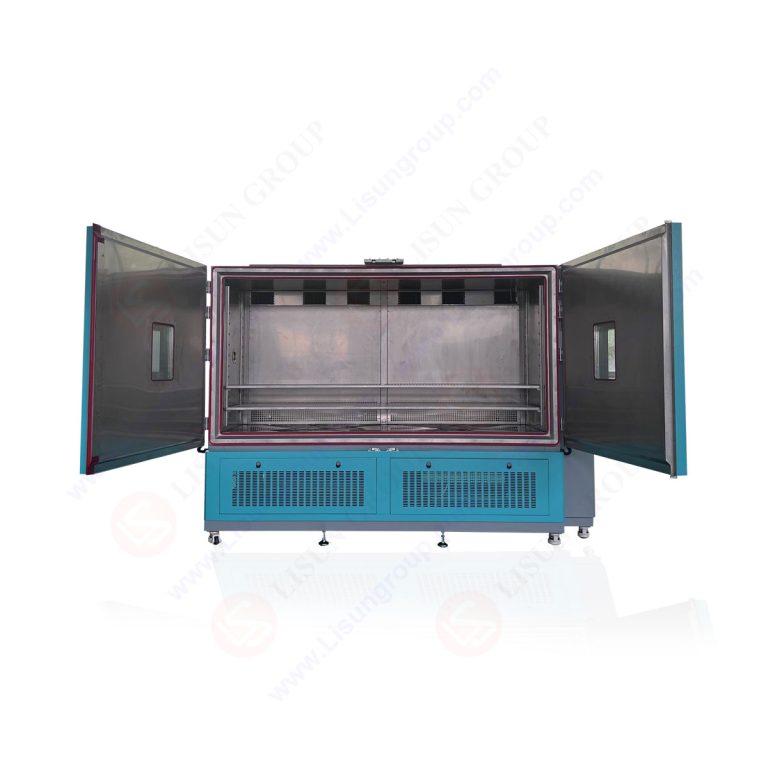
Table 1: Technical comparison highlighting the LISUN Environmental Chamber vs Climate Chamber: Key Differences Explained for LED testing.
5.1 Continuous vs. Interrupted Test Modes
The LEDLM-80PL offers two distinct testing modes: Continuous (100% duty cycle) and Switched (2-hours on/2-hours off). This is a pivotal point in the LISUN Environmental Chamber vs Climate Chamber: Key Differences Explained. A standard climate chamber can only perform a continuous thermal soak. The switched mode in the Environmental Chamber allows engineers to evaluate the impact of thermal cycling on the solder joints and phosphor layers, which is critical for predicting failure in real-world driver-less AC LED applications. The LISUN software logs data at each sample point.
5.2 Data Integrity and In-Situ Measurement
One of the primary advantages of the LISUN system is that the Environmental Chamber encloses the LED sample, but the measurement is performed by the LEDLM’s integrating sphere, which is mounted directly to the chamber wall. This prevents the thermal gradient error introduced when transferring a hot LED to a cold photometer. A climate chamber forces this transfer, causing thermal shock and inaccurate lumen output readings due to the sudden temperature drop. The LISUN Environmental Chamber thus ensures strict compliance with IES LM-79-19 for temperature stabilization during measurement.
6.1 Multi-Chamber Configuration for Acceleration
The LISUN system is highly scalable. A typical setup for LM-80 includes three Environmental Chambers connected to a single LEDLM-80PL central controller.
- Chamber 1: Set to 55°C (Standard Operating Condition 1)
- Chamber 2: Set to 85°C (Standard Operating Condition 2)
- Chamber 3: Set to 105°C (Enhanced Stress Condition)
This configuration allows the Arrhenius Model to calculate the activation energy (Ea) with high statistical confidence. The software can extrapolate 10-year (60000+ hour) life from 6000 hours of data. No single climate chamber can provide this multi-point thermal stress while maintaining optical measurement integrity.
6.2 Customization for Specific LED Types
The LISUN Environmental Chamber vs Climate Chamber: Key Differences Explained extends to internal fixturing. LISUN Environmental Chambers come with customizable cable feedthroughs and heat sinks for mounting different LED modules. For high-power COBs (Chip-on-Board), the chamber can be equipped with a liquid-cooled heat sink to control the TMP (Temperature Measurement Point) accurately. A climate chamber typically has generic shelves, which cannot conduct heat away from the LED package, leading to thermal runaway and invalid test results per CIE 084.
7.1 The L70 and L50 Metrics Explored
The primary output from the LISUN Environmental Chamber test is the L70 lifetime. Per TM-21, the extrapolated L70 is the time estimated for the LED’s luminous flux to reach 70% of its initial value. For example, a high-quality LED tested at 85°C might achieve an extrapolated L70(6k) of >36,000 hours. The L50 metric, representing the time to 50% light output, is typically an order of magnitude longer but is often reported for industrial lighting. The Environmental Chamber data provides the necessary slope for this calculation.
7.2 Chromaticity Maintenance (Δuv)
Beyond lumen depreciation, the LISUN Environmental Chamber system tracks chromaticity shift (Δuv). CIE 70 and TM-21 Annex D require monitoring spectral shift. The spectroradiometer (part of the LEDLM system) records the full spectrum at each measurement interval. A shift of >0.007 u’v’ is generally considered a failure for most SSL applications. The Environmental Chamber’s stable, dry environment ensures that this shift is due to the LED phosphor degradation and not humidity-induced corrosion, which would be the confounding variable if a Climate Chamber were used.
Understanding the LISUN Environmental Chamber vs Climate Chamber: Key Differences Explained is paramount for any LED reliability testing protocol. The Environmental Chamber, specifically when integrated with the LISUN LEDLM-80PL or LEDLM-84PL system, is not a general-purpose conditioning tool but a precision instrument for photometric longevity testing. It provides the dry, stable thermal environment required for IES LM-80, IES TM-21, and LM-84 compliance, enabling accurate Arrhenius Model-based life extrapolation. Unlike a climate chamber, its design is optimized for in-situ optical measurement, eliminating thermal shock errors and ensuring data fidelity over the mandatory 6000-hour test duration.
By supporting up to three daisy-chained chambers and offering both continuous and switched test modes, LISUN provides a scalable solution that covers standard LED packages (LM-80) and integral luminaires (LM-84). The resulting data—L70/L50 lifetimes and Δuv chromaticity maintenance—provides engineers with the reliable performance metrics necessary for warranty validation, design optimization, and regulatory compliance with global lighting standards. For professionals seeking validation that is accurate, repeatable, and compliant, the LISUN Environmental Chamber remains the definitive choice over a standard climate chamber.
Q1: Can a standard climate chamber be used as a substitute for the LISUN Environmental Chamber for LM-80 testing?
A: Technically, a climate chamber can provide the required temperature (e.g., 85°C). However, it is functionally inadequate for LM-80 compliance. The LISUN Environmental Chamber is designed with specific optical feedthroughs to mount an integrating sphere directly to the chamber wall. This enables in-situ measurement without moving the hot LED sample to a photometer, preventing thermal shock and ensuring compliance with IES LM-79-19 stabilization requirements. Moreover, a climate chamber lacks the required dry-air purge system (usually <20% RH) recommended by IES LM-80 to prevent condensation on optical components. Using a climate chamber often leads to corrupted data due to moisture condensation on the LED lens or within the integrating sphere.
Q2: What is the practical significance of the 6000-hour test duration for the LISUN Environmental Chamber system?
A: The 6000-hour duration is the minimum requirement defined by IES LM-80. This period provides sufficient data points (typically 19-21 measurement intervals) to construct a statistically valid lumen depreciation curve for TM-21 extrapolation. Testing for less than 6000 hours can lead to overestimation of L70 life. The LISUN system features an automatic shutdown and data recovery function if power is lost, ensuring continuity across this long duration. After 6000 hours, the LISUN software automatically performs the TM-21 calculation to project the L70 lifetime, which can be 50,000 hours or more for modern LEDs.
Q3: How does the LISUN system handle the difference between LM-80 (LED packages) and LM-84 (Luminaires)?
A: The LISUN Environmental Chamber vs Climate Chamber: Key Differences Explained is critical here. For LM-80 (using the LEDLM-80PL), the chamber holds the LED module on a specific thermal control plate to maintain a precise case temperature (Tcase). For LM-84 (using the LEDLM-84PL), the chamber must be larger (e.g., 1m x 1m) to hold the complete luminaire, and the temperature measurement point is the TMPLED. The LISUN system software allows selection of the correct standard. The hardware differs primarily in the size of the chamber and the type of optical head (small integrating sphere for LM-80, large sphere or goniometer for LM-84). The Environmental Chamber controller maintains the airflow to ensure uniform thermal distribution around the luminaire, which is critical for valid TM-28 extrapolation.