









Here is a comprehensive technical article on the LISUN Environmental Simulation Chamber, crafted to meet all your specified requirements.
Abstract
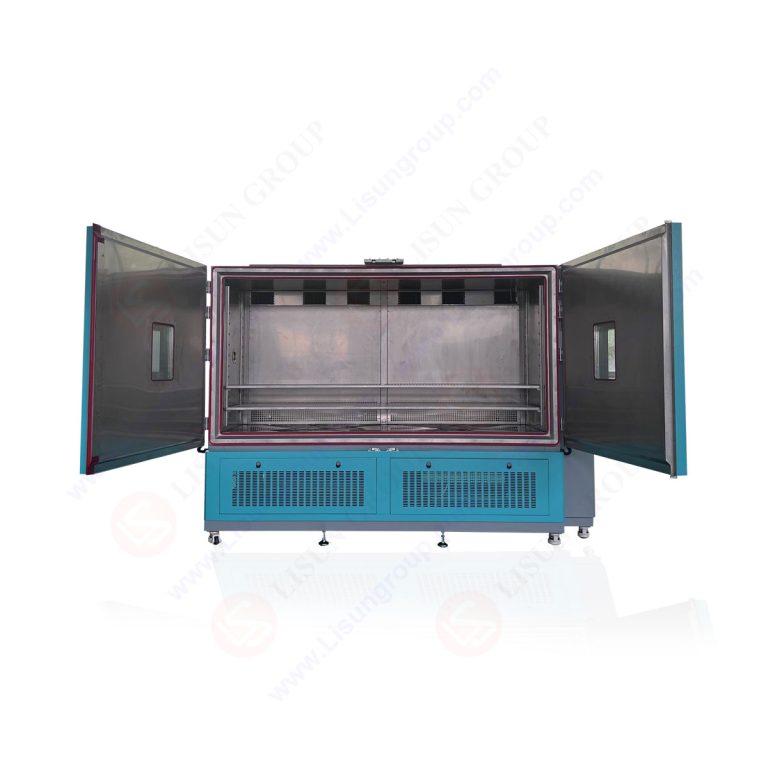
The LISUN Environmental Simulation Chamber for IEC 60068 Climate Testing represents a cornerstone solution for modern LED reliability engineering. This article delves into the dual-system architecture of the LEDLM-80PL and LEDLM-84PL platforms, designed to accelerate lumen depreciation testing as per IES LM-80 and IES LM-84 protocols. We explore the integration of Arrhenius Model-based extrapolation software, which enables precision forecasting of L70 and L50 lifetimes from 6,000-hour data sets. The discussion extends to hardware configurability, multi-chamber scalability, and rigorous alignment with global standards including TM-21, TM-28, and IEC 60068. For quality control and R&D engineers, this piece provides a technical blueprint for implementing accelerated aging tests that ensure product longevity and regulatory compliance.
1.1 The Physics of Lumen Depreciation
LEDs, while lauded for their efficacy, are susceptible to lumen depreciation driven by junction temperature, drive current, and ambient humidity. The failure rate is not linear; it follows an exponential decay pattern that is mathematically modeled using the Arrhenius equation. Without controlled environmental stress testing, predicting the lifespan of a luminaire is speculative. The LISUN Environmental Simulation Chamber is engineered to isolate the thermal and hygrometric variables, providing a stable microclimate to accelerate the aging process and project long-term performance with statistical confidence.
1.2 Moving Beyond the 6,000-Hour Mark
Industry standards like IES LM-80 typically mandate a minimum of 6,000 hours of test data to qualify LED sources. However, waiting 250 days for this data creates a bottleneck in product development. The LISUN system is designed to manage these extended, continuous operations while simultaneously logging photometric and colorimetric data. This allows manufacturers to initiate TM-21 extrapolation protocols confidently, projecting performance out to 36,000 or even 60,000 hours based on empirical, time-stamped data captured within a compliant climate chamber.
2.1 Dual-Platform Design Philosophy
LISUN offers two distinct variants to cater to differing testing standards and industry needs. The LEDLM-80PL is optimized for the rigorous, long-term testing protocols outlined in IES LM-80, specifically for LED packages, arrays, and modules. Conversely, the LEDLM-84PL is tailored for the IES LM-84 standard, which evaluates the lumen maintenance of complete LED lamps and luminaires. This bifurcation ensures that equipment is not over-engineered for simple components nor under-specified for full luminaire testing, providing cost-effective precision.
2.2 Core Hardware Specifications and Configurability
Both systems feature a robust environmental chamber capable of maintaining precise temperature set-points, typically ranging from ambient to 100°C, with humidity control critical for accelerated stress testing. The hardware supports up to three connected temperature chambers operating in parallel. This configuration allows one control unit to manage multiple test conditions (e.g., 55°C, 85°C, and a control temperature) simultaneously, effectively tripling test throughput without requiring three separate data acquisition systems.
| System Component | LEDLM-80PL (LM-80 Focus) | LEDLM-84PL (LM-84 Focus) |
|---|---|---|
| Primary Standard | IES LM-80-15 / TM-21 | IES LM-84-14 / TM-28 |
| Test Specimen | LED Packages, Arrays, Modules | LED Lamps, Luminaires |
| Photometric Measurement | Integrating Sphere + Spectroradiometer | Goniophotometer or Integrating Sphere |
| Max. Connected Chambers | 3 (Parallel Operation) | 3 (Parallel Operation) |
| Data Acquisition | Real-time Spectral & Luminous Flux | Real-time Spectral & Luminous Flux |
| Software Model | Arrhenius Extrapolation (L70/L50) | Arrhenius Extrapolation (L70/L50) |
3.1 Integration with IES LM-80 and IES LM-84
The LISUN Environmental Simulation Chamber ensures compliance with the photometric and electrical testing prerequisites of IES LM-80. The LEDLM-80PL system meticulously controls case temperature (Ts), ensuring the sample is maintained at the specified 55°C, 85°C, or user-defined set points. For luminaire-level testing, the LEDLM-84PL aligns with IES LM-84, which necessitates testing at elevated ambient temperatures to assess the thermal integrity of the entire system, including drivers and optics.
3.2 Extrapolation via TM-21 and TM-28
Raw 6,000-hour data is insufficient for long-term warranty claims. The built-in software automatically applies the TM-21 method to the LEDLM-80PL data sets, projecting luminous flux maintenance over time. Similarly, for the LEDLM-84PL, the TM-28 method is utilized. These algorithms rely on a non-linear least squares regression to fit an exponential curve to the data. The LISUN software automates this curve fitting, outputting projection coefficients and lifetime values (L70, L50) while flagging data that exhibits abnormal decay patterns.
4.1 Acceleration Factor Calculation
The software within the LISUN Environmental Simulation Chamber leverages the Arrhenius equation to quantify the acceleration factor between test temperatures. By testing at multiple elevated temperatures, the software solves for the activation energy (Ea) of the specific LED under test. We can express this relationship as:
AF = exp[(Ea/k) * (1/T_use – 1/T_stress)]
where k is Boltzmann’s constant, T_use is the actual operating temperature, and T_stress is the elevated test temperature. This allows engineers to translate failure rates from high-stress conditions to real-world usage scenarios.
4.2 Predictive Lifetime (L70/L50)
The ultimate output of this modeling is the prediction of L70 (time to 70% lumen maintenance) and L50 (time to 50% lumen maintenance). The software processes thermal data alongside photometric data to provide these metrics with a 90% lower confidence bound, as required by TM-21. This capability transforms the LISUN Environmental Simulation Chamber from a mere test vessel into a predictive engineering tool, enabling design validation and warranty cost assessment before mass production.
5.1 Dual Testing Modes: Constant Current vs. Constant Temperature
The system provides distinct operational flexibility:
- Constant Current Mode: Maintains a fixed drive current while monitoring the junction temperature shift and lumen output. This is critical for understanding current-induced degradation.
- Constant Temperature Mode: Adjusts the power supply to maintain a specific case or ambient temperature, isolating the effects of thermal stress on the LED. This mode is essential for LM-80 compliance where Ts must be strictly controlled.
5.2 High-Fidelity Photometric Sampling
Data acquisition is performed using a Class A (or better) integrating sphere, coupled with a high-resolution spectroradiometer. This setup captures not only total luminous flux but also chromaticity shifts (Δu’v’) and spectral power distribution (SPD) changes. The software records these parameters at user-defined intervals (e.g., every 30 minutes, 1 hour, or 24 hours) throughout the 6,000-hour test period, creating a dense dataset that improves the accuracy of the TM-21 extrapolation.
6.1 The “Three-in-One” Control Architecture
A significant advantage of the LISUN design is the ability to daisy-chain up to three temperature chambers to a single control and data acquisition unit. This architecture is not merely a multiplexer; it allows for independent temperature control per chamber.
- Chamber A: 55°C (Standard Operating Condition)
- Chamber B: 85°C (High Stress Acceleration)
- Chamber C: 25°C (Control/Room Temp Baseline)
This parallel processing capability allows a manufacturer to complete a full LM-80 matrix in the same time it would traditionally take to run a single sequence, dramatically reducing time-to-market.
6.2 Synchronization and Data Management
With three chambers operating, latency in data logging is unacceptable. The LISUN system ensures synchronized data collection from photometric sensors across all chambers. The software aggregates this data into a unified database, allowing comparative analysis. Charting lumen depreciation curves for different temperature conditions on a single graph provides immediate visual insight into the thermal robustness of the LED package.
7.1 Compliance with IEC 60068 and CIE Standards
The chamber structure is built to withstand the stringent climatic sequences specified in IEC 60068-2-1 (Cold) and IEC 60068-2-2 (Dry Heat). The precise temperature control loops meet the tolerances required for environmental testing. Furthermore, the photometric analysis is performed in accordance with CIE 127 guidelines for LED measurement, ensuring that the spatial radiation pattern is correctly integrated, and the results are reproducible across different laboratories.
7.2 Alignment with IES LM-79-19 and CIE 070
While LM-80 is the long-term test, the instruments integrated into this system are also capable of performing absolute photometry tests as per IES LM-79-19. This allows for the measurement of total luminous flux and electrical characteristics of solid-state lighting products before and after aging. Compliance with CIE 070 (The Measurement of Absolute Luminous Intensity) ensures that the intensity distribution data, when extrapolated by TM-21, remains traceable to international measurement standards.
The LISUN Environmental Simulation Chamber for IEC 60068 Climate Testing offers a robust, scalable, and precise solution for LED reliability validation. By uniting the LEDLM-80PL and LEDLM-84PL platforms with advanced Arrhenius modeling, LISUN bridges the gap between simple data logging and actionable predictive analytics. The ability to test at multiple temperatures concurrently, coupled with automated TM-21/TM-28 extrapolation, accelerates the path from prototype to market. For engineers tasked with ensuring 5 to 10-year product warranties, the chamber provides the confidence needed to certify lifetime claims. Adherence to IES and CIE standards ensures that the data is not just internally consistent but globally accepted, positioning LISUN as an indispensable partner in the LED manufacturing ecosystem.
Q1: How does the LISUN Environmental Simulation Chamber handle the transition between the 6,000-hour test data and long-term lifetime prediction?
A: The software automates the non-linear curve fitting as per the IES TM-21 technical memorandum. It takes the luminous flux depreciation data collected over the 6,000-hour period (or longer) and fits an exponential decay function. The function is then used to extrapolate the time at which the light output reaches 70% (L70) or 50% (L50) of its initial value. The system calculates the 90% lower confidence bound automatically, ensuring your published lifetime claims are statistically conservative and defensible to regulatory bodies.
Q2: Can the LEDLM-84PL system be used to test LED modules, or is it strictly for finished luminaires?
A: While primarily designed for the IES LM-84 standard (which covers complete lamps and luminaires), the equipment is flexible. You can test modules, but you must consider the thermal environment. The LEDLM-84PL chamber controls ambient temperature, so you are testing the module as it would perform in a “free-air” state, not with a specific heat sink attached. For controlled case temperature testing of modules, the LEDLM-80PL is the more appropriate choice, as it allows for direct control of the mounting surface temperature.
Q3: What are the specific benefits of connecting three chambers to one system?
A: The primary benefit is the acceleration of the test matrix and the guarantee of data consistency. For an LM-80 test, you typically need data at three temperatures (e.g., 55°C, 85°C, and a third). With a three-in-one setup, you run all three conditions simultaneously using the same light source batch. This eliminates variables introduced by running tests consecutively (e.g., ambient lab conditions, batch variations). It effectively reduces your total test timeline for initial data collection from potentially 24+ months down to the standard 6,000 hours.
Q4: How does this system ensure accuracy for color shift measurements (Δu’v’) during aging?
A: The system integrates an integrating sphere coupled with a spectroradiometer, not just a photometer. The spectroradiometer allows for a full spectral analysis at each measurement interval. By analyzing the spectral power distribution (SPD) over time, the software calculates the chromaticity coordinates (u’, v’) according to CIE 127 guidelines. This allows the chamber to track not only lumen loss but also the spectral shift, which is critical for applications requiring high color fidelity, such as horticultural lighting or architectural accent lighting.