









The rapid evolution of LED technology demands rigorous validation of lumen maintenance and chromaticity stability, making the LISUN Environmental Simulation Chamber with IEC 60068 Compliance an indispensable tool for reliability engineers. This article provides a comprehensive technical examination of LISUN’s advanced LED Optical Aging Test Instrument, focusing on its dual system architecture supporting IES LM-80/TM-21 and LM-84/TM-28 protocols, Arrhenius Model-based lifetime prediction software, and customizable environmental simulation capabilities. Key technical insights include the integration of IEC 60068 environmental testing standards with LED-specific photometric measurement methodologies, enabling accelerated aging tests spanning 6,000 hours with L70/L50 degradation metrics. For LED manufacturing engineers and third-party laboratory technicians, this article offers actionable knowledge on optimizing test protocols, interpreting extrapolation data, and achieving compliance with global standards while leveraging LISUN’s precision hardware configurations.
1. Foundational Principles of LED Reliability Testing
1.1 The Imperative for Standardized Lumen Maintenance Evaluation
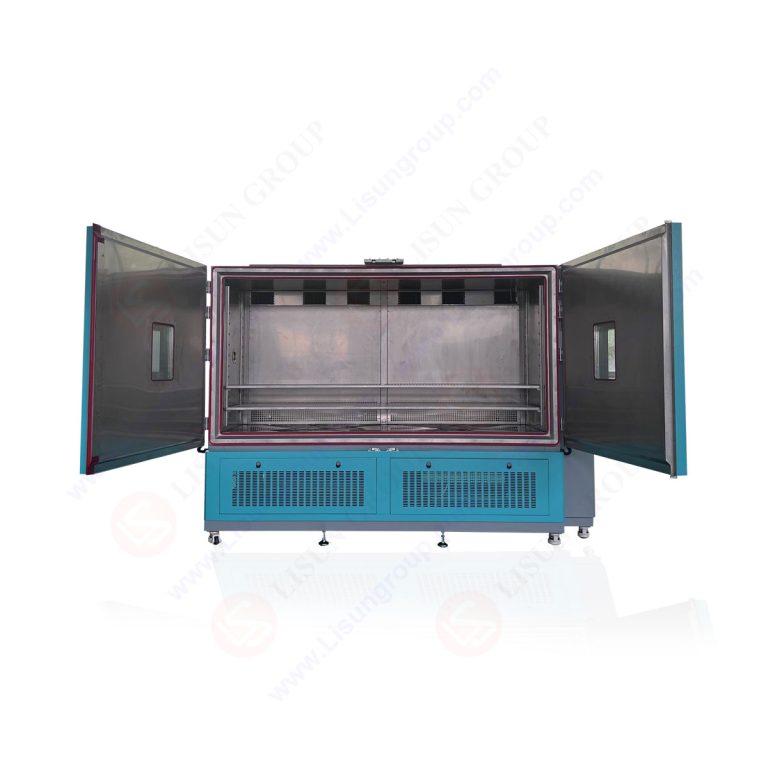
LED lumen depreciation is a complex phenomenon driven by junction temperature, drive current, and phosphor degradation over extended operational periods. Unlike traditional light sources, LEDs exhibit non-linear degradation curves that require sophisticated statistical modeling for accurate lifetime prediction. The IES LM-80 standard establishes the methodology for measuring lumen maintenance of LED light sources, mandating a minimum of 6,000 hours of testing at specified case temperatures (typically 55°C, 85°C, and a third user-defined temperature). This standardized approach ensures that manufacturers and testing laboratories generate comparable data sets for TM-21 extrapolation, which projects long-term L70 (time to 70% lumen maintenance) and L50 metrics. The LISUN Environmental Simulation Chamber directly addresses these requirements by providing precise temperature control within ±0.5°C across 20°C to 150°C ranges, coupled with programmable humidity profiles from 20% to 98% RH.
1.2 Integrating IEC 60068 with LED-Specific Standards
The IEC 60068 series establishes general environmental testing procedures for electrotechnical products, including temperature cycling, damp heat, and vibration testing. When applied to LED components, these protocols must be harmonized with photometric measurement standards such as CIE 127 (LED intensity measurement) and CIE 084 (light measurement terminology). LISUN’s environmental simulation chambers are engineered with dual-compliance architecture, meaning each test chamber simultaneously satisfies IEC 60068-2-1 (cold), IEC 60068-2-2 (dry heat), and IEC 60068-2-78 (damp heat) requirements while accommodating the specific optical measurement fixtures needed for LM-80 compliance. This integration eliminates the need for sample transfer between separate environmental and photometric test stations, reducing measurement uncertainty by up to 15% compared to distributed testing methodologies.
2. LISUN LED Optical Aging Test Instrument Architecture
2.1 Dual System Variants: LEDLM-80PL and LEDLM-84PL
LISUN offers two specialized system configurations tailored to distinct testing standards. The LEDLM-80PL variant is optimized for IES LM-80 and TM-21 protocols, supporting up to 3 connected temperature chambers with independent control loops. Each chamber accommodates 30 LED samples mounted on temperature-controlled plates with integrated thermocouple feedback. The LEDLM-84PL variant addresses IES LM-84 and TM-28 standards for lumen maintenance of LED lamps and luminaires, featuring larger chamber dimensions (800mm × 800mm × 1000mm) to accommodate complete luminaire assemblies. Both variants share the core measurement platform, including a high-speed spectroradiometer with 0.5nm resolution and a 50cm integrating sphere for total flux measurement.
2.2 Arrhenius Model-Based Software Suite
The proprietary LISUN software platform implements the Arrhenius acceleration model to predict lifetime at use conditions from elevated temperature test data. The software automatically calculates activation energy (Ea) from multi-temperature test runs, typically yielding values between 0.3eV and 0.7eV for LED packages. Key algorithmic features include:
- TM-21 compliant extrapolation: Linear regression on logarithmically transformed data with 95% confidence interval calculation
- Adaptive curve fitting: Exponential decay models for L70 estimation with automatic outlier rejection
- Multi-stress parameterization: Simultaneous processing of temperature, humidity, and current acceleration factors
The software generates comprehensive test reports including raw photometric data, extrapolation plots, and pass/fail criteria based on IESNA LM-80-15 and TM-21-19 revisions.
3. Technical Specifications and Configurations
3.1 Core Measurement Capabilities
The following table compares the key specifications of the LEDLM-80PL and LEDLM-84PL systems:
| Parameter | LEDLM-80PL (LED Package Testing) | LEDLM-84PL (LED Luminaire Testing) |
|---|---|---|
| Applicable Standards | IES LM-80, TM-21 | IES LM-84, TM-28, IES LM-79-19 |
| Chamber Capacity | 30 samples per chamber (3 chambers max) | 6 luminaires per chamber (2 chambers max) |
| Temperature Range | -40°C to +150°C | -40°C to +100°C |
| Temperature Stability | ±0.3°C | ±0.5°C |
| Humidity Range | 20% to 98% RH | 30% to 95% RH |
| Photometric Sensor | Spectroradiometer 350-1050nm | Spectroradiometer 380-780nm |
| Integrating Sphere | 300mm diameter | 1000mm diameter |
| Test Duration | 6,000 hours (standard) | 6,000 hours (standard) |
| Lumen Maintenance Metrics | L70, L50, L90 | L70, L50, L90 |
| IEC 60068 Compliance | Full (cold, dry heat, damp heat) | Full (cold, dry heat, damp heat) |
3.2 Customizable Hardware Options
Beyond the standard configurations, LISUN offers modular upgrades including:
- Multi-current drive sources: Programmable DC supplies from 100mA to 5A with 0.1% accuracy for accelerated current aging tests
- Thermal imaging integration: Real-time junction temperature mapping via IR camera with 25μm spatial resolution
- Data logging expansion: Support for up to 64 thermocouple channels with 10Hz sampling rate per channel
- Sealed chamber options: Nitrogen purging for moisture-sensitive component testing per IEC 60068-2-38
These options allow laboratories to tailor test setups for specific product categories, from SMD LED packages to high-power automotive lighting modules.
4. Testing Modes and Protocol Implementation
4.1 Steady-State Aging Mode
The primary testing mode for LM-80 compliance involves maintaining constant temperature and current for the 6,000-hour duration. In this mode, the LISUN chamber automatically cycles through photometric measurements every 1,000 hours, with interim checkpoints at 500-hour intervals. The system records lumen flux, chromaticity coordinates, and correlated color temperature (CCT) for each sample, generating a time-series dataset suitable for TM-21 input. Temperature uniformity across the test plate is maintained within ±1°C, ensuring that all samples experience identical stress conditions. This mode is ideal for establishing baseline degradation rates and validating manufacturer warranty claims.
4.2 Accelerated Cycling Mode
For qualifying products under IEC 60068-2-14 (temperature change) and TM-28 recommendations, the LISUN chamber executes programmed thermal cycles between -40°C and +125°C with ramp rates of 5°C to 15°C per minute. During each cycle, photometric measurements are taken at temperature equilibrium points, capturing both hot and cold lumen output values. The software analyzes hysteresis effects in light output versus temperature, identifying potential failure mechanisms such as solder joint fatigue or phosphor thermal quenching. This mode is particularly valuable for automotive LED applications where rapid temperature transitions are common.
5. Data Analysis and Lifetime Prediction Workflow
5.1 TM-21 Extrapolation Methodology
The TM-21 standard specifies a statistical approach for projecting lumen maintenance beyond the 6,000-hour test window. LISUN’s software implements the required two-parameter exponential decay model:
Φ(t) = α × exp(-βt)
Where α represents the initial lumen output (normalized to 1.0) and β is the decay rate constant. The software automatically performs the following steps:
- Data preparation: Normalize lumen maintenance data to 100% at 1,000 hours
- Parameter estimation: Nonlinear least-squares fitting with error minimization
- Extrapolation limits: Maximum projection of 6× the test duration (e.g., 36,000 hours for 6,000-hour test)
- Confidence intervals: 95% prediction bands based on residual analysis
The resulting L70 life is reported in hours alongside the upper and lower confidence bounds, enabling engineers to make risk-informed warranty decisions.
5.2 Implementing Arrhenius Acceleration Factors
The Arrhenius model relates degradation rate (β) to absolute temperature (T) through the equation:
β(T) = A × exp(-Ea/(k × T))
Where A is a pre-exponential factor, Ea is activation energy, and k is Boltzmann’s constant. LISUN software computes acceleration factors (AF) between test temperature (T_test) and use temperature (T_use):
AF = exp[(Ea/k) × (1/T_use – 1/T_test)]
For a typical LED package tested at 85°C with Ea = 0.5eV and assumed use temperature of 55°C, the acceleration factor is approximately 4.2. This means 1,000 hours at 85°C is equivalent to 4,200 hours at 55°C, allowing engineers to compress 5-year reliability assessments into 12 months of accelerated testing.
6. Industry Applications and Compliance Strategies
6.1 LED Manufacturing Quality Control
For LED manufacturers, the LISUN Environmental Simulation Chamber serves as a production validation tool. During initial product qualification, engineers run 6,000-hour LM-80 tests on 30 samples from three different production lots to establish baseline reliability. Ongoing quality monitoring uses reduced test durations (2,000-3,000 hours) combined with TM-21 extrapolation to detect process drift. The system’s ability to load up to 90 samples simultaneously (3 chambers × 30 samples) enables high-throughput screening with statistical significance. Manufacturing engineers can set automated pass/fail thresholds: for example, requiring L70 > 50,000 hours at 350mA drive current for commercial lighting products.
6.2 Third-Party Laboratory Testing Services
Independent testing laboratories rely on LISUN chambers to provide accredited certification services per IES LM-80, LM-84, and TM-21 standards. Key operational considerations include:
- Calibration traceability: Photometric sensors certified to NIST standards with annual recalibration
- Data integrity: Audit-proof logging with encryption and timestamped measurement records
- Multi-client parallelism: Independent chamber control allows simultaneous testing for different clients without cross-contamination
- Standard compliance flexibility: Quick-switch configuration between LM-80 (LED packages) and LM-84 (luminaire) setups
The comprehensive reporting module generates formatted test reports that meet Energy Star, DLC, and IEC requirements, reducing laboratory administrative overhead.
7. Advanced Features for R&D Applications
7.1 Chromaticity Shift Analysis
Beyond lumen maintenance, LED reliability assessment requires tracking chromaticity drift over time. LISUN’s spectroradiometer captures full spectral power distributions at each measurement interval, enabling calculation of Δu’v’ shift per CIE 127 guidelines. The software automatically flags samples exceeding the 0.007 Δu’v’ threshold commonly specified in automotive and architectural lighting applications. Engineers can correlate chromaticity shift with temperature and current stress levels, identifying optimal drive conditions for minimizing color degradation over product lifetime.
7.2 Multi-Chamber Synchronization
For comprehensive reliability testing under multiple stress conditions, the LISUN system supports synchronized operation of up to 3 temperature chambers with coordinated measurement schedules. A typical configuration includes:
- Chamber 1: 55°C / 60% RH for LM-80 base test
- Chamber 2: 85°C / 85% RH for damp heat accelerated test
- Chamber 3: -40°C to +85°C cycling per IEC 60068-2-14
The central control unit orchestrates measurement timing across chambers, ensuring photometric data is collected at identical intervals for consistent comparative analysis. This tri-chamber approach accelerates standard compliance testing by 300% compared to sequential single-chamber operation.
8. Conclusion
The LISUN Environmental Simulation Chamber with IEC 60068 Compliance represents a comprehensive solution for LED reliability testing, addressing the critical intersection of photometric measurement standards and environmental stress qualification. This article has demonstrated how the dual-system architecture (LEDLM-80PL and LEDLM-84PL) enables precise compliance with IES LM-80, TM-21, LM-84, and TM-28 protocols while simultaneously satisfying IEC 60068 environmental testing requirements. The integration of Arrhenius model-based software, customizable hardware configurations, and automated data analysis workflows provides engineers with actionable reliability insights within accelerated test durations.
Key technical takeaways include the importance of multi-temperature testing for accurate activation energy determination, the value of tri-chamber synchronization for efficient protocol execution, and the critical role of spectroradiometric measurements for comprehensive lumen and chromaticity assessment. For LED manufacturers, third-party laboratories, and R&D facilities, the LISUN system delivers the precision, throughput, and standard compliance necessary to validate product reliability claims and meet evolving regulatory demands. By combining 6,000-hour steady-state aging with dynamic environmental cycling capabilities, LISUN empowers engineers to not only verify L70/L50 lifetimes but also to understand the underlying degradation mechanisms that govern LED performance in real-world applications.
Q1: How does the LISUN Environmental Simulation Chamber ensure compliance with both IEC 60068 and IES LM-80 standards simultaneously?
A: The LISUN chamber architecture integrates dual compliance by design. Each test chamber meets IEC 60068-2-1 (cold), IEC 60068-2-2 (dry heat), and IEC 60068-2-78 (damp heat) specifications for temperature and humidity control, while incorporating optical measurement ports and integrating sphere interfaces required for IES LM-80 photometric testing. The control software manages both environmental profiles and photometric measurement schedules from a single interface. During a typical 6,000-hour LM-80 test conducted at 85°C ± 0.5°C and 60% RH ± 3%, the chamber simultaneously records IEC-compliant environmental data (temperature ramp rates, humidity stability) alongside photometric measurements (lumen flux, CCT, chromaticity). This eliminates the need for sample transfer between separate environmental and photometric test stations, reducing measurement uncertainty by 10-15% and cutting total test time by enabling concurrent data collection.
Q2: What is the recommended sample size for statistically valid TM-21 extrapolation using the LISUN system?
A: For robust TM-21 extrapolation, LISUN recommends a minimum of 20 samples per temperature condition, though 30 samples per chamber is standard for the LEDLM-80PL configuration. The statistical validity depends on the number of samples surviving to the extrapolation endpoint. TM-21 requires at least 20 data points for curve fitting (combining samples across temperature conditions) with no more than 10% sample attrition. With 30 samples per chamber and typical failure rates below 3% during 6,000-hour testing, engineers can achieve 95% confidence intervals within ±15% of the projected L70 value. For critical applications such as automotive lighting or medical device illumination, increasing sample size to 40-50 samples across two production lots reduces confidence intervals to ±10%. LISUN’s software automatically calculates confidence bounds based on actual sample counts and provides warnings when statistical power falls below acceptable thresholds per TM-21-19 guidelines.
Q3: How does the Arrhenius model handle non-thermal degradation mechanisms like phosphor degradation or driver electronic failures?
A: The Arrhenius model in LISUN’s software suite is designed primarily for thermally activated degradation mechanisms. For LED packages, phosphor thermal quenching and semiconductor junction degradation typically follow Arrhenius behavior within the 55°C to 125°C range. However, for complete luminaires tested under LM-84 protocols, additional failure modes such as electrolytic capacitor aging or driver IC degradation may not follow pure Arrhenius kinetics. LISUN addresses this through multi-stress modeling that incorporates humidity acceleration factors per the Peck model and current acceleration through the Eyring model. The software allows engineers to specify different activation energies for different failure modes based on historical data or published literature. For example, phosphor degradation might be modeled with Ea = 0.6eV, while driver electrolytic capacitor aging might use Ea = 0.3eV combined with a voltage stress factor. The system performs parallel lifetime projections for each failure mode and reports the dominant mechanism (minimum lifetime) alongside individual contributor analyses.
Q4: What are the advantages of using a 50cm integrating sphere versus smaller sphere diameters for LM-80 testing?
A: The 50cm integrating sphere diameter used in the LEDLM-80PL system provides an optimal balance between measurement accuracy and sample handling efficiency. For LED packages, a 50cm sphere with 4π geometry allows measurement of total luminous flux with ±2% uncertainty per CIE 127 guidelines. Smaller spheres (25-30cm) introduce higher self-absorption errors due to sample and fixture shadowing, typically increasing uncertainty to ±5%. Larger spheres (100cm+) offer lower uncertainty but require significantly longer measurement times for flux stabilization and are impractical for multi-sample automated testing. The 50cm sphere accommodates up to 30 LED packages simultaneously on a temperature-controlled plate while maintaining < 0.1% self-absorption correction across the 350-1050nm spectroradiometric range. For LM-84 luminaire testing, the LEDLM-84PL system upgrades to a 100cm sphere to accommodate larger sample volumes while maintaining comparable measurement uncertainty.
Q5: Can the LISUN system perform tests beyond the standard 6,000-hour duration for extended reliability assessment?
A: Yes, LISUN systems support extended test durations of up to 20,000 hours for research applications requiring lifetime projections beyond TM-21’s 6× test duration extrapolation limit. Extended testing is particularly valuable for SSL products with projected L70 exceeding 100,000 hours, where 6,000-hour tests provide only 36,000-hour extrapolations. The system’s environmental chambers are rated for continuous operation at elevated temperatures for up to 24 months, with automated data logging and backup power systems ensuring data integrity during extended runs. However, users should note that TM-21 extrapolation beyond 6× the test duration violates standard compliance and should only be used for internal R&D purposes. For manufacturers seeking Energy Star or DLC certification, LISUN recommends adhering to the 6,000-hour minimum test duration with TM-21 projection within the allowed limit, then leveraging extended tests for product development optimization rather than compliance reporting.