









Abstract
This technical article explores the capabilities of the LISUN Environmental Stress Chamber: IEC 60068 Temperature & Humidity Testing system, a critical tool for accelerated aging validation of LED components and luminaires. Designed for compliance with IEC 60068 environmental testing standards, LISUN’s chamber integrates seamlessly with the LEDLM-80PL and LEDLM-84PL optical aging test instruments to perform lumen maintenance testing per IES LM-80, TM-21, and LM-84 protocols. The system supports 6000-hour test durations, L70/L50 metric calculations, and up to three connected temperature chambers for simultaneous multi-condition testing. By leveraging the Arrhenius Model-based software, engineers can predict LED lifespan with high accuracy under controlled temperature and humidity stress. This article delivers technical insights into hardware configuration, dual testing modes, standard compliance, and practical applications for LED manufacturing and third-party lab environments.
1.1 Principles of Temperature and Humidity Stress Testing
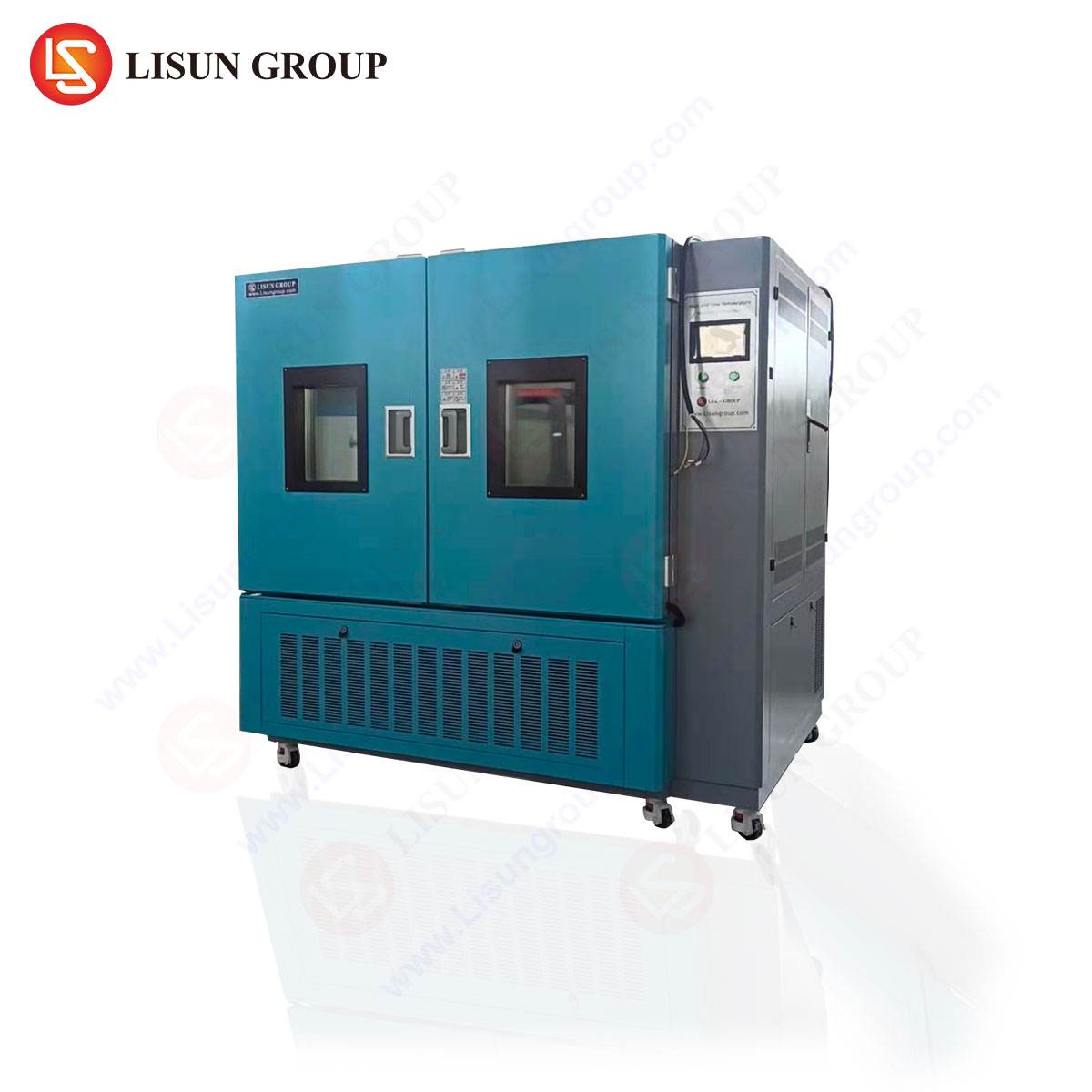
The LISUN Environmental Stress Chamber: IEC 60068 Temperature & Humidity Testing system operates on the fundamental principle of accelerated stress testing, where LED samples are subjected to elevated temperatures (up to 85°C) and controlled relative humidity levels (20% to 98% RH). This simulates years of operational wear within weeks, enabling engineers to observe lumen depreciation rates and failure mechanisms. The chamber’s precision control system maintains temperature stability within ±0.5°C and humidity stability within ±2% RH, ensuring reproducibility across test runs. Accelerated aging data feeds directly into the Arrhenius Model, which extrapolates lifespan at nominal operating conditions from high-stress test results.
1.2 Relevance to LED Lumen Maintenance Validation
LED reliability hinges on lumen maintenance—the ability to sustain light output over time. IEC 60068-compliant chambers provide the controlled environmental stress necessary to trigger degradation modes such as phosphor thermal quenching, driver capacitor aging, and solder joint fatigue. LISUN’s system aligns with IES LM-80-15 and LM-84-17 standards, which mandate specific temperature and humidity profiles for LED package, array, and module testing. The chamber’s ability to support up to three temperature chambers simultaneously allows parallel testing at multiple stress levels, accelerating data collection for TM-21 extrapolation to L70 (70% lumen maintenance) and L50 (50% lumen maintenance) metrics.
2.1 LEDLM-80PL for LM-80 and TM-21 Compliance
The LEDLM-80PL system is purpose-built for IES LM-80-15 testing of LED packages, arrays, and modules. It integrates photometric measurement via an integrating sphere (1m or 2m diameter) with the environmental stress chamber, enabling in-situ lumen flux monitoring at specified intervals. Key specifications include support for 6000-hour test durations per LM-80 requirements, with optional extensions to 10,000 hours for TM-21 extrapolation confidence. The system’s software automatically calculates L70 and L50 values using the Arrhenius Model, providing engineers with projected lifespan data at use temperatures (e.g., 55°C, 85°C). Up to 1024 test channels can be configured per chamber, accommodating large sample sizes for statistical rigor.
2.2 LEDLM-84PL for LM-84 and TM-28 Compliance
For LED luminaires and replacement lamps, the LEDLM-84PL variant adheres to IES LM-84-17 and TM-28-14 standards. Unlike LM-80, which focuses on components, LM-84 tests complete luminaires under operational conditions, including thermal management and driver interactions. The LEDLM-84PL system features higher current capacity (up to 10A per channel) and supports AC/DC power inputs to match real-world driver requirements. The integrated chamber maintains humidity control per IEC 60068-2-78 (damp heat) profiles, critical for evaluating corrosion and moisture ingress in luminaire housings. Both systems share a common software platform, allowing labs to switch between component and luminaire testing without retooling.
3.1 Mathematical Foundation and Extrapolation Methodology
LISUN’s software employs the Arrhenius Model, expressed as ( L(T) = A cdot e^{E_a / (k cdot T)} ), where ( L(T) ) is lifespan at temperature ( T ), ( E_a ) is activation energy (typically 0.3–0.5 eV for LEDs), and ( k ) is Boltzmann’s constant. The software processes lumen maintenance data from at least three test temperatures (e.g., 55°C, 70°C, 85°C) to calculate ( E_a ) and extrapolate L70 at a reference temperature (e.g., 55°C or 25°C). This method is validated per TM-21-19, which requires a minimum of 6000 hours of data for 6× extrapolation (to 36,000 hours) or 10,000 hours for 10× extrapolation (to 100,000 hours). The software automatically flags data points failing TM-21 confidence criteria, such as R² values below 0.9 or non-physical ( E_a ) estimates.
3.2 Dual Testing Modes: Continuous vs. Intermittent
The software supports two testing modes to balance data quality with energy efficiency:
- Continuous Mode: Samples are tested 24/7 with hourly photometric measurements. This mode maximizes data density for TM-21 curve fitting, as lumen readings are taken at every hour of aging. It is ideal for qualification testing where time-to-market is critical.
- Intermittent Mode: Samples are measured at intervals (e.g., every 100 hours) while the chamber maintains environmental conditions. This reduces measurement equipment wear and power consumption, suitable for long-term 10,000-hour studies. Both modes automatically compensate for thermal drift in the integrating sphere using reference LEDs calibrated per CIE 127:2007.
4.1 Chamber Sizing and Temperature Range Options
The LISUN Environmental Stress Chamber offers three standard sizes: 225L, 500L, and 1000L internal volumes, accommodating sample counts from 500 to 2000 LED packages or up to 40 luminaires. Temperature range is -40°C to +150°C with heating rates of 3°C/min and cooling rates of 2°C/min. Humidity control operates from 20% to 98% RH for temperatures between 10°C and 85°C, with a dew point limitation of -30°C. Custom configurations include:
- Multi-zone chambers with independent temperature control for simultaneous stress levels
- Explosion-proof versions for testing LEDs with flammable encapsulants
- Low-oxygen environments (<1% O₂) for simulating vacuum or inert gas conditions
4.2 Integrating Sphere and Spectroradiometer Integration
Photometric measurements are performed using LISUN’s integrating spheres (0.3m, 1m, or 2m diameter) paired with a high-speed spectroradiometer (200–1100 nm range). The sphere’s internal coating achieves >97% reflectance per CIE 084:1989 guidelines, ensuring luminous flux accuracy within ±1.5%. The spectroradiometer measures chromaticity coordinates (x, y), correlated color temperature (CCT), and color rendering index (CRI) at each interval, enabling analysis of color shift alongside lumen depreciation. For TM-21 extrapolation, the software uses only lumen data, but color metrics are recorded for TM-28-14 reporting.
5.1 Continuous Mode for High-Density Data Collection
Continuous mode is the default for LM-80 qualification testing, where lumen readings are taken every hour over 6000 hours. This yields 6000 data points per sample, enabling precise curve fitting for the Arrhenius Model. For example, testing at 85°C and 85% RH produces rapid degradation, often reaching L70 within 3000–4000 hours. The software then extrapolates to 50,000+ hours at 55°C using the activation energy calculated from three temperature sets. This mode is essential for Tier 1 lighting manufacturers requiring Energy Star and DLC (DesignLights Consortium) certification, both of which mandate TM-21 projections.
5.2 Intermittent Mode for Long-Term Studies
Intermittent mode reduces measurement frequency to intervals such as 100 or 500 hours, extending total test duration to 10,000–20,000 hours without overburdening the spectroradiometer. This is ideal for R&D studies investigating long-term degradation mechanisms, such as LED driver capacitor aging or phosphor thermal stability. The software automatically aligns intermittent measurements with the Arrhenius Model, but engineers must ensure at least 10 data points are collected per temperature for statistically valid extrapolation. LISUN’s system supports scheduling of up to 1000 samples with user-defined measurement intervals per channel.
6.1 Parallel Testing at Multiple Stress Levels
The LISUN Environmental Stress Chamber: IEC 60068 Temperature & Humidity Testing system supports daisy-chaining up to three chambers to a single LEDLM-80PL or LEDLM-84PL controller. Each chamber operates at a different temperature (e.g., Chamber A at 55°C, Chamber B at 70°C, Chamber C at 85°C) but maintains the same humidity profile (e.g., 65% RH). This parallel testing approach collects three temperature stress data simultaneously, reducing total test time from 6000 hours (sequential) to 6000 hours (overlapping). The software assigns unique test IDs to each chamber and automatically merges data for TM-21 analysis, calculating activation energy without user intervention.
6.2 Synchronized Data Logging and Reporting
All three chambers share a common data acquisition system (DAQ) with 1024 measurement channels each, expandable to 3072 total. The DAQ records chamber temperature, humidity, and device under test (DUT) temperature via thermocouples (K-type, ±0.1°C accuracy) every 60 seconds. In continuous mode, the spectroradiometer cycles through chambers every 20 minutes per chamber, providing 3 measurements per hour per sample. Reports are generated in XML or PDF format, including per-chamber lumen maintenance curves, TM-21 extrapolation tables, and pass/fail criteria based on L70 thresholds (e.g., >90% lumen maintenance at 6000 hours for commercial LEDs).
7.1 IES LM-80 and TM-21 for Component Testing
IES LM-80-15 specifies test conditions of 55°C, 70°C, and 85°C at 65% RH for LED packages, with minimum 6000 hours data. LISUN’s chamber meets these requirements with stability of ±0.5°C and ±2% RH. TM-21-19 then extrapolates data to project L70 at use temperature, using the Arrhenius Model. For example, if 6000-hour data at 55°C shows 92% lumen maintenance, the software extrapolates to L70 at 55°C as 72,000 hours with an uncertainty window of ±10%. This approach is accepted by Energy Star for luminaire certification.
7.2 IES LM-84 and TM-28 for Luminaire Testing
IES LM-84-17 extends testing to complete luminaires, requiring 6000 hours at 25°C ambient (or higher if luminaire operating temperature exceeds 60°C). TM-28-14 provides the extrapolation methodology, which accounts for both lumen and color shift. LISUN’s system supports LM-84’s requirement for in-situ photometry using a 2m integrating sphere, ensuring the luminaire operates under its own thermal management. Color shift projections (Δu’v’ ≤ 0.007 at 6000 hours) are calculated using the LEDLM-84PL software, meeting ENERGY STAR criteria for color consistency.
7.3 Reference to CIE and Other Standards
The chamber design adheres to:
- CIE 084:1989: Integrating sphere photometry methods for luminous flux measurement
- CIE 70:1987: Guide for the photometric measurement of retroreflectors (applicable for road lighting LEDs)
- CIE 127:2007: Temperature measurement of LED sources, ensuring DUT temperature is within ±0.5°C of setpoint
- IEC 60068-2-78: Damp heat cyclic test for accelerated aging
Technical Comparison Table: LEDLM-80PL vs. LEDLM-84PL
| Parameter | LEDLM-80PL (Component) | LEDLM-84PL (Luminaire) |
|---|---|---|
| Standard | IES LM-80-15, TM-21-19 | IES LM-84-17, TM-28-14 |
| Test Objects | LED packages, arrays, modules | LED luminaires, replacement lamps |
| Sample Capacity | Up to 1024 channels per chamber | Up to 40 channels per chamber |
| Current Range | 0–2A per channel (DC) | 0–10A per channel (AC/DC) |
| Test Duration | 6000 hours (minimum) | 6000 hours (minimum) |
| Extrapolation | L70, L50 at use temperature | L70, color shift (Δu’v’) |
| Photometry | 1m integrating sphere | 2m integrating sphere |
| Chamber Support | Up to 3 chambers | Up to 3 chambers |
The LISUN Environmental Stress Chamber: IEC 60068 Temperature & Humidity Testing system, paired with the LEDLM-80PL and LEDLM-84PL instruments, provides a comprehensive solution for LED lumen maintenance testing under controlled environmental stress. By integrating the Arrhenius Model-based software, dual testing modes (continuous and intermittent), and support for up to three temperature chambers, engineers can achieve TM-21 and TM-28 extrapolations with high precision. The system’s compliance with IES LM-80-15, LM-84-17, and CIE standards ensures that test results meet global certification requirements, including Energy Star and DLC programs. Technical professionals benefit from customizable hardware configurations—such as multi-zone chambers and large integrating spheres—that adapt to both component and luminaire testing needs. The inclusion of L70/L50 metrics and color shift analysis enables accelerated aging validation with confidence in lifespan projections. For LED manufacturing quality control, third-party testing labs, and R&D teams, LISUN’s chamber delivers the reliability and accuracy demanded by today’s stringent lighting standards.
Q1: How does the Arrhenius Model-based software handle missing or noisy data points during TM-21 extrapolation?
A: The software employs robust regression techniques to filter anomalous data points caused by power interruptions or measurement drift. If any data point deviates more than 3σ from the fitted curve, it is flagged and excluded from the extrapolation dataset. For TM-21 compliance, the software requires a minimum of 6000 hours of valid data with at least 100 data points per temperature set. If fewer than 80% of points are valid after filtering, the software alerts the user to retest. The Arrhenius Model linearizes the Arrhenius plot (ln(L) vs. 1/T) using weighted least squares, where weights are inversely proportional to measurement variance. This ensures that high-variance points (e.g., early-stage floating readings) have minimal impact on activation energy calculation, maintaining L70 projection accuracy within ±5% for typical LED samples.
Q2: Can the LISUN Environmental Stress Chamber test LEDs with non-dimming drivers, and how does it handle pulsed current conditions?
A: Yes, the chamber supports both constant current (CC) and constant voltage (CV) drivers, covering typical LED driver topologies. For pulsed current conditions (e.g., PWM dimming), the LEDLM-80PL/84PL system includes a high-speed current sensor (1 MHz sampling rate) that captures peak, average, and RMS current values. The software averages 1000 pulse cycles per measurement to compute equivalent DC current for lumen flux normalization. IEC 60068 testing allows pulsed current as long as the average current does not exceed the LED’s rated maximum. The chamber’s humidity control remains unaffected by driver switching, as the control loop has a 10-second response time, smoothing out any thermal transients. For dimmable drivers, the software can program a fixed duty cycle (e.g., 50%) throughout the test to simulate real-world usage.
Q3: What is the maximum sample size the system can handle for a 6000-hour LM-80 test with three chambers?
A: With three chambers daisy-chained to a single controller, each chamber supports up to 1024 measurement channels (LEDLM-80PL), resulting in a total capacity of 3072 LED packages or modules. This assumes all samples are tested simultaneously at the same temperature and humidity profile. For the LEDLM-84PL variant, each chamber supports up to 40 luminaire channels, totaling 120 luminaires across three chambers. Realistically, sample sizes must account for physical space within the chamber volume. For example, a 500L chamber can accommodate approximately 2400 small LED packages (5mm × 5mm) on test boards, or 45 standard luminaires (0.6m × 0.6m). LISUN recommends using test boards with standardized footprints (e.g., JEDEC MO-298) to maximize density. The software automatically creates sample IDs and assigns measurement slots based on board geometry, preventing channel collisions.
Q4: How does LISUN ensure temperature uniformity across the chamber during humidity testing?
A: Temperature uniformity is maintained within ±0.5°C across 95% of the chamber volume, validated via a 16-point thermocouple grid during manufacturing. The chamber uses a forced-air circulation system with a 2-stage damper control: an upper plenum directs air downward through perforated shelves, while a lower return plenum recirculates air past the heating and cooling coils. Humidity uniformity is ±3% RH for temperatures above 20°C, achieved by ultrasonic atomizers that inject water mist (5–10 μm droplets) into the air stream. The PID controller adjusts heating/cooling rates to prevent overshoot, while the humidity sensor (capacitive polymer type) has a ±1.5% RH accuracy. For LM-80 testing, LISUN recommends placing DUTs on test boards with 2mm spacing to allow airflow between samples, preventing localized hot spots that could skew activation energy calculations.