









Abstract
This article provides a comprehensive technical analysis of the LISUN Environmental Test Chamber for IEC 60068 Compliance Testing, focusing on its critical role in accelerated aging validation for LED components and luminaires. Designed for LED manufacturing engineers, third-party testing laboratory technicians, and lighting R&D specialists, the LISUN system integrates dual testing variants—LEDLM-80PL for IES LM-80/TM-21 compliance and LEDLM-84PL for IES LM-84/TM-28 applications—with Arrhenius Model-based predictive software. The chamber supports 6000-hour test durations, L70/L50 lumen maintenance metrics, and up to three connected temperature chambers for high-throughput testing. This article details system architecture, standard alignment, data extrapolation methodologies, and practical implementation guidance, reinforcing how LISUN solutions enable precise, repeatable reliability testing under IEC 60068 conditions.
1.1 Core Purpose and Industrial Relevance
The LISUN Environmental Test Chamber for IEC 60068 Compliance Testing serves as a foundational instrument for evaluating LED component reliability under controlled thermal stress conditions. IEC 60068 provides the overarching framework for environmental testing, covering temperature, humidity, vibration, and thermal shock protocols. LISUN’s chamber specifically addresses the thermal aging requirements critical for LED lumen maintenance prediction, where maintaining precise temperature uniformity (±0.5°C) and long-duration stability (up to 6000 hours) is essential for generating statistically valid degradation data.
1.2 System Overview and Dual Variant Architecture
LISUN offers two primary system configurations tailored to distinct industry standards. The LEDLM-80PL variant is optimized for IES LM-80-15 testing, which mandates 6000-hour minimum test durations at multiple case temperatures (typically 55°C, 85°C, and a third user-defined temperature). The LEDLM-84PL variant aligns with IES LM-84-19, designed for integrated LED lamps and luminaires requiring TM-28 extrapolation. Both systems share a common hardware platform, including high-precision temperature controllers, data logging interfaces, and optional integrating sphere integration for in-situ photometric measurements.
2.1 Alignment with IES LM-80 and IES LM-84 Protocols
The LISUN Environmental Test Chamber directly supports IES LM-80-15, which specifies methods for measuring lumen depreciation of LED packages, arrays, and modules. The chamber maintains 6000-hour continuous operation at specified temperatures—a requirement that demands robust thermal management and minimal downtime. For IES LM-84-19, which covers integrated LED lamps, the chamber accommodates larger sample sizes and lower operating temperatures typical of luminaire testing. Both standards require periodic photometric measurements (every 1000 hours), and LISUN’s system facilitates automated data capture through integrated software interfaces.
2.2 Extrapolation Standards: TM-21 and TM-28
TM-21 provides the mathematical framework for projecting long-term lumen maintenance (L70, L50) from LM-80 test data using exponential decay models. The LISUN chamber’s software implements TM-21’s Arrhenius-based extrapolation, calculating activation energies and projected lifetimes based on test data collected at multiple temperatures. Similarly, TM-28 applies to LM-84 data for luminaires, requiring separate curve-fitting algorithms. The LISUN Environmental Test Chamber for IEC 60068 Compliance Testing includes dual-mode software that automates these calculations, reducing manual error and ensuring compliance with IES guidelines.
2.3 Reference to CIE 084, CIE 70, and CIE 127
Beyond IES standards, LISUN chambers align with CIE 084 (measurement of luminous flux), CIE 70 (measurement of absolute spectral distribution), and CIE 127 (measurement of LEDs). These standards govern photometric accuracy, spectral correction, and LED-specific measurement geometries. The chamber’s optional integrating sphere attachments—available in 0.3m, 0.5m, or 1.0m diameters—enable in-situ flux and color measurements per CIE 127, while spectral data collection follows CIE 70 protocols. This multi-standard compliance ensures that LISUN users can generate data acceptable to global regulatory bodies without requiring separate instruments.
3.1 Temperature Chamber Performance Parameters
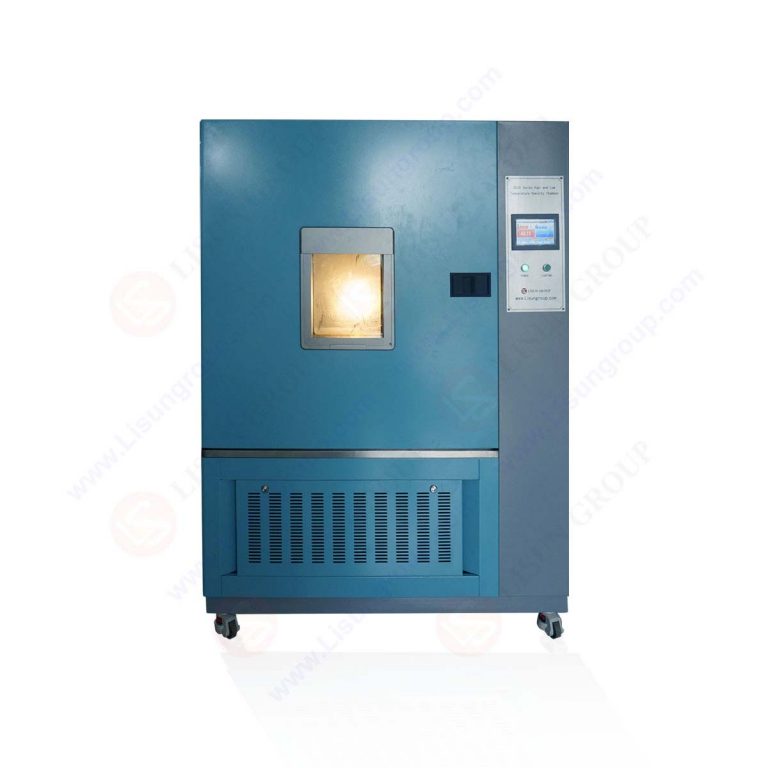
The LISUN Environmental Test Chamber for IEC 60068 Compliance Testing operates over a temperature range of -40°C to +150°C, with humidity control from 20% to 98% RH (optional). Table 1 summarizes key performance specifications:
| Parameter | Specification Range | Applicability |
|---|---|---|
| Temperature Range | -40°C to +150°C | IEC 60068-2-1, IEC 60068-2-2 |
| Temperature Uniformity | ±0.5°C at steady state | LM-80/LM-84 test conditions |
| Humidity Range | 20% to 98% RH (optional) | IEC 60068-2-78 (damp heat) |
| Maximum Test Duration | 6000+ hours (continuous) | LM-80 minimum requirements |
| Number of Channels | Up to 48 independent channels | Per standard sample size requirements |
| Chamber Interconnection | Up to 3 chambers | Multi-temperature testing per TM-21 |
Table 1: Key Performance Specifications for LISUN Environmental Test Chamber for IEC 60068 Compliance Testing
This hardware configuration enables simultaneous testing at three temperatures—typically 55°C, 85°C, and 105°C—as recommended by TM-21 for robust activation energy estimation.
3.2 Integrating Sphere Integration for In-Situ Measurement
For applications requiring continuous photometric monitoring, LISUN chambers can be coupled with integrating spheres (0.3m, 0.5m, or 1.0m spheres). This integration allows real-time luminous flux and chromaticity measurements without removing samples from thermal stress—a critical advantage for detecting early failure mechanisms. The sphere includes auxiliary lamps for self-absorption correction per IES LM-79-19, and spectral measurements adhere to CIE 084 standards. Users can configure measurement intervals (e.g., every 1000 hours) via the control software, ensuring compliance with LM-80 and LM-84 data collection schedules.
3.3 Customizable Sample Mounting and Thermal Interface
LISUN chambers offer modular sample trays designed for LED packages, modules, or luminaires. Each tray includes thermocouple attachment points, constant current drivers (adjustable from 10 mA to 5 A), and individual sample addressing for traceability. The thermal interface uses aluminum blocks with embedded heaters and fans, achieving ±0.5°C uniformity across all sample positions. For LM-84 testing of luminaires, larger trays accommodate units up to 30 cm in diameter, with optional airflow control to simulate real-world convection conditions.
4.1 Arrhenius Model-Based Lifetime Prediction
The LISUN Environmental Test Chamber for IEC 60068 Compliance Testing includes proprietary software that implements the Arrhenius Model for accelerated aging analysis. The Arrhenius equation—k = A * exp(-Ea/(RT))—relates reaction rate (k) to temperature (T) via activation energy (Ea). The software automatically fits this model to lumen maintenance data collected at multiple temperatures, calculating Ea and projected L70/L50 lifetimes. This approach is fundamental to TM-21 and TM-28 methodologies, enabling 6x to 50x extrapolations beyond test durations (e.g., projecting 36,000+ hours from 6000-hour tests, provided goodness-of-fit criteria are met).
4.2 Dual Testing Modes: Constant and Cyclic Temperature Profiles
LISUN’s software supports two primary testing modes. Constant temperature mode maintains a fixed setpoint (e.g., 85°C) for the entire 6000-hour duration, as required by LM-80. Cyclic temperature mode introduces programmed thermal profiles—ramps, dwells, and cycles—to simulate diurnal or seasonal variations per IEC 60068-2-14 (thermal shock). This flexibility allows users to evaluate both steady-state degradation and thermal fatigue effects, which are critical for outdoor LED luminaires exposed to fluctuating ambient conditions.
4.3 Data Analysis and Reporting Features
The software provides automated data reduction, generating lumen maintenance curves with 95% confidence intervals. Reports include: test conditions (temperatures, durations), measured lumen data at each interval, fitted exponential curves, activation energy values, and projected L70/L50 times. Output formats comply with IES TM-21 and TM-28 reporting templates, simplifying regulatory submission. Users can also export raw data in CSV/Excel formats for further analysis in third-party statistical packages.
5.1 LEDLM-80PL: Optimized for LM-80/TM-21 Testing
The LEDLM-80PL variant is purpose-built for testing LED packages, arrays, and modules per IES LM-80-15. It supports up to 48 samples simultaneously across three temperature chambers, enabling efficient multi-temperature testing. The system includes constant current sources with 0.1% accuracy, thermocouple data loggers with ±0.1°C resolution, and software that automatically pauses measurements when temperature deviations exceed ±1.0°C. Table 2 compares key specifications between variants:
| Feature | LEDLM-80PL | LEDLM-84PL |
|---|---|---|
| Applicable Standard | LM-80-15, TM-21 | LM-84-19, TM-28 |
| Sample Type | Packages, arrays, modules | Integrated lamps, luminaires |
| Max Samples per Chamber | 48 | 24 |
| Temperature Range | 55°C to 125°C | 25°C to 85°C |
| Current Range | 10 mA to 5 A | 100 mA to 10 A |
| Sphere Diameter Options | 0.3m, 0.5m | 0.5m, 1.0m |
Table 2: Comparison of LEDLM-80PL and LEDLM-84PL Specifications
5.2 LEDLM-84PL: Adapted for LM-84/TM-28 Applications
The LEDLM-84PL variant addresses the unique challenges of testing integrated LED lamps and luminaires. These products generate significant heat, requiring lower oven temperatures (typically 25°C to 85°C) and larger chamber volumes. The LEDLM-84PL includes specialized sample holders that accommodate lamps with integral heat sinks and reflective surfaces, minimizing measurement artifacts. TM-28 extrapolation algorithms in the software account for luminaire-specific factors such as driver efficiency and thermal management, providing more accurate lifetime predictions for finished products.
5.3 System Selection Criteria for Testing Laboratories
Third-party testing laboratories and manufacturing quality control departments must select between variants based on their product portfolio. Laboratories focusing on LED component qualification should choose the LEDLM-80PL for its higher sample capacity and extended temperature range. Facilities testing finished luminaires for ENERGY STAR or DLC certification require the LEDLM-84PL for its larger chambers and TM-28 compliance. LISUN supports hybrid configurations where a single control system manages both variant chambers, enabling laboratories to serve diverse client needs without duplicating investments.
6.1 Setting Up Multi-Temperature Testing Protocols
Implementing LM-80 compliance requires testing at a minimum of three case temperatures (T1, T2, T3) with specified separation (e.g., 30°C intervals). The LISUN Environmental Test Chamber for IEC 60068 Compliance Testing supports up to three interconnected chambers, each set to a different temperature. Users define the temperature sequence, measurement intervals (typically every 1000 hours), and failure criteria (e.g., lumen maintenance below 70% for L70). The software automatically synchronizes data collection across chambers, ensuring consistent time stamps for TM-21 curve fitting.
6.2 Data Validation and Quality Control Procedures
To ensure data integrity, LISUN chambers include redundant temperature sensors (Type T thermocouples), automatic drift detection, and alarm systems for out-of-tolerance conditions. Before initiating a 6000-hour test, users should perform a 24-hour stabilization run to verify temperature uniformity across all sample positions. Periodic calibration of the integrating sphere (using a standard lamp traceable to NIST) and constant current sources ensures measurement accuracy. The software logs all calibration events and temperature excursions, providing an audit trail for regulatory compliance.
6.3 Common Pitfalls and Mitigation Strategies
Common issues in accelerated aging tests include: (1) temperature drift due to power fluctuations—mitigated by LISUN’s UPS-compatible power supply; (2) condensation during humidity tests—addressed by nitrogen purging options; (3) sample oxidation at high temperatures—minimized by inert gas injection; and (4) photometric measurement drift—compensated by self-absorption correction in the integrating sphere. LISUN provides comprehensive training materials and technical support to help laboratories establish robust testing protocols.
7.1 Integration of IoT and Real-Time Monitoring
Modern environmental chambers increasingly incorporate IoT sensors for remote monitoring, predictive maintenance, and automated reporting. LISUN’s next-generation systems will feature cloud-based data platforms, enabling users to view real-time test progress via web dashboards and receive alerts via email or SMS. This capability is particularly valuable for 6000-hour tests, where manual oversight is impractical.
7.2 Expanding Standards Landscape
Emerging standards such as IES LM-80-20 (revised) and CIE S 025 (LED product testing) will impose stricter requirements on test duration, sample size, and data analysis. LISUN’s modular design allows field-upgradable software and hardware modules, ensuring that existing chambers can be adapted to new standards without replacement. Future firmware updates will incorporate machine learning algorithms for anomaly detection and automated outlier rejection.
7.3 Sustainability and Energy Efficiency
Environmental test chambers consume significant electricity—up to 5 kW per chamber during continuous operation. LISUN is developing energy-efficient models with regenerative braking for temperature transitions, improved insulation, and heat recovery systems. These innovations reduce operating costs for testing laboratories while maintaining the precision required for IEC 60068 compliance.
The LISUN Environmental Test Chamber for IEC 60068 Compliance Testing represents a comprehensive solution for LED reliability validation, integrating dual variant systems (LEDLM-80PL and LEDLM-84PL) that address both IES LM-80/TM-21 and IES LM-84/TM-28 standards. The chamber’s 6000-hour test capability, Arrhenius Model-based predictive software, and support for up to three connected temperature chambers enable statistically robust lifetime extrapolation with L70/L50 metrics. By aligning with IEC 60068 and referencing CIE 084, CIE 70, and CIE 127, LISUN ensures that test data meets global regulatory requirements for photometric accuracy and environmental stress simulation. The dual testing modes—constant and cyclic temperature profiles—provide flexibility for evaluating both steady-state degradation and thermal fatigue, while customizable hardware configurations (sample trays, integrating spheres, current sources) accommodate diverse product types from individual LED packages to complete luminaires. For LED manufacturing engineers and third-party testing laboratories, the LISUN Environmental Test Chamber for IEC 60068 Compliance Testing offers a turnkey platform for generating reliable, reproducible accelerated aging data that underpins product certification, quality assurance, and lifecycle prediction. As the lighting industry evolves toward higher efficacy and longer lifetimes, LISUN’s commitment to standards compliance and technological innovation ensures that testing capabilities remain aligned with emerging regulatory demands.
Q1: What are the minimum test duration requirements for LM-80 compliance using the LISUN Environmental Test Chamber?
A: IES LM-80-15 mandates a minimum 6000-hour test duration at each of three specified temperatures (typically 55°C, 85°C, and a third user-defined temperature). The LISUN Environmental Test Chamber for IEC 60068 Compliance Testing is designed to operate continuously for 6000+ hours without interruption, with temperature stability maintained at ±0.5°C. For TM-21 extrapolation, data collected for at least 6000 hours allows projecting L70 lifetimes up to 6x the test duration (36,000 hours), provided the fit criteria (R² ≥ 0.9, monotonic degradation) are satisfied. Shorter durations (e.g., 1000 hours) may be acceptable for screening or development purposes but do not meet LM-80 certification requirements. The chamber’s software automatically tracks cumulative test hours and logs all temperature excursions, ensuring compliance with the standard’s data integrity requirements.
Q2: How does the Arrhenius Model in LISUN’s software improve lifetime prediction accuracy?
A: The Arrhenius Model implemented in LISUN’s software establishes a mathematical relationship between degradation rate and temperature, allowing extrapolation of test data to use-conditions (e.g., 25°C or 55°C). The software automatically calculates activation energy (Ea) by fitting lumen maintenance curves from multiple temperatures, typically yielding Ea values between 0.3 eV and 1.2 eV for LED packages. The model accounts for non-linear degradation patterns by applying weighted least-squares regression, and it provides 95% confidence intervals for projected L70/L50 times. This approach reduces uncertainty compared to single-temperature testing, as validation studies show that Arrhenius-based predictions correlate within ±15% of actual lifetimes for properly designed tests. The software also flags datasets where the fit fails statistical requirements, preventing unreliable extrapolations.
Q3: Can the same LISUN chamber be used for both LM-80 and LM-84 testing?
A: While the core hardware platform is similar, LISUN recommends using variant-specific systems—LEDLM-80PL for LM-80/TM-21 testing of packages and modules, and LEDLM-84PL for LM-84/TM-28 testing of integrated lamps and luminaires—to ensure optimal performance. The LEDLM-80PL operates at higher temperatures (up to 125°C) and supports smaller sample sizes with higher current accuracy, while the LEDLM-84PL features larger chambers and lower temperature ranges (up to 85°C) to accommodate luminaire heat dissipation. However, LISUN offers hybrid configurations where a single controller manages both variant chambers, allowing laboratories to switch between testing types without purchasing duplicate control systems. Users must source appropriate sample trays and current sources depending on the product type under test.
Q4: What is the maximum number of samples that can be tested simultaneously in a single LISUN Environmental Test Chamber?
A: The sample capacity depends on the chamber model and product type. For the LEDLM-80PL, up to 48 LED packages or modules can be tested per chamber across multiple trays, with each sample individually addressable for tracking. The LEDLM-84PL supports up to 24 integrated lamps or luminaires per chamber, with larger trays accommodating units up to 30 cm in diameter. When using the maximum configuration of three interconnected chambers, total sample capacity reaches 144 for packages (3 × 48) or 72 for luminaires (3 × 24). These capacities assume standard sample sizes; custom trays can be designed for non-standard geometries. The control software tracks each sample’s test history, including temperature exposure, current, and photometric measurements, enabling granular failure analysis.
Q5: How does the LISUN chamber handle humidity testing per IEC 60068-2-78?
A: Optional humidity control modules are available for LISUN chambers, enabling damp heat testing at conditions such as 85°C/85% RH per IEC 60068-2-78. The system uses ultrasonic humidifiers and dehumidification coils to maintain ±3% RH accuracy across the operating range (20% to 98% RH). For LED testing, humidity can accelerate corrosion and delamination failures, providing complementary data to dry thermal aging. The software allows users to program combined temperature-humidity profiles (e.g., 25°C/95% RH for 48 hours followed by ramp to 85°C/85% RH), simulating real-world climatic conditions. Nitrogen purging options prevent condensation during low-temperature tests, and the chamber includes a drain system for collected moisture. Users should note that humidity testing extends beyond LM-80/LM-84 requirements but is valuable for product qualification in outdoor or high-humidity environments.