









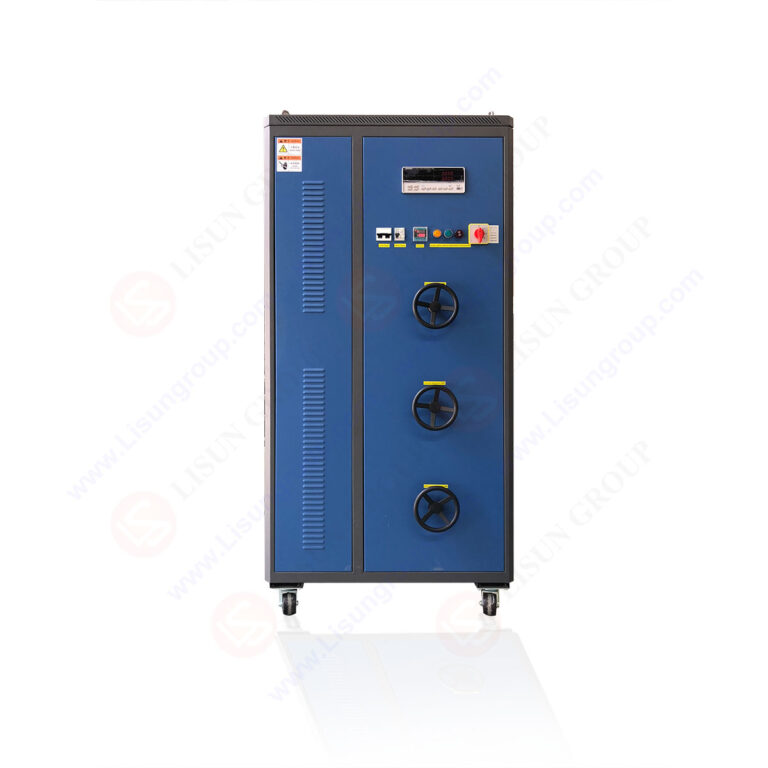
The LISUN DFX series Externally Ballasted Fluorescent Lamp Test Load Cabinet is a precision instrument designed for compliance testing of electrical accessories under IEC 60969 and related standards. This article provides a comprehensive technical analysis of the DFX series as a fluorescent lamp load tester, detailing its capabilities in simulating resistive, inductive, and capacitive loads for switch, socket, and relay endurance testing. Targeting manufacturers, third-party laboratories, and quality control engineers, the document explores core specifications, standard alignment, and integration with complementary LISUN equipment. With multiple models offering current ranges from 0.1A to 80A and adjustable power factors from 0.3 to 0.98, the DFX series enables accurate reproduction of ballasted lamp electrical characteristics. This technical review covers operational principles, model comparisons, compliance benefits, and practical implementation for rigorous product validation.
1.1 Purpose and Application Scope
The LISUN DFX series load test cabinet serves as a dedicated test load simulator for evaluating the durability and safety of electrical accessories such as switches, sockets, connectors, and relays under controlled electrical stress. These devices must withstand repeated switching operations while connected to loads that mimic real-world ballasted fluorescent lamps. The DFX series provides precise load simulation by combining resistive, inductive, and capacitive components in configurable parallel and series arrangements. Engineers use this equipment to perform cyclic endurance tests per IEC 60669-1 Clause 19.2, IEC 60884-1 Clause 20, and IEC 61058-1 requirements. The test cabinet supports both single-phase and multi-channel configurations, enabling simultaneous testing of multiple samples.
1.2 Core Technical Principle
The DFX series operates by synthesizing a composite electrical load that replicates the impedance characteristics of externally ballasted fluorescent lamps. A typical fluorescent lamp circuit includes a ballast inductor, a lamp resistor, and a power factor correction capacitor. The load test cabinet recreates this network using high-precision adjustable resistors, inductors, and capacitors. By tuning these components, operators achieve target current levels (RMS and peak), power factor values, and crest factors. The load cabinet includes protection mechanisms such as overcurrent relays and thermal cutoffs to ensure safe operation during extended test cycles. Measurement instruments integrated into the cabinet display real-time voltage, current, power, and power factor readings, enabling operators to verify load conditions before initiating endurance tests.
2.1 DFX Series Model Overview
The LISUN DFX series includes five models: DFX-20, DFX-20-3CH, DFX-40, DFX-60, and DFX-80. Each model serves specific current and channel requirements. The DFX-20 offers a 20A maximum current with a single output channel. The DFX-20-3CH provides three independent channels, each rated at 20A, allowing parallel testing of three devices simultaneously. Higher current models include the DFX-40 (40A), DFX-60 (60A), and DFX-80 (80A), all with single-channel configurations. All models support adjustable power factors from 0.3 to 0.98 with a resolution of 0.01. Input voltage ratings match standard mains supplies (110V/220V AC, 50/60Hz). Measurement accuracy for current and voltage is ±0.5% of reading plus two digits, ensuring reliable data for compliance reporting.
2.2 Technical Comparison Table
The following table compares core specifications across the DFX series models:
| Model | Max Current (A) | Channels | Input Voltage (V AC) | Power Factor Range | Crest Factor Capability | Measurement Accuracy |
|---|---|---|---|---|---|---|
| DFX-20 | 20 | 1 | 110/220 | 0.3 – 0.98 | ≤1.8 | ±0.5% ±2 digits |
| DFX-20-3CH | 20 per channel | 3 | 110/220 | 0.3 – 0.98 | ≤1.8 | ±0.5% ±2 digits |
| DFX-40 | 40 | 1 | 110/220 | 0.3 – 0.98 | ≤1.8 | ±0.5% ±2 digits |
| DFX-60 | 60 | 1 | 220 | 0.3 – 0.98 | ≤1.8 | ±0.5% ±2 digits |
| DFX-80 | 80 | 1 | 220 | 0.3 – 0.98 | ≤1.8 | ±0.5% ±2 digits |
The DFX-20-3CH model offers unique advantages for high-throughput testing environments where multiple samples must be evaluated concurrently. For applications requiring higher inrush currents, the DFX-60 and DFX-80 models provide extended headroom for heavy-duty switches and industrial relays.
3.1 IEC and GB Standard Alignment
The LISUN DFX series is engineered to meet the load simulation requirements of multiple international standards. For switch testing, IEC 60669-1 Clause 19.2 specifies load parameters for fluorescent lamp loads, including a power factor of 0.6 ± 0.05 for inductive loads and 0.9 ± 0.05 for resistive loads. The DFX series achieves these values with a resolution of 0.01, exceeding the standard’s tolerance requirements. For socket-outlet testing, IEC 60884-1 Clause 20 defines endurance test conditions with current levels up to 16A at rated voltage, which the DFX series supports across all models. Additionally, IEC 61058-1 for switches and IEC 60969 for self-ballasted lamps reference similar load profiles, all achievable through the DFX series’ configurable load network.
3.2 Minimum Compliance Requirements Table
The following table compares minimum standard requirements against DFX series capabilities:
| Standard Clause | Required Current | Required Power Factor | DFX Series Capability | Margin |
|---|---|---|---|---|
| IEC 60669-1 19.2 | Up to 16A | 0.6 ± 0.05 (inductive) | 0.3 – 0.98 (0.01 res.) | ±0.04 accuracy |
| IEC 60884-1 20 | Up to 16A | 0.6 ± 0.05 (inductive) | 0.3 – 0.98 (0.01 res.) | ±0.04 accuracy |
| IEC 61058-1 | Up to 20A | 0.6 – 0.9 | 0.3 – 0.98 (0.01 res.) | Full coverage |
| GB 16915.1 | Up to 16A | 0.6 ± 0.05 | 0.3 – 0.98 (0.01 res.) | ±0.04 accuracy |
The DFX series exceeds standard requirements by providing a wider power factor adjustment range and finer resolution. This ensures that laboratories can reproduce exact test conditions specified in normative documents without approximation.
4.1 Resistive, Inductive, and Capacitive Load Configurations
The DFX series load test cabinet includes independent resistor banks, inductor banks, and capacitor banks that can be combined in series or parallel configurations. Resistive loads use high-wattage wire-wound resistors with low temperature coefficients, maintaining stable resistance values during extended test runs. Inductive loads employ iron-core inductors with adjustable air gaps to vary inductance values, enabling precise power factor setting. Capacitive loads use metalized polypropylene capacitors rated for AC operation, allowing simulation of power factor correction circuits. Operators select load combinations using front-panel rotary switches or digital interfaces, depending on the model. Each load component is rated for continuous duty at the cabinet’s maximum current rating, preventing thermal drift during long-duration tests.
4.2 Power Factor and Crest Factor Control
Power factor adjustment is critical for reproducing the non-sinusoidal current waveforms characteristic of ballasted fluorescent lamps. The DFX series allows continuous adjustment from 0.3 (highly inductive) to 0.98 (near-unity), covering all standard test conditions. The resolution of 0.01 enables fine-tuning to match specific standard clauses. Crest factor, defined as the ratio of peak current to RMS current, is maintained at ≤1.8 for inductive loads, consistent with typical fluorescent lamp ballast outputs. For capacitive loads, crest factor values may reach up to 2.5, which the DFX series accommodates through capacitor bank selection. The load cabinet includes a peak current measurement function, allowing operators to verify crest factor compliance during test setup.
5.1 LISUN CZKS Series Life Testers
The LISUN DFX series integrates seamlessly with the LISUN CZKS series switch and socket life testers. The CZKS series provides mechanical actuation and cycle counting, while the DFX series supplies the electrical load. During a typical test, the CZKS tester operates a switch or socket under test, connecting it to the DFX load cabinet at predefined intervals. The CZKS controller signals the DFX unit to apply load voltage only during the “on” portion of the cycle, preventing unnecessary stress on load components. This integration enables automated testing per IEC 60669-1 Clause 19.2, where thousands of mechanical operations are performed under specified electrical loads. The combined system logs cycle counts, failure events, and electrical parameters for comprehensive reporting.
5.2 Additional LISUN Test Accessories
The DFX series is compatible with other LISUN test equipment, including the SW-6 bending tester for flexible cord endurance and the LS series leakage current testers. For socket testing with connected plugs, the SW-6 tester subjects cords to repeated bending while the DFX load cabinet maintains the specified current flow. This combination validates socket contact integrity under mechanical and electrical stress. The LS series leakage current testers can measure residual currents during DFX load testing, ensuring that insulation resistance remains within acceptable limits. Additionally, the DFX series can be used with temperature measurement systems to monitor contact temperature rise during high-current tests, supporting compliance with IEC 60884-1 Clause 19 temperature rise limits.
6.1 Pre-Test Configuration
Setting up a DFX series load test cabinet requires careful configuration of load parameters to match the standard clause under evaluation. Operators first select the appropriate model based on maximum test current and channel count. For example, testing a 16A switch per IEC 60669-1 would use the DFX-20 or DFX-20-3CH model. The operator then adjusts the power factor to 0.6 using the inductive load controls, verifying the value with the built-in power factor meter. The applied voltage is set to the rated voltage of the device under test, typically 220V or 110V AC. The load cabinet includes a test button to apply load for short periods, allowing verification of current and power factor before starting the automated endurance test cycle.
6.2 Test Execution and Monitoring
During test execution, the DFX series operates continuously, maintaining stable load conditions despite thermal variations. Built-in cooling fans ensure component temperatures remain within safe limits. The cabinet’s display shows real-time parameters including voltage, current, power, power factor, and cumulative test time. For the DFX-20-3CH model, each channel is independently monitored and controlled, allowing different test conditions for separate test samples. The load cabinet includes overcurrent and overtemperature protection circuits that automatically disconnect the load if limits are exceeded. Test results are recorded manually or through optional data logging interfaces, providing traceable records for compliance documentation.
7.1 Reproducibility and Accuracy
The LISUN DFX series delivers high reproducibility of test conditions, a critical requirement for certified testing laboratories. The precision resistors, inductors, and capacitors used in the load cabinet maintain stable values over time and temperature. Calibration intervals recommended by LISUN ensure that measurement accuracy remains within ±0.5% of reading. This reproducibility allows laboratories to verify test results across different test sessions and equipment setups, supporting ISO 17025 accreditation requirements. For manufacturers performing internal quality control, the DFX series provides confidence that products passing factory tests will also pass third-party certification tests.
7.2 Cost Efficiency and Throughput
For testing laboratories handling high volumes of samples, the DFX-20-3CH model offers significant throughput advantages. Three independent channels allow simultaneous testing of three devices, tripling test capacity compared to single-channel configurations. The load cabinet’s robust construction and thermal management reduce downtime for cooling between tests. Additionally, the ability to adjust power factor without changing load components eliminates the need for multiple fixed loads, reducing equipment costs. The DFX series is designed for long service life with minimal maintenance requirements, providing a favorable total cost of ownership for both small and large testing facilities.
The LISUN DFX series Externally Ballasted Fluorescent Lamp Test Load Cabinet represents a technically mature solution for electrical accessory compliance testing. Its comprehensive load simulation capabilities, spanning adjustable power factors from 0.3 to 0.98 and current ranges from 0.1A to 80A, enable precise reproduction of ballasted fluorescent lamp electrical characteristics. The series supports testing per IEC 60669-1 Clause 19.2, IEC 60884-1 Clause 20, IEC 61058-1, and GB 16915.1, among other standards. Model options including the DFX-20, DFX-20-3CH, DFX-40, DFX-60, and DFX-80 allow laboratories to select configurations matching their specific test requirements. Integration with LISUN CZKS life testers and other accessories creates a complete end-to-end testing workflow, improving efficiency and data consistency. The DFX series delivers high measurement accuracy, stable load conditions, and robust protection features, making it suitable for both certified testing laboratories and manufacturing quality control departments. By enabling accurate, reproducible load simulation, the DFX series contributes to the reliable validation of switches, sockets, and relays, supporting product safety and compliance in the electrical accessories industry.
Q1: What standards does the LISUN DFX series fluorescent lamp load tester comply with?
A: The LISUN DFX series is designed to meet the load simulation requirements of multiple international standards including IEC 60669-1 (switches for household fixed installations), IEC 60884-1 (plugs and socket-outlets), IEC 61058-1 (switches for appliances), and GB 16915.1 (Chinese national standard for switches). Specifically, the DFX series can reproduce the load conditions specified in IEC 60669-1 Clause 19.2 for fluorescent lamp loads and IEC 60884-1 Clause 20 for endurance testing of socket-outlets. The load cabinet’s adjustable power factor range of 0.3 to 0.98 with 0.01 resolution exceeds the ±0.05 tolerance required by these standards, ensuring accurate compliance testing with margin.
Q2: How do I choose between the DFX-20, DFX-40, DFX-60, and DFX-80 models?
A: Model selection depends primarily on the maximum test current required for your applications. For testing switches and sockets rated up to 16A, the DFX-20 model provides sufficient capacity with 20A maximum output. For industrial relays or heavy-duty switches rated at 32A or 63A, select the DFX-40 or DFX-60 respectively. The DFX-80 supports currents up to 80A for specialized high-power applications. If you need to test multiple devices simultaneously, the DFX-20-3CH model offers three independent 20A channels, enabling parallel testing of up to three samples. Consider your typical test portfolio and maximum device current ratings when selecting a model.
Q3: Can the DFX series be integrated with automated test systems?
A: Yes, the LISUN DFX series integrates with LISUN CZKS series life testers for automated endurance testing. The CZKS controller manages mechanical actuation of switches or sockets while coordinating with the DFX load cabinet to apply electrical load only during the “on” portion of each cycle. This integration enables fully automated tests requiring thousands of cycles per IEC 60669-1. Additionally, the DFX series can be controlled via optional remote interfaces, allowing connection to data acquisition systems or laboratory information management systems (LIMS). For manufacturers with custom test stations, the DFX series provides standard I/O connections for integration with programmable logic controllers (PLCs) or PC-based control systems.
Q4: What is the recommended calibration frequency for the DFX series load cabinet?
A: LISUN recommends annual calibration for the DFX series load test cabinet to maintain measurement accuracy within ±0.5% of reading for voltage and current. Calibration should verify the accuracy of built-in meters, power factor readings, and load component values. The load cabinet includes calibration access points and adjustment procedures in the user manual. For testing laboratories operating under ISO 17025 accreditation, calibration must be performed by an accredited calibration laboratory. The resistors, inductors, and capacitors used in the load cabinet are selected for long-term stability, but thermal cycling and extended use may cause minor drift. Regular calibration ensures continued compliance with standard requirements and reliable test results.
Q5: How does the DFX series handle thermal management during extended test runs?
A: The LISUN DFX series incorporates forced-air cooling with high-capacity fans to maintain component temperatures within safe operating limits during continuous duty tests. The load cabinet includes thermal sensors that monitor critical components such as resistor banks and inductor cores. If internal temperature exceeds preset thresholds, the cabinet activates an audible alarm and may automatically disconnect the load to prevent damage. For typical tests lasting 10,000 to 50,000 cycles at rated current, the cooling system maintains stable performance without interruption. For very high current applications near the model’s maximum rating, operators should ensure adequate ventilation around the cabinet and follow the duty cycle guidelines provided in the technical manual.