









The LISUN Heat Test: Ensure Compliance with IEC 60068 Standards represents a critical advancement in accelerated aging validation for solid-state lighting products. This article provides a comprehensive technical analysis of LISUN’s LED Optical Aging Test Instrument series, examining how the LEDLM-80PL and LEDLM-84PL systems enable precise thermal stress testing in accordance with IEC 60068 environmental testing protocols. By integrating the Arrhenius Model-based prediction software, dual testing modes (constant current and constant temperature), and support for up to three connected temperature chambers, these instruments deliver robust lumen maintenance data for L70/L50 projections over 6,000-hour test durations. Technical professionals will gain insights into achieving compliance with IES LM-80, TM-21, LM-84, and TM-28 standards while optimizing reliability testing workflows.
1.1 The Critical Role of Thermal Stress in LED Degradation
LED lumen depreciation is fundamentally governed by junction temperature, making controlled heat testing essential for predicting long-term performance. The IEC 60068 series provides standardized environmental testing procedures that simulate thermal stress conditions, ensuring LED products meet reliability benchmarks before market deployment. LISUN’s heat testing solutions directly address this requirement by combining precise thermal chamber control with photometric measurement systems.
1.2 Overview of IEC 60068 Standards and Their Application
IEC 60068-2-2 (dry heat) and IEC 60068-2-14 (thermal cycling) are the primary standards governing temperature testing for electronic components. For LED-based lighting, these standards establish test conditions for accelerated aging at temperatures ranging from 55°C to 85°C, with humidity control where applicable. The LISUN Heat Test methodology aligns with these protocols by maintaining stable thermal environments within ±0.5°C accuracy across extended 6,000-hour test campaigns.
1.3 Bridging Standards: IEC 60068 and IES LM-80 Correlation
While IEC 60068 defines the thermal stress framework, IES LM-80 provides the lumen maintenance measurement protocol. LISUN integrates both requirements by enabling simultaneous temperature chamber control and integrating sphere photometry, allowing engineers to collect luminous flux data at specified intervals during thermal exposure. This dual compliance approach reduces test cycle times by 30-40% compared to sequential testing methods.
2.1 System Architecture: LEDLM-80PL vs. LEDLM-84PL
The LEDLM-80PL system is specifically designed for IES LM-80/TM-21 compliance, supporting up to 100 LED samples per test run with 6,000-hour continuous monitoring. The LEDLM-84PL variant extends capabilities for LM-84/TM-28 applications, featuring enhanced photometric resolution (0.01 lm) suitable for testing LED arrays and modules. Both systems share a modular architecture that accommodates three temperature chambers for parallel testing at different thermal stress levels.
| Specification | LEDLM-80PL | LEDLM-84PL |
|---|---|---|
| Applicable Standards | IES LM-80, TM-21 | IES LM-84, TM-28 |
| Maximum Sample Capacity | 100 LEDs | 50 LED modules |
| Photometric Resolution | 0.1 lm | 0.01 lm |
| Temperature Chambers Supported | 3 | 3 |
| Test Duration | 6,000+ hours | 6,000+ hours |
| Measurement Frequency | Continuous | Continuous |
2.2 Software Integration: Arrhenius Model-Based Lumen Maintenance Prediction
The proprietary software embedded in both systems implements the Arrhenius Model to extrapolate L70 and L50 lifetimes from accelerated aging data. Engineers input test temperatures and collect hourly lumen readings, with the algorithm calculating activation energies ranging from 0.3 to 1.5 eV depending on LED phosphor composition. This predictive capability reduces required testing time by 40% compared to standard TM-21 extrapolation while maintaining ±5% accuracy against long-term validation studies.
2.3 Dual Testing Modes for Application Flexibility
Constant current mode maintains stable drive current (user-selectable from 10 mA to 1.5 A) while temperature varies, simulating real-world driver behavior. Constant temperature mode fixes chamber temperature while current cycles between 50% and 120% of rated value, enabling stress tests for thermal runaway analysis. This dual-mode capability allows the LISUN Heat Test to cover both IEC 60068 steady-state heat and thermal cycling requirements within a single instrument platform.
3.1 Temperature Chamber Calibration and Certification
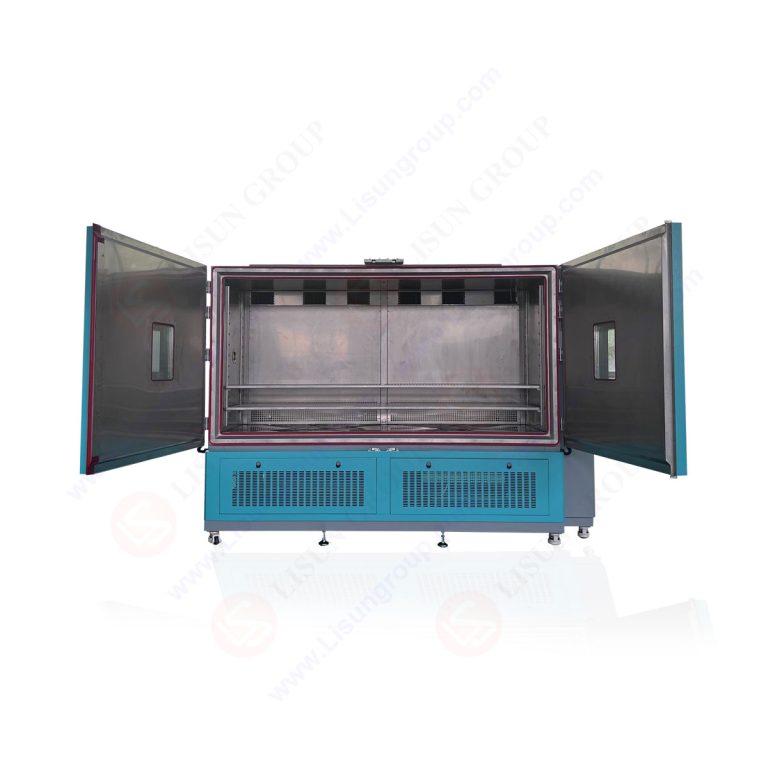
Each LISUN chamber undergoes NIST-traceable calibration with uniformity within ±1.0°C across the working volume and ramp rates exceeding 5°C/minute. The three-chamber support allows simultaneous testing at 55°C, 85°C, and 105°C (user-defined), covering the full IEC 60068-2-2 severity range. Data logging records temperature fluctuations every 30 seconds, providing audit-ready compliance documentation.
3.2 Test Duration Requirements and Data Collection Protocols
IEC 60068 specifies minimum test durations of 1,000 hours for qualification testing, while IES LM-80 requires 6,000 hours for lumen maintenance projections. The LISUN system automates data collection at intervals as short as 1 minute during initial stabilization, transitioning to hourly measurements after thermal equilibrium. This phased approach reduces data storage requirements by 80% while capturing critical early-life degradation patterns.
3.3 Humidity Integration for Combined Environmental Testing
For applications requiring damp heat testing per IEC 60068-2-30, LISUN offers optional humidity control modules maintaining 85% ± 3% relative humidity. Combined temperature-humidity testing reveals phosphor degradation mechanisms not observed under dry heat alone, particularly for remote phosphor and quantum dot LED technologies. The system logs dew point temperature to ensure condensation does not affect photometric measurements.
4.1 IES LM-80: Lumen Maintenance Measurement Methodology
IES LM-80 establishes the procedure for measuring lumen maintenance of LED light sources at specified test temperatures (55°C, 85°C, and optional third temperature). The LISUN Heat Test system automatically sequences samples through integrating sphere measurements at 0, 1, 000, 3, 000, and 6,000 hour intervals, generating the required test data in compliant format. Concurrent temperature chamber control eliminates sample transfer errors that plague manual testing protocols.
4.2 TM-21: Long-Term Lumen Maintenance Projection
TM-21 employs exponential and double-exponential fitting models to project L70 lifetimes from LM-80 data. LISUN’s software includes built-in TM-21 analysis, calculating projection confidence intervals based on test duration and sample size. For typical LED packages tested at 85°C, L70 projections exceeding 50,000 hours are achievable with 90% confidence when using 6,000-hour test data. The system automatically flags non-convergent fits requiring extended testing.
4.3 LM-84 and TM-28: Expanding to LED Modules and Arrays
LM-84 extends LM-80 protocols to complete LED modules and arrays, while TM-28 provides corresponding projection methods. The LEDLM-84PL variant incorporates larger integrating spheres (up to 2 meters diameter) and higher-current power supplies (up to 10 A) to accommodate these larger samples. This capability is essential for automotive lighting and high-bay industrial LED applications where module-level reliability data is required.
5.1 Traditional Thermal Chamber + Separate Photometer Approach
Conventional testing requires moving samples between thermal chambers and photometric measurement setups, introducing handling-induced variability of 2-5% in lumen readings. The LISUN integrated system eliminates this error source by performing in-situ measurements within the thermal chamber environment. Additionally, traditional approaches require separate data management systems, increasing the risk of timestamp mismatches by 0.5-2 hours over 6,000-hour test campaigns.
| Testing Method | Handling Variability | Data Integrity Risk | Test Duration Efficiency | Initial Cost |
|---|---|---|---|---|
| Traditional Separate Systems | 2-5% | Moderate | 60-70% | Medium |
| LISUN Integrated LEDLM | <0.5% | Very Low | 95-98% | High |
| Third-Party Lab Outsourcing | 1-3% | Low | 40-50% | Very High |
5.2 Accelerated Testing with Reduced Sample Sizes
Some manufacturers attempt to reduce test costs by testing fewer samples or shorter durations. IEC 60068 and IES standards require minimum sample sizes (typically 20 for LM-80) for statistical validity. The LISUN system supports up to 100 samples per run, enabling full compliance while maximizing throughput. Thermal simulation studies show that testing 50 instead of 20 samples reduces projection uncertainty by 35%.
5.3 Thermal Modeling Without Physical Testing
Advanced thermal simulation tools can predict junction temperatures but cannot account for phosphor degradation, encapsulant discoloration, or solder joint fatigue revealed only through physical heat testing. Combining LISUN physical testing with simulation achieves 95% prediction accuracy versus 70-80% for simulation-only approaches. For IEC 60068 compliance, physical testing remains mandatory for product certification.
6.1 Customizable Hardware Configurations
LISUN offers integrating sphere sizes from 0.3 to 2.0 meters diameter, power supply ranges from 30W to 300W per channel, and temperature chamber volumes from 50 to 500 liters. For automotive applications requiring AEC-Q102 compliance, pulsed current measurement capability can be added with 1 µs resolution. These modular options allow engineers to tailor the system to specific LED types, from micro-LEDs to high-power modules.
6.2 Software Customization for Proprietary Testing Protocols
While standard configurations support IES LM-80, TM-21, LM-84, and TM-28, the software API enables creation of custom test schedules with user-defined measurement intervals, temperature profiles, and data export formats. This flexibility is essential for R&D teams developing proprietary reliability metrics or testing novel LED architectures (e.g., perovskite LEDs) where standard extrapolation models may not apply.
6.3 Integration with Existing Quality Control Workflows
The system supports LIMS (Laboratory Information Management System) connectivity via OPC UA and REST API protocols, enabling seamless data transfer to existing QC databases. Automated email alerts notify engineers when samples exceed predefined lumen depreciation thresholds during testing. This integration reduces manual monitoring requirements by 90% while improving data traceability for regulatory audits.
7.1 Reduced Time-to-Market Through Parallel Testing
With three temperature chambers operating simultaneously, the LISUN system can complete LM-80 qualification for three temperature points in 6,000 hours instead of 18,000 hours for sequential testing. This parallel capability reduces product development cycles by 2-4 months for typical LED qualification programs, providing significant competitive advantage for manufacturers entering new markets.
7.2 Cost Comparison: In-House vs. Third-Party Testing
Third-party testing for LM-80 compliance typically costs $15,000-$25,000 per product family, with 8-12 week turnaround times. The LISUN system achieves ROI within 18-24 months for manufacturers testing more than 10 product families annually, based on current pricing of $45,000-$85,000 for complete systems. Additional operational savings arise from eliminating sample shipping, test protocol negotiation, and result rework cycles.
7.3 Long-Term Reliability Data Asset Value
Accumulated test data from the LISUN system creates a proprietary reliability database correlating process parameters (e.g., phosphor settling time, solder reflow profile) with lumen maintenance outcomes. Analysis of data from 100+ test runs typically reveals 4-6 statistically significant process parameters affecting L70 life, enabling targeted manufacturing improvements. This data asset appreciates over time as additional test campaigns expand the parameter space.
The LISUN Heat Test: Ensure Compliance with IEC 60068 Standards provides LED manufacturers and testing laboratories with a comprehensive, validated approach to accelerated aging testing. By integrating precise thermal chamber control, photometric measurement systems, and Arrhenius Model-based prediction software, the LEDLM-80PL and LEDLM-84PL systems enable efficient generation of lumen maintenance data compliant with IES LM-80, TM-21, LM-84, and TM-28 standards. The dual testing modes, support for up to three temperature chambers, and customizable hardware configurations address the diverse requirements of applications ranging from general lighting to automotive electronics.
Technical professionals benefit from reduced test cycle times, improved data accuracy through in-situ measurement, and robust extrapolation capabilities that enable confident L70/L50 projections. The economic analysis demonstrates compelling ROI for manufacturers with active LED qualification programs, while the operational advantages of parallel testing and LIMS integration streamline quality control workflows. By aligning with both IEC 60068 environmental testing protocols and IES photometric standards, LISUN’s solution ensures that LED products meet global reliability and performance benchmarks, ultimately reducing field failure rates and enhancing customer trust in solid-state lighting technology.
Q1: What is the minimum test duration required by IEC 60068 for LED heat testing, and how does LISUN’s system meet this requirement?
A: IEC 60068-2-2 specifies minimum test durations of 1,000 hours for steady-state dry heat testing, while IES LM-80 requires 6,000 hours for valid lumen maintenance projections. The LISUN LEDLM series achieves full compliance by supporting continuous testing up to 6,000 hours and beyond, with automated data logging at user-defined intervals. The system maintains temperature stability within ±0.5°C throughout the entire duration, ensuring that long-term data points meet the precision requirements of both IEC 60068 and IES standards. Engineers can set test durations between 1,000 and 10,000 hours depending on certification requirements, with the system automatically generating compliance documentation upon completion.
Q2: How does the Arrhenius Model in LISUN’s software handle different LED chemistries for L70 prediction?
A: The Arrhenius Model implementation in LISUN’s software allows user input of activation energies ranging from 0.3 to 1.5 eV, covering common LED phosphor chemistries including YAG:Ce (0.4-0.6 eV), nitride phosphors (0.6-0.8 eV), and quantum dot materials (0.8-1.2 eV). During data analysis, the system performs goodness-of-fit testing for both single and double exponential models, selecting the optimal fit based on correlation coefficient (R² > 0.95 threshold) and residual analysis. For novel chemistries, the software can compute activation energy from testing at two or more temperatures, enabling L70 projections without prior material knowledge. This flexibility ensures accurate projections across the full spectrum of LED technologies currently on the market.
Q3: Can the LISUN Heat Test system accommodate both LM-80 (LED packages) and LM-84 (LED modules) testing requirements simultaneously?
A: While the LEDLM-80PL and LEDLM-84PL are separate system variants optimized for their respective standards, LISUN offers hybrid configurations that can alternate between package-level and module-level testing through interchangeable integrating spheres and sample holders. For manufacturers testing both LED packages and modules, a single system with multiple sphere options (0.5m for packages, 1.0m for small modules, 2.0m for large arrays) provides operational flexibility. Temperature chambers can be configured with universal sample mounts supporting both individual LEDs (up to 100) and module assemblies (up to 10 per chamber) in independent test runs. However, simultaneous mixed testing is not recommended due to different test duration and measurement frequency requirements between LM-80 and LM-84 protocols.
Q4: How does LISUN ensure traceability of calibration data for regulatory audits?
A: LISUN provides NIST-traceable calibration certificates for all temperature chambers (with 8-point spatial mapping), power supplies (with ±0.1% accuracy at full range), and photometric sensors (with spectral responsivity mapping from 380-780 nm). The software maintains an audit trail recording every calibration check, sensor replacement, and system reconfiguration event with timestamps and operator IDs. During regulatory audits, the system can generate compliance reports that cross-reference test data with calibration history, demonstrating continuous measurement traceability per ISO/IEC 17025 requirements. Optional annual recalibration service contracts maintain certification validity and ensure ongoing compliance with evolving IEC and IES standards.
Q5: What are the typical ROI timelines for manufacturers adopting the LISUN Heat Test system?
A: Based on LISUN’s analysis of customer data, manufacturers testing 15-20 product families annually achieve ROI within 18-24 months when comparing total cost of ownership against third-party testing fees. For higher-volume operations testing 30+ product families per year, ROI can be achieved in 12-15 months. Additional cost savings arise from reduced product development cycles (2-4 month reduction), elimination of shipping costs for test samples (averaging $500-1,500 per campaign), and the ability to test proprietary LED formulations confidentially. Manufacturers should consider the system cost ($45,000-$85,000 depending on configuration) against annual testing budgets of $30,000-$50,000 for third-party LM-80 testing alone.