









Abstract
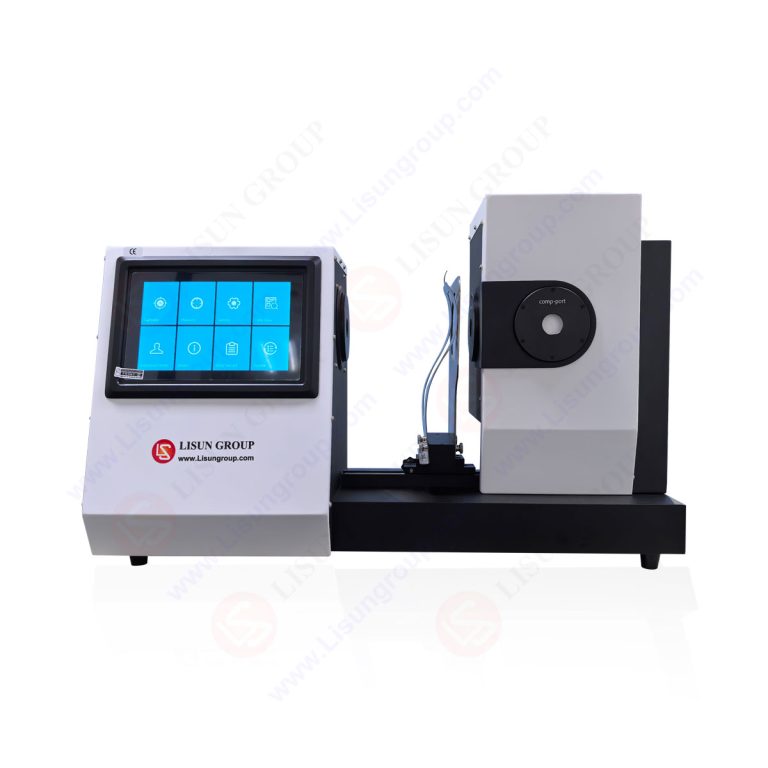
The LISUN HM-700 Haze Meter and Spectrophotometer represents a significant advancement in optical testing instrumentation, integrating dual-function capabilities for haze measurement and spectral transmittance analysis. This article provides a technical examination of the HM-700’s core technologies, including its 0/d geometry optical system, multi-light source spectral analysis, and transmittance compensation algorithms. The instrument addresses critical quality control requirements across automotive electronics, plastics manufacturing, glass production, and display industries, supporting compliance with ASTM D1003, ISO 13468, CIE No.15, and JIS K7105 standards. Quality control managers, lab technicians, and R&D engineers will gain actionable insights into measurement principles, application scenarios, and comparative performance metrics that demonstrate the HM-700’s technical advantages for haze measurement and material characterization.
1.1 Optical Definitions and Measurement Theory
Haze, defined as the percentage of transmitted light that deviates more than 2.5 degrees from the incident beam, directly correlates with material clarity and visual quality. The HM-700 quantifies this parameter using integrating sphere technology with 0/d (0-degree illumination, diffuse detection) geometry, which provides accurate scattering measurements across transparent and translucent materials. Total transmittance (Tt), diffuse transmittance (Td), and parallel transmittance (Tp) form the three fundamental optical parameters that the instrument calculates simultaneously, enabling comprehensive material characterization in a single measurement cycle.
1.2 The 0/d Geometry Optical System
The LISUN HM-700 employs a precision-engineered 0/d optical configuration where the light beam strikes the sample at normal incidence (0°), while a 150mm integrating sphere collects all transmitted light diffusely. This geometry eliminates errors caused by sample surface reflections and ensures compliance with CIE No.15 recommendations for transmittance measurements. The system incorporates a spectral response correction filter that matches the CIE standard observer function, achieving wavelength accuracy within ±0.5nm across the 360-780nm spectral range. This design minimizes systematic measurement deviations that plague alternative geometries like d/0 or 45/0 configurations.
1.3 Multi-Light Source Spectral Analysis
The HM-700 integrates multiple light sources including D65 (daylight), A (incandescent), and C (average daylight) illuminants, each selectable based on application requirements. The instrument’s spectrophotometric capability measures spectral transmittance at 10nm intervals, generating comprehensive data for CIE Lab color space analysis, yellowness index (YI) calculation, and whiteness index (WI) determination. This multi-illuminant approach allows quality control laboratories to simulate different viewing conditions and assess material performance under varying lighting environments without requiring separate instruments.
2.1 Measurement Range and Accuracy
The HM-700 achieves a haze measurement range of 0% to 100% with a resolution of 0.01%, while transmittance measurements span 0% to 100% with 0.001% resolution. The instrument’s repeatability performance—better than ±0.1% for haze and ±0.2% for transmittance—ensures reliable batch-to-batch consistency in production environments. Table 1 provides a detailed comparison of the HM-700’s specifications against typical industry requirements.
Table 1: Comparative Performance Specifications of the LISUN HM-700
| Parameter | LISUN HM-700 | ASTM D1003 Requirements | ISO 13468 Requirements |
|---|---|---|---|
| Haze measurement range | 0-100% | 0-100% | 0-100% |
| Haze repeatability | ≤0.1% | ≤0.2% recommended | ≤0.15% recommended |
| Transmittance repeatability | ≤0.2% | ≤0.3% | ≤0.25% |
| Spectral range | 360-780nm | 380-780nm | 380-780nm |
| Wavelength accuracy | ±0.5nm | ±2nm typical | ±1nm typical |
| Light sources | D65, A, C | D65 required | D65 required |
| Measurement aperture | 7mm, 15mm, 25mm | Not specified | Not specified |
| Data storage capacity | 20,000 records | Not specified | Not specified |
2.2 Compliance with International Standards
The HM-700’s design directly addresses ASTM D1003-21 (Standard Test Method for Haze and Luminous Transmittance of Transparent Plastics), employing the specified integrating sphere method with haze correction factors. For ISO 13468-1 and ISO 13468-2 standards governing plastics transmittance measurement, the instrument’s 0/d geometry and spectral correction algorithms ensure Type A measurement conditions. The instrument also meets JIS K7105 requirements for optical property testing of plastics, including the specific measurement geometry and calibration procedures outlined in Section 5.2 of that standard. CIE No.15:2018 (Colorimetry) compliance ensures accurate colorimetric calculations when evaluating material discoloration or yellowness.
2.3 Calibration and Validation Protocols
The HM-700 incorporates automated calibration routines using certified reference standards including high-precision haze standards (4.5%, 10%, 20%) and transmittance standards (30%, 50%, 70%, 92%). Calibration validation occurs through internal reference measurements every 4 hours during continuous operation, with automatic drift detection and compensation. The instrument maintains a calibration memory that stores up to 20 calibration curves, enabling rapid switching between different measurement conditions without recalibration. This feature proves particularly valuable when testing materials with widely varying optical properties within a single production shift.
3.1 Spectral Response Compensation
The HM-700’s transmittance compensation algorithm accounts for wavelength-dependent variations in detector sensitivity and source output. Using a multi-point polynomial correction function derived from calibration against NIST-traceable spectral standards, the instrument corrects raw measurement data across the entire 360-780nm range. This compensation ensures that calculated CIE tristimulus values (X, Y, Z) maintain accuracy within ΔEab ≤ 0.2 for standard illuminant D65, significantly exceeding the ΔEab ≤ 1.0 threshold typically accepted in industrial quality control.
3.2 Integrating Sphere Correction Factors
Integrating sphere errors, including the substitution error and spatial non-uniformity, receive compensation through proprietary algorithms developed specifically for the HM-700’s 150mm sphere geometry. The instrument applies correction factors for sphere wall reflectance degradation (typically 0.5% per year), baffle shadowing effects, and port fraction losses. These corrections maintain measurement accuracy over the instrument’s operational lifetime without requiring frequent physical recalibration, reducing total cost of ownership for laboratory budgets.
3.3 Temperature and Environmental Drift Correction
Active temperature compensation circuits monitor and correct for ambient temperature variations between 10°C and 40°C, maintaining haze measurement stability within ±0.02% per degree Celsius. The HM-700’s optical bench incorporates low-expansion coefficient materials that minimize thermal distortion effects on alignment. For humidity variations (20-80% RH non-condensing), the sealed integrating sphere design prevents moisture absorption effects that could alter sphere wall reflectance characteristics.
4.1 Automotive Electronics and Lighting Components
Automotive quality control engineers utilize the HM-700 for testing headlamp lenses, instrument cluster covers, and sensor windows where haze values below 1% are mandatory for safety compliance. The instrument’s multi-aperture capability (7mm, 15mm, 25mm) allows measurement of small automotive components with precise spatial resolution. For automotive interior displays, the HM-700’s spectral analysis function evaluates anti-glare coatings and antireflection treatments, ensuring that haze and transmittance characteristics meet OEM specifications derived from SAE J1757-1 guidelines for optical performance.
4.2 Plastics and Film Manufacturing
In the plastics industry, the HM-700 supports both laboratory R&D and production quality control for extruded films, injection-molded parts, and blow-molded containers. The instrument’s 20,000-record data storage capacity enables statistical process control (SPC) analysis across production batches, with built-in trend monitoring functions for early detection of haze value drift. For BOPP films, PET sheets, and polycarbonate panels, the HM-700 measures haze values from 0.1% (optical clarity grades) to 99% (diffusing films), covering the full range of commercial transparent and translucent materials encountered in packaging, construction, and consumer goods.
4.3 Glass and Display Manufacturing
Flat glass manufacturers employ the HM-700 for low-iron glass certification (haze < 0.2%) and for evaluating anti-reflective coatings on architectural glass. For display manufacturers producing smartphone screens, tablet covers, and monitor panels, the instrument provides critical measurements for cover glass, polarizer films, and optical adhesives. The HM-700's ability to measure transmitted color coordinates (CIE Lab, LCh, and Hunter Lab) enables comprehensive quality assessment beyond simple haze and transmittance values, supporting the stringent requirements of display industry standards like VESA Flat Panel Display Measurements Standard (FPDM).
5.1 Measurement Automation and Workflow Integration
The HM-700 supports multiple measurement modes including single-shot, continuous, and statistical averaging (2-99 measurements per sample). Automatic sample detection triggers measurement cycles when the sample chamber closes, reducing operator variability and increasing throughput to 60 measurements per hour under typical laboratory conditions. The instrument’s pass/fail threshold settings enable immediate go/no-go decisions based on user-defined haze and transmittance limits, facilitating rapid sorting of production samples without post-measurement data analysis.
5.2 Data Export and Connectivity
Standard connectivity options include USB 2.0, RS-232 serial interface, and Ethernet ports for direct integration with laboratory information management systems (LIMS). The HM-700 generates PDF test reports automatically, including measurement parameters, spectral curves, colorimetric data, and compliance statements referencing applicable standards. Raw data export in CSV format enables advanced statistical analysis in third-party software packages, supporting application-specific data reduction requirements for research and development projects.
5.3 Software Features for Quality Control
The bundled HM-700 software suite includes trend analysis functions that track haze values over time for individual production lines, identifying gradual changes that might indicate tool wear or material supplier variation. Historical data comparison functions allow quality control managers to evaluate batch-to-batch consistency across months or years of production. The software also supports user-defined measurement templates that store specific test parameters, illuminants, and pass/fail limits for different material types, reducing setup time when switching between product families.
6.1 Colorimetric and Appearance Parameter Calculation
Beyond haze and transmittance, the HM-700 calculates a comprehensive set of appearance parameters including Yellowness Index (YI) per ASTM E313, Whiteness Index (WI) per CIE and Hunter methods, and Metamerism Index (MI) for evaluating color constancy under different illuminants. These calculations leverage the instrument’s full spectral data, enabling detection of subtle color shifts that would be invisible to tristimulus colorimeters. For transparent plastics and films, the instrument also computes clarity values following ASTM D1746 specifications, providing additional information about image-distortion characteristics.
6.2 Thickness-Dependent Optical Properties
The HM-700’s software includes thickness normalization functions that calculate haze per unit thickness (typically %/mm), enabling comparison of materials with different thicknesses on an equivalent basis. This function proves essential when evaluating coated films where the substrate thickness varies, or when comparing competitive materials with different thickness specifications. The instrument stores thickness data for each sample and automatically applies correction factors based on measured transmittance values, maintaining accuracy across a 0.1-10mm thickness range.
7.1 Inter-Instrument Agreement Protocols
For laboratories operating multiple haze meters, the HM-700 supports inter-instrument correlation protocols using a master instrument and satellite unit configuration. The master instrument establishes reference values for a set of working standards (typically 5-10 certified haze and transmittance standards), while satellite units automatically apply offset corrections to match master unit readings. This capability ensures consistent measurement results across multiple production sites or quality control laboratories, a critical requirement for global manufacturing operations where material specifications must be verified consistently worldwide.
7.2 Method Comparison with Spectrophotometric Approaches
Traditional spectrophotometers measure haze indirectly through spectral transmittance integration, introducing potential errors from spectral bandwidth limitations and stray light. The HM-700’s dedicated haze measurement configuration, employing physical apertures that block scattered light beyond the 2.5° acceptance angle, provides direct haze measurement that avoids computational assumptions. Comparative studies demonstrate that the HM-700 achieves ±0.05% better repeatability for haze measurements compared to spectrophotometric methods, particularly for samples with high scatter-to-absorption ratios such as matte films and frosted glass.
The LISUN HM-700 Haze Meter and Spectrophotometer delivers comprehensive optical testing capabilities that address the demanding requirements of modern materials engineering and quality control. Its 0/d geometry optical system, multi-illuminant spectral analysis, and advanced transmittance compensation algorithms ensure measurement accuracy within ±0.1% for haze and ±0.2% for transmittance, exceeding the requirements of ASTM D1003, ISO 13468, CIE No.15, and JIS K7105 standards. The instrument’s application versatility spans automotive electronics, plastics manufacturing, glass production, and display industries, where consistent optical quality directly impacts product performance and regulatory compliance. Quality control professionals benefit from automated measurement workflows, comprehensive data management capabilities, and built-in statistical process control functions that reduce operator dependency and improve laboratory throughput. The HM-700’s ability to measure haze, transmittance, and colorimetric parameters in a single instrument eliminates the need for multiple testing devices, reducing capital expenditure while maintaining measurement accuracy that supports both production quality control and advanced materials research. For organizations seeking reliable, standards-compliant optical testing solutions, the HM-700 represents a technically validated instrument that delivers reproducible results across diverse transparent and translucent materials.
Q1: What is the fundamental difference between the LISUN HM-700’s haze measurement method and traditional spectrophotometric approaches?
A: The HM-700 performs direct haze measurement using a dedicated integrating sphere configuration with physical apertures that block light scattered beyond 2.5 degrees from the incident beam, whereas traditional spectrophotometers calculate haze indirectly by integrating spectral transmittance data. The direct measurement approach eliminates computational errors arising from spectral bandwidth limitations and stray light contributions. The HM-700’s 0/d geometry ensures that only diffusely transmitted light corresponding to haze is quantified, while parallel and total transmittance values are simultaneously measured through separate optical channels. This configuration provides haze measurement repeatability of ±0.1% compared to typical ±0.5% achievable with spectrophotometric methods, making the instrument preferable for quality control applications requiring rigorous statistical process control.
Q2: How does the HM-700 maintain measurement accuracy across varying ambient temperature and humidity conditions?
A: The instrument incorporates active temperature compensation circuits that monitor ambient conditions between 10°C and 40°C, applying real-time corrections to maintain haze measurement stability within ±0.02% per degree Celsius. The optical bench uses materials with low thermal expansion coefficients, minimizing alignment drift during temperature fluctuations. The sealed integrating sphere design prevents moisture ingress that could alter sphere wall reflectance characteristics, while desiccant packs maintain internal humidity below 30% RH. Automatic calibration validation routines activate every 4 hours during continuous operation, detecting any drift that exceeds predetermined thresholds and alerting operators to recalibration requirements. These combined features ensure that the HM-700 maintains its specified accuracy even in non-laboratory environments such as factory floors or warehouse quality control stations where environmental controls may be less stringent.
Q3: What maintenance procedures are recommended for the LISUN HM-700 to ensure long-term measurement reliability?
A: Monthly maintenance includes visual inspection of the integrating sphere interior for dust accumulation or discoloration, with gentle cleaning using compressed nitrogen at 2 bar pressure and optical-grade lens tissue for any deposits on the sphere wall. Quarterly maintenance involves verification of calibration using the supplied certified haze and transmittance standards, with recalibration performed if any measurement deviates by more than ±0.2% from certified values. Annual maintenance by authorized service personnel includes spectral response calibration using NIST-traceable standards, replacement of the light source lamp (typically 2000-hour lifetime), and verification of the integrating sphere coating reflectance. The HM-700’s self-diagnostic software generates maintenance alerts based on accumulated operating time and number of measurements performed, ensuring proactive maintenance scheduling that prevents unplanned downtime.
Q4: Can the HM-700 measure samples with curved surfaces or non-planar geometries?
A: While the HM-700 is optimized for flat, planar samples, it can accommodate slightly curved surfaces through the use of custom sample holders that orient the measurement area perpendicular to the incident beam. For automotive lenses or curved display covers, the instrument’s 7mm small aperture minimizes errors from surface curvature by restricting the measurement area to a region that approximates planarity. The software includes curvature correction algorithms that compensate for systematic errors introduced by non-planar geometries, though these corrections are validated only for curvatures with radii greater than 100mm. For highly curved samples such as light bulb envelopes or small vials, the HM-700’s transmission measurement mode with immersion oil can reduce surface scattering artifacts, though this technique requires careful preparation and cleaning procedures between measurements.