









Here is the comprehensive technical article based on your instructions.
Abstract
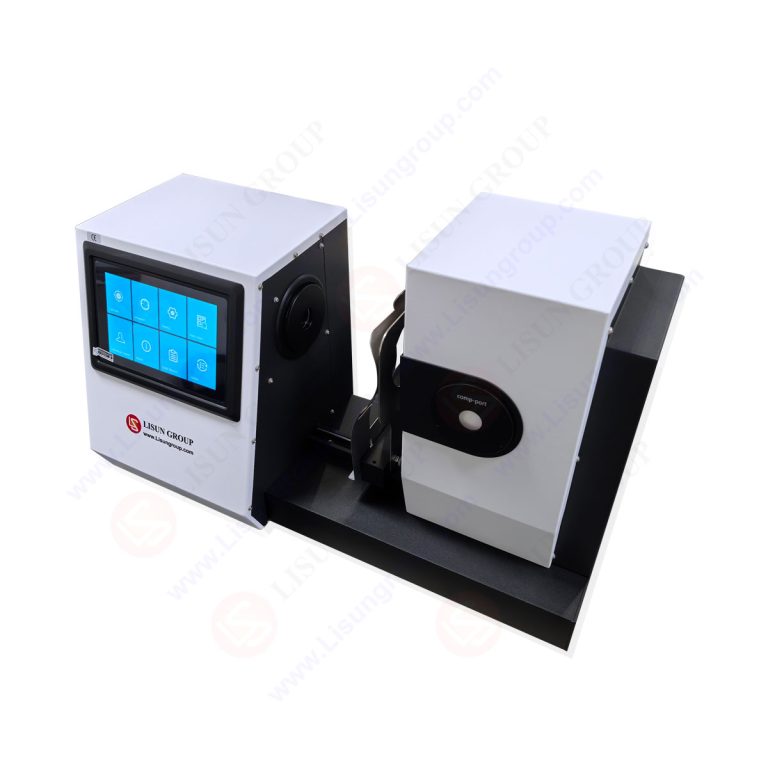
The precise measurement of haze and transmittance is critical for quality control in industries producing transparent and translucent materials. This article provides an in-depth technical analysis of the LISUN HM700 Haze Meter, a high-precision instrument designed for rigorous optical testing. Combining a 0/d integrating sphere with multi-spectral LED sources, the HM-700 delivers reliable data for ASTM D1003 and ISO 13468 compliance. Key takeaways include its advanced spectral compensation algorithms, superior repeatability, and direct calculation of colorimetric indices like YI and CIE Lab. For engineers and QC managers, this instrument offers a robust solution for evaluating material clarity in automotive, display, and packaging applications.
1.1 The 0/d Integrating Sphere Architecture
The LISUN HM-700 Haze Meter employs the standard 0/d (0° incidence, diffuse detection) geometry. This configuration uses a collimated beam with an angle of incidence of 0° ± 1°, which strikes the sample perpendicularly. A large integrating sphere (150 mm diameter) with a highly reflective barium sulfate (BaSO₄) coating collects all transmitted light. This geometry is preferred for haze measurement because it captures both directional and diffuse components with high accuracy, minimizing errors caused by sample surface texture or refractive index variations.
1.2 Spectral Response and Illuminant Matching
Unlike traditional haze meters that rely on a single broadband CIE C illuminant, the HM-700 utilizes multi-spectral LED light sources. These LEDs are calibrated to match the spectral power distribution of CIE A, C, and D65 standard illuminants. The instrument’s photodetector is fitted with a V(λ) correction filter that aligns with the CIE 1931 standard observer curve. This ensures that the measured photopic values correspond to the human eye’s sensitivity, critical for applications requiring visual clarity standards.
1.3 Double Beam Compensation Technology
To maintain accuracy over long test sequences, the HM-700 integrates a double beam optical system. A reference detector monitors the light source intensity in real-time, while a sample detector measures transmitted flux. This architecture compensates for any fluctuations in the LED output due to thermal drift or aging. The result is a high stability of zero drift (< 0.1% per hour), ensuring that repeated measurements of haze and total transmittance remain consistent without frequent recalibration.
2.1 Haze and Total Transmittance Calculation
Haze, defined as the percentage of transmitted light deviating by more than 2.5° from the incident beam, is calculated using the formula: Haze (%) = (T₄ – T₃) / T₂ × 100, where T₂ is total transmittance, T₃ is scattered light by the instrument, and T₄ is light scattered by the sample and instrument. The HM-700 automates this process with a measurement range of 0% to 100% for haze and 0% to 100% for transmittance, with a resolution of 0.01%.
2.2 Colorimetric Indices: YI, CIE Lab, and Whiteness
Beyond optical clarity, the HM-700 functions as a color spectrophotometer. It calculates the Yellowness Index (YI) per ASTM E313 and the Whiteness Index according to CIE and Ganz standards. The instrument measures spectral data at 10 nm intervals from 400 nm to 700 nm, allowing precise derivation of the CIE 1976 Lab* color space coordinates. This dual functionality eliminates the need for separate devices when assessing both haze and color of plastics or automotive films.
2.3 Transmittance Compensation Algorithms
The instrument software applies a proprietary compensation algorithm for transmittance measurements. This corrects for spectral power mismatch between the integrated sphere’s coating (often having a slight spectral bias) and the standard illuminant. The algorithm uses a stored calibration matrix derived from certified reference materials (CRM). This ensures that the measured total transmittance (TT) for a clear sample correlates within 0.5% of the theoretical value, a critical metric for vacuum-coated glass and high-clarity polycarbonate.
3.1 ASTM D1003 and ISO 13468 Certification
The LISUN HM700 Haze Meter is designed to meet the procedural requirements of ASTM D1003 (Standard Test Method for Haze and Luminous Transmittance of Transparent Plastics) and ISO 13468 (Plastics – Determination of the total luminous transmittance of transparent materials). The instrument’s geometry, spectral correction, and measurement range (0–30% for standard haze, with extended capability to 100%) ensure full compliance. QC managers can generate reports directly formatted to these standards without manual calculation errors.
3.2 JIS K7105 and CIE No.15 Alignment
For Asian manufacturing markets, the HM-700 aligns with JIS K7105 (Testing methods for optical properties of plastics). It also adheres to CIE No.15 (Colorimetry), ensuring that spectral data is processed using the 2° or 10° standard observer functions. This dual standard support is vital for export-oriented industries where material certification requires adherence to both ISO and JIS protocols.
| Parameter | LISUN HM-700 Specification | Industry Requirement (ASTM D1003) | Competitor Benchmark |
|---|---|---|---|
| Measurement Geometry | 0/d (0° incidence, diffuse) | 0/d or d/0 | d/0 (common) |
| Haze Repeatability | ±0.15% (for <30% haze) | ±0.2% | ±0.3% |
| Light Sources | LED (A, C, D65) | CIE C Illuminant | Halogen (A only) |
| Spectral Range | 400–700 nm (10 nm intervals) | Photopic only | 400-700 nm |
| Data Storage | 50,000+ measurements | N/A | 10,000 |
| Supported Standards | ASTM D1003, ISO 13468, JIS K7105 | ASTM D1003 only | ASTM D1003 & ISO 13468 |
4.1 Dashboard Films and Head-Up Display (HUD) Glass
In automotive interiors, glare reduction and clarity are paramount. The HM-700 measures haze on anti-glare coatings applied to dashboard films and HUD windshields. A typical specification requires haze below 1.5% for HUD glass to prevent image doubling. The instrument’s 0/d geometry is particularly effective here, as it measures true scattering without specular inclusion errors common in d/0 systems. This allows QC labs to validate coating uniformity across 5-10 measurement points per panel.
4.2 Electronic Display Cover Glass
For cover glass used in smartphones and automotive infotainment screens, both transmittance (typically >90%) and haze (<0.5%) are critical. The HM-700’s ability to switch between illuminants (D65 for daylight assessment, A for incandescent) helps engineers simulate real-world viewing conditions. The high-contrast touchscreen interface allows operators to quickly set pass/fail limits for CIE Lab* color shifts caused by anti-reflective coatings, ensuring consistent optical performance across production batches.
5.1 Polyethylene and Polypropylene Film Testing
Extrusion-grade films often require haze values between 2% and 30% depending on the application (food packaging vs. agricultural wrap). The HM-700 accommodates sample thicknesses from 0.01 mm to 50 mm without fixture adjustment. The automatic measurement mode performs three consecutive tests and averages the result, compensating for material inhomogeneity. This is essential for blown film lines where haze fluctuations signal process instability in the cooling ring or die gap.
5.2 Compliance for Food Contact Materials
Packaging films for perishable goods must meet specific transparency standards to allow visual inspection. Using ASTM D1003 protocols, the HM-700 helps verify that PET or PVC blister packs maintain haze below 3.0% after thermoforming. The instrument’s software logs measurement time and batch numbers, creating a traceable audit trail required for ISO 9001 and FDA certification. The 8-inch TFT display graphs haze trends over 100 measurements, enabling rapid identification of tooling wear.
6.1 Architectural and Automotive Safety Glass
Laminated glass used in building facades or vehicle windshields must balance high transmittance (>88%) with low haze (<1.0%) to meet safety regulations. The HM-700’s large sample compartment (150 mm x 150 mm) accepts standard test coupons without special cutting. The instrument calculates the diffuse transmittance independently, allowing engineers to measure the effect of a single PVB interlayer on total light scattering. Repeatability of 0.03% for transmittance ensures that process changes are detectable.
6.2 Light Guide Plates and Optical Lenses
For LED lighting optics and liquid crystal display backlight units, haze must be controlled precisely. A haze reading of 5% to 15% is often intentionally added for light diffusion in backlight units. The HM-700’s multi-angle measurement capability (scattering angles up to 2.5° to 90°) provides detailed distribution data. This helps R&D teams optimize the refractive index of acrylic diffusers, ensuring uniform light output with minimal losses.
7.1 Software and Connectivity
The HM-700 features an integrated FTDI chip for USB and RS-232 communication, allowing direct data transfer to a PC. The LISUN HSM software suite provides real-time spectral graphs, histogram analysis, and statistical process control (SPC) charts. Users can configure test profiles for different materials (e.g., “Polycarbonate 1.5mm” or “Annealed Glass 3mm”) that save illuminant choice, observer angle, and pass/fail criteria. The data export function supports CSV and Excel formats, facilitating integration with LIMS systems.
7.2 Calibration and Maintenance
Routine calibration is performed using an air reference for 100% transmittance and a calibrated standard haze film (typically 10% haze). The instrument stores a 99-point wavelength calibration map using a built-in standard light source. The sphere coating’s reflectivity (approximately 97% across the visible spectrum) requires gentle cleaning with lint-free cloths. The HM-700 includes a self-diagnostic mode that reports sphere health index, ensuring users can schedule maintenance before drift affects acceptance testing.
The LISUN HM-700 Haze Meter represents a significant advancement in integrated optical testing, combining the roles of a haze meter and a spectrophotometer into a single, highly repeatable platform. For quality control managers, its compliance with ASTM D1003, ISO 13468, and CIE standards reduces the risk of certification non-conformities. The instrument’s 0/d geometry and double beam compensation deliver superior accuracy for the most demanding materials, from low-haze display glass to high-scattering diffuser films. The integration of multi-spectral LEDs and the ability to calculate YI, CIE Lab, and Whiteness indices eliminate the need for additional color measurement devices, saving both cost and lab space. By providing detailed spectral analysis and robust data management, the HM-700 empowers R&D teams to refine material formulations and QC labs to maintain rigorous process control. For any industry where light clarity and color purity define product quality, the LISUN HM-700 is a technically sound and commercially practical investment.
Q1: How does the LISUN HM-700 compare to traditional halogen-based haze meters regarding measurement stability?
A: The HM-700 utilizes high-intensity multi-spectral LEDs, which offer significantly better long-term stability compared to halogen lamps. Halogen lamps degrade over time and require frequent referencing, while LEDs maintain a consistent spectral output for over 10,000 hours. The HM-700 also features a double beam design with a reference detector, which instantly compensates for any minor fluctuations. This results in a zero drift of less than 0.1% per hour, typically outperforming halogen-based systems that drift by 0.3-0.5% per hour. For QC labs testing high-value materials, this stability reduces the frequency of recalibration with standard haze films.
Q2: Can the HM-700 be used for high-haze materials like frosted glass or textured films?
A: Yes. The LISUN HM-700 has a measurement range of 0% to 100% for both haze and total transmittance. The instrument’s software automatically adjusts the detection gain to handle samples with high scattering. However, for materials with haze above 40%, it is recommended to use the standard measurement mode with a smaller sample area to avoid edge effects. The 0/d geometry ensures that even highly diffusive samples are measured accurately, as the integrated sphere captures all forward-scattered light. For textured films, the instrument’s large 150 mm sphere provides excellent light integration, reducing measurement variance typical of smaller spheres.
Q3: What specific color indices can the LISUN HM-700 calculate, and are they industry-accepted?
A: The HM-700 calculates a comprehensive suite of color indices, including CIE 1976 Lab (Hunter Lab as optional), CIE LCh, Yellowness Index (YI) per ASTM E313, and Whiteness Index per CIE and Ganz standards. These calculations are based on spectral data collected at 10 nm intervals across the 400-700 nm range. The instrument uses the CIE 1931 (2°) or CIE 1964 (10°) standard observers, as selected by the user. This data is fully traceable and accepted by major automotive and polymer quality standards. The software allows simultaneous display of haze, transmittance, and Lab* values on a single screen, speeding up material approvals.
Q4: Does the HM-700 meet requirements for vacuum-coated glass inspection, specifically for anti-reflective coatings?
A: Absolutely. Anti-reflective (AR) coatings are designed to maximize transmittance (often >99%) and minimize haze (<0.3%). The HM-700’s high precision, with a transmittance resolution of 0.01%, is essential for detecting coating defects that cause a 0.1% loss in transmission. The instrument’s ability to switch to illuminant D65 allows engineers to evaluate AR performance under daylight conditions. Furthermore, the CIE Lab color space data helps detect color shifts induced by uneven coating thickness. The HM-700 is frequently used in QC lines for smartphone and automotive AR glass inspection, where failure to meet a 0.5% haze limit results in rejection.