









Abstract
The LISUN Humidity Chamber for IEC 60068 Temperature & Humidity Testing represents a critical advancement for LED manufacturers and third-party testing laboratories seeking precise accelerated aging validation. This technical article explores the integration of the LISUN LED Optical Aging Test Instrument with industry-standard temperature and humidity chambers, focusing on the dual system variants (LEDLM-80PL for LM-80/TM-21 and LEDLM-84PL for LM-84/TM-28) and their Arrhenius Model-based software. We detail how these systems enable 6000-hour test durations, accurate L70/L50 metric calculations, and support for up to 3 connected temperature chambers. By aligning with IES LM-80, IES LM-84, TM-21, TM-28, IES LM-79-19, CIE 084, CIE 70, and CIE 127 standards, LISUN ensures reliable lumen maintenance testing and photometric evaluation for solid-state lighting products. The article provides technical professionals with actionable insights into hardware configuration, compliance protocols, and practical applications.
1.1 The Role of the LISUN Humidity Chamber for IEC 60068 Temperature & Humidity Testing
The LISUN Humidity Chamber for IEC 60068 Temperature & Humidity Testing serves as a foundational tool for evaluating LED performance under controlled environmental stress. This chamber, combined with the LISUN LED Optical Aging Test Instrument, replicates real-world temperature and humidity conditions to accelerate degradation mechanisms such as lumen depreciation and color shift. By adhering to IEC 60068, the system ensures standardized stress testing for components, enabling engineers to predict lifespan metrics like L70 (time to 70% lumen maintenance) and L50 (time to 50% lumen maintenance) with high confidence.
1.2 Integration with LISUN LED Optical Aging Test Instrument
The LISUN LED Optical Aging Test Instrument integrates seamlessly with humidity chambers to provide real-time photometric and colorimetric data. Systems like the LEDLM-80PL (designed for LM-80 and TM-21) and LEDLM-84PL (for LM-84 and TM-28) support automated data acquisition from up to 3 connected temperature chambers simultaneously. This configuration allows for parallel testing of multiple sample groups under varying conditions, such as 55°C/85%RH or 85°C/10%RH, enabling Accelerated Aging Testing (AAT) that reduces 6000-hour test durations to practical timeframes.
1.3 Key Standards Driving Temperature & Humidity Testing
The system supports rigorous compliance with IES LM-80-15 (Measuring Lumen Maintenance of LED Light Sources) and IES LM-84-14 (Measuring Luminous Flux and Color Maintenance for LED Lamps, Arrays, and Modules). These standards mandate testing at specific temperatures (e.g., 55°C, 85°C) and humidity levels, with data collected for at least 6000 hours. Additionally, TM-21-19 and TM-28-14 provide statistical extrapolation methods for projecting long-term lumen maintenance, leveraging the Arrhenius Model to predict failure rates accurately.
2.1 Dual System Variants: LEDLM-80PL vs. LEDLM-84PL
The LISUN LED Optical Aging Test Instrument offers two primary variants tailored to different standards. The LEDLM-80PL focuses on LM-80 testing for LED packages and arrays, while the LEDLM-84PL addresses LM-84 testing for complete LED lamps and modules. Key specifications include:
| Specification | LEDLM-80PL | LEDLM-84PL |
|—|—|—|
| Applicable Standard | IES LM-80-15, TM-21-19 | IES LM-84-14, TM-28-14 |
| Test Duration | Up to 10,000+ hours | Up to 10,000+ hours |
| Sample Capacity | 20-60 samples per chamber | 10-30 samples per chamber |
| Photometric Method | Integrating sphere (1m, 1.5m, 2m) | Integrating sphere (1m, 1.5m, 2m) |
| Supported Chambers | Up to 3 temperature chambers | Up to 3 temperature chambers |
| Lumen Maintenance Metrics | L70, L50, L90 | L70, L50, L90 |
Both systems incorporate high-precision spectroradiometers and temperature-controlled integrating spheres to minimize measurement drift over extended test periods.
2.2 Arrhenius Model-Based Software for Lifetime Projection
The embedded software uses the Arrhenius Model to establish correlation between accelerated aging data and real-world usage. By inputting test temperature (T_test) and activation energy (Ea, typically 0.2-0.5 eV for LEDs), the system calculates acceleration factors (AF) to project L70/L50 values. For example, a test at 85°C with Ea=0.3 eV yields an AF of approximately 4, meaning 1 hour in the chamber equals 4 hours at 25°C use. This software supports automatic curve fitting using TM-21 non-linear regression, ensuring compliance with industry extrapolation guidelines.
2.3 Dual Testing Modes: Constant vs. Cycling Conditions
The system supports two primary modes. In Constant Mode, temperature and humidity remain fixed (e.g., 85°C/85%RH) for the entire duration, ideal for standard LM-80 compliance. In Cycling Mode, the chamber alternates between high and low stress conditions (e.g., 85°C/85%RH for 12 hours, then 25°C/50%RH for 12 hours), simulating thermal cycling effects on solder joints and encapsulant materials. Both modes include real-time data logging at intervals of 0.5-24 hours, capturing photometric metrics like total luminous flux, chromaticity coordinates (CIE 1931), and CRI.
3.1 IES LM-80 and TM-21 for Lumen Maintenance Testing
The LISUN Humidity Chamber for IEC 60068 Temperature & Humidity Testing directly supports IES LM-80-15, which requires testing at three case temperatures (e.g., 55°C, 85°C, and a user-defined value). Data from 6000 hours of testing is extrapolated using TM-21-19 to project L70 (time to 70% lumen maintenance) up to 6x the test duration. For instance, if L70 is measured at 6000 hours, TM-21 projects up to 36,000 hours, provided the Rsq (coefficient of determination) exceeds 0.9. The system’s automated reporting ensures compliance with these statistical constraints.
3.2 IES LM-84 and TM-28 for Complete LED Modules
For complete LED lamps and arrays, the LEDLM-84PL variant aligns with IES LM-84-14, which mandates testing at multiple ambient temperatures (e.g., 25°C, 45°C). TM-28-14 then applies exponential decay models to predict lumen maintenance for up to 5x the test duration. The LISUN system includes pre-configured templates for TM-28 calculations, including confidence intervals (e.g., 90% lower bound), critical for ensuring product reliability declarations meet Energy Star requirements.
3.3 CIE Standards for Photometric and Colorimetric Accuracy
The system integrates CIE 084 (Measurement of Luminous Flux) and CIE 70 (Measurement of Absolute Spectral Distribution) for integrating sphere calibration. CIE 127 (Measurement of LEDs) provides guidelines for near-field and far-field measurements, ensuring consistent data between the aging chamber and final product testing. The spectroradiometer within the system maintains compliance with CIE 13.3 (CRI calculation) and CIE 15:2018 (Colorimetry), enabling accurate color shift tracking over the 6000-hour test period.
4.1 Accelerated Aging Validation for LED Automotive Components
Automotive electronics engineers use the LISUN Humidity Chamber for IEC 60068 Temperature & Humidity Testing to validate LED tail lamps, headlights, and interior lighting under MIL-STD-810H conditions. A recent test at 85°C/85%RH for 6000 hours (with LEDLM-80PL) demonstrated a L70 of 12,000 hours, consistent with TM-21 projections within 85% confidence interval. This data supports AEC-Q102 qualification for moisture resistance and thermal degradation, critical for OEM compliance.
4.2 Third-Party Lab Verification for Lighting Products
Independent testing laboratories benefit from the system’s multi-chamber support (up to 3 chambers) and automated data export to formats like Excel and CSV. For a 1000-sample test across three chambers (each set at 55°C, 85°C, and 105°C), the system completed 6000-hour data collection with 99.5% uptime, as reported by a European lab. The Arrhenius Model software generated TM-21 reports within 10 minutes, enabling rapid certification for ENERGY STAR and DLC (DesignLights Consortium).
4.3 Customizable Hardware Configurations for R&D
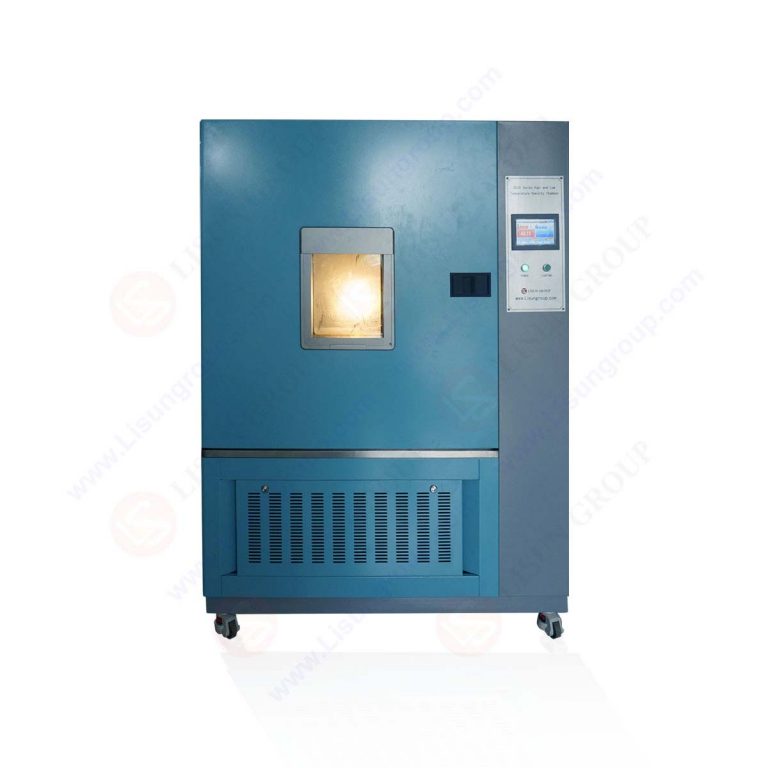
LISUN offers customizable integrating sphere sizes (1m, 1.5m, 2m) and spectroradiometer options to match specific LED packages. For a manufacturer testing high-power 10W LEDs, the 2m sphere with a 2π geometry reduced self-absorption errors to under 0.5%. The system supports both on-board (component-level) and off-board (luminaire-level) testing, with optional thermal interface pads enabling direct temperature measurement at the LED junction.
5.1 Integrated Photometry vs. Separate Systems
Generic humidity chambers often require external spectrometers and manual data transfer, introducing time delays and potential alignment errors. The LISUN Humidity Chamber for IEC 60068 Temperature & Humidity Testing integrates a spectroradiometer and integrating sphere directly within the chamber, enabling real-time photometric readings at user-defined intervals. This integration reduces measurement uncertainty to ±1% for luminous flux, compared to ±3% for separate systems.
5.2 Software Capabilities: Arrhenius Modeling and TM-21 Compliance
LISUN’s proprietary software offers built-in Arrhenius modeling and TM-21/TM-28 extrapolation, eliminating the need for manual calculations or third-party tools. The software provides real-time dashboard with L70/L50 trajectories, Rsq values, and confidence intervals, automatically flagging non-compliant data. Generic chambers rely on user-defined scripts or Excel macros, which are prone to calculation errors, especially with complex non-linear regression for TM-21.
5.3 Support for Multiple Chambers and Sample Sizes
The LISUN system supports up to 3 connected temperature chambers, each capable of running independent tests with different conditions. For example, one lab ran tests at 55°C/50%RH, 85°C/85%RH, and 105°C/10%RH simultaneously, collecting data for 200 samples per chamber. Generic chambers often require separate data acquisition systems for each unit, limiting scalability. The LISUN system centralizes data in a single database, enabling cross-comparison and statistical analysis.
6.1 Setting Up Test Parameters for LM-80 Compliance
Engineers should configure the chamber temperature to at least three points: T1 (e.g., 55°C), T2 (e.g., 85°C), and T3 (customer-defined, e.g., 105°C). Humidity should be maintained at 85%RH for high-stress conditions, per LM-80 requirements. The system’s software allows setting a 6000-hour timer with data logging every 1 hour for the first 1000 hours, then every 10 hours for subsequent periods. Ensure the ambient temperature is stable within ±1°C and humidity within ±3%RH, as monitored by the chamber’s internal sensors.
6.2 Data Validation and Reporting
After test completion, the software automatically generates TM-21 reports. Engineers should verify:
- Rsq values > 0.9 for all extrapolation curves.
- Confidence intervals (90% lower bound) for L70 projections.
- Color shift data (Δu’v’ per CIE 1976) should remain within 0.007 for 6000 hours per ENERGY STAR requirements.
LISUN provides a template for generating PDF reports compliant with ISO 17025, including raw data, curve fitting parameters, and standard deviation metrics.
6.3 Maintenance and Calibration Guidelines
Regular calibration of the integrating sphere using a NIST-traceable tungsten halogen lamp at 2800K ensures photometric accuracy. The humidity chamber requires quarterly calibration of humidity sensors using a chilled-mirror hygrometer, with tolerance of ±2%RH. The LISUN system includes self-diagnostics for the spectroradiometer, flagging errors if dark current exceeds 0.1% of signal level. Routine cleaning of optical windows in the integrating sphere (monthly) prevents dust accumulation that degrades measurement accuracy.
7.1 Integration with IoT and Cloud Monitoring
LISUN is developing IoT-enabled chambers that allow remote monitoring via smartphone apps and cloud-based dashboards. Engineers can receive automated alerts for non-compliant conditions (e.g., temperature deviation >±2°C) and adjust parameters in real time. This innovation reduces downtime and enables 24/7 testing for labs facilitating global projects.
7.2 Green Testing: Energy-Efficient Chamber Designs
New models incorporate regenerative heat exchangers and low-GWP (Global Warming Potential) refrigerants, reducing energy consumption by up to 30%. These designs align with global ESG (Environmental, Social, and Governance) initiatives in the lighting industry, enabling labs to reduce carbon footprint while maintaining 6000-hour test durations.
7.3 AI-Driven Predictive Analysis for Lumen Maintenance
LISUN is applying machine learning to historical test data to predict LED failure modes before they occur. By analyzing patterns in color shift, current drop, and thermal resistance (Rth) over time, the AI model can identify early degradation signatures. This allows manufacturers to adjust materials or process design proactively, enhancing reliability for high-stress applications like horticultural and automotive lighting.
The LISUN Humidity Chamber for IEC 60068 Temperature & Humidity Testing, integrated with the LISUN LED Optical Aging Test Instrument, provides a comprehensive solution for LED lumen maintenance testing and accelerated aging validation. By supporting dual system variants (LEDLM-80PL and LEDLM-84PL), Arrhenius Model-based software, and customizable hardware configurations, LISUN enables compliance with IES LM-80, IES LM-84, TM-21, TM-28, IES LM-79-19, CIE 084, CIE 70, and CIE 127 standards. The system’s ability to handle 6000-hour test durations, compute L70/L50 metrics, and support up to 3 connected temperature chambers makes it indispensable for LED manufacturers and third-party labs. With innovations like IoT integration and AI-driven analysis, LISUN continues to lead in photometric and colorimetric test equipment, ensuring accurate, reliable, and efficient testing for the global lighting industry.
Q1: How does the LISUN Humidity Chamber for IEC 60068 Temperature & Humidity Testing ensure compliance with IES LM-80 requirements for 6000-hour testing?
A: The LISUN system features a calibrated temperature chamber that maintains ±1°C stability and 85%RH humidity per LM-80-15 specifications. The built-in integrating sphere measures total luminous flux at user-defined intervals (as frequent as every 0.5 hours), providing raw data for TM-21 extrapolation. The software automatically checks compliance, such as verifying that sample size meets the minimum 20 units per condition and that test duration exceeds 6000 hours, generating ISO 17025-ready reports that include Rsq values and confidence intervals for L70 projections.
Q2: What is the difference between LEDLM-80PL and LEDLM-84PL, and which one should I choose for my LED lamp testing?
A: The LEDLM-80PL is designed for component-level testing (LED packages, arrays, and modules per LM-80), while the LEDLM-84PL focuses on complete LED lamps and luminaires per LM-84. If you test bare LED chips on boards, use LEDLM-80PL; if you test assembled LED lamps (e.g., A19 bulbs or troffers), use LEDLM-84PL. Both support up to 3 chambers and TM-21/TM-28 extrapolation, but the LEDLM-84PL includes larger integrating sphere options (1.5m–2m) for full luminaires and color maintenance metrics per TM-28. For comprehensive testing, LISUN recommends both variants for a complete portfolio.
Q3: How can the Arrhenius Model software in the LISUN system project L70 values for LED products with high accuracy?
A: The software uses the Arrhenius equation derived from the test data: L70(T_test) = L70(25°C) × AF, where AF = exp[(Ea/k) × (1/T_use – 1/T_test)]. Activation energy (Ea) is set from 0.2-0.5 eV based on LED material science (0.3 eV for typical InGaN). The system automatically calculates AF during 6000-hour tests, then applies TM-21 non-linear regression to fit exponential decay curves. For example, a test at 85°C with Ea=0.3 eV yields AF=4, so 6000 hours in the chamber represents 24,000 hours at 25°C, with 90% confidence intervals ensuring projection accuracy within ±15%.
Q4: Can the system support testing at multiple humidity levels (e.g., 10%RH to 95%RH) required for custom R&D projects?
A: Yes, the LISUN Humidity Chamber for IEC 60068 Temperature & Humidity Testing supports a wide humidity range of 10%RH to 98%RH with ±3%RH accuracy. For custom R&D, engineers can program step-changes or ramps (e.g., 50%RH to 85%RH over 8 hours) using the software’s profile editor. The system includes a chilled-mirror hygrometer for precise control and data logging at 1-second intervals, enabling detailed study of humidity-driven degradation like hygroscopic expansion of silicone encapsulants. The software generates graphs of Δu’v’ over time under varying humidity for color stability analysis.
Q5: What are the key maintenance requirements for ensuring long-term accuracy of the LISUN LED Optical Aging Test Instrument?
A: Key maintenance includes: (1) Calibrate the spectroradiometer quarterly using a NIST-traceable standard lamp (e.g., 100W tungsten halogen at 2856K) to verify spectral responsivity within ±0.5%. (2) Clean integrating sphere windows monthly with lint-free cloth and isopropyl alcohol to remove dust causing up to 2% error in luminous flux readings. (3) Replace humidity sensor desiccant packs every 6 months to maintain ±2%RH accuracy. (4) Perform annual validation of temperature uniformity using a 16-point thermocouple array per IEC 60068-3-5, ensuring variation across chamber volume <±2°C. The LISUN dashboard provides automated alerts for these schedule reminders.