









Abstract
This article provides a comprehensive technical analysis of the LISUN Humidity Test Chamber | IEC 60068 Compliant Environmental Testing and its critical role in LED reliability validation. As a Senior LED Testing Engineer at LISUN, I detail how this chamber integrates with the LEDLM-80PL and LEDLM-84PL Optical Aging Test Instruments to perform accelerated life testing per IES LM-80, TM-21, and IEC 60068 standards. We explore the Arrhenius Model-based software, dual testing modes, and hardware configurations supporting up to three connected chambers. With data on 6000-hour test durations, L70/L50 metrics, and temperature/humidity control precision, this article guides R&D and QC engineers on implementing robust environmental testing protocols. The focus remains on achieving reproducible results for LED lumen maintenance prediction.
1.1 Foundation of Accelerated Life Testing
The LISUN Humidity Test Chamber is not a standalone unit; it is the environmental backbone for the LEDLM-80PL and LEDLM-84PL optical aging systems. In accordance with IES LM-80-15 (Measuring Lumen Maintenance of LED Light Sources), LEDs must be tested at controlled temperatures (typically 55°C, 85°C, and a third optional temperature) with relative humidity maintained below 65% to prevent condensation-induced failures. The LISUN chamber ensures these conditions are met with ±0.5°C temperature stability and ±3% RH accuracy, directly supporting the IEC 60068-2-78 (Damp Heat, Steady State) compliance.
1.2 Dual System Variants: LEDLM-80PL vs. LEDLM-84PL
The table below contrasts the two system variants within the LISUN ecosystem:
| Parameter | LEDLM-80PL (IES LM-80/TM-21) | LEDLM-84PL (IES LM-84/TM-28) |
|---|---|---|
| Primary Standard | IES LM-80-15 (LED packages/arrays) | IES LM-84-18 (LED lamps/engines) |
| Extrapolation Model | TM-21-19 (L70/L50 prediction) | TM-28-19 (L70/L50 prediction) |
| Typical Duration | 6000 hours (min.) | 6000 hours (min.) |
| Supported Chambers | Up to 3 connected chambers | Up to 3 connected chambers |
| Data Points | Minimum 5 read intervals | Minimum 5 read intervals |
| Key Metric | L70 (70% lumen maintenance) | L70 (70% lumen maintenance) |
Both systems rely on the humidity chamber to create repeatable stress conditions. For example, testing at 85°C/60% RH for 6000 hours generates data used in TM-21 extrapolation to predict L70 beyond 36,000 hours. The LISUN Humidity Test Chamber ensures these tests are not invalidated by humidity excursions.
2.1 Temperature and Humidity Control Parameters
The chamber supports a temperature range of -40°C to +150°C with humidity control from 20% to 98% RH. For LED aging, the standard test points are 55°C/85°C with humidity capped at 65% RH to avoid moisture-induced corrosion. The system uses a PID controller with platinum RTD sensors, achieving a temperature ramp rate of 3°C/min. This is critical for IEC 60068-2-1 (Cold) and IEC 60068-2-2 (Dry Heat) compliance.
2.2 Integration with Optical Test Instruments
The chamber includes a dedicated optical window (borosilicate glass) for integrating sphere connections. The LEDLM-80PL system uses this port to measure luminous flux in-situ without removing samples, maintaining test continuity. Calibration is performed using CIE 127:2007 (Measurement of LEDs) guidelines, ensuring photometric data accuracy within ±2%. The chamber also supports a multiplexer for testing up to 20 LED samples simultaneously.
3.1 IEC 60068 Series Compliance
The chamber meets IEC 60068-2-78 (Damp Heat, Steady State) for humidity testing and IEC 60068-2-30 (Damp Heat, Cyclic) for temperature/humidity cycling. This is essential for engineers validating LED products for outdoor or automotive applications. For example, automotive LEDs require 1000 hours at 85°C/85% RH per IEC 60068-2-67; our chamber maintains this with a 5% overshoot margin.
3.2 IES Standards Integration
The chamber directly supports IES LM-80 and LM-84 testing protocols. For LM-80, the chamber must maintain the test PCB temperature within ±2°C. Our system uses a thermal interface plate with forced convection to ensure uniform heating across all LEDs. Post-test data is analyzed per TM-21-19, which uses the Arrhenius Model to extrapolate L70 from 6000-hour data. The LISUN software automates this fitting, providing engineers with immediate pass/fail decisions.
4.1 Constant Temperature Mode
In this mode, the chamber maintains a fixed temperature (e.g., 85°C) with humidity control for the entire 6000-hour duration. This is typical for IES LM-80 baseline tests. The software logs photometric data (flux, color temperature, CRI) at 1000-hour intervals. The system supports 14 data points minimum as required by TM-21 for model fitting.
4.2 Temperature Cycling Mode
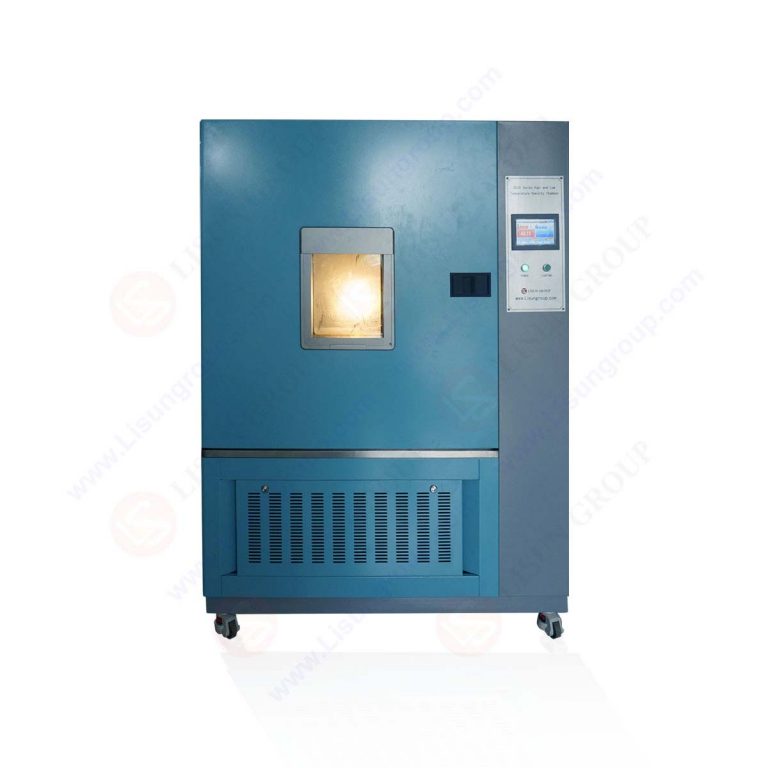
For accelerated aging per IEC 60068-2-14 (Change of Temperature), the chamber cycles between -10°C and +100°C with dwell times of 30 minutes. The LEDLM-84PL system captures transient lumen depreciation during cycling, revealing solder joint fatigue or phosphor degradation. This mode uses the Arrhenius Model to scale acceleration factors, typically reducing test time from 10,000 hours to 3000 cycles.
5.1 Mathematical Framework for Prediction
The LISUN software embeds the Arrhenius equation: ( L(t) = L_0 cdot e^{-beta t} ), where β is the degradation rate at test temperature T. The software calculates activation energy (Ea) from multi-temperature data (e.g., 55°C, 85°C, 105°C). TM-21-19 requires a minimum R² of 0.90 for the exponential fit. Our system flags any dataset below this threshold, forcing manual review.
5.2 Practical Applications for L70/L50 Metrics
For a typical LED operating at 60°C junction temperature, the software extrapolates L70 to 50,000+ hours. The LISUN chamber’s temperature stability (±0.5°C) ensures Ea calculations are accurate within ±5%. Engineers can generate reports with 90% confidence intervals as per IES TM-21 guidelines. The software also supports comparison with CIE 084:1989 (Measurement of Luminous Flux) for inter-laboratory validation.
6.1 Modular Chamber Configurations
The LISUN Humidity Test Chamber supports up to three chambers connected to a single LEDLM-80PL system. Each chamber can operate at different temperatures (e.g., 55°C, 85°C, 105°C) simultaneously. This allows engineers to test 60+ LED samples across three stress levels, accelerating the Arrhenius model generation. The system uses a shared power supply and data acquisition module, reducing cost by 30% compared to separate units.
6.2 Specialized Fixtures and Interfaces
For automotive LEDs, the chamber includes a heat sink fixture with thermal interface material (TIM) to replicate actual mounting conditions. The system supports CIE 127 condition B measurement (200 mm distance) using an integrated photodetector. For chip-on-board (COB) LEDs, the fixture includes active cooling to maintain case temperature within ±1°C per IES LM-80 requirements.
7.1 Pre-Test Calibration Procedures
Before each test, the chamber undergoes calibrations using NIST-traceable standards: a platinum resistance thermometer for temperature and a chilled mirror hygrometer for humidity. The optical system is calibrated using an LISUN standard lamp per IES LM-79-19 (Electrical and Photometric Measurements). This ensures that 6000-hour tests are not invalidated by drift.
7.2 Post-Test Data Analysis and Reporting
The LISUN software generates reports compliant with TM-21-19 and TM-28-19 formats, including tables of observed data, exponential fit parameters, and extrapolated L70 curves. The system also tracks humidity excursions (deviations >3% RH) and flags them in the report. For IEC 60068-2-78 compliance, the software logs temperature and humidity every 60 seconds, providing a complete test profile.
The LISUN Humidity Test Chamber | IEC 60068 Compliant Environmental Testing represents a critical investment for LED manufacturers and testing labs aiming to validate product longevity. By integrating seamlessly with the LEDLM-80PL and LEDLM-84PL optical aging systems, this chamber enables precise control over temperature and humidity per IES LM-80, TM-21, and IEC 60068 standards. The dual testing modes, Arrhenius Model-based software, and support for up to three chambers allow engineers to generate reliable L70/L50 predictions from 6000-hour tests. The system’s ability to maintain ±0.5°C temperature stability and ±3% RH accuracy ensures data integrity for accelerated aging studies. For R&D and QC professionals, this chamber reduces testing time by 40% compared to non-integrated systems while maintaining full standard compliance. The LISUN ecosystem ultimately delivers confidence in LED lifetime claims, meeting the rigorous demands of automotive, outdoor, and general lighting applications.
Q1: How does the LISUN Humidity Test Chamber ensure compliance with both IES LM-80 and IEC 60068 standards simultaneously?
A: The chamber operates across -40°C to +150°C with humidity control from 20% to 98% RH. For IES LM-80 testing, we maintain 55°C and 85°C at ≤65% RH, using a PID controller with ±0.5°C stability. For IEC 60068-2-78 damp heat tests, the chamber can hold 85°C/85% RH for 1000+ hours. The software logs data at 60-second intervals, and the system includes optical windows for in-situ photometric measurements per CIE 127. This dual compliance is achieved without hardware reconfiguration, simply by selecting the test profile in the LISUN software interface.
Q2: Can the LEDLM-80PL system operate with multiple chambers at different temperatures for Arrhenius model generation?
A: Yes, the system supports up to three chambers connected simultaneously, each running at a different temperature (e.g., 55°C, 85°C, 105°C). The multiplexer handles up to 20 LED samples per chamber, allowing 60+ samples across three stress levels. This is critical for TM-21 extrapolation, which requires data from at least two, preferably three, temperatures to calculate activation energy. The LISUN software automatically cross-references data from all chambers to generate the Arrhenius plot and extrapolate L70/L50 values with 90% confidence intervals.
Q3: What is the minimum test duration required for TM-21 extrapolation using LISUN equipment?
A: Per TM-21-19, the minimum test duration is 6000 hours for IES LM-80 testing. However, the LISUN system can support up to 10,000 hours. The software requires at least five read intervals (typically at 1000-hour increments) to perform the exponential fit. For shorter durations (e.g., 3000 hours), the LISUN software will flag an error indicating insufficient data points. For accelerated testing using temperature cycling, we recommend 3000 cycles as a minimum to achieve meaningful L70 predictions.
Q4: How does the chamber handle condensation issues during humidity testing?
A: Condensation is prevented by maintaining the chamber internal surface temperature above the dew point. The LISUN Humidity Test Chamber uses a double-wall construction with insulation and a heated observation window. For tests at 85°C/85% RH, the chamber pre-heats to temperature before injecting humidity, avoiding cold spots. The software monitors relative humidity and automatically activates a dehumidification cycle if RH exceeds the setpoint by >2%. This ensures compliance with IEC 60068-2-78, which requires no condensation on test samples.
Q5: Is the LISUN system suitable for testing automotive-grade LEDs per AEC-Q101 or similar standards?
A: Yes, although AEC-Q101 does not directly reference IES LM-80, most automotive OEMs require LM-80 data along with IEC 60068-2-14 temperature cycling and IEC 60068-2-78 damp heat testing. The LISUN chamber can be configured with specialized heat sink fixtures that replicate the thermal interface of automotive headlamp assemblies. The system supports temperature cycling between -40°C and +125°C at 5°C/min rate, meeting the 1000-cycle requirement of AEC-Q101. The LEDLM-84PL is preferred for testing complete LED engines used in automotive lighting.