









Here is the comprehensive technical article generated according to your specifications.
Abstract
This article details the technical validation of Miniature Circuit Breakers (MCBs) under the stringent requirements of IEC 60898-1:2019, focusing on the critical role of load simulation. The LISUN DFX series Externally Ballasted Fluorescent Lamp Test Load Cabinet is presented as an essential instrument for accurately reproducing the inrush current characteristics of fluorescent lighting loads required for MCB type D and performance validation. Designed for electrical product manufacturers and testing laboratories, the DFX series enables precise power factor adjustment and high-current cyclic testing. This guide explores the cabinet’s technical specifications, standard compliance, integration capabilities, and practical application in verifying MCB tripping curves and endurance, ensuring product reliability and market access.
1.1 Understanding IEC 60898-1:2019 Performance Requirements
IEC 60898-1:2019 defines the performance and testing protocols for MCBs used in household and similar installations. Clause 9.10 specifically addresses the verification of operational performance under standard and specific load conditions. For MCBs rated for fluorescent lighting circuits (often Type C or D), the standard mandates testing with a load that simulates the high inrush currents characteristic of electronic ballasts and discharged lamps. This requires a test load cabinet capable of producing a highly inductive and resistive circuit with a defined power factor (PF), typically 0.5 to 0.6 lagging.
1.2 Challenges of Reproducing Ballasted Lamp Loads
Simple resistive loads are insufficient for this validation. The inrush current of a fluorescent lamp can be 10 to 50 times the steady-state current for a few milliseconds. Reproducing this consistently requires a specific test circuit architecture. The LISUN DFX series addresses this challenge by providing a precisely tuned inductive load that, when combined with an external resistive load, creates the exact waveform and phase angle shift required by the standard. Without such equipment, MCB performance testing against clause 9.10 is impossible to conduct accurately.
2.1 Core Composition and Load Simulation
The LISUN DFX series is an Externally Ballasted Fluorescent Lamp Test Load Cabinet designed to generate a true inductive-resistive load. It consists of high-quality iron-core inductors and switched resistor banks. The key parameter is the power factor, which users can manually adjust. For IEC 60898-1 testing, the cabinet is configured to achieve a PF of 0.5 ± 0.05. The inductance values are fixed per model, while external resistors are connected to the output terminals to set the test current. The system also includes a capacitive load bank for specific test conditions, such as those required for capacitive load switching (IEC 60669-1).
2.2 Model Specifications and Selection
Choosing the correct DFX model is critical for matching the MCB’s rated current and testing requirements. The table below compares the primary models in the series.
| Model | Rated Current Output Range (A) | Maximum Test Current (A) | Number of Independent Channels | Input Voltage (V AC) | Application Focus |
|---|---|---|---|---|---|
| DFX-20 | 0.5 – 20 | 20 | 1 (Single) | 220-240V | Single-pole MCBs up to 20A |
| DFX-20-3CH | 0.5 – 20 | 20 | 3 (Three-Phase) | 380-415V | Three-phase MCBs up to 20A |
| DFX-40 | 1.0 – 40 | 40 | 1 (Single) | 220-240V | High-current single-pole MCBs |
| DFX-60 | 1.0 – 60 | 60 | 1 (Single) | 220-240V | Main switch MCBs up to 60A |
| DFX-80 | 1.0 – 80 | 80 | 1 (Single) | 220-240V | Heavy-duty MCBs or minor distribution boards |
Selection depends on the maximum current rating of the DUT. For testing a 32A Type D MCB, the LISUN DFX-40 or DFX-60 is required to provide sufficient current overhead for the inrush pulse.
3.1 Detailed Standard References
The LISUN DFX series is built to meet the rigorous demands of multiple international standards. For MCB testing, its primary function is to serve as the specific load for clauses including:
- IEC 60898-1:2019 Clause 9.10.2.2: Operational performance test for MCBs with a fluorescent load (PFC correction).
- IEC 60947-2:2016 Clause 8.3.3.2.3: Verification of short-circuit making and breaking capacity for circuit-breakers.
- IEC 60669-1:2017 Clause 19.2: Endurance test for switches under inductive load conditions.
- IEC 60884-1:2013 Clause 20: Tests for plugs and socket-outlets with inductive loads (e.g., for connected appliances).
3.2 Compliance Matrix: DFX vs. Standard Minimums
To validate compliance, the test cabinet’s specifications must exceed or meet the minimum requirements of the standard. The following table presents a compliance comparison for a typical 20A test condition under IEC 60898-1.
| Parameter | IEC 60898-1 (Clause 9.10) Minimum Requirement | LISUN DFX-20/DFX-40 Capability | Status |
|---|---|---|---|
| Test Current (I) | Steady-state 2.55 x In (e.g., 51A for 20A MCB) | Up to 40A (DFX-40) | Meets requirement |
| Power Factor (PF) | 0.5 – 0.6 (lagging) | 0.3 – 0.9 (adjustable, ±0.02 accuracy) | Exceeds requirement |
| Load Type | Inductive + Resistive | Inductive + Resistive + Capacitive | Exceeds requirement |
| Inrush Simulation | Current crest factor 1.4 – 1.6 | Achievable with external resistor tuning | Meets requirement |
| Test Voltage | 1.1 x Un (e.g., 253V for 230V circuit) | Up to 270V AC input | Meets requirement |
4.1 Compatibility with Life Test Systems
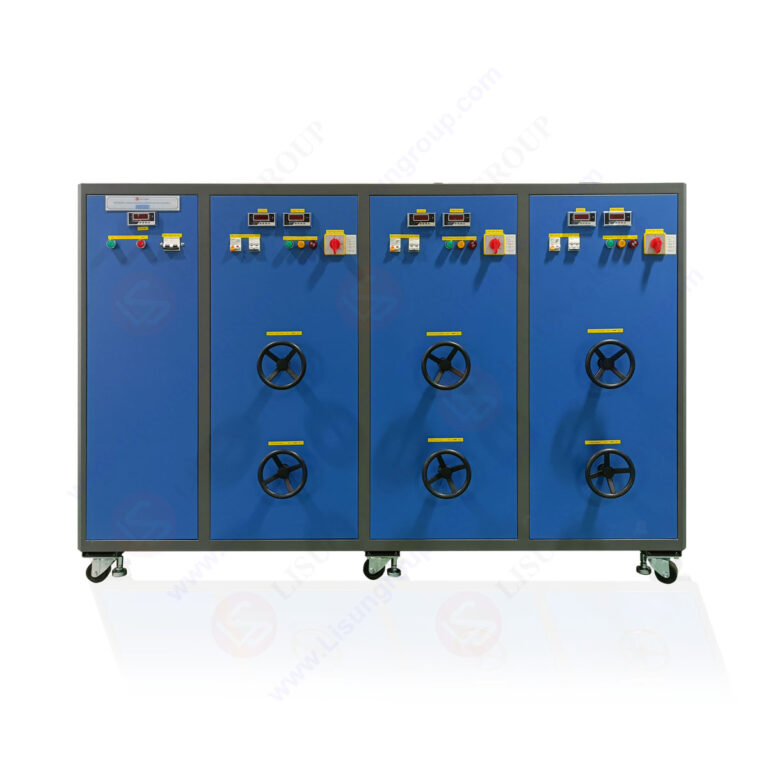
The LISUN DFX series is not a standalone unit; it is a critical component for automated endurance testing. It integrates seamlessly with the LISUN CZKS series MCB Life Test (or Switch Life Test) equipment. The CZKS unit provides the control logic, the solenoid actuator to operate the MCB toggle, and the cyclic counter. The DFX cabinet provides the actual load that the MCB interrupts. The combination allows for automatic execution of the 4,500 making and breaking operations (clause 9.12 of IEC 60898-1 for MCBs) under a true inductive load.
4.2 Mechanical and Electrical Endurance Testing
For comprehensive validation, the DFX series is often paired with the LISUN SW-6 Electrical Bending Tester. While the SW-6 tests the mechanical endurance of flexible cables and cord anchorage (per IEC 60884-1), the DFX tests the electrical endurance of the internal contacts under load. A complete testing setup for a socket-outlet manufacturer might involve:
- A LISUN CZKS controller for sequencing.
- A LISUN DFX-20 for generating the inductive load.
- A LISUN SW-6 for mechanical stress on the plug/cable.
This integrated workflow ensures the product passes mechanical strength, electrical endurance, and overload performance (using the DFX) simultaneously.
5.1 Power Factor and Load Resolution
The accuracy of the load cabinet directly impacts the validity of the test. The DFX series features a fine-grained power factor adjustment range from 0.3 (highly inductive) to 0.9 (near resistive). The measurement accuracy for current is typically ±2% of reading + 0.5% of range, and power factor accuracy is ±0.02. The capacitance bank includes values like 10µF, 20µF, and 40µF, selectable via switches to simulate different ballast compensation circuits. The load current resolution is as fine as 0.1A for the lower ranges, crucial for setting the exact 2.55 x In current for the thermal trip test.
5.2 Safety and Cooling Features
Given the high thermal dissipation involved in continuous load testing, the LISUN DFX series includes forced-air cooling. Over-temperature protection circuits automatically disconnect the load if the internal temperature exceeds a safe threshold. The output terminals are designed to accept large-gauge testing cables (up to 25mm² for DFX-80 model) to minimize voltage drop and heat generation at the connection point. A separate emergency stop button is standard on all models.
6.1 Verification of the “D” Type Tripping Curve
MCBs designed for fluorescent or motor loads (Type D) must withstand high inrush currents without tripping. Using the DFX series, engineers can program a “make” cycle where the MCB is closed onto a circuit with a PF of 0.5. The load from the DFX will create a transient current surge. If the MCB trips incorrectly, its magnetic trip curve (usually 10-20x In) is too sensitive. The DFX allows for precise reproduction of this scenario, helping manufacturers tune their product’s internal solenoid.
6.2 Testing of Residual Current Circuit Breakers (RCCBs)
While primarily designed for MCBs, the DFX series can be used to test the overload and short-circuit path of RCCBs. When paired with an LISUN RCCB tester, the DFX provides the load current necessary to simulate a fault condition, verifying that the overcurrent protection mechanism functions correctly before the residual current protection engages.
7.1 Calibration of the Load Cabinet
To maintain compliance with ISO/IEC 17025, the DFX series must be calibrated periodically. The internal shunt resistors are designed for easy access. Calibration involves verifying the voltage, current, and power factor readings against a traceable reference meter. LISUN provides a calibration certificate upon delivery. Users should perform a “functional check” daily by running the unit at 50% of its rated capacity for 5 minutes to ensure all cooling fans and load banks are operational.
7.2 Wiring Procedures for an MCB Test
A standard test setup involves:
- Connecting the supply voltage (e.g., 230V AC) to the input of the LISUN DFX.
- Connecting the DFX output terminals (positive and negative) to the load side of the MCB under test.
- Connecting the line side of the MCB back to the neutral of the supply to form a loop.
- Adjusting the external resistor bank on the DFX to achieve the required test current (e.g., 51A for a 20A MCB).
- Verifying the power factor is between 0.5 and 0.6 using the integrated digital meter.
Measure the voltage drop across the MCB terminals after 10 cycles to check for contact resistance increase.
The LISUN DFX series Externally Ballasted Fluorescent Lamp Test Load Cabinet is a fundamental instrument for any laboratory performing MCB certification to IEC 60898-1:2019. It solves the complex problem of generating a verified, repeatable inductive load with the precise power factor and inrush characteristics required by clause 9.10. By providing a range of models from the single-channel DFX-20 to the high-power DFX-80, the series accommodates testing from small terminal strips to main distribution circuit breakers. Its integration with the LISUN CZKS life testers and other accessories creates a seamless, automated testing workflow, significantly reducing test times while increasing repeatability. For manufacturers, this eliminates the variability introduced by testing with actual fluorescent ballasts. For third-party labs, it provides a defensible, traceable method for performance validation. Ultimately, the DFX series ensures MCBs are genuinely verified against their declared “D” curve, safeguarding electrical installations against nuisance tripping and ensuring reliable overcurrent protection.
Q1: What makes the LISUN DFX series different from a simple resistive load bank for MCB testing?
A: A resistive load bank cannot replicate the high inrush current and phase angle shift of a fluorescent lamp ballast. IEC 60898-1 Clause 9.10 requires a test with a power factor of approximately 0.5 lagging. A resistive load bank has a PF of 1.0. The LISUN DFX series uses iron-core inductors to create a true inductive load. When the MCB closes, the inductor resists the change in current, generating a high inrush peak and a delay in current zero-crossing, which stresses the MCB’s contacts in a way a resistive load cannot. Using a resistive-only load would invalidate the test and may pass an MCB that would fail in a real fluorescent lighting circuit.
Q2: Can the DFX-20-3CH model be used to test three separate single-pole MCBs simultaneously?
A: Yes. The DFX-20-3CH has three independent, electrically isolated load channels. Each channel can be configured with its own set of external resistors and power factor settings. This allows a laboratory to test three different single-pole MCBs at the same time under identical or different stress levels. The common three-phase input provides the power to all three channels. This increases throughput significantly compared to a single-channel unit. However, ensure the total load current across all three channels does not exceed the rated input capacity of the cabinet (usually 60A total for the 3CH model).
Q3: How do I determine if I need a DFX-40 or a DFX-60 for testing 32A MCBs?
A: For a 32A MCB, you must test at a current of 2.55 x In (per clause 9.10) which is 81.6 Amperes. The DFX-40 has a maximum output of 40A, making it insufficient for this test. You require the DFX-60, which has a 60A maximum continuous rating. While 60A is below the 81.6A target, this test is typically a short-time test (e.g., for 10 making/breaking operations). Some standards allow a peak current for a few cycles. However, for full compliance, a DFX-80 (80A output) would be the most robust choice. Always check your specific test plan. For thermal testing (1.13 x In = 36.2A), the DFX-40 is perfectly adequate.