









Here is the comprehensive technical article based on your requirements.
Abstract
This article provides a deep technical analysis of the LISUN LED Accelerated Life Test Chambers for IEC 60068 Compliance, examining how these systems enable precise lumen maintenance prediction through the integration of Arrhenius Model-based software and controlled environmental stress. Targeting LED reliability engineers and testing lab technicians, the article details the essential dual-system architecture (LEDLM-80PL and LEDLM-84PL) designed for IES LM-80/TM-21 and LM-84/TM-28 protocols. It covers critical specifications, including 6000-hour test durations, L70/L50 metrics, and support for up to 3 connected temperature chambers, while providing a comparative analysis of test modes. The discussion focuses on ensuring robust compliance with IEC 60068-2-14 and CIE 127 standards.
1.1 The Critical Role of Lumen Depreciation Prediction
The long-term reliability of LED systems heavily depends on accurate lumen maintenance data. Unlike traditional lighting, LEDs exhibit non-linear degradation driven by junction temperature and drive current. This makes lifespan prediction complex. The industry relies on accelerated life tests to compress years of operation into standardized durations, such as 6000 hours, using elevated temperatures to induce premature failure. By analyzing these results, engineers can calculate L70 (time to 70% lumen output) and L50 metrics, essential for warranty and specifier validation. LISUN LED Accelerated Life Test Chambers for IEC 60068 Compliance provide the precise thermal control necessary for these projections.
1.2 Overview of LISUN’s Dual-System Architecture
LISUN addresses two distinct application domains with specialized hardware platforms. The LEDLM-80PL system is optimized for the IES LM-80 standard, focusing on the lumen maintenance of individual LED packages, modules, or arrays at multiple case temperatures. Conversely, the LEDLM-84PL system aligns with IES LM-84, which governs the testing of integral LED lamps (retrofit bulbs) and luminaires. Both systems integrate LISUN’s proprietary software that implements the Arrhenius Model to calculate acceleration factors. These chambers can run simultaneous tests across multiple temperature points, with support for up to 3 temperature chambers connected to a single control unit, facilitating high-throughput validation.
2.1 Temperature and Environmental Control Parameters
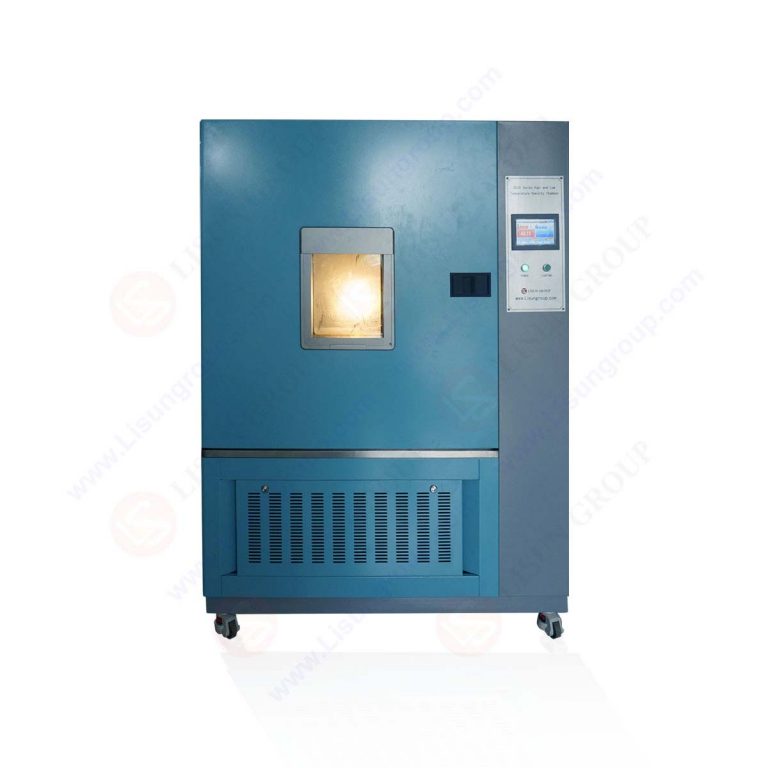
The chambers provide precise thermal cycling to meet IEC 60068-2-14 test Na and Nb requirements. The standard temperature range is ambient to +100°C (or +120°C for special configurations), with a uniformity of ±0.5°C across the test space. Humidity control ranges from 20% to 98% RH, crucial for assessing corrosion or hygroscopic failure modes in LED materials. The system uses forced air convection to ensure thermal homogeneity across the DUT (Device Under Test) mounting plane.
2.2 Hardware Platform Flexibility
Each system supports a modular tray design that allows engineers to customize the loading configuration. For instance, the LEDLM-80PL can accommodate up to 100 LED samples per tray, depending on size. The test fixture uses a four-wire (Kelvin) connection system for accurate real-time current monitoring. Drive current stability is maintained at ±0.5% of the set point, preventing current-induced noise from corrupting photometric data. The system also includes integrated safety interlocks for over-temperature protection and door-open detection.
3.1 Data Acquisition and Real-Time Monitoring
The control software provides a real-time visual dashboard showing luminous flux, forward voltage, and case temperature for each sample. Data logging intervals are user-configurable from 1 second to 1 hour. The software automatically detects open-circuit failures and logs the exact failure time. A critical feature is the automatic truncation of initial 1000-hour data (a standard requirement for TM-21 extrapolation), ensuring regression analysis begins with stable data.
3.2 Arrhenius Model Calculation Engine
LISUN’s software implements the standard Arrhenius equation:
[
AF = expleft(frac{E_a}{kb} left(frac{1}{T{use}} – frac{1}{T_{test}}right)right)
]
Where:
AF= Acceleration FactorE_a= Activation Energy (typically 0.2 eV to 0.5 eV for LEDs)k_b= Boltzmann’s ConstantT= Temperature in Kelvin
The software calculates the junction temperature (Tj) based on the thermal resistance (RθJ-C) provided by the user. This allows engineers to predict L70 lifetimes at standard use conditions (often 25°C or 55°C) based on data collected at elevated temperatures (e.g., 85°C).
4.1 Mapping Test Modes to Specific Standards
The chambers support dual testing modes to cover the primary IES standards:
- LM-80 Mode (LEDLM-80PL): For components and arrays. Requires three different case temperatures (e.g., 55°C, 85°C, and a third user-defined point). Test duration is typically 6000 hours.
- LM-84 Mode (LEDLM-84PL): For integral lamps. Requires a single ambient temperature (e.g., 45°C) and a longer test duration (up to 10,000 hours).
4.2 Direct Application of TM-21 and TM-28
The software directly outputs TM-21 projections for LEDLM-80PL data and TM-28 projections for LEDLM-84PL data. TM-21 requires a minimum of 6000 hours of data for a 6x lifetime projection (L70), while TM-28 allows for a 2.5x projection. The software automatically checks the goodness-of-fit (R² value) of the exponential decay model and flags data sets with poor correlation, preventing unreliable projections.
4.3 Supporting CIE and Photometric Standards
The test environment also supports CIE 084 (measurement of luminous flux) and CIE 127 (measurement of LEDs). By integrating with an LISUN integrating sphere (e.g., the LPCE series), the system allows for in-situ measurement of total luminous flux and spectral power distribution at specified intervals, complying with IES LM-79-19 for electrical and photometric measurements. The chamber design considers the CIE 70 recommendation for uniform temperature distribution during photometric testing.
| Feature | LEDLM-80PL System | LEDLM-84PL System |
|---|---|---|
| Primary Standard | IES LM-80 (Components) | IES LM-84 (Integral Lamps) |
| Extrapolation Method | TM-21 (6x projection) | TM-28 (2.5x projection) |
| Test Temperature | 3x Case Temperatures (e.g., 55°C, 85°C, 105°C) | 1x Ambient Temperature (e.g., 25°C, 45°C) |
| Sample Size | Up to 100 components per tray | Up to 20 integral lamps per chamber |
| Drive Current | Constant Current (0-2A, 0-30V) | Constant AC/DC (up to 300V, 5A) |
| Test Duration | 6,000 hours (minimum for TM-21) | 6,000 – 10,000 hours |
| Failure Criteria | L70, L50 (JEDEC JESD22-A108) | L70, L50 (IEC 62612) |
| Chamber Connectivity | Up to 3 chambers | Up to 3 chambers |
This table highlights the specialized nature of each system. Using an LM-80 chamber for an integral lamp test would violate the standard’s definition of ambient temperature control. Conversely, an LM-84 chamber cannot provide the three distinct case temperatures required for component-level Arrhenius modeling.
6.1 Dynamic Test Profile Creation
Engineers can design complex test profiles with multiple steps. For example, a profile might include:
- Initial Burn-in: 100 hours at 25°C to stabilize the sample.
- Accelerated Aging: 6000 hours at 85°C with 10% duty cycle on/off (to simulate thermal cycling stress per IEC 60068-2-14 test Nb).
- Recovery & Measurement: 30-minute cool-down to 25°C before each photometric measurement (to ensure repeatability per CIE 127).
6.2 Data Export and Traceability
The software generates comprehensive CSV reports containing raw data (flux vs. time), the fitted exponential curve, and the extrapolated L70/L50 values. An audit trail logs every parameter change, operator login, and alarm event. This ensures full traceability for third-party certification bodies (e.g., UL, TÜV, DEKRA) reviewing the test data for compliance with ENERGY STAR or DLC requirements.
7.1 Quality Assurance for Production Lines
Manufacturing engineers use the chambers to validate incoming LED batches. By running a short-term accelerated test (e.g., 1000 hours at 100°C), they can quickly screen for phosphor degradation or wire bond failures that would otherwise take months to appear. The software’s pass/fail criteria (based on a minimum L70 projection of 50,000 hours at 55°C) provide immediate go/no-go decisions.
7.2 Research & Development for New Materials
R&D teams utilize the chamber’s variable humidity control to test new encapsulation materials. They can run a Design of Experiments (DoE) with different temperature and humidity combinations (85°C / 85% RH vs. 85°C / 20% RH) to calculate the activation energy for moisture-induced failures. This data is critical for improving LED package reliability and achieving longer warranties (e.g., 100,000-hour L70 projections).
The LISUN LED Accelerated Life Test Chambers for IEC 60068 Compliance represent a significant advancement in reliability test equipment. By integrating precision environmental control with the rigorous data analysis requirements of TM-21 and TM-28, these systems enable engineers to move beyond simple pass/fail metrics to true physics-of-failure analysis. The support for up to 3 connected temperature chambers significantly reduces test cycle times for multi-temperature point studies required by LM-80. The ability to customize test profiles for both components and integral lamps makes the system versatile for any lighting laboratory. Ultimately, LISUN’s solution aligns directly with the core needs of the industry: faster time-to-market for reliable LED products, robust compliance with global standards, and detailed data traceability for certification audits.
Q1: Can the LISUN chambers be used to test automotive LED components specifically?
A: Yes. While the primary design follows IES LM-80 and LM-84, the chamber’s thermal control profile ( 55°C to 100°C) is compatible with the thermal shock requirements of automotive standards like AEC-Q102 and JEDEC JESD22-A108. The L70/L50 metrics calculated by the software are required for automotive lifetime validation. However, you must ensure your test profile includes the specific duty cycles (e.g., 1 hour on, 1 hour off) required by AEC-Q102, which the LISUN system can support through its customizable step-programs.
Q2: How does the system handle the required periodic photometric measurements without interrupting the aging cycle?
A: The system utilizes a scheduled “measurement pause” feature. The controller can be programmed to automatically stop the thermal stress and cool the chamber down to a standard measurement temperature (e.g., 25°C) at specific intervals (e.g., every 1000 hours). Once the chamber reaches thermal equilibrium at 25°C, the software logs the photometric data from the connected integrating sphere. The system then automatically resumes the accelerated aging profile, ensuring a consistent and repeatable measurement sequence as defined in CIE 127.
Q3: What is the power consumption of the LISUN chamber during operation, and what are the ventilation requirements?
A: The power consumption depends on the chamber size and operating temperature. A standard 1m³ chamber running at 85°C draws approximately 3.5 kW. Ensure your facility has a dedicated 220V/30A circuit. The chambers generate significant heat; therefore, adequate room ventilation is needed to maintain ambient temperatures below 40°C. LISUN recommends a dedicated HVAC system or exhaust duct for the heat exchanger to prevent thermal saturation of the laboratory space during long 6000-hour tests.
Q4: Is it possible to perform tests at temperatures lower than ambient, such as -20°C, for cold start testing?
A: The standard LISUN LED Accelerated Life Test Chamber is designed for high-temperature acceleration (up to +100°C or +120°C) and does not include built-in refrigeration. For low-temperature or thermal shock testing (e.g., -40°C to +125°C), LISUN offers a separate thermal cycling chamber series. For standard LM-80/TM-21 and LM-84/TM-28 testing, only elevated temperatures are required for the Arrhenius acceleration model. Please contact LISUN for a dedicated combined temperature cycling solution if your application requires it.
Q5: How do I calibrate the photometric sensors or integrating sphere used with the chamber?
A: The photometric measurement chain (spectrophotometer and integrating sphere) must be calibrated separately from the chamber. LISUN provides a standard lumen standard lamp with a calibration traceable to NIST. Calibration should be performed annually, or after any change in the optical geometry (e.g., repositioning the sphere, replacing the detector). The chamber’s temperature sensors (RTDs) are calibrated at the factory via ISO 17025 procedures. The software allows you to apply an offset correction to the thermocouples if recalibration is needed on-site.