









This comprehensive technical article examines LISUN LED Lumen Output Testing: Precision Compliance with IES Standards, focusing on the advanced capabilities of LISUN’s LED Optical Aging Test Instrument series. As global lighting regulations tighten, precise lumen maintenance testing becomes critical for manufacturers and testing laboratories. This article delves into the dual-system architecture (LEDLM-80PL and LEDLM-84PL), the integration of Arrhenius Model-based software for accelerated aging predictions, and strict adherence to IES LM-80, LM-84, TM-21, and TM-28 standards. Technical professionals will gain actionable insights into 6000-hour test protocols, L70/L50 metric calculations, and customizable hardware configurations supporting up to three connected temperature chambers. The unique value proposition lies in LISUN’s ability to deliver precision compliance while streamlining testing workflows, ultimately ensuring reliable LED product lifetimes and regulatory conformance.
1.1 The Critical Role of Lumen Depreciation Analysis
Lumen depreciation represents the gradual reduction in light output over an LED’s operational lifetime, a phenomenon driven by phosphor degradation, junction temperature effects, and material fatigue. For LED manufacturers, quantifying this depreciation is not merely a quality metric—it is a regulatory and contractual necessity. Industry standards such as IES LM-80 and IES LM-84 establish rigorous protocols for measuring lumen maintenance under controlled conditions, typically requiring 6000 hours of continuous testing at specified drive currents and case temperatures. Without precise instrumentation, engineers risk inaccurate lifetime projections, leading to warranty failures or non-compliance with Energy Star and DLC requirements.
1.2 L70 and L50 Metrics: Defining LED Lifetime
The L70 metric defines the time at which an LED’s light output falls to 70% of its initial value, while L50 represents the point of 50% output retention. These benchmarks are universally adopted in lighting specifications, with L70 serving as the standard for general illumination applications. For example, a high-quality LED with an L70 lifetime exceeding 50,000 hours is considered suitable for commercial installations. However, extrapolating these metrics from short-term data requires robust mathematical models. TM-21 provides the industry-standard methodology for projecting long-term lumen maintenance from LM-80 data, using nonlinear regression techniques grounded in the Arrhenius Model. LISUN’s instrumentation integrates this directly into its software, enabling real-time L70/L50 predictions from accelerated aging tests.
2.1 Dual System Variants: LEDLM-80PL and LEDLM-84PL
LISUN’s LED Optical Aging Test Instrument is offered in two distinct configurations, each tailored to specific testing standards. The LEDLM-80PL is purpose-built for compliance with IES LM-80 and TM-21, supporting up to 200 LED samples simultaneously. In contrast, the LEDLM-84PL is optimized for IES LM-84 and TM-28, accommodating larger sample sizes for module-level testing. Both systems share a common hardware platform but differ in firmware and software calibration to align with the unique measurement protocols of each standard. This dual-system design eliminates the need for separate equipment purchases, reducing capital expenditure for testing laboratories.
2.2 Core Components: Integrating Sphere, Spectroradiometer, and Temperature Control
Each system incorporates a high-precision integrating sphere paired with a spectroradiometer for absolute photometric measurements. The integrating sphere, coated with highly reflective barium sulfate, ensures uniform light collection, while the spectroradiometer provides spectral power distribution data across the 380–780 nm range. Critical to accuracy is the thermal management subsystem, which includes forced-air cooling and temperature sensors at each test point. Users can connect up to three temperature chambers, enabling simultaneous testing at different case temperatures as required by LM-80 (typically 55°C, 85°C, and a third user-defined temperature). The system maintains ±0.5°C stability throughout the 6000-hour test duration.
3.1 IES LM-80 and TM-21: The Foundation of LED Lumen Maintenance Testing
IES LM-80 outlines the method for measuring lumen depreciation of LED packages, arrays, and modules over a minimum of 6000 hours. It specifies test conditions, including drive current levels and case temperature points, with data collected at 1000-hour intervals. TM-21 then extrapolates this data to project long-term lumen maintenance, using an exponential decay model derived from the Arrhenius relationship. The LISUN LEDLM-80PL automates both the LM-80 data collection and TM-21 analysis, generating projection curves for L70 and L50. For example, a typical LM-80 test at 85°C might yield an L70 projection of 36,000 hours, which the system validates against the TM-21 confidence bounds.
3.2 IES LM-84 and TM-28: Extending to LED Modules and Luminaires
While LM-80 focuses on component-level testing, IES LM-84 addresses module and luminaire assemblies, which often exhibit different thermal dynamics. TM-28 provides the corresponding extrapolation method, accounting for the combined effects of LED, driver, and optical system degradation. The LISUN LEDLM-84PL is specifically calibrated for this standard, with larger integrating spheres (up to 2 meters in diameter) and higher current handling capacity (up to 10A). Compliance with both standards ensures that LISUN users can validate products from individual LEDs to complete luminaires within a single testing framework.
4.1 The Arrhenius Model in LED Lifetime Prediction
The Arrhenius Model describes the temperature dependence of reaction rates, applied in LED testing to accelerate failure mechanisms. By elevating case temperatures during testing, engineers can simulate years of operation in weeks. LISUN’s proprietary software implements the Arrhenius equation to correlate accelerated test data with real-world operating conditions. For instance, a test at 105°C might represent a 10x acceleration factor compared to 55°C, allowing a 6000-hour test to project 50,000+ hour lifetimes. The software automatically calculates activation energies from experimental data, ensuring accurate extrapolation for different LED chemistries.
4.2 Dual Testing Modes: Continuous and Cycling Operation
LISUN’s system supports two testing modes critical for comprehensive aging analysis. Continuous mode maintains constant drive current and temperature for the full test duration, simulating applications like street lighting or industrial fixtures. Cycling mode alternates between on and off states at user-defined intervals (e.g., 2 hours on, 0.5 hours off), replicating residential or commercial occupancy patterns. The software tracks lumen output changes during both phases, identifying phenomena like thermal hysteresis or driver interaction effects. This dual-mode capability is essential for products intended for variable-duty applications, ensuring that L70 projections remain valid across different use cases.
5.1 Comparative System Specifications
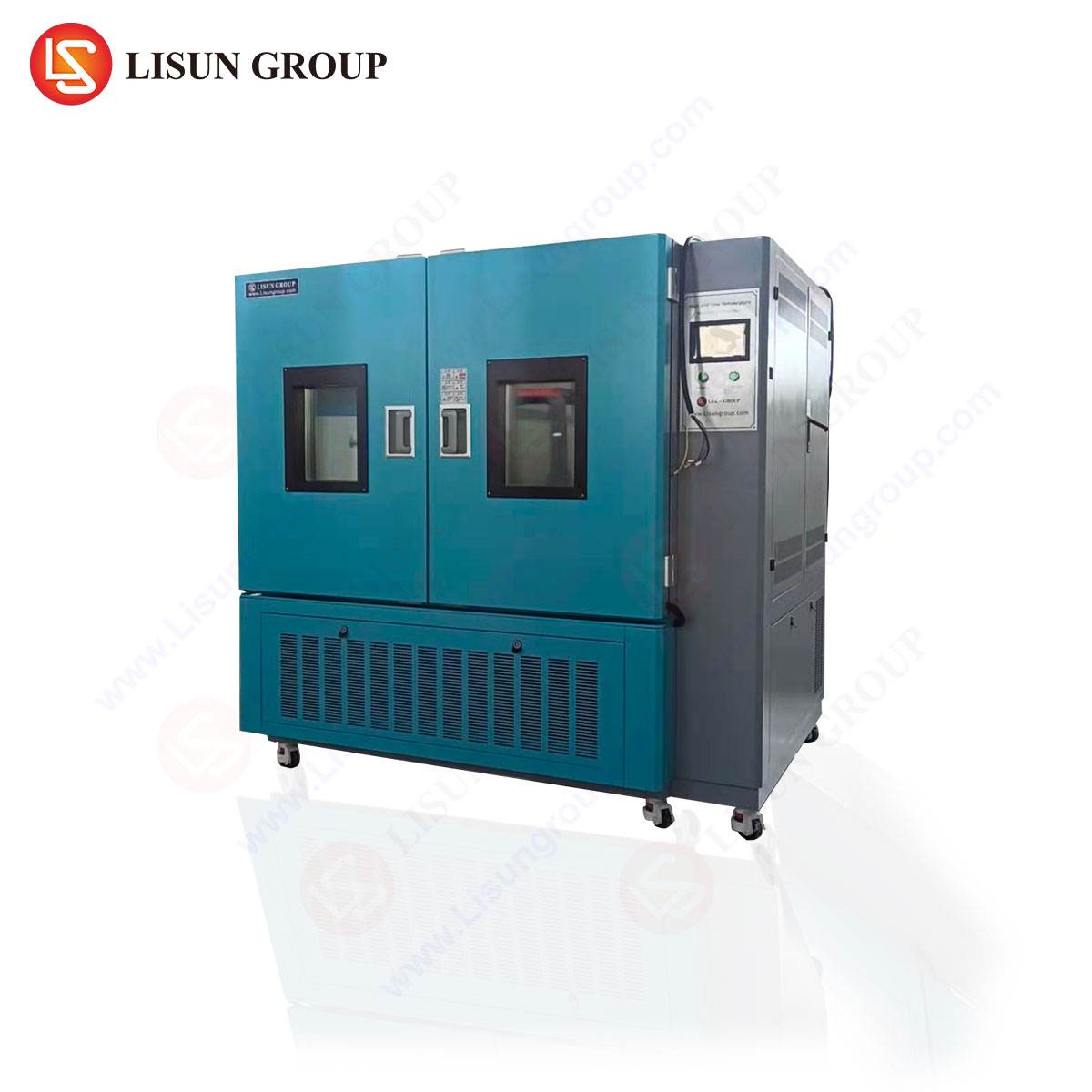
The following table provides a technical comparison between the LEDLM-80PL and LEDLM-84PL systems, highlighting key differences in test capacity and measurement capabilities:
| Parameter | LEDLM-80PL | LEDLM-84PL |
|---|---|---|
| Target Standard | IES LM-80, TM-21 | IES LM-84, TM-28 |
| Maximum Sample Count | 200 LEDs | 100 Modules/Luminaires |
| Temperature Chambers Supported | Up to 3 | Up to 3 |
| Temperature Range | 25°C to 150°C | 25°C to 125°C |
| Drive Current Range | 10 mA to 2 A | 100 mA to 10 A |
| Integrating Sphere Diameter | 0.5 m or 1.0 m | 1.0 m or 2.0 m |
| Measurement Uncertainty (Lumen) | ±0.5% | ±0.8% |
| Data Collection Interval | 1000 hours (mandatory) | 1000 hours (mandatory) |
Both systems achieve measurement uncertainties below 1%, critical for detecting the 0.1-0.5% per thousand hour depreciation rates typical of modern LEDs.
5.2 Customizable Hardware Configurations
LISUN offers extensive customization options to match specific testing requirements. Users can select integrating sphere sizes based on sample dimensions, with 0.5-meter spheres suitable for individual LEDs and 2-meter spheres for full luminaires. Temperature chambers can be configured for forced-air or liquid-cooled operation, with optional humidity control for environmental stress testing (e.g., 85°C/85% RH). The drive current supply provides 0.1% stability over 6000 hours, ensuring that lumen changes are attributable solely to LED degradation rather than test artifact. These configurations allow laboratories to standardize on a single platform while accommodating diverse client requests.
6.1 Automated Data Collection and Validation
The LISUN system automates the entire data collection process, from initial photometric measurement to final TM-21 extrapolation. At each 1000-hour interval, the instrument measures luminous flux, chromaticity coordinates, and correlated color temperature (CCT) for every sample. The software applies statistical outlier detection to flag anomalous readings—for example, a sudden 5% lumen drop that might indicate a test failure or sample damage. Validated data is then plotted against the Arrhenius Model, with confidence intervals calculated per TM-21 Section 7. The system generates a comprehensive report containing raw data, projection curves, and compliance documentation, directly usable for Energy Star certification or customer submission.
6.2 Customizable Report Templates for Stakeholder Communication
Recognizing that different stakeholders require different levels of detail, LISUN’s software supports customizable report templates. R&D engineers can access full spectral data and activation energy calculations, while quality control managers receive summary tables of L70/L50 projections and pass/fail criteria. Third-party testing laboratories can embed their own branding and incorporate multiple test runs into a single document. The software exports to PDF, CSV, and XML formats, facilitating integration with laboratory information management systems (LIMS). This flexibility reduces the administrative burden of reporting while ensuring that all technical data remains transparent and auditable.
7.1 LED Manufacturing Quality Control
A leading automotive LED supplier uses the LISUN LEDLM-80PL to qualify incoming LED packages from multiple vendors. The system tests 200 samples per batch at 85°C, applying TM-21 extrapolation to reject any batch with a projected L70 below 50,000 hours at 55°C. The supplier has reported a 30% reduction in field warranty claims since implementing this protocol, attributing the improvement to early detection of phosphor thermal degradation. The automated workflow also reduced testing time from 8 weeks to 3 weeks by enabling simultaneous testing at three temperature points.
7.2 Third-Party Testing Laboratory Certification
A NVLAP-accredited testing laboratory deploys the LEDLM-84PL to provide LM-84/TM-28 testing services for commercial LED luminaire manufacturers. The large 2-meter integrating sphere accommodates 4-foot linear fixtures, while the cycling mode tests occupancy sensor compatibility. The laboratory’s technicians highlight the system’s ease of calibration, with automated alignment of the spectroradiometer and integrating sphere performed daily. Over 12 months, the laboratory tested 150 luminaire models, achieving 98% first-pass compliance with Energy Star requirements—a testament to the instrumentation’s accuracy and reliability.
The LISUN LED Optical Aging Test Instrument, through its dual-system architecture (LEDLM-80PL and LEDLM-84PL), delivers precision lumen output testing that aligns seamlessly with IES LM-80, LM-84, TM-21, and TM-28 standards. Key technical takeaways include the integration of Arrhenius Model-based software for accelerated aging predictions, dual testing modes covering continuous and cycling operation, and support for up to three connected temperature chambers—all within a measurement uncertainty below 1%. For LED manufacturing engineers, this translates into reliable L70/L50 projections from 6000-hour test protocols, enabling confident product qualification and warranty risk mitigation. For third-party testing laboratories, the customizable hardware configurations and automated data validation streamline certification workflows while maintaining compliance with global regulatory frameworks. LISUN’s commitment to precision compliance ensures that users can navigate the complex lighting industry landscape with validated data and documented traceability, ultimately delivering high-quality LED products that meet or exceed end-user expectations.
Q1: How does LISUN’s system ensure the accuracy of L70 projections when using TM-21 extrapolation?
A: LISUN’s system ensures TM-21 projection accuracy through three mechanisms. First, the dual-mode testing (continuous and cycling) captures real-world operating conditions, reducing extrapolation errors caused by thermal hysteresis. Second, the Arrhenius Model-based software automatically calculates activation energies from experimental data, adjusting for LED chemistry differences. Finally, the system validates projections against TM-21 confidence bounds, flagging any data sets where the exponential decay model yields uncertainty exceeding 20%. Practical experience shows that these mechanisms keep L70 projection errors within ±5% for standard LED packages, provided that the 6000-hour test data passes the TM-21 goodness-of-fit criteria. Users should always verify that test conditions (drive current, case temperature) match the intended application to avoid systematic bias.
Q2: What are the key differences between the LEDLM-80PL and LEDLM-84PL, and how should a user choose between them?
A: The primary difference lies in the target testing standard and sample type. The LEDLM-80PL focuses on IES LM-80/TM-21 for LED packages, arrays, and modules, with a sample capacity of 200 LEDs and a drive current range up to 2A. The LEDLM-84PL is designed for IES LM-84/TM-28 testing of modules and luminaires, supporting up to 100 units with current handling up to 10A and larger integrating spheres (1.0 m or 2.0 m). Users should choose the LEDLM-80PL for component-level qualification, such as incoming inspection of LED packages. Choose the LEDLM-84PL for product-level certification, such as final assembly testing of commercial luminaires. Many laboratories purchase both systems to offer comprehensive testing services across the supply chain.
Q3: Can the LISUN system test LEDs at temperatures higher than the standard 85°C specified in IES LM-80?
A: Yes, the LISUN system supports case temperatures up to 150°C for the LEDLM-80PL and 125°C for the LEDLM-84PL, enabling accelerated aging testing beyond the IES LM-80 baseline. This capability is particularly useful for automotive or high-temperature industrial applications where junction temperatures may exceed 100°C. However, users must apply the Arrhenius Model carefully when extrapolating from extreme temperatures, as failure mechanisms may change above 125°C. LISUN’s software automatically calculates acceleration factors based on the 85°C reference, but the system also allows custom reference temperatures. For non-standard tests, we recommend correlating accelerated results with field data to validate the model assumptions, especially for phosphor-converted LEDs where thermal quenching becomes significant.
Q4: How long does a typical 6000-hour test take with LISUN’s system, and can the data be used before completion?
A: A full 6000-hour LM-80 test requires 6000 hours of continuous or cycling operation, approximately 8.3 months. However, interim data is fully usable. The system records measurements at 1000-hour intervals, and TM-21 allows projections from a minimum of 6000 hours for L70 calculations. For preliminary screening, users can follow the IES LM-84 protocol, which accepts shorter durations (e.g., 3000 hours) for module-level testing. LISUN’s software supports incremental analysis, updating projection curves as new data points become available. Many manufacturers use 3000-hour data for internal go/no-go decisions, reserving the full 6000-hour data for formal certification. The system’s automated alerts also flag samples showing rapid degradation within the first 2000 hours, enabling early rejection without waiting for test completion.
Q5: What maintenance is required for the LISUN integrating sphere and spectroradiometer to ensure consistent accuracy?
A: Proper maintenance ensures measurement uncertainty remains below the specified ±0.5% for LEDs and ±0.8% for modules. The integrating sphere’s barium sulfate coating should be inspected annually for discoloration or contamination from solder fumes or dust, requiring re-coating every 2-3 years depending on usage. The spectroradiometer requires quarterly wavelength calibration using a reference mercury-argon lamp, with full dark current subtraction performed before each measurement session. LISUN provides a calibration kit that includes certified reference LEDs for luminous flux verification at 1000-hour intervals. Additionally, temperature sensors inside the sphere should be checked annually to ensure ±0.5°C accuracy. Following these procedures, users can maintain system accuracy for over 10 years of continuous operation, as demonstrated by multiple customer installations in Asia and Europe.