









Abstract
The LISUN LED Power Test, centered on the LEDLM-80PL and LEDLM-84PL Optical Aging Test Instruments, delivers precision measurement for IEC 60068 compliance and accelerated aging validation. This article provides a comprehensive analysis of LISUN’s dual-system architecture, integrating IES LM-80, TM-21, and LM-84 methodologies with Arrhenius Model-based predictive software. We examine how 6000-hour testing cycles, support for up to 3 temperature chambers, and L70/L50 metrics enable engineers to accurately assess lumen depreciation and lifespan. The content bridges practical hardware configuration with stringent global standards, offering R&D and QC professionals actionable insights for reliable LED reliability testing, thermal management, and photometric characterization under the specific context of LISUN LED Power Test solutions.
1.1 Transitioning from Basic Photometry to Predictive Aging Analysis
The lighting industry’s shift toward solid-state lighting has necessitated a paradigm shift in power testing. Traditional static photometric measurements are insufficient for defining an LED’s service life. The LISUN LED Power Test with the LEDLM-80PL and LEDLM-84PL addresses this by integrating photometric measurements with accelerated aging profiles. These instruments are designed to monitor parameters such as lumen depreciation and color shift over prolonged periods, specifically targeting 6000-hour test durations as a baseline for extrapolation. This approach aligns with the industry’s move from simple pass/fail criteria to predictive reliability engineering, however, the precision of LISUN’s systems lies in their ability to simulate real-world thermal stresses while maintaining high-frequency data logging.
1.2 The Critical Role of IEC 60068 in Environmental Stress Testing
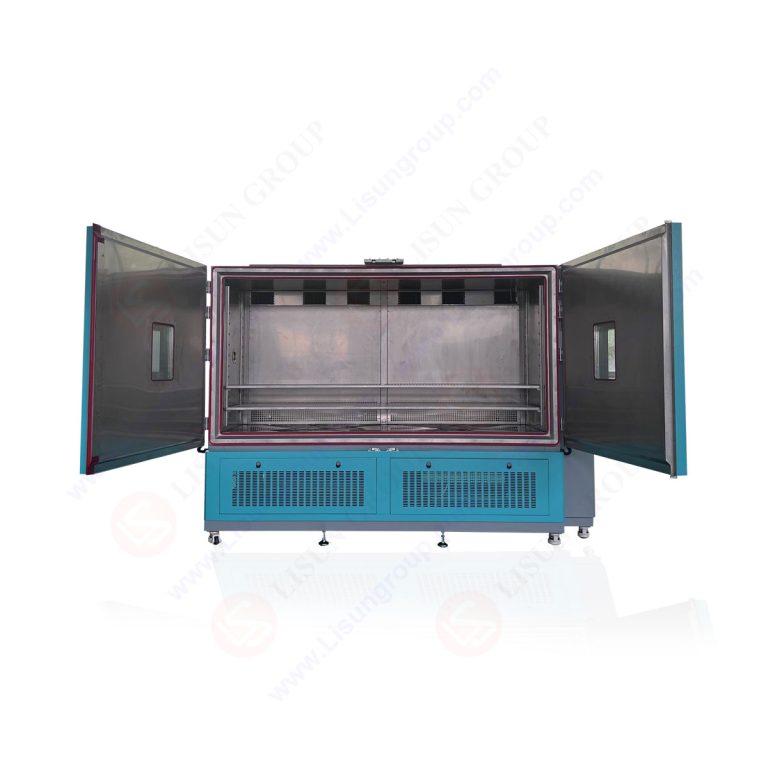
IEC 60068 is a foundational standard suite for environmental testing, dictating how products withstand temperature, humidity, and vibration. In the context of LISUN LED Power Test, compliance with IEC 60068 ensures that the aging chambers provide controlled, repeatable thermal environments. The LEDLM-80PL supports up to 3 connected temperature chambers, allowing simultaneous testing at different temperature points (e.g., 55°C, 85°C, and a control ambient). This facilitates compliance with IEC 60068-2-1 (cold) and IEC 60068-2-2 (dry heat) protocols. By precisely controlling these environments, LISUN systems isolate the variable of thermal stress from lumen maintenance data, ensuring that the Power Test results are attributable solely to the LED’s intrinsic degradation mechanisms.
2.1 LEDLM-80PL: Designed for LM-80 and TM-21 Methodologies
The LEDLM-80PL is engineered specifically for the rigorous requirements of IES LM-80-08 and the subsequent TM-21-11 extrapolation. It operates in two distinct modes: a long-term 6000-hour test mode and a switching test mode for evaluating power cycling effects. The hardware supports customizable configurations, including various integrating sphere sizes (e.g., 0.3m, 0.5m, 1.0m) and an optional array spectrometer. The “Power Test” function in this variant is meticulously calibrated to measure electrical power consumption alongside luminous flux, allowing engineers to calculate the efficacy (lm/W) degradation curve concurrently. Its internal data acquisition system logs data at user-defined intervals, which is critical for capturing the non-linear early mortality phase of LED decay.
2.2 LEDLM-84PL: Facilitating LM-84 and TM-28 Protocols
For labs focusing on more recent standards, the LEDLM-84PL aligns with IES LM-84 and TM-28, which allow for testing of LED packages, arrays, and modules under various current and temperature conditions. Unlike the LM-80PL, the 84PL variant emphasizes “in-situ” measurement capabilities, often incorporating mirror-based optical paths to measure light output without removing the sample from the thermal chamber. This is a critical distinction in the LISUN LED Power Test spectrum, as it eliminates the variability introduced by handling and re-fixturing. Furthermore, the 84PL software inherently supports the Arrhenius Model more dynamically, allowing for accelerated testing at higher temperatures and extrapolating the Mean Time Between Failures (MTBF) specific to the thermal stress applied.
3.1 Integrating Sphere and Spectroradiometer Integration
The accuracy of any LISUN LED Power Test hinges on the optical measurement chain. The instruments utilize high-reflectance barium sulfate (BaSO4) coated integrating spheres, conforming to CIE 127 and CIE 84 standards for total flux measurement. The sphere is coupled with a high-speed array spectrometer, featuring a CCD detector that captures the full visible spectrum (380nm-780nm) instantaneously. This allows for the simultaneous calculation of CCT (Correlated Color Temperature), CRI (Color Rendering Index), and chromaticity coordinates (u’, v’). The Power Test precision is enhanced by the system’s temperature compensation within the spectrometer, ensuring minimal wavelength drift during long-duration aging tests.
Table 1: Comparative Specification Analysis of LISUN Aging Systems
| Feature / Metric | LEDLM-80PL (LM-80/TM-21) | LEDLM-84PL (LM-84/TM-28) |
|---|---|---|
| Primary Standards | IES LM-80, TM-21 | IES LM-84, TM-28 |
| Max Connected Chambers | 3 Temperature Chambers | 2 Temperature Chambers (Upgradeable) |
| Total Flux Measurement | Integrating Sphere (0.3m – 2.0m options) | Integrating Sphere with In-Situ Mount |
| Spectral Range | 380nm – 780nm | 380nm – 780nm |
| Test Duration | 6000 Hours (Standard) | 6000 Hours (Standard) |
| Key Output Metrics | Lumen Depreciation, CCT Shift, L70/L50 | Lumen Depreciation, Efficacy Degradation, L70/L50 |
| Software Extrapolation | TM-21 Linear/Exponential Curves | TM-28 + Arrhenius Model (Multi-point) |
3.2 Electrical Power Measurement Accuracy
Beyond optical data, the LISUN LED Power Test integrates a precision power meter to measure U (Voltage), I (Current), and P (Power) against time. This is essential for detecting changes in the LED’s electrical behavior that often precede catastrophic optical failure. The system uses a 4-wire (Kelvin) connection method to eliminate lead resistance errors, ensuring accuracy of ±0.1% for power measurements. This specific focus on “LED Power Test” allows engineers to correlate the shift in electrical characteristics (e.g., rise in forward current under constant voltage) with lumen depreciation. The instrumentation passes through the chamber via standard BNC and high-voltage connectors, maintaining IEC 60068 stability while ensuring data integrity.
4.1 Implementing the Arrhenius Model in LISUN Software
The software suite included with the LISUN LED Power Test instruments is a cornerstone of its value proposition. It utilizes the Arrhenius Model to calculate the acceleration factor between test temperatures and the actual operating temperature of the LED in its intended environment. This model is crucial for reliability prediction; however, the LISUN implementation augments the basic equation with specific activation energies derived from LED package materials (e.g., phosphor and silicone browning). By inputting the thermal resistance (Rth) of the system, the software extrapolates the L70 (time to 70% lumen maintenance) lifespan far beyond the empirical 6000-hour test window, providing predictions for up to 100,000 hours with specific confidence intervals.
4.2 TM-21 and TM-28 Data Extrapolation Techniques
Following the data collection phase, the software applies statistical algorithms mandated by TM-21 and TM-28. The exponential decay function is fitted to the collected data points post-early mortality, determining the decay rate constant. For the LEDLM-80PL, the system auto-selects the appropriate fitting method (linear regression vs. exponential) based on the data trajectory. Meanwhile, the LEDLM-84PL leverages TM-28’s more flexible approach for lamp assemblies, incorporating driver losses and external optical losses into the lifetime calculation. This combined analysis, standardized by LISUN’s reporting module, generates detailed PDF reports that include the raw data file, the fitted curve graph, and the projected L70/L50 metrics, fully compliant with the documentation standards of IES.
5.1 Constant Current vs. Constant Voltage Testing
The LISUN LED Power Test equipment supports both Constant Current (CC) and Constant Voltage (CV) operational modes, simulating different qualification requirements. In CC mode, which is most common for LED packages, the current is regulated at levels such as 350mA or 700mA, and the voltage drop is monitored. Conversely, CV mode (e.g., 12V or 24V) is critical for testing modules designed for flexible strips or signage. The instrument’s power supply has a fast transient response (µs range), ensuring that switching modes (according to IEC 60068-2-33) do not create destructive voltage spikes. This dual-mode flexibility ensures that the “Power Test” is applicable regardless of the DUT (Device Under Test) topology.
5.2 Customizable Hardware Configurations for Diverse DUTs
Understanding that testing needs vary, LISUN provides modular hardware. Customers can configure the system with different types of temperature chambers: forced convection ovens integral to the frame, or large walk-in chambers for high-power luminaires. Furthermore, the optical interface can be adapted—allowing either a direct mount integrator or a fiber-optic probe insert—to facilitate “in-situ” measurements. For the LEDLM-84PL specifically, the mirror-based light path allows for the test head to remain cool, improving the accuracy of the optical signal measured in the LISUN LED Power Test by preventing thermal degradation of the optical sensors. This customization eliminates the need for multiple, separate test rigs.
6.1 Synchronizing with IES LM-79-19 for Production Verification
While the aging test focuses on long-term reliability, its input data often cross-references IES LM-79-19, which dictates the measurement of electrical and photometric characteristics of solid-state lighting products. The LISUN system’s measurement components, notably the integrating sphere and the software’s data handling, are calibrated to be traceable to LM-79-19 standards. This dual functionality allows QC laboratories to use the same system for initial photometric verification (at 0 hours) and subsequent aging checks, providing a seamless bridge between compliance testing and reliability research. This integration ensures documentation of ambient temperature control at 25°C ± 1°C, as mandated by LM-79.
6.2 Ensuring Repeatability with CIE 084 and CIE 070
LISUN integrates the technical guidance of CIE 084 (Measurement of Luminous Flux) and CIE 070 (Absolute Intensity Distribution) into their software algorithms. The CIE 084 standard addresses the auxiliary lamp method for compensation of the sphere absorption effect, which is automatically applied by the LISUN software during each measurement interval. This meticulous attention to photometric correction ensures the precision of the LISUN LED Power Test is not compromised by the aging of the sphere coating itself. By embedding the spectral mismatch correction factors from the CIE standard, the instrument delivers highly reproducible data points across multiple test runs, critical for statistical confidence in the predicted lifetime. This ensures high accuracy and repeatability.
7.1 Maximizing Throughput with Multi-Chamber Support
Time is a crucial factor in reliability testing. The LISUN LED Power Test system mitigates the constraint of the 6000-hour test cycle by allowing up to 3 chambers to be connected to a single computer and software instance. This parallelization enables testing at multiple temperatures (e.g., 45°C, 75°C, and 100°C) simultaneously, generating a full matrix of data points as required by LM-80. The software supports sequential polling of chambers, ensuring real-time data display without cross-interference. This operational efficiency reduces the effective project timeline by 60-70% compared to sequential testing, allowing R&D teams to move to product release faster.
7.2 User-Friendly Interface and Automated Reporting
The software utilized for the LISUN LED Power Test is intuitive, displaying parameters in six-channel chart curves—Temperature, Current, Voltage, Power, Luminous Flux, and CCT. The system allows operators to set alarms for anomalies, such as the failure of a cooling fan in the chamber, which would compromise the test’s validity. Upon completion of the 6000-hour test, the system automatically generates the data dump in Excel or .CSV format, and synthesizes the final report.
The LISUN LED Power Test, facilitated by the LEDLM-80PL and LEDLM-84PL, represents a state-of-the-art solution for precision measurement and reliability prediction in the LED industry. By precisely correlating electrical power consumption with photometric degradation under IEC 60068-guided thermal stress, this system empowers engineers to derive accurate L70/L50 metrics through TM-21/TM-28 extrapolation. The integration of the Arrhenius Model and the support for multiple temperature chambers ensures that power testing is faster, more comprehensive, and standardized. Adherence to standards like IES LM-79-19 for characterization and CIE 127 for measurement geometry ensures the data generated is globally compliant. For manufacturers demanding robust data for lifetime warranties, LISUN provides a sophisticated testing ecosystem that validates performance and drives greater innovation in lighting design.
Q1: Why is the LISUN LED Power Test specific to IEC 60068 compliance, and how does it differ from standard electrical testing?
A: The LISUN LED Power Test integrates electrical measurement with environmental stress testing. While standard power tests measure Voltage, Current, and Wattage in a static atmosphere, LISUN’s systems conduct these evaluations inside compliance-grade thermal chambers. They are manufactured to fulfill IEC 60068 environmental test conditions (e.g., steady-state temperature and humidity). This means the instrument logs the power metrics while the LED is subjected to accelerated aging temperatures. This procedure is critical because LED’s electrical characteristics (like forward voltage) shift with junction temperature. By leveraging the LISUN hardware, you can isolate how thermal aging affects electrical consumption and driver efficiency, ensuring the LED will function correctly in extreme environmental settings defined by IEC standards.
Q2: How does the switching test mode on the LEDLM-80PL affect the L70 lifetime projection?
A: The switching test mode subjects the LED to a predefined power cycle sequence (e.g., 2 minutes ON, 2 minutes OFF) for a specific number of cycles, per IEC 60068 recommendations. This test inflicts thermo-mechanical stress, particularly on the solder joints and wire bonds, due to Coefficient of Thermal Expansion (CTE) mismatch. Although the luminous decay due to switching is often similar, the electrical degradation (drift in consumption) is magnified—often resulting in faster catastrophic failure of the driver. By analyzing the power consumption data from switching cycles in conjunction with TM-21 algorithms, LISUN software often flags a more conservative L70 estimate. This project is vital for automotive applications where the lifespan is determined by ruggedness, not just light output.
Q3: Can the LISUN LEDLM-84PL measure in-situ power consumption without breaking the thermal boundary?
A: Absolutely. The LEDLM-84PL is specifically designed to bridge the challenge of in-situ measurement via feed-through connections. The instrument has specialized hermetically sealed ports for high-current cabling. The power meter is located externally, but it uses an external shunt configuration to measure the current flowing into the chamber precisely. This setup allows for continuous data logging of “LED Power Test” metrics—Voltage, Current, Wattage—in real-time. This capability is indispensable when using the Arrhenius Model, as the junction temperature can only be accurately calculated if the specific electrical input power is known at the exact moment of photometric measurement. The LISUN system ensures you never have to open the chamber door, thereby maintaining thermal stability crucial for test repeatability.
Q4: How does the system manage the heat dissipation inside the chamber during the LED Power Test to ensure accurate thermal metrics?
A: In reliability testing, the temperature inside the chamber represents the ambient temperature, not the case or junction temperature. LISUN’s standard configuration utilizes a “hovering” or forced air circulation system (typically using industrial PTC heaters) to maintain the chamber temperature setpoint within ±1°C. However, to ensure the LED’s heat is not creating a localized microclimate, the LISUN system supports combining the aging unit with a “cold plate” fixture. This allows the LED package to be mounted at a controlled case temperature (Tcase). This is the critical factor in LM-80 testing, which mandates reporting specific tcase points. This premium configuration isolates the LED’s self-heating from the chamber ambient, guaranteeing the calculated junction temperature is mathematically precise.
Q5: What is the advantage of using the Arrhenius Model software in LISUN’s system over basic external spreadsheet calculations?
A: Basic spreadsheet modeling often utilizes simplistic activation energy assumptions. The LISUN software integrates data logging with mathematical modeling to minimize errors. The software specifically calculates the acceleration factor by allowing you to input the specific thermal resistance (Rth j-c) of your assembly, rather than just using the ambient temperature. The graphical interface plots parameter shifts (e.g., in electrical power) against the temperature function continuously. It utilizes methods of least squares and non-linear estimation to determine degradation constants. This eliminates human error introduced by manual data point selection (skewing the TM-21 projection) and automatically calculates the confidence bounds (90% confidence limit) required for a statistically valid lifetime claim.