Abstract
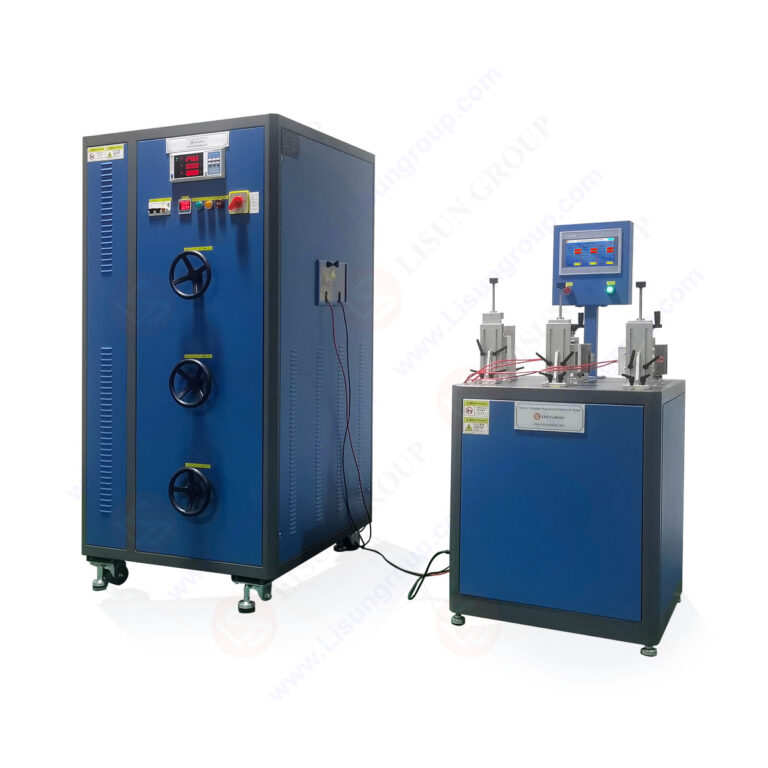
The LISUN plug socket breaking capacity testing system provides a comprehensive solution for evaluating the electrical durability and mechanical endurance of plugs, sockets, switches, and couplers according to international safety standards. This article examines the CZKS-3 series breaking capacity test equipment, including the CZKS-3, CZKS-3P, CZKS-3S, and CZKS-3A variants, which are designed to perform breaking capacity and normal operation tests on electrical accessories. The core focus is on IEC 60884-1 and IEC 60669-1 compliance verification, with detailed analysis of test parameters, actuation mechanisms, and data acquisition capabilities. The CZKS-3 series employs PLC-controlled pneumatic actuation systems that simulate real-world electrical fatigue conditions. This guide serves electrical testing engineers, quality control professionals, and manufacturers seeking to validate product safety through rigorous breaking capacity testing protocols that meet global regulatory requirements.
1.1 Fundamental Concepts of Breaking Capacity Testing
Breaking capacity testing evaluates an electrical accessory’s ability to safely interrupt electrical current under specified load conditions without sustaining damage or creating safety hazards such as arcing, welding, or insulation breakdown. For plugs, sockets, and switches, this test simulates repeated insertion, withdrawal, and switching operations under rated voltage and current conditions. The LISUN CZKS-3 series breaking capacity testing equipment applies controlled electrical loads while monitoring contact resistance, temperature rise, and mechanical wear across thousands of operational cycles. IEC 60884-1 clause 20 specifies the breaking capacity test requirements for plugs and socket-outlets, mandating specific numbers of operations, current levels, and power factor conditions that the CZKS-3 series is engineered to meet.
1.2 Test Parameters and Measurement Thresholds
The breaking capacity test parameters for plug and socket accessories include rated voltage up to 440V AC, rated current from 10A to 32A depending on the product category, and power factor values between 0.6 and 0.8 for inductive loads. The CZKS-3 series accommodates these parameters with programmable load settings that ensure consistent test conditions across all samples. The test sequence involves a specified number of make-and-break operations, typically ranging from 50 to 100 cycles for breaking capacity verification and up to 10,000 cycles for normal operation tests as referenced in IEC 60884-1 clause 21. Temperature monitoring during breaking capacity testing is critical, with maximum permissible temperature rises defined in IEC 60884-1 Table 101 for various contact materials and housing types.
2.1 Mechanical Actuation System Design
The LISUN CZKS-3 series breaking capacity testing equipment utilizes a cylinder-driven actuation mechanism controlled by a programmable logic controller (PLC) for precise timing and force application. The CZKS-3 variant supports single-pole testing configurations, while the CZKS-3P model extends functionality for three-pole testing scenarios common in industrial socket applications. The CZKS-3S variant incorporates enhanced stroke control for switch durability testing with adjustable travel distances ranging from 5mm to 50mm. The actuation system achieves insertion and withdrawal speeds that comply with IEC 60884-1 clause 20 requirements, with rates adjustable between 0.5 and 2.0 cycles per second depending on the test protocol being executed.
2.2 Electrical Load Management and Monitoring
The CZKS-3 series breaking capacity testing system integrates a resistive-inductive load bank that replicates real-world electrical conditions for household and industrial applications. The CZKS-3A variant includes an active power monitoring module that measures real-time voltage, current, and power factor during each operational cycle. The load management system supports automatic switching between capacitive, inductive, and resistive load configurations as specified in IEC 60669-1 clause 17 for switch testing standards. The CZKS-3 series incorporates overcurrent protection and fault detection circuits that automatically halt the test sequence if predefined safety thresholds are exceeded, ensuring both equipment protection and data integrity.
2.3 Technical Specifications Comparison
| Parameter | CZKS-3 | CZKS-3P | CZKS-3S | CZKS-3A |
|---|---|---|---|---|
| Rated Test Voltage | Up to 250V AC | Up to 440V AC | Up to 250V AC | Up to 440V AC |
| Rated Test Current | 10-16A | 16-32A | 10-20A | 10-32A |
| Number of Test Stations | 2 | 3 | 4 | 2-4 |
| Power Factor Range | 0.6-1.0 | 0.6-1.0 | 0.6-1.0 | 0.5-1.0 |
| Max Cycle Count | 100,000 | 100,000 | 200,000 | 500,000 |
| Actuation Speed | 0.5-1.5 cycles/sec | 0.5-1.5 cycles/sec | 0.5-2.0 cycles/sec | 0.5-2.0 cycles/sec |
| Temperature Monitoring | Optional | Optional | Standard | Standard |
3.1 IEC 60884-1 Compliance for Plugs and Socket-Outlets
IEC 60884-1 establishes the general requirements for plugs and socket-outlets for household and similar purposes, with clause 20 specifically addressing breaking capacity testing. The standard mandates that sockets must withstand 50 cycles of making and breaking at rated current with a power factor of 0.6 ± 0.05 for inductive loads. The CZKS-3 series breaking capacity testing equipment automatically calculates and maintains the required power factor through dynamic load adjustment throughout the test sequence. Clause 21 of IEC 60884-1 specifies the normal operation test requiring 10,000 operations for socket-outlets without earthing contacts and 20,000 operations for those with earthing contacts. The CZKS-3A variant includes extended cycle counting capabilities that exceed these requirements, supporting up to 500,000 operations for long-term durability assessment.
3.2 IEC 60669-1 and IEC 61058-1 Switch Testing Standards
IEC 60669-1 covers switches for household and similar fixed-electrical installations, with clause 17 defining the breaking capacity test protocol. The standard requires switches to demonstrate safe interruption of current under inductive load conditions for a minimum of 200 operations at rated voltage. The CZKS-3S variant specifically addresses switch durability testing with programmable dwell times and actuation profiles that simulate manual switching actions. IEC 61058-1 applies to switches for appliances and includes additional requirements for electronic switches and power factor correction circuits. The CZKS-3 series accommodates these standards through adjustable test sequences that can be configured for different switch types, including rocker switches, push-button switches, and rotary switches commonly used in household appliances.
3.3 Additional Standards and Regional Variations
The CZKS-3 series breaking capacity testing system supports compliance verification for GB/T 2099.1, the Chinese national standard equivalent to IEC 60884-1, which includes additional requirements for plug geometry verification and force measurement. EN 50075 and UL 498 standards for European and North American markets respectively are accommodated through interchangeable test fixtures and adjustable parameter ranges. The CZKS-3P variant includes three-pole testing capabilities that address industrial applications requiring compliance with IEC 60309 for industrial plugs and socket-outlets. The breaking capacity testing protocols for automotive electrical components are supported through custom test sequences that reference ISO 6722 and SAE J928 standards for vehicle electrical cable and connector testing.
4.1 Household Plug and Socket Breaking Capacity Testing
Household plugs and socket-outlets undergo breaking capacity testing to verify their ability to safely interrupt the rated current under both normal and fault conditions. The LISUN CZKS-3 breaking capacity testing system applies the specified test sequence from IEC 60884-1 clause 20, typically involving 50 make-and-break operations at rated current with the prescribed power factor. Each test sample is evaluated for mechanical integrity, insulation resistance, and dielectric strength before and after the test sequence. The CZKS-3 series excels in this application by providing real-time contact resistance monitoring that identifies potential welding or adhesion issues during the breaking operation. Temperature sensors integrated into the test fixtures measure contact temperature rise, ensuring compliance with the 45°C maximum temperature rise requirement for brass contacts specified in IEC 60884-1 Table 101.
4.2 Switch Durability Testing for Lighting and Appliance Controls
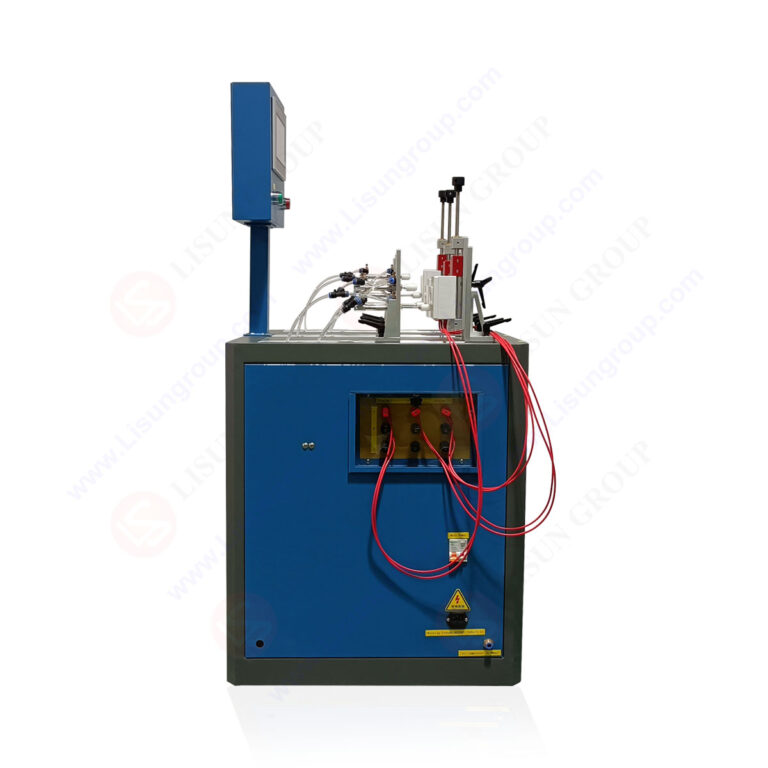
Switch durability testing requires thousands of operational cycles to validate mechanical and electrical endurance under load conditions. The CZKS-3S variant is specifically configured for switch testing applications, featuring adjustable actuation angles and forces that simulate manual operation patterns. Testing protocols for lighting switches typically require 10,000 operations at rated current with a tungsten filament load representing the inrush current characteristics of incandescent lamps. The CZKS-3 series breaking capacity testing equipment generates the high inrush current waveform required by IEC 60669-1 clause 19 for tungsten filament load testing, with peak currents reaching 10-15 times the rated current during the first half-cycle. Appliance control switches are tested using the CZKS-3A variant with active power measurement, which records voltage drop across contacts during steady-state current flow to assess contact resistance stability throughout the test sequence.
4.3 Automotive and Industrial Electrical Component Testing
Automotive electrical connectors and switches require breaking capacity testing under DC load conditions with specific time constants representing real electrical system characteristics. The CZKS-3 series breaking capacity testing system accommodates DC testing with programmable current waveforms and interruption sequences that simulate vehicle electrical system faults. Industrial socket-outlets and plugs conforming to IEC 60309 are tested using the CZKS-3P three-pole variant, which simultaneously tests all phases for balanced load distribution verification. The breaking capacity testing protocols for industrial applications include additional environmental conditioning requirements, such as exposure to dust, moisture, and temperature extremes, which the CZKS-3 series supports through integration with environmental chambers. DC breaking capacity testing at 48V and 72V for automotive auxiliary power outlets is a growing application, with the CZKS-3A variant providing the precision current control required for evaluating DC arc extinction performance.
5.1 Real-Time Monitoring and Data Logging
The CZKS-3 series breaking capacity testing system incorporates a comprehensive data acquisition module that records voltage, current, power factor, and contact resistance at each operation cycle. The system samples electrical parameters at 1 kHz to capture transient events during make and break operations, including arc voltage waveforms and current zero-crossing behavior. The CZKS-3A variant includes a high-speed data acquisition card that records waveform data at 10 kHz for detailed analysis of arc duration and energy dissipation during breaking events. All test data is logged to a secure database with timestamp and operator identification, ensuring traceability for quality management systems and certification audits. The data logging system supports automatic generation of test reports that include statistical analysis of contact resistance trends, failure mode identification, and pass/fail determination based on predefined acceptance criteria from IEC 60884-1 clause 20 and 21.
5.2 Performance Analysis and Trend Visualization
The CZKS-3 series breaking capacity testing software provides graphical visualization of test results, including contact resistance versus cycle count plots, temperature rise curves, and voltage drop trends. These visualizations enable engineers to identify early warning signs of contact degradation, such as increasing contact resistance or erratic power factor values that may indicate surface contamination or mechanical wear. The system automatically detects and flags abnormal events, including contact welding failures where the plug fails to release from the socket, arcing durations exceeding standard limits, or insulation breakdown indicated by current flow during the open circuit state. The LISUN CZKS-3 series includes Weibull analysis tools for predicting failure probability distributions based on early test data, allowing manufacturers to estimate product lifetime under different load conditions and usage patterns.
6.1 Interchangeable Fixture Systems for Different Product Types
The CZKS-3 series breaking capacity testing equipment features interchangeable test fixtures that accommodate various plug types, socket configurations, and switch form factors. Standard fixtures are available for European Schuko plugs, British BS 1363 plugs, and universal socket configurations that support multiple international plug types. Each fixture incorporates alignment guides and clamping mechanisms that ensure consistent sample positioning and insertion angles across all test cycles. The CZKS-3P variant includes a rotating fixture system for three-phase industrial plugs and sockets, allowing simultaneous testing of all poles with independent load control per phase. Fixture changeover time is minimized through quick-release mechanisms and tool-less adjustment features, enabling testing laboratories to process multiple product variants efficiently during breaking capacity testing sessions.
6.2 Sample Preparation and Pre-Conditioning Requirements
Proper sample preparation is essential for reproducible breaking capacity testing results. The CZKS-3 series testing protocol requires that all samples be cleaned with isopropyl alcohol to remove manufacturing residues, then conditioned at standard environmental conditions of 23°C ± 2°C and 50% ± 5% relative humidity for a minimum of 24 hours before testing. Pre-test measurements include insulation resistance testing at 500V DC, dielectric strength testing at 2000V AC for 1 minute, and contact resistance measurement using a 4-wire Kelvin bridge method. The LISUN CZKS-3 series breaking capacity testing system integrates these pre-test procedures into the automated test sequence, eliminating manual measurements and reducing operator error. Sample identification is maintained through barcode scanning and database linking, ensuring that all test results are traceable to specific production batches or design iterations.
7.1 Common Failure Modes and Diagnostic Approaches
Breaking capacity testing frequently reveals specific failure modes in plugs, sockets, and switches that require systematic diagnosis. Contact welding occurs when the high temperature generated during arc extinction causes localized melting and fusion of contact surfaces, resulting in the plug failing to separate from the socket. The CZKS-3 series breaking capacity testing system automatically detects this condition through force monitoring sensors that measure withdrawal force exceeding the normal range. Plastic deformation of housing components occurs when heat from sustained arc activity causes thermoplastic materials to soften and flow, compromising dimensional integrity and dielectric performance. The system monitors temperature at multiple fixture points and triggers alarms when housing temperature exceeds the material’s heat deflection temperature. Arc tracking damage on insulating surfaces is identified through periodic insulation resistance measurements between phases and between live parts and earth.
7.2 Calibration Standards and Maintenance Schedule
The CZKS-3 series breaking capacity testing equipment requires regular calibration to maintain measurement accuracy and compliance with ISO 17025 laboratory standards. Voltage and current measurement circuits are calibrated using traceable reference standards with an accuracy of ±0.5% of reading, verified annually or after every 5000 test cycles. Force measurement sensors used for insertion and withdrawal force testing are calibrated using certified weight sets with an accuracy of ±0.1% of applied load. The LISUN CZKS-3 series includes auto-calibration routines that verify electrical measurement accuracy against internal reference standards before each test sequence. The cylinder-driven actuation system requires quarterly lubrication and seal inspection to maintain consistent actuation speed and force output. Replacement of pneumatic cylinder seals is recommended after 50,000 operational cycles to prevent air leakage that could affect test repeatability.
The LISUN CZKS-3 series breaking capacity testing equipment represents a comprehensive solution for manufacturers and testing laboratories seeking to validate plug, socket, and switch compliance with IEC 60884-1, IEC 60669-1, and IEC 61058-1 standards. The CZKS-3, CZKS-3P, CZKS-3S, and CZKS-3A variants provide scalable testing capabilities that address single-pole household applications through three-phase industrial testing requirements. The PLC-controlled pneumatic actuation system ensures precise and repeatable test conditions across thousands of operational cycles, while the integrated data acquisition module delivers high-resolution monitoring of voltage, current, and contact resistance parameters. The breaking capacity testing protocols embedded in the CZKS-3 series automate compliance verification, reducing testing time while improving data reliability through consistent application of standard parameters. The system’s interchangeable fixture design supports rapid configuration changes for different product types and international standards, making it suitable for laboratories serving global markets. By combining mechanical durability testing with electrical performance monitoring, the CZKS-3 series enables engineers to identify failure mechanisms and optimize product designs for enhanced safety and reliability. The comprehensive reporting and analysis capabilities support certification documentation and quality improvement initiatives, reinforcing the value of the CZKS-3 series as a critical tool in electrical safety compliance programs.
Q1: What is the difference between breaking capacity testing and normal operation testing for plugs and sockets according to IEC 60884-1?
A: Breaking capacity testing, defined in IEC 60884-1 clause 20, evaluates the ability of a plug or socket-outlet to safely interrupt the rated current under specified load conditions with a power factor of 0.6 ± 0.05 for inductive loads. This test typically involves 50 make-and-break operations and focuses on arc extinction capability, contact welding prevention, and insulation integrity under fault-like conditions. Normal operation testing, specified in clause 21, assesses mechanical and electrical endurance over 10,000 to 20,000 cycles at rated current with a unity power factor load. The normal operation test emphasizes mechanical wear resistance, contact material durability, and long-term electrical performance stability. The LISUN CZKS-3 series breaking capacity testing system can perform both test types with programmable parameter sets, using the CZKS-3A variant’s extended cycle counting capability for normal operation tests requiring up to 500,000 cycles.
Q2: How does the CZKS-3 series ensure accurate power factor control during breaking capacity testing?
A: The CZKS-3 series breaking capacity testing equipment maintains accurate power factor control through a closed-loop feedback system that continuously monitors the phase angle between voltage and current waveforms during each operational cycle. The programmable load bank consists of precision resistors and iron-core inductors that are switched in combinations to achieve the target power factor within ±0.02 tolerance as specified in IEC 60884-1. The PLC controller calculates the required inductance value based on the test voltage and current settings, then selects the appropriate inductor tap using solid-state relays. The CZKS-3A variant includes real-time power factor verification using digital signal processing algorithms that compute power factor from sampled voltage and current data at 10 kHz. This system automatically adjusts load parameters if power factor drift is detected due to load bank temperature changes, ensuring consistent test conditions throughout the entire breaking capacity testing sequence.
Q3: Can the CZKS-3 series be used for testing automotive electrical components such as 12V and 48V connectors?
A: The CZKS-3 series breaking capacity testing system can be configured for automotive electrical component testing through specialized DC load modules that support 12V, 24V, 48V, and 72V systems. Automotive connector testing requires different current waveforms and interruption profiles compared to AC household applications, including specific time constants representing inductive loads from motors and solenoids. The CZKS-3 series accommodates these requirements through programmable load profiles that define current rise times, steady-state durations, and decay characteristics. The CZKS-3S variant includes low-voltage DC testing capabilities with current ratings up to 50A for high-power automotive connectors. Breaking capacity testing for automotive applications also requires monitoring of DC arc extinction behavior, which the system captures through high-speed voltage and current waveform recording. The test fixtures can be customized with specific connector geometries and locking mechanisms common in automotive electrical systems.
Q4: What are the recommended maintenance intervals for the CZKS-3 series to ensure consistent test results?
A: The CZKS-3 series breaking capacity testing equipment requires a structured maintenance schedule to maintain measurement accuracy and mechanical reliability. Daily maintenance includes visual inspection of pneumatic connections, verification of zero-voltage switching circuits, and cleaning of contact surfaces on test fixtures. Weekly maintenance involves checking pneumatic cylinder seals for leakage, lubricating linear guides with light machine oil, and verifying PLC program integrity through system self-diagnostics. Monthly calibration verification compares the system’s voltage and current measurements against external reference standards with ±0.2% accuracy. Annual calibration by ISO 17025 accredited laboratories is required for all measurement channels including voltage, current, power factor, and force sensors. The cylinder-driven actuation system should undergo seal replacement after 50,000 cycles to prevent speed variation. The LISUN CZKS-3 series includes maintenance reminder functions that track cumulative operational cycles and elapsed time since last calibration, notifying operators when scheduled servicing is due.
Q5: How does the CZKS-3 series handle different international plug and socket standards during testing?
A: The CZKS-3 series breaking capacity testing system utilizes interchangeable test fixture plates designed for specific plug and socket standards including European CEE 7/7, British BS 1363, Australian AS/NZS 3112, and Chinese GB 1002 configurations. Each fixture plate incorporates alignment features that ensure proper insertion angle and depth according to the relevant standard’s dimensional requirements. The system’s PLC controller stores parameter sets for each standard, including test voltage, current, power factor, and number of cycles as specified in the corresponding national adaptation of IEC 60884-1. The CZKS-3P variant includes a multi-standard fixture carriage that can be rotated between test positions for sequential testing of different plug types without manual fixture changeover. Force measurement sensors are calibrated for each fixture configuration to account for mass differences, ensuring accurate insertion and withdrawal force data. The breaking capacity testing software allows operators to select the applicable standard from a dropdown menu, automatically configuring all test parameters and pass/fail criteria according to that standard’s requirements.