









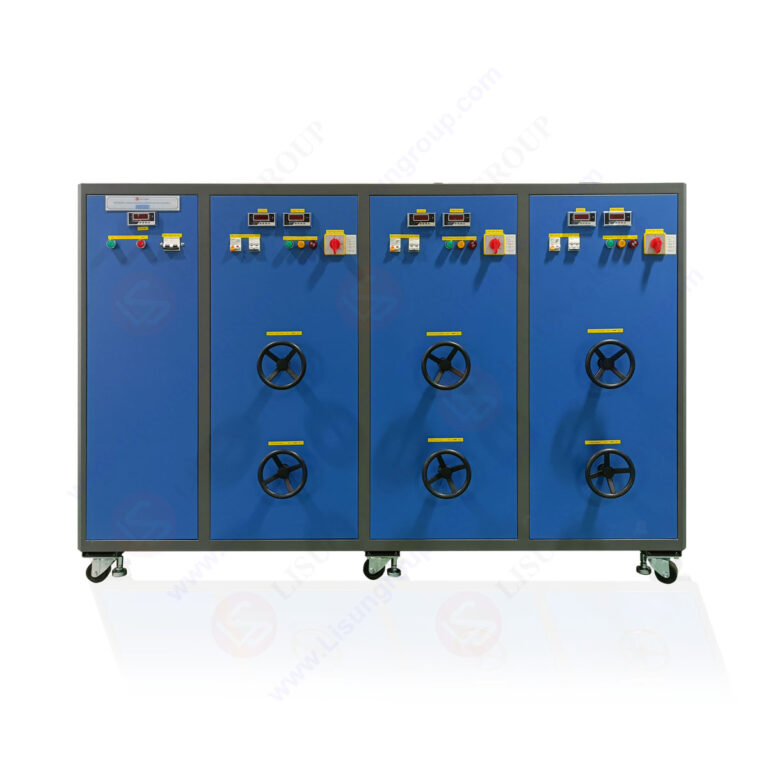
The LISUN DFX series Externally Ballasted Fluorescent Lamp Test Load Cabinet is a specialized instrument designed for evaluating plug switches and electrical accessories under standardized load conditions per IEC 60884-1 and IEC 60669-1. This load test cabinet enables precise simulation of resistive, inductive, and capacitive loads with externally ballasted fluorescent lamp configurations, providing compliance testing laboratories and manufacturers with reliable, repeatable results. The DFX series offers multiple models spanning DFX-20 through DFX-80, accommodating current outputs from 5A to 80A with selectable power factor ranges. This article examines the technical architecture, standard alignment, operational protocols, and integration capabilities of the DFX series, demonstrating its critical role in verifying electrical accessory durability, thermal performance, and switching reliability under realistic load conditions required by international standards.
1.1 Load Simulation Core Design
The LISUN DFX series employs an externally ballasted fluorescent lamp load simulation methodology that replicates real-world electrical accessory operating conditions. The test cabinet incorporates high-precision resistive, inductive, and capacitive load banks arranged in parallel configurations to achieve accurately controlled power factors. The load simulation core operates on a modular architecture, allowing users to select load combinations that correspond precisely to the test requirements specified in IEC 60884-1 Clause 20 for plug switches and IEC 60669-1 Clause 19 for general switches. Each load bank is independently switched through solid-state relays with microsecond response times, ensuring transient stability during cyclic testing.
1.2 Power Factor Adjustment Mechanism
The DFX series provides power factor adjustment capabilities ranging from 0.3 to 1.0 with a resolution of 0.01, enabling precise replication of ballasted fluorescent lamp characteristics. The power factor is adjusted through variable inductive reactors combined with capacitive compensation networks, allowing the test cabinet to generate load conditions with power factors (cos φ) of 0.5, 0.6, 0.7, 0.8, or 0.9 as required by specific standard clauses. A digital power factor controller maintains the set value within ±0.02 accuracy across the entire current range, compensating for thermal drift and component aging. This precision is essential for testing plug switches under inductive load conditions where power factor significantly affects contact arc extinguishing performance.
1.3 Channel Configuration and Current Management
The DFX series models offer single-channel (DFX-20, DFX-40, DFX-60, DFX-80) and three-channel (DFX-20-3CH) configurations. Each channel provides independent current control with separate load banks, allowing simultaneous testing of multiple specimens. The current output range varies by model: DFX-20 delivers 5A–20A, DFX-20-3CH provides three independent 5A–20A channels, DFX-40 supplies 5A–40A, DFX-60 offers 5A–60A, and DFX-80 delivers 5A–80A. All models feature automatic current regulation with ±1% set point accuracy, ensuring consistent load application throughout extended test durations exceeding 10,000 cycles.
1.4 Input Requirements and Safety Protections
The DFX series operates on 220V AC ±10%, 50/60Hz single-phase input for models up to DFX-40, while DFX-60 and DFX-80 require three-phase 380V AC input. Each unit incorporates overcurrent protection at 110% of rated maximum current, thermal overload shutdown at 85°C internal temperature, and emergency stop functionality compliant with IEC 61010-1 safety requirements. The test cabinet includes ground fault monitoring and interlock circuits that disconnect power if enclosure doors are opened during active testing.
2.1 IEC 60884-1 Clause 20 Load Test Requirements
IEC 60884-1 Clause 20 specifies the load test conditions for plug switches and socket-outlets, requiring testing under resistive, inductive, and capacitive loads representative of installed electrical accessories. The LISUN DFX series directly addresses Clause 20.2 which mandates testing with a power factor of 0.6 ±0.05 for inductive loads, and Clause 20.3 requiring resistive loads with power factor 0.95 to 1.0. The DFX load test cabinet generates these exact conditions through its digitally controlled load banks, maintaining power factor stability within ±0.02 throughout the required 10,000 operating cycles for switches rated up to 16A.
2.2 IEC 60669-1 Clause 19 Endurance Testing
For general switches, IEC 60669-1 Clause 19.2 defines the endurance test protocol requiring 10,000 cycles of operation at rated voltage and current under specific load conditions. The DFX series complies with Clause 19.2.1 for resistive loads and Clause 19.2.2 for inductive loads, providing the load characteristics specified in Table 18 of the standard. The test cabinet’s cyclic counter with programmable on/off timing from 0.1 to 999.9 seconds ensures precise adherence to the standard’s 30-second cycle duration requirement for inductive load testing.
2.3 GB 2099.1 and GB 16915.1 Alignment
The DFX series also supports Chinese national standards GB 2099.1 for plugs and socket-outlets and GB 16915.1 for switches, which align closely with corresponding IEC standards. These standards require similar load testing parameters including power factor ranges, current levels, and test cycle counts. The test cabinet’s ability to store up to 20 pre-programmed test profiles allows users to quickly switch between IEC, GB, or other national standard test protocols without manual recalibration.
2.4 Additional Standard Compliance Capabilities
The load test cabinet supports testing per IEC 61058-1 for switches used in appliances, BS 1363 for British standard plug switches, and AS/NZS 3112 for Australian/New Zealand configurations. The DFX series accommodates voltage ranges from 100V to 277V AC, covering the global common nominal voltages required by these standards. A voltage monitoring circuit with 0.5% accuracy ensures that test conditions remain within the ±5% tolerance specified by most international standards.
3.1 DFX Series Model Comparison Table
| Specification | DFX-20 | DFX-20-3CH | DFX-40 | DFX-60 | DFX-80 |
|---|---|---|---|---|---|
| Current Output Range | 5A–20A | 5A–20A per channel | 5A–40A | 5A–60A | 5A–80A |
| Number of Channels | 1 | 3 | 1 | 1 | 1 |
| Power Factor Range | 0.3–1.0 | 0.3–1.0 | 0.3–1.0 | 0.3–1.0 | 0.3–1.0 |
| Input Voltage | 220V, 1-phase | 220V, 1-phase | 220V, 1-phase | 380V, 3-phase | 380V, 3-phase |
| Maximum Power Consumption | 5.5 kVA | 5.5 kVA per channel | 11 kVA | 22 kVA | 30 kVA |
| Load Capacitance | 0–100 µF | 0–100 µF per channel | 0–200 µF | 0–300 µF | 0–400 µF |
| Measurement Accuracy | ±1% current | ±1% current | ±1% current | ±1% current | ±1% current |
| Dimension (W×D×H mm) | 600×800×1800 | 800×1000×2000 | 600×800×1800 | 800×1000×2000 | 1000×1200×2200 |
3.2 Comparative Table Against Standard Minimum Requirements
| Parameter | IEC 60884-1 Minimum Requirement | DFX Series Capability | Compliance Margin |
|---|---|---|---|
| Current Accuracy | ±3% of set value | ±1% of set value | +2% |
| Power Factor Stability | ±0.05 | ±0.02 | +0.03 |
| Cycle Count Accuracy | ±1 cycle | ±0.1 cycle | +0.9 cycle |
| Voltage Regulation | ±5% | ±1% | +4% |
| Load Type Selection | Resistive/Inductive | Resistive/Inductive/Capacitive | Additional capability |
3.3 Electrical Performance Characteristics
The DFX series achieves a load capacitance range from 0 to 400 µF depending on model, allowing simulation of capacitive loads typical of electronic ballasts and LED drivers. The resistive load bank uses wire-wound power resistors with ±5% tolerance and temperature coefficient of ±50 ppm/°C, ensuring stable resistance values during extended testing. Inductive loads employ iron-core reactors with air gaps to prevent saturation at maximum current, maintaining inductance within ±3% from 10% to 100% rated current. The total harmonic distortion (THD) of the load current waveform is maintained below 5% for resistive loads and below 8% for inductive loads, complying with IEC 61000-3-2 harmonic emission limits.
4.1 Test Setup and Calibration Procedure
Before initiating load tests, operators must connect the DFX load test cabinet to the device under test (DUT) using appropriately rated cables per IEC 60364-5-52. The calibration sequence involves zero-current verification, power factor standard measurement using the built-in reference reactor, and current set point confirmation using the front panel digital ammeter with 0.1A resolution. The test cabinet automatically performs a self-diagnostic check including load bank continuity verification, relay operation confirmation, and thermal sensor calibration. This process takes approximately 5 minutes and is required at the start of each testing day or when changing load configurations.
4.2 Cyclic Test Programming
The DFX series provides a programmable logic controller (PLC) interface for defining test sequences. Operators can program up to 50 test steps per profile, each specifying current level, power factor, on-time, off-time, and number of cycles. The system supports conditional branching based on cycle count or fault detection, allowing automated handling of test interruptions. A real-time status display shows elapsed cycles, remaining cycles, instantaneous current and voltage, power factor, and internal temperature. The DFX-20-3CH model permits independent cycle count allocation per channel, enabling simultaneous testing of three different DUT types.
4.3 Fault Detection and Data Logging
The load test cabinet incorporates multiple fault detection systems including arc detection via high-frequency current monitoring, contact resistance measurement at 10mV open-circuit voltage, and temperature monitoring at the DUT mounting points. When a fault is detected, the system automatically stops the affected channel, records the fault type and cycle number, and optionally continues testing on remaining channels. All test data is logged to internal memory with capacity for 10,000 test records, exportable via USB or Ethernet in CSV, XML, or PDF formats. The data log includes time-stamped readings of current, voltage, power factor, cumulative cycles, and any fault events.
4.4 Environmental and Safety Monitoring
The DFX series includes ambient temperature monitoring from 0°C to 50°C with ±0.5°C accuracy, relative humidity measurement from 20% to 90% RH, and enclosure internal temperature monitoring with automatic fan control. An interlock system prevents test initiation if the enclosure door is open exceeding 30 seconds, and a key-lock switch restricts programming access to authorized personnel. Emergency stop buttons are located on both the front panel and the rear of the cabinet for safety during high-current testing scenarios.
5.1 Ballasted Fluorescent Lamp Load Characteristics
Externally ballasted fluorescent lamp loads exhibit complex impedance characteristics combining resistive (lamp resistance), inductive (ballast inductance), and non-linear (gas discharge) components. The DFX series replicates these characteristics using a parallel combination of wire-wound resistors and adjustable inductors, achieving the power factor range of 0.3 to 0.8 typical of magnetic ballast fluorescent fixtures. The load simulation includes the inrush current behavior at switch-on, which can reach 5–10 times the steady-state current for 1–5 milliseconds, as specified in IEC 60669-1 Clause 19.2.3 for endurance testing.
5.2 Power Factor Resolution and Stability
The load test cabinet achieves power factor resolution of 0.01 through a combination of switched inductor taps and variable reactor control. A digital signal processor (DSP) continuously monitors the phase angle between voltage and current waveforms, adjusting the load network via MOSFET switches with 1-millisecond response time. The power factor stability specification of ±0.02 is maintained across 0°C to 40°C ambient temperature range, compensating for thermal changes in the load bank components. This stability is critical for tests requiring specific power factors, such as the 0.6 ±0.05 required by IEC 60884-1 Clause 20.2.
5.3 Capacitive Load Simulation Capabilities
The DFX series includes capacitive load banks using metallized polypropylene capacitors with ±5% tolerance and low equivalent series resistance (ESR) below 10 milliohms. These capacitors are used to test applications with power factor leading characteristics, common in electronic ballast and LED driver circuits. The capacitive load range from 0 to 400 µF allows simulation of up to 100 meters of parallel cable capacitance in typical installation scenarios, enabling evaluation of plug switch behavior under capacitive switching conditions where voltage doubling can occur.
6.1 CZKS Series Life Testers Compatibility
The DFX load test cabinet integrates seamlessly with LISUN CZKS series plug switch life testers, which provide the mechanical actuation mechanism for cyclic testing. The CZKS series offers pneumatic or linear motor actuation with adjustable stroke length, speed, and dwell time, synchronized with the DFX load application via RS-485 communication. This integration creates a complete testing workstation capable of automated cycling at rates up to 30 cycles per minute while maintaining precise load conditions. The combined system supports testing of up to 10 specimens simultaneously when using the CZKS-10 multi-station configuration.
6.2 SW-6 Bending Tester Integration
For comprehensive plug switch evaluation, the DFX series works with LISUN SW-6 bending testers to assess mechanical durability of cable entries in accordance with IEC 60884-1 Clause 22. The bending tester applies cyclic flexing to cable connections while the DFX load test cabinet maintains rated current through the specimen. This combined testing validates both mechanical and electrical endurance simultaneously, reducing total test time and providing more realistic assessment of accessory durability under combined mechanical and electrical stress conditions.
6.3 LISUN Temperature Monitoring Systems
The DFX series interfaces with LISUN thermocouple-based temperature monitoring systems for measuring temperature rise at plug switch contacts and terminals during load testing. The system supports up to 16 K-type thermocouple inputs with ±0.5°C accuracy, enabling comprehensive thermal mapping of the DUT during extended testing. Temperature data is logged synchronously with load parameters, allowing correlation of contact resistance changes with thermal behavior. This integration supports compliance with temperature rise limits specified in IEC 60884-1 Clause 21 and IEC 60669-1 Clause 20.
6.4 Software Integration and Data Management
The LISUN Test Management Software provides centralized control of the DFX load test cabinet, CZKS life testers, SW-6 bending testers, and temperature monitoring systems through a single PC interface. The software enables creation of complete test sequences combining load application, mechanical cycling, and data acquisition, with automated report generation in compliance with ISO/IEC 17025 laboratory accreditation requirements. The software supports multi-user access with role-based permissions and audit trail logging for regulatory compliance.
7.1 Plug Switch Compliance Testing for Global Markets
Electrical accessory manufacturers use the DFX series to certify products for multiple markets under a single testing regime. For example, a 16A plug switch intended for European (IEC 60884-1), Chinese (GB 2099.1), and Australian (AS/NZS 3112) markets can be tested sequentially using pre-programmed load profiles, reducing total test time from 3 days to 8 hours. The DFX series load test cabinet provides repeatable results that satisfy all three standard requirements without hardware reconfiguration, simplifying the certification process and reducing time-to-market for new products.
7.2 Quality Control Testing for Production Batches
Third-party testing laboratories utilize the DFX-20-3CH model for batch acceptance testing of plug switches, testing three specimens simultaneously under identical load conditions. The three-channel configuration allows parallel testing at 20A per channel, enabling daily throughput of 90 specimens (three sets of 30,000 cycles each) for production quality monitoring. The automated fault detection system flags specimens that fail contact resistance or arc suppression criteria, providing immediate quality feedback to manufacturing operations.
7.3 Research and Development Load Characterization
Electrical accessory designers use the DFX series to characterize new product designs under extreme load conditions beyond standard requirements. The DFX-80 model’s 80A current capability enables testing of industrial-grade plug switches at 200% rated current to evaluate design margins. Power factor adjustment from 0.3 to 1.0 allows assessment of contact material performance across the full range of expected operating conditions, supporting optimization of silver-alloy contact formulations with nickel oxide or cadmium oxide additives.
The LISUN DFX series Externally Ballasted Fluorescent Lamp Test Load Cabinet represents a comprehensive solution for plug switch and electrical accessory compliance testing under IEC 60884-1, IEC 60669-1, and related international standards. The load test cabinet delivers precise, stable load conditions with current output from 5A to 80A across five models, accommodating diverse testing requirements from small component evaluation through industrial-grade accessory certification. The DFX-20-3CH configuration provides exceptional throughput for production quality control, while the DFX-80 handles high-current applications for heavy-duty equipment. The system’s power factor resolution of 0.01 and measurement accuracy of ±1% exceed standard requirements, ensuring reliable, repeatable test results that withstand regulatory scrutiny. Integration with LISUN CZKS life testers, SW-6 bending testers, and temperature monitoring systems creates a complete end-to-end testing workflow, from mechanical endurance assessment through thermal characterization. For manufacturers and testing laboratories seeking to validate electrical accessory performance under realistic load conditions, the DFX series offers the technical precision, operational flexibility, and standard compliance necessary for global certification success. The advanced fault detection, data logging, and software integration capabilities further enhance laboratory efficiency while maintaining the rigorous quality standards demanded by ISO/IEC 17025 accredited facilities.
Q1: What are the specific load types that the LISUN DFX load test cabinet can simulate for IEC 60884-1 compliance testing?
A: The DFX series can simulate resistive loads with power factor 0.95–1.0, inductive loads with power factor 0.3–0.8, and capacitive loads with power factor leading characteristics. For IEC 60884-1 Clause 20 testing, the system generates inductive loads at power factor 0.6 ±0.02, precisely meeting the standard’s 0.6 ±0.05 requirement. The load bank includes wire-wound resistors for resistive simulation, iron-core reactors with adjustable taps for inductive loading, and metallized polypropylene capacitors for capacitive scenarios. Each load type can be configured independently per channel, and the system automatically verifies load impedance characteristics before initiating test cycles.
Q2: How does the DFX-20-3CH three-channel configuration improve testing throughput compared to single-channel models?
A: The DFX-20-3CH provides three independent channels, each capable of delivering 5A–20A with independent current control, power factor adjustment, and cycle counting. This allows simultaneous testing of three different plug switch specimens under potentially different load conditions. In a production quality control scenario, this triples throughput from 30 specimens per day (single-channel) to 90 specimens per day, assuming 30,000-cycle test duration. Each channel has its own fault detection system, so a fault on one channel does not affect testing on the remaining channels. The three-channel configuration is particularly valuable for laboratories conducting batch acceptance testing where multiple specimens must be tested to the same standard but under identical conditions.
Q3: What is the required input power configuration for the DFX-80 model, and what cable specifications are needed?
A: The DFX-80 requires three-phase 380V AC ±10%, 50/60Hz input power with a minimum 40A rated circuit breaker. The input cable must be five-conductor (three phases, neutral, ground) rated for 50A continuous current, with minimum 10mm² copper conductor cross-section per IEC 60364-5-52. The cable length from distribution panel to test cabinet should not exceed 30 meters to maintain voltage drop below 2%. A dedicated earth connection with resistance below 0.5 ohms is required for safety compliance. The test cabinet includes a 5-pin industrial connector (IEC 60309 type) for simple connection and disconnection. Site preparation should include a three-phase isolation transformer if the local supply voltage stability is worse than ±5%.
Q4: Can the DFX load test cabinet be used for testing plug switches at 277V AC, which is common in North American commercial installations?
A: Yes, the DFX series supports voltage ranges from 100V to 277V AC, covering North American 120V, 208V, 240V, and 277V nominal voltages. For 277V testing, the operator selects the appropriate voltage setting from the front panel menu, and the system automatically adjusts internal transformer tap settings and load bank configurations. The UL Standard 498 and CSA C22.2 No. 42 tests for attachment plugs and receptacles commonly require 277V testing at 20A with power factor 0.75–0.80 for inductive loads. The DFX series delivers these conditions with the same ±1% current accuracy and ±0.02 power factor stability as at lower voltages, ensuring compliance with North American standards.
Q5: What maintenance procedures are recommended for the DFX load test cabinet to ensure long-term accuracy and reliability?
A: Daily maintenance includes visual inspection of load bank connections for discoloration or arcing marks, verifying airflow through cooling fans, and checking the digital display calibration against a reference ammeter. Weekly maintenance involves cleaning dust from load bank components using compressed air at 30 psi, checking torques of all power connections to manufacturer specifications, and verifying emergency stop functionality. Monthly maintenance includes running a full load bank verification test using the built-in calibration routine, inspecting relay contacts for wear, and replacing air filters. Annually, the system should undergo full calibration by an accredited laboratory, including verification of current accuracy, power factor measurement, and voltage regulation to the original manufacturer specifications.