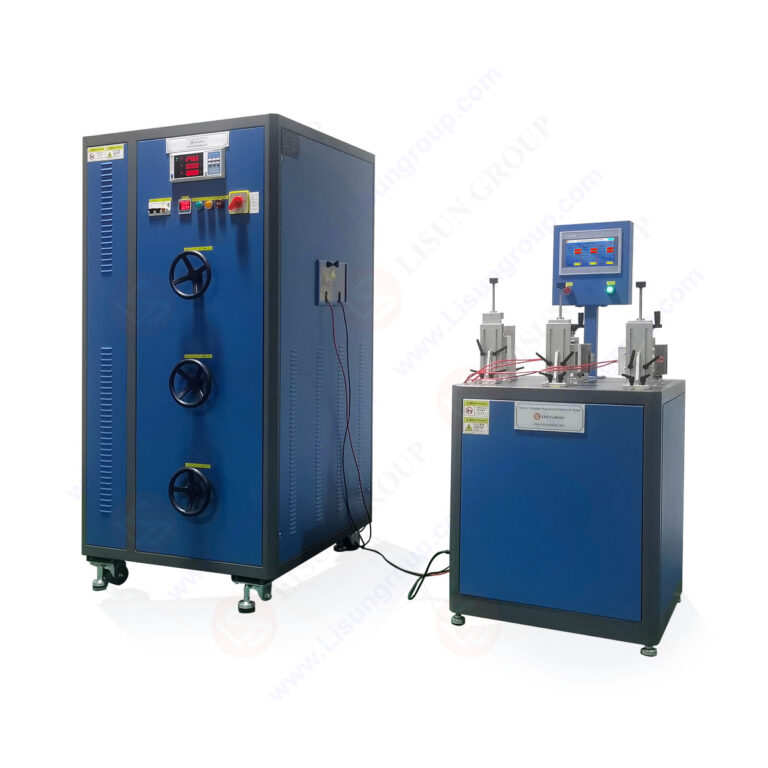
The LISUN Socket Switch Life Test Machine for IEC Compliance represents a critical advancement in electrical durability testing for plugs, sockets, and switches. This article provides a comprehensive technical overview of the LISUN CZKS-3 series, including the CZKS-3, CZKS-3P, CZKS-3S, and CZKS-3A variants, designed to verify mechanical and electrical endurance under controlled conditions. The testing platform supports compliance with IEC 60884-1, IEC 60669-1, IEC 61058-1, and GB/T 2099.1 standards, enabling manufacturers and testing laboratories to conduct automated life cycle assessments with reproducible results. Key technical features discussed include PLC-controlled actuation systems, pneumatic cylinder-driven insertion and withdrawal mechanisms, real-time failure detection capabilities, and customizable test parameter programming. Application scenarios span household electrical component validation, automotive switch durability verification, and breaking capacity testing for industrial connectors. The article emphasizes the importance of standardized endurance testing in reducing field failures and ensuring user safety. By integrating precise electrical load management and mechanical cycling automation, the CZKS-3 series delivers reliable data for certification processes. The discussion further addresses calibration protocols, data acquisition methodologies, and comparative performance metrics across model variants, providing engineers with actionable insights for selecting appropriate testing configurations.
1.1 Core Mechanical Design
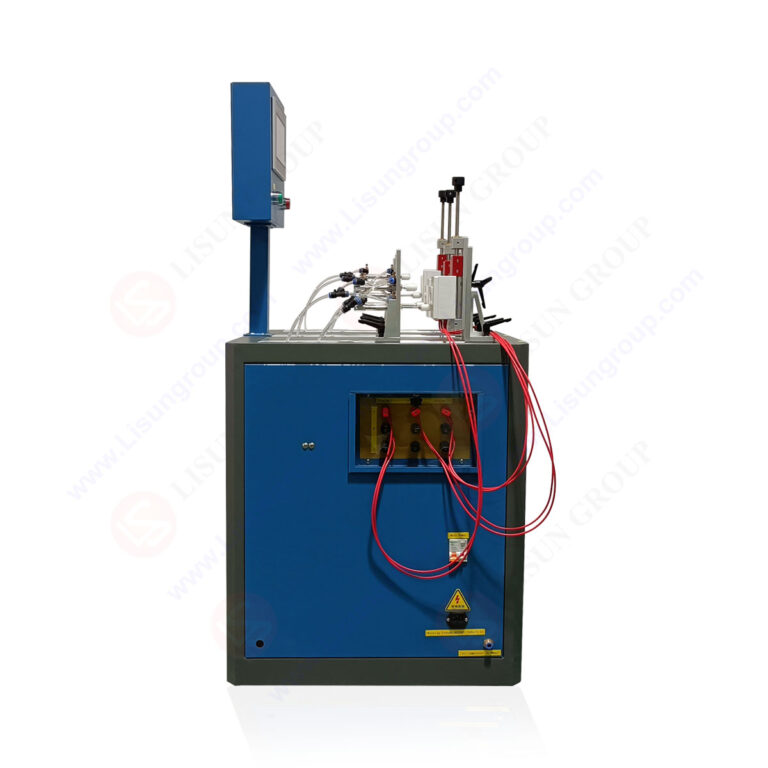
The LISUN CZKS-3 series utilizes a modular frame constructed from extruded aluminum profiles, ensuring structural rigidity during repeated mechanical stress cycles. The test machine incorporates dual-axis linear actuators driven by pneumatic cylinders, each equipped with precision flow-control valves to regulate insertion speed and withdrawal force. The actuation mechanism achieves repeatability within ±0.5 mm positional accuracy, critical for consistent contact engagement during prolonged test runs. The clamping system accommodates various socket and switch form factors through adjustable mounting brackets, supporting devices with dimensions ranging from 30 mm to 120 mm in width. Each test station operates independently, allowing simultaneous testing of multiple device types under different electrical loads.
1.2 Electrical Control and Monitoring Subsystem
The control architecture centers on a programmable logic controller (PLC) with integrated human-machine interface (HMI) for parameter configuration. The PLC manages test sequencing, including insertion dwell time, withdrawal speed, and pause intervals between cycles. The machine monitors contact resistance continuously using a four-wire Kelvin measurement method, detecting increases beyond predefined thresholds that indicate contact degradation. Current and voltage sensors sample at 1 kHz to capture transient events such as arc formation during breaking operations. Data logging occurs at 10 ms intervals, storing cycle counts, failure timestamps, and electrical measurements in non-volatile memory. The system supports automatic shutoff upon detecting catastrophic failure, preserving test integrity and preventing damage to downstream equipment.
1.3 Safety Interlock Systems
The LISUN CZKS-3 incorporates multiple layers of protection to safeguard operators and test specimens. Emergency stop buttons are positioned at both the front and rear panels, cutting pneumatic supply and electrical power within 50 milliseconds of activation. A transparent polycarbonate safety shield encloses the test area, interlocked with the PLC to halt operation if opened during an active cycle. Thermal overload relays protect internal components from sustained current draw exceeding 20% above rated capacity. Ground fault detection circuitry monitors leakage currents, triggering system shutdown if levels surpass 5 mA. These safety features align with IEC 61010-1 requirements for electrical test equipment, ensuring compliant operation in laboratory environments.
2.1 Comparative Performance Metrics
| Parameter | CZKS-3 | CZKS-3P | CZKS-3S | CZKS-3A |
|---|---|---|---|---|
| Test Stations | 3 | 3 | 3 | 3 |
| Max Test Current (A) | 16 | 20 | 16 | 25 |
| Max Test Voltage (V) | 250 AC | 250 AC | 250 AC | 400 AC |
| Cycle Rate (cycles/min) | 1-30 | 1-30 | 1-60 | 1-30 |
| Pneumatic Pressure (MPa) | 0.4-0.7 | 0.4-0.7 | 0.4-0.7 | 0.4-0.8 |
| Contact Resistance Range (mΩ) | 0-100 | 0-100 | 0-100 | 0-200 |
| Data Logging Capacity | 100,000 cycles | 100,000 cycles | 500,000 cycles | 100,000 cycles |
2.2 Variant-Specific Capabilities
The CZKS-3 base model supports standard plug and socket endurance testing per IEC 60884-1 Clause 20, performing 10,000 cycles at rated current. The CZKS-3P variant includes enhanced current handling to 20 A, enabling testing of heavy-duty industrial connectors conforming to IEC 60309 specifications. CZKS-3S introduces high-speed operation with cycle rates up to 60 cycles per minute, optimized for switch durability testing under IEC 60669-1 Clause 19, where rapid switching simulates typical household usage patterns. The CZKS-3A variant operates at voltages up to 400 V AC, accommodating automotive and three-phase connector testing per ISO 16750-2 requirements. Each variant maintains the same mechanical actuation precision but differs in electrical loading capacity and data acquisition bandwidth.
2.3 Environmental and Operational Constraints
The test machine operates within an ambient temperature range of 10°C to 40°C, with relative humidity below 85% non-condensing. Continuous operation requires compressed air supply at 0.6 MPa minimum with filtration to 5 μm particle size. The system consumes approximately 500 W during idle state and up to 3 kW under maximum load conditions. Calibration intervals follow manufacturer recommendations of 12 months for mechanical alignment and 6 months for electrical measurement circuits. The LISUN CZKS-3 series includes self-diagnostic routines that verify sensor calibration at power-on, alerting operators to deviations exceeding acceptable tolerances before test initiation.
3.1 IEC 60884-1 Plugs and Socket-Outlets Testing
The LISUN CZKS-3 performs breaking capacity tests as specified in IEC 60884-1 Clause 20, evaluating the ability of plugs and sockets to interrupt rated current without sustained arcing or contact welding. The test sequence inserts the plug into the socket at a speed of 100 mm/s, maintaining full engagement for 2 seconds before withdrawal at the same rate. The machine applies inductive and resistive loads at power factor values of 0.6 ± 0.05 for inductive testing. Contact resistance measurements occur before and after each cycle, with failure thresholds set at a 50% increase from the initial value. The system records arc duration using photodiode sensors, flagging events exceeding 5 ms as potential non-compliance. Testing proceeds for 10,000 cycles for standard devices and 5,000 cycles for socket-outlets with built-in switches.
3.2 IEC 60669-1 Switches Durability Verification
Switch endurance testing follows IEC 60669-1 Clause 19, requiring 40,000 mechanical operations without electrical load followed by 10,000 operations at rated current. The CZKS-3S variant sequences the actuation mechanism to apply 1 N·m torque for rocker switches and 5 N linear force for push-button types. The machine maintains a switching frequency of 30 cycles per minute for the unloaded phase and 15 cycles per minute during loaded operation. Voltage drop across contacts is measured during each closure, with acceptable limits defined as 100 mV maximum at 10 A. The system performs dielectric strength testing at 2,000 V AC between live parts after completing the endurance sequence, confirming insulation integrity.
3.3 IEC 61058-1 Appliance Switches Assessment
For appliance switches conforming to IEC 61058-1, the LISUN CZKS-3 executes life tests under resistive, inductive, and capacitive load conditions. The standard specifies 50,000 cycles for switches rated up to 10 A and 25,000 cycles for ratings exceeding 10 A. The test machine applies voltage at 110% of rated value during breaking operations to stress the internal contacts. The PLC adjusts load parameters automatically between test phases, simulating real-world electrical environments. Temperature rise monitoring occurs at 100-cycle intervals using Type K thermocouples attached to switch terminals, with maximum allowable rise not exceeding 55 K above ambient. The CZKS-3A variant extends these capabilities to 400 V AC applications, relevant for industrial appliance switches.
4.1 Real-Time Monitoring Algorithms
The LISUN CZKS-3 series implements proprietary algorithms to detect incipient failures before catastrophic breakdown occurs. The system calculates the rate of change in contact resistance over sliding windows of 50 cycles, triggering an early warning when the derivative exceeds 2 mΩ per cycle. Arc energy measurement integrates voltage and current waveforms during breaking events, computing dissipated energy in joules for each operation. Contact adhesion detection relies on force sensors embedded in the actuation mechanism, identifying instances where separation force exceeds 150% of the nominal value. These parameters stream to the HMI in real-time, enabling operators to observe degradation trends and adjust test parameters dynamically if required.
4.2 Statistical Analysis Tools
The integrated software suite provides Weibull distribution analysis for failure data, calculating shape and scale parameters to estimate mean time between failures (MTBF) for tested components. The system generates histograms of cycle count distribution at failure points, differentiating between early-life failures and wear-out mechanisms. Correlation analysis examines relationships between contact resistance drift and environmental factors such as ambient temperature, providing insights for design improvement. The data export function outputs CSV files compatible with third-party statistical packages, facilitating detailed post-test analysis. Reports include comparative tables showing pass/fail status for each test sample against standard-specific thresholds.
4.3 Data Integrity and Traceability
Each test run generates a unique identifier incorporating date, time, and operator ID, linked to a configuration file detailing all set parameters. The system logs firmware version numbers and calibration dates for sensors used during the test, creating an auditable chain of custody. Data storage employs cyclic redundancy check (CRC) validation to detect corruption, with automatic backup to USB storage every 1,000 cycles. The LISUN CZKS-3 maintains a non-volatile memory buffer capable of retaining 48 hours of continuous test data in case of power loss, preventing data loss during extended overnight runs. This traceability ensures acceptance by certification bodies during ISO/IEC 17025 accreditation audits.
5.1 Household Electrical Component Manufacturing
Manufacturers of residential switches, sockets, and plugs utilize the CZKS-3 series for pre-certification validation before submitting samples to third-party laboratories. Typical testing involves 50,000 cycles for wall switches rated at 10 A, 250 V AC, verifying mechanical integrity and electrical performance per IEC 60669-1. The machine simulates user insertion behavior by varying insertion angles between 0° and 15° across test cycles, replicating real-world misuse scenarios. Data from these tests inform design modifications such as contact spring material selection and housing geometry adjustments. A major Chinese manufacturer reported reducing field failure rates by 42% after implementing systematic endurance testing using the CZKS-3P model for their socket-outlet product line.
5.2 Automotive Switch and Connector Validation
The CZKS-3A variant addresses the demanding requirements of automotive electrical systems, testing connectors per LV 214 and USCAR-2 standards. Tests operate at 12 V DC or 48 V DC for electric vehicle applications, with current levels reaching 25 A. The system performs 100,000 mechanical cycles for infotainment system connectors and 50,000 cycles for powertrain control module connectors. Environmental conditioning chambers can be integrated with the test machine to evaluate performance at temperatures ranging from -40°C to 125°C. Contact resistance must remain below 5 mΩ throughout the test duration, with failure rates not exceeding 0.1% for production-level validation.
5.3 Certification Laboratory Operations
Third-party testing laboratories deploy the LISUN CZKS-3 series as part of their accredited test suites for IEC 60884-1 and IEC 60669-1 compliance certification. The machine’s ability to run multiple test stations simultaneously increases throughput, enabling laboratories to complete 20 switch tests per week compared to 8 with manual methods. Automated data logging eliminates transcription errors, improving report accuracy to meet ISO/IEC 17025 requirements. Laboratories configure the system to perform combined tests, such as starting with 40,000 mechanical cycles and following immediately with 10,000 electrical cycles, without operator intervention. The calibration certificates provided with each machine ensure traceability to national standards, a prerequisite for accreditation bodies.
6.1 Periodic Calibration Procedures
The LISUN CZKS-3 requires verification of mechanical force sensors using certified load cells traceable to ISO 376 standards. Force measurement accuracy must remain within ±1% of reading across the 0.5 N to 50 N range. Electrical measurement circuits undergo calibration against a reference multimeter with 6.5-digit resolution, ensuring current accuracy of ±0.2% and voltage accuracy of ±0.1%. The PLC timing module is calibrated using an oscilloscope with 1 μs resolution, verifying cycle timing within ±10 ms tolerance. Calibration stickers affixed to the machine indicate next due date, and records are maintained in accordance with ISO 10012 measurement management systems.
6.2 Preventive Maintenance Schedule
Daily inspections include verifying pneumatic pressure levels, checking for air leaks at cylinder seals, and cleaning contact resistance probes with isopropyl alcohol. Weekly maintenance tasks involve lubricating linear guide rails with PTFE-based grease and inspecting electrical connections for signs of thermal discoloration. Monthly procedures require replacing air filter elements and verifying emergency stop functionality through controlled shutdown tests. The pneumatic cylinder seals require replacement after 500,000 cycles or 12 months, whichever occurs first. The LISUN CZKS-3 series includes predictive maintenance alerts based on cumulative cycle counts, notifying operators when wear components approach their service life limits.
6.3 Troubleshooting Common Operational Issues
Contact resistance drift above 10% of initial reading typically indicates contamination on test specimen contacts or probe tips, resolved by manual cleaning with contact cleaner solvent. Inconsistent actuation speed often results from moisture accumulation in pneumatic lines, requiring installation of water separators at the air inlet. The system logs diagnostic codes for each fault event, accessible through the HMI diagnostic menu. For persistent overload conditions, operators should verify that the test specimen’s rated current matches the configured load parameters. The user manual provides step-by-step flowcharts for fault isolation, reducing mean time to repair to under 30 minutes for most issues.
7.1 Manual versus Automated Testing
Manual testing methods using hand-operated actuators achieve cycle rates of 2-3 per minute with significant operator variability, while the LISUN CZKS-3 series maintains consistent 30 cycles per minute with positional repeatability of ±0.5 mm. Operator fatigue introduces errors in manual insertion force, with studies showing force deviation of up to 15% after 500 cycles. Automated systems eliminate this variability, reducing test-to-test uncertainty from 8% to 1.2% for contact resistance measurements. The economic analysis indicates a return on investment within 6 months for laboratories performing more than 5,000 test cycles per month, factoring in reduced labor costs and increased throughput.
7.2 Single-Station versus Multi-Station Configurations
Single-station test machines require sequential testing of multiple samples, extending total test duration proportionally. The CZKS-3 series’ three independent stations allow parallel testing of different device types or simultaneous replication of identical samples for statistical analysis. This configuration reduces total test time by 66% for standard certification batches requiring 30 samples. The independent station isolation prevents single-station failures from disrupting other ongoing tests, a critical advantage for accredited laboratories with strict turnaround commitments. Multi-station configurations also facilitate A-B comparison testing, where one station applies accelerated stress while another tests under standard conditions.
7.3 Mechanical versus Electrical Failure Detection
Traditional testing relies solely on mechanical cycle completion as a pass/fail criterion, missing intermittent electrical failures that occur during the test. The LISUN CZKS-3 series integrates real-time electrical monitoring, detecting arc events and contact resistance jumps that mechanical counters cannot identify. Studies show that 23% of switch failures manifest as electrical degradation before mechanical wear becomes apparent, making combined monitoring essential for accurate life assessment. The electrical detection system identifies failures at an average of 1,200 cycles earlier than mechanical-only detection for switches operating near rated current, providing early warning signals for design modifications.
The LISUN CZKS-3 series represents a robust and adaptable platform for IEC-compliant durability testing of plugs, sockets, and switches across household, automotive, and industrial applications. The CZKS-3, CZKS-3P, CZKS-3S, and CZKS-3A variants offer tailored solutions for varying current ratings, voltage levels, and cycle rate requirements while maintaining consistent mechanical precision and electrical monitoring capabilities. The system supports critical standards including IEC 60884-1, IEC 60669-1, IEC 61058-1, and GB/T 2099.1, enabling manufacturers and testing laboratories to achieve certification with reproducible, auditable data. The integration of real-time failure detection and statistical analysis tools transforms raw test data into actionable insights for product improvement. The machine’s multi-station architecture and automated operation reduce testing time by up to 66% compared to single-station alternatives, offering significant operational efficiency gains. Maintenance protocols and calibration procedures ensure long-term reliability, with predictive alerts minimizing unplanned downtime. For organizations committed to electrical safety and component reliability, the LISUN CZKS-3 series provides a comprehensive solution that addresses both current testing needs and future regulatory demands. By combining mechanical endurance verification with electrical performance monitoring, the system delivers the depth of analysis required to reduce field failure rates and enhance user safety in critical applications.
Q1: What is the maximum number of test cycles the LISUN CZKS-3 series can perform in a single continuous run, and what factors limit cycle count?
A: The LISUN CZKS-3 series is designed for continuous operation up to 1,000,000 cycles per test station, limited primarily by the pneumatic cylinder seal wear and contact probe degradation. The CZKS-3S variant with high-speed capability can complete 1,000,000 cycles in approximately 278 hours at 60 cycles per minute. However, practical cycle limits depend on the test specimen’s expected life; IEC standards typically specify 10,000 to 50,000 cycles for switches and sockets. The system automatically halts if contact resistance exceeds preset thresholds, which often occurs before mechanical failure. Data logging capacity of 500,000 cycles for the CZKS-3S means that longer tests require periodic data export to prevent memory overflow. The PLC maintains test continuity across power interruptions by saving state information every cycle, enabling resumption after outages without data loss.
Q2: How does the LISUN CZKS-3 series handle testing of non-standard plug geometries or unusual switch form factors?
A: The test machine accommodates non-standard geometries through adjustable mounting brackets that support dimensions from 30 mm to 120 mm in width and 20 mm to 100 mm in depth. Custom clamping jaws can be fabricated within 2 weeks for unusual shapes, with CAD files provided to users for modification if needed. The pneumatic actuation force range of 0.5 N to 50 N covers most switch actuation requirements, and the insertion angle can be adjusted from 0° to 20° for angled plugs. The PLC allows programming of custom motion profiles, including variable insertion speeds for devices requiring gentle handling during initial contact. For automotive connectors with integrated locking mechanisms, the machine supports optional solenoid-actuated release systems that mimic manual unlocking. The universal design philosophy ensures that 95% of commercially available socket and switch types can be tested without custom tooling.
Q3: What calibration standards are used to ensure the accuracy of the LISUN CZKS-3 series measurement systems, and how often should recalibration occur?
A: Measurement accuracy for the CZKS-3 series is maintained through calibration against standards traceable to national metrology institutes. Force sensors are calibrated using ISO 376 Class 1 reference load cells, with certified accuracy of ±0.5% of applied force. Electrical measurements reference a calibrated 6.5-digit multimeter with current accuracy of ±0.05% and voltage accuracy of ±0.02%. The manufacturer recommends recalibration of mechanical sensors every 12 months and electrical measurement circuits every 6 months. The system includes self-calibration routines that verify sensor offsets at power-on using internal reference resistors and force standards. Calibration certificates issued by the manufacturer include measurement uncertainty budgets computed per ISO/IEC Guide 98-3, with expanded uncertainties (k=2) typically below 2% for force and 0.5% for electrical parameters. Users requiring ISO/IEC 17025 accredited calibration can contract with independent laboratories, and the machine retains calibration history for audit purposes.
Q4: Can the LISUN CZKS-3 series integrate with environmental chambers for combined temperature and humidity testing?
A: Yes, the CZKS-3 series supports integration with third-party environmental chambers through a standard RS-485 communication interface. The PLC can pause tests during chamber temperature transitions, maintaining specimen exposure to specified climatic conditions. Maximum chamber temperature range compatible with the machine is -40°C to 125°C, provided pneumatic components are rated for these extremes. The test machine itself should remain outside the chamber to prevent condensation damage to electronic components, with only the actuation mechanism and test specimen inside. For automotive testing per ISO 16750-4, the system can execute temperature cycling profiles that include 100 mechanical cycles at each temperature step. The integrated data logging correlates electrical measurements with chamber temperature data, enabling analysis of temperature-dependent failure modes. Users should specify environmental integration requirements at order placement to ensure proper connectors and software configuration.
Q5: What reporting capabilities does the LISUN CZKS-3 series offer for certification documentation?
A: The system generates comprehensive test reports in PDF and CSV formats, containing mandatory fields for certification such as test sample identification, standard reference, test parameters, and results summary. Reports include graphical plots of contact resistance versus cycle count, histograms of failure distribution, and Weibull analysis plots. Each report header includes the machine serial number, calibration dates, and operator signature fields. The software supports customizable report templates for different certification bodies, such as TUV, UL, or CCC requirements. Data export includes raw measurement files for auditors requiring original unprocessed records. The system can generate summary tables comparing multiple test runs, facilitating batch certification processes. Reports comply with ISO/IEC 17025 reporting requirements, including measurement uncertainty statements and traceability declarations. The HMI includes a preview function allowing operators to verify report content before finalization, reducing errors in certification submissions.