









Abstract
The reliability and longevity of modern LED products are fundamentally dependent on rigorous accelerated aging tests that simulate real-world environmental stressors. This technical article examines the LISUN Temperature Humidity Cycling Chamber for IEC 60068 Compliance, a critical instrument for validating LED performance under controlled temperature and humidity conditions. We delve into the integration of LISUN’s LED Optical Aging Test Instrument, which supports dual-system variants (LEDLM-80PL for LM-80/TM-21 and LEDLM-84PL for LM-84/TM-28), enabling precise lumen maintenance tracking over 6000-hour test durations. By leveraging Arrhenius Model-based software, dual testing modes, and customizable hardware configurations, engineers can accurately predict L70/L50 metrics. This article provides a comprehensive technical analysis for LED manufacturing engineers, third-party lab technicians, and compliance specialists seeking to align with IES standards and ensure product reliability.
1.1 Core Functionality and Test Environment Control
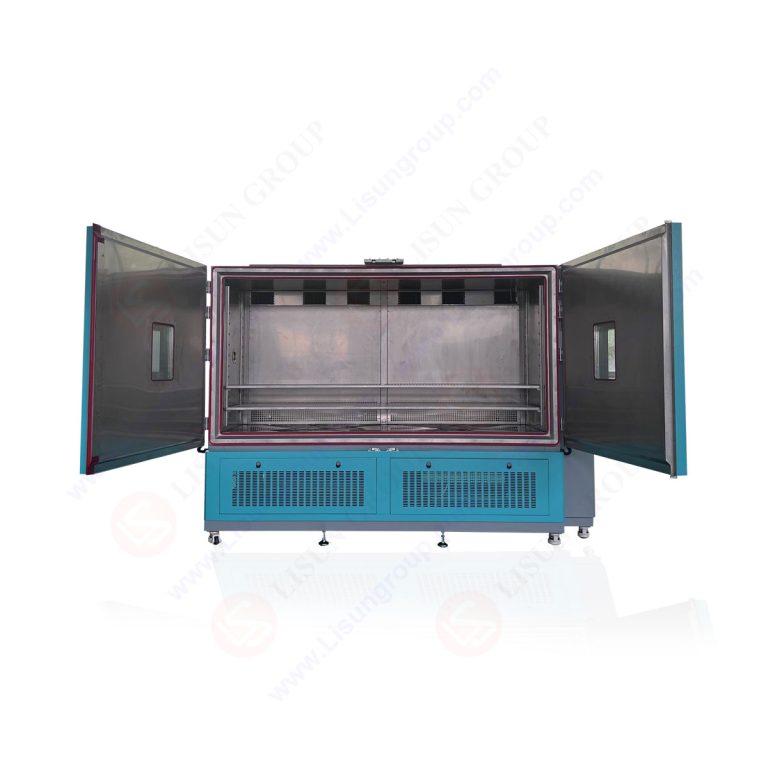
The LISUN Temperature Humidity Cycling Chamber is engineered to replicate the climatic conditions specified under IEC 60068-2-38, which governs temperature and humidity cyclic tests for electronic components. The chamber achieves precise control over relative humidity (20% to 98% RH) and temperature ranges (-40°C to +150°C), with stability within ±0.5°C and ±2% RH. This capability is essential for accelerating failure mechanisms such as corrosion, solder joint fatigue, and encapsulant delamination in LED packages. The system supports up to three connected temperature chambers, enabling parallel testing environments for different test protocols or sample groups. This scalability reduces overall test cycle times while maintaining strict compliance with the IEC 60068 framework.
1.2 Integration with LISUN’s LED Optical Aging Test Instrument
The chamber operates as a standalone environmental stressor but achieves maximum utility when integrated with LISUN’s LED Optical Aging Test Instrument. This instrument features dual-system variants: the LEDLM-80PL for IES LM-80 and TM-21 testing, and the LEDLM-84PL for IES LM-84 and TM-28 protocols. Both variants incorporate integrating sphere photometers for real-time luminous flux measurement, ensuring that lumen depreciation is captured at each data point without removing samples from the environmental chamber. This integration eliminates measurement errors caused by thermal shock or handling damage, providing high-fidelity data for Arrhenius Model-based extrapolation.
2.1 LEDLM-80PL for LM-80 and TM-21 Compliance
The LEDLM-80PL is optimized for IES LM-80-15, which mandates 6000 hours of testing at three case temperatures (typically 55°C, 85°C, and a third temperature selected by the manufacturer). This system supports up to 20 sample positions per temperature chamber, with automated data logging at 1000-hour intervals. The companion software performs TM-21-19 extrapolation to project L70 (time to 70% lumen maintenance) and L50 values, using the Arrhenius model to account for thermal acceleration. Engineers can specify confidence intervals (90% or 95%) for extrapolated data, which is critical for warranty projections and regulatory submissions.
2.2 LEDLM-84PL for LM-84 and TM-28 Compliance
The LEDLM-84PL variant addresses IES LM-84-21, which evaluates LED light engines and luminaires rather than discrete packages. This standard requires testing at elevated ambient temperatures (typically 25°C above rated maximum) with relative humidity control between 30% and 70%. The LEDLM-84PL system incorporates TM-28-21 extrapolation algorithms that are specifically calibrated for luminaire-level thermal behavior, which differs significantly from package-level testing. The system can simultaneously monitor key electrical parameters—such as forward voltage, drive current, and power factor—providing a holistic view of luminaire degradation under environmental stress.
3.1 Theoretical Foundation and Application
The Arrhenius model is the cornerstone of accelerated lifetime prediction in LED testing, relating reaction rate to temperature through the equation: k = A exp(-Ea/kT), where Ea is the activation energy (typically 0.3 to 0.7 eV for LEDs). LISUN’s software automatically calculates the acceleration factor between test temperatures and use conditions, allowing 6000-hour test data to predict lifetimes exceeding 50,000 hours. The software validates the Arrhenius assumption by performing residual analysis and correlation coefficient checks (R² > 0.95 required for acceptance). This mathematical rigor ensures that extrapolated L70 and L50 values are statistically defensible for regulatory bodies such as ENERGY STAR or the DesignLights Consortium.
3.2 Dual Testing Modes: Continuous and Intermittent
The system supports two distinct testing modes. In Continuous Mode, the temperature and humidity are held constant for the entire 6000-hour duration, suitable for establishing baseline activation energy values. Intermittent Mode introduces cyclic variations—such as 24-hour cycles with 8 hours at 85°C/85% RH followed by 16 hours at 25°C/60% RH—to simulate diurnal or seasonal stress patterns. The software logs data from each cycle phase separately, enabling engineers to identify failure mechanisms that are accelerated by thermal or humidity transients. This dual-mode capability is particularly valuable for automotive electronics components exposed to under-hood or exterior lighting environments.
4.1 Chamber Specifications and Sample Loading
The LISUN Temperature Humidity Cycling Chamber is available in multiple form factors, with internal volumes ranging from 150 liters to 1000 liters. Each chamber features stainless steel interior walls, HEPA-filtered air circulation, and a dedicated refrigeration system with cascade cooling for low-temperature stability. Sample carriers are modular, allowing engineers to switch between horizontal trays for LED package arrays and vertical racks for luminaire assemblies. The system supports up to three chambers connected to a single control unit, enabling simultaneous testing at different temperature/humidity setpoints. This configuration is ideal for comparative studies across LED bins or supplier qualifications.
4.2 Electrical and Optical Measurement Integration
Customizable hardware options include integrated DC power supplies (0-100V, 0-5A per channel) and AC power analyzers for line-powered luminaires. Each sample channel is independently programmable for drive current (pulsed or continuous) to simulate PWM dimming or steady-state operation. The optical measurement subsystem uses a 2-meter integrating sphere (compliant with IES LM-79-19 and CIE 084) with a spectroradiometer covering 380 nm to 780 nm at 1 nm resolution. This setup allows simultaneous measurement of total luminous flux, chromaticity coordinates (CIE 1931 x,y), color rendering index (CRI), and correlated color temperature (CCT). The system logs these parameters at user-defined intervals, typically every 1 to 24 hours, providing high-resolution degradation curves.
5.1 Alignment with IES and CIE Standards
The LISUN system is designed to meet the stringent requirements of multiple international standards:
- IES LM-80-15: Lumen maintenance testing for LED packages, requiring 6000 hours at three temperatures.
- IES LM-84-21: Lumen maintenance testing for LED light engines and luminaires.
- IES LM-79-19: Electrical and photometric measurements of solid-state lighting products.
- CIE 084: Measurement of luminous flux from electric lamps and luminaires.
- CIE 127: Measurement of LEDs (including pulsed operation and thermal management).
The chamber’s IEC 60068 compliance ensures that the environmental stress profile accurately replicates real-world conditions, while the optical measurement subsystem is traceable to NIST standards. This dual compliance framework simplifies regulatory submissions for global markets including UL, CE, and CCC.
5.2 Test Protocol Customization
Engineers can define custom test protocols within the software interface, specifying temperature ramp rates (up to 15°C/min), humidity setpoints, and dwell times. The system automatically performs self-checks at each step to verify chamber stability before advancing to the next phase. Data integrity is ensured through redundant logging to both internal SSD storage and cloud-based servers. For TM-21 and TM-28 extrapolations, the software generates automatically formatted reports that include the raw data table, Arrhenius plot, activation energy calculation, and projected L70/L50 values with 90% confidence bounds. These reports are ready for submission to ENERGY STAR or the DesignLights Consortium.
6.1 Comparative Specification Table
| Parameter | LEDLM-80PL | LEDLM-84PL |
|---|---|---|
| Applicable Standard | IES LM-80-15, TM-21-19 | IES LM-84-21, TM-28-21 |
| Test Duration | 6000 hours (mandatory) | 6000 hours (optional, up to 10,000h) |
| Sample Type | LED packages, chips, modules | LED light engines, luminaires |
| Temperature Range | 55°C, 85°C, and one custom | 25°C above rated max (ambient) |
| Humidity Control | 30% to 70% RH (optional 85% RH) | 30% to 70% RH (mandatory) |
| Sample Capacity | 20 positions per chamber | 10 positions per chamber |
| Extrapolation Method | TM-21 (Arrhenius model) | TM-28 (Arrhenius + power model) |
| Parameter Tracking | Luminous flux only | Flux, color, CRI, CCT, voltage, power |
| Typical Activation Energy | 0.3 to 0.7 eV | 0.2 to 0.5 eV |
6.2 Implications for Test Data Quality
The LEDLM-84PL’s broader parameter tracking provides a more comprehensive picture of luminaire degradation, which is critical for warranty and reliability analysis. For example, a 5% increase in CCT (from 3000K to 3150K) or a 2-point drop in CRI can indicate phosphor degradation before measurable lumen depreciation occurs. In contrast, the LEDLM-80PL’s focus on luminous flux is appropriate for package-level testing where phosphor and encapsulates are the primary failure modes. Engineers should select the variant based on the product life-cycle stage: LEDLM-80PL for component qualification, LEDLM-84PL for luminaire certification.
7.1 In-House Reliability Laboratories
Large-scale LED manufacturers can use the LISUN system to qualify new phosphor formulations or die-attach materials. By testing at three temperatures simultaneously (using three connected chambers), an engineer can generate complete TM-21 data sets in 6000 hours, rather than running sequential tests over 18 months. The real-time monitoring software alerts operators to anomalous degradation rates—for example, a sudden drop in luminous flux beyond 5% within 1000 hours—triggering an immediate investigation into batch quality or process control issues.
7.2 Third-Party Testing Laboratories
Independent labs benefit from the system’s scalability and multi-standard compliance. A single installation can serve clients requiring LM-80 certification for automotive LED headlamps (typically 55°C test temperature) and LM-84 certification for architectural lighting luminaires (85°C and 85% RH). The cloud-based data management feature allows remote auditing by clients or regulatory agencies, reducing the need for physical sample inspections. The System’s ability to generate directly submission-ready ENERGY STAR reports reduces test cycle times by up to 30% compared to manual data analysis methods.
The LISUN Temperature Humidity Cycling Chamber for IEC 60068 Compliance represents a significant advancement in LED reliability testing infrastructure. By integrating precision environmental control with dual-system optical aging instruments (LEDLM-80PL and LEDLM-84PL), the platform enables comprehensive evaluation of LED packages and luminaires under standardized conditions. The Arrhenius Model-based software provides statistically robust extrapolations to L70 and L50 metrics, supporting warranty projections and regulatory compliance with IES LM-80, LM-84, TM-21, and TM-28 standards. Engineers benefit from customizable hardware configurations—including support for up to three chambers—and real-time monitoring of critical parameters such as chromaticity, CRI, and forward voltage. This system is particularly valuable for manufacturers seeking to accelerate product development cycles, third-party labs requiring multi-standard flexibility, and automotive electronics engineers validating component reliability under thermal and humidity cycling. The LISUN platform not only meets current industry standards but also provides the data quality and traceability necessary for future regulatory requirements.
Q1: How does the LISUN Temperature Humidity Cycling Chamber ensure compliance with IEC 60068 for temperature and humidity cycling tests?
A: The chamber is engineered to meet the cyclic test profiles specified in IEC 60068-2-38, including temperature ramp rates up to 15°C/min and humidity stability within ±2% RH. The system’s cascade refrigeration and HEPA-filtered air circulation maintain uniform conditions across the entire chamber volume. The control software automatically validates each test phase against the standard’s tolerance windows and logs deviations for audit trails. For LED applications, this compliance ensures that environmental stress profiles accurately replicate real-world conditions, such as outdoor temperature swings or indoor humidity variations, without introducing artifacts that could skew lumen maintenance data.
Q2: Can the LEDLM-80PL system perform tests longer than the standard 6000-hour duration?
A: Yes, while the IES LM-80 standard stipulates a minimum of 6000 hours of test data, the LEDLM-80PL supports extended durations up to 10,000 hours for research or specialized qualification programs. The software continues logging data at user-defined intervals and applies TM-21 extrapolation to the extended dataset. However, engineers should note that TM-21-19 recommends a maximum extrapolation factor of 6× the test duration (e.g., 36,000 hours project life for 6000-hour test). Extending the test duration reduces the extrapolation factor and improves statistical confidence in L70/L50 predictions. The system’s automated data management ensures that extended tests generate high-quality datasets for internal reliability models.
Q3: What is the primary difference in failure mechanisms captured by LM-80 (package-level) versus LM-84 (luminaire-level) testing?
A: LM-80 testing focuses on the LED package itself, primarily capturing failure mechanisms such as phosphor degradation (causing color shift and lumen depreciation), die-attach fatigue (increasing thermal resistance), and encapsulant carbonization (reducing light extraction). LM-84 testing addresses system-level failures including driver electronics degradation (e.g., electrolytic capacitor aging), thermal management deficiencies (e.g., heatsink fouling), and optical component yellowing (e.g., lens or diffuser discoloration). The LISUN system’s ability to run both protocols on a single hardware platform allows engineers to distinguish between package-level intrinsic reliability and system-level design robustness, facilitating more targeted product improvements.
Q4: How does the Arrhenius Model software handle multiple temperature data points for TM-21 extrapolation?
A: The software uses all three test temperature data sets (default: 55°C, 85°C, and a user-selected third temperature) to perform a linear regression of ln(lumen maintenance) versus 1/T (in Kelvin). It calculates the activation energy (Ea) that best fits the observed degradation rates across the three temperatures. The software then applies the Arrhenius equation to project lumen maintenance at the use temperature (typically 25°C to 55°C for indoor applications). The system provides a goodness-of-fit statistic (R²) and standard error for the Ea estimate. If R² is below 0.95, the software alerts the user to potential non-Arrhenius behavior, such as humidity-dependent degradation or bimodal failure distributions.
Q5: What is the maximum number of samples that can be tested simultaneously across three connected chambers?
A: With three chambers connected to a single control unit, the maximum sample capacity is 60 sample positions for the LEDLM-80PL system (20 per chamber) and 30 positions for the LEDLM-84PL system (10 per chamber). Each chamber can be set to a different temperature/humidity profile, allowing simultaneous testing at three different conditions per test protocol. For example, an engineer might set Chamber 1 at 55°C/30% RH, Chamber 2 at 85°C/50% RH, and Chamber 3 at 105°C/70% RH to generate a three-point Arrhenius dataset. The integrated power supplies and optical measurement system switch between chambers automatically, cycling samples through the integrating sphere for measurement without interrupting the environmental exposure of other samples.