









Abstract
This comprehensive technical article examines the LISUN Thermal Aging Chamber for IEC 60068-2-2 Compliance Testing, a critical instrument for accelerated thermal aging validation of LED components and lighting systems. Designed to meet rigorous international standards including IEC 60068-2-2, this chamber integrates with LISUN’s LEDLM-80PL and LEDLM-84PL dual system variants for LM-80/TM-21 and LM-84/TM-28 compliance testing respectively. The system leverages the Arrhenius Model-based software to predict lumen maintenance metrics such as L70 and L50 over extended durations up to 6000 hours. With support for up to three connected temperature chambers and customizable hardware configurations, this article provides engineering professionals with detailed technical insights into test methodologies, standard alignment, and practical applications for accelerated aging validation in LED manufacturing and third-party testing laboratories.
1.1 The Role of Thermal Aging in LED Reliability Testing
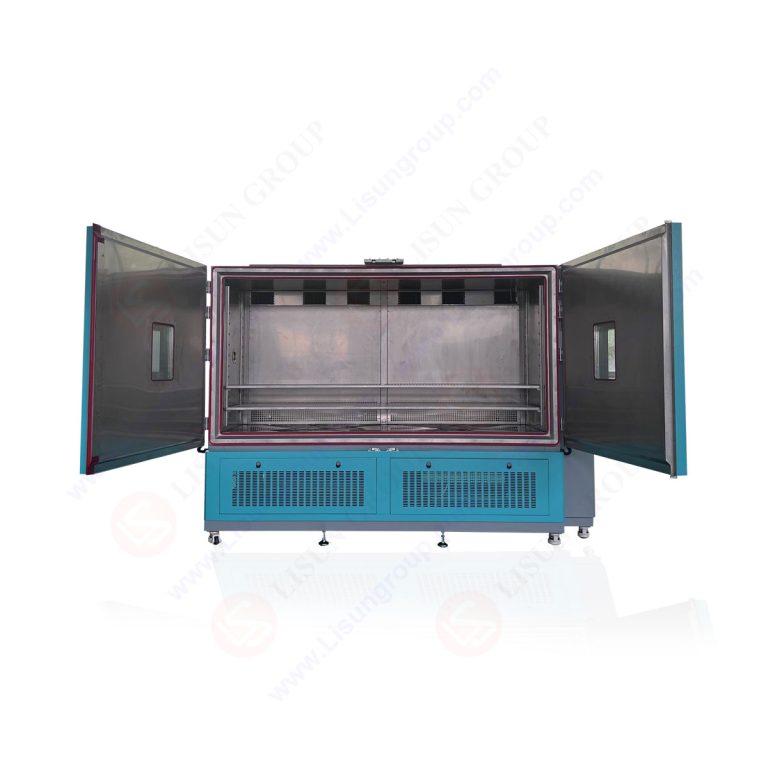
Thermal aging chambers are fundamental to semiconductor reliability assessment, particularly for determining the expected operational lifetime of LED light sources. The LISUN Thermal Aging Chamber for IEC 60068-2-2 Compliance Testing provides precise temperature control from ambient to +200°C with ±0.5°C uniformity, enabling accelerated degradation studies that compress years of real-world operation into weeks. This methodology relies on the Arrhenius relationship, where elevated temperatures accelerate chemical reactions and material failures, allowing engineers to calculate activation energies and predict failure rates under normal operating conditions. For LED manufacturers, understanding thermal aging behavior directly impacts product warranties, datasheet claims, and compliance with global lighting regulations.
1.2 Alignment with International Electrotechnical Commission Standards
IEC 60068-2-2 specifies environmental testing procedures for dry heat endurance, requiring chambers to maintain specified temperature tolerances over defined exposure periods. The LISUN chamber exceeds these requirements through PID-controlled heating systems and forced air circulation that ensures temperature deviation remains within ±1.0°C across the entire working volume. This level of precision is essential when testing LED modules that exhibit thermally-sensitive photometric outputs, where even minor temperature fluctuations can introduce measurement artifacts into lumen maintenance data. The chamber’s design incorporates redundant safety systems including over-temperature protection and programmable ramp rates, aligning with the standard’s requirements for non-destructive testing protocols.
2.1 LEDLM-80PL System for LM-80/TM-21 Compliance
The LEDLM-80PL configuration is purpose-built for IES LM-80-15 accredited testing of LED packages, arrays, and modules. This system supports simultaneous monitoring of up to 20 test samples across multiple current settings, with data acquisition intervals as short as 15 minutes. The integrated software automatically calculates lumen maintenance parameters including L70(6K) and L50(6K) as defined by TM-21-19, using the IES-recommended exponential decay model. A critical feature is the real-time detection of catastrophic failures, which are excluded from extrapolation calculations per TM-21 guidelines. The system supports test durations up to 6000 hours minimum, with extrapolation capabilities extending predictions to 36,000 hours for L70 and 50,000 hours for L50 metrics.
2.2 LEDLM-84PL System for LM-84/TM-28 Compliance
For luminaire-level testing, the LEDLM-84PL variant addresses IES LM-84-19 and TM-28-20 standards, which require testing complete LED luminaires rather than individual components. This system accommodates larger samples up to 600mm in diameter within the integrating sphere assembly, maintaining the same thermal precision as the LM-80 configuration. TM-28 introduces unique statistical methodologies for handling multi-channel data from spectroradiometers, and the LISUN software implements these algorithms natively. The dual system approach allows laboratories to maintain separate certification scopes for component and luminaire testing without duplicating thermal chamber infrastructure, significantly reducing capital expenditure for third-party testing facilities.
3.1 Theoretical Foundations of Accelerated Aging
The Arrhenius acceleration factor is mathematically expressed as AF = exp[(Ea/k) × (1/Tuse – 1/Ttest)], where Ea represents activation energy (typically 0.3-1.2 eV for LED materials) and k is Boltzmann’s constant. The LISUN software automatically calculates acceleration factors based on user-defined use temperatures (typically 25°C or 55°C per standard specifications) and test temperatures ranging from 55°C to 105°C. For example, testing at 85°C with an activation energy of 0.7 eV yields an acceleration factor of approximately 20× relative to 25°C operation, meaning 3000 hours at 85°C corresponds to roughly 60,000 hours at room temperature. The software supports up to four test temperatures simultaneously to generate multi-stress Arrhenius plots for activation energy determination.
3.2 Lumen Maintenance Extrapolation Algorithms
The software implements two distinct extrapolation engines: TM-21’s exponential curve fitting for LM-80 data and TM-28’s polynomial least-squares regression for luminaire measurements. For LM-80 datasets, the algorithm iteratively fits the function Φ(t) = A × exp(-αt) + B, where Φ(t) is normalized lumen output at time t. The software automatically rejects early data points (typically first 1000-2000 hours) to eliminate initial burn-in effects, then calculates projected L70 and L50 values with 90% confidence intervals. TM-28’s approach differs by incorporating temperature cycling effects on driver electronics, using a two-stage model that separates LED package degradation from luminaire-specific failure mechanisms.
4.1 Temperature Chamber Specifications and Support
The LISUN Thermal Aging Chamber for IEC 60068-2-2 Compliance Testing supports up to three interconnected temperature chambers, enabling simultaneous testing at different stress levels per IES LM-80 requirements for minimum three temperature conditions. Each chamber provides 200L of usable volume with adjustable shelves and custom sample fixtures. The control system manages independent temperature profiles for each chamber while maintaining synchronized data logging across all units. This configuration is particularly valuable for activation energy determination, where engineers require data points at 55°C, 85°C, and 105°C to establish reliable Arrhenius parameters.
| Parameter | LEDLM-80PL System | LEDLM-84PL System |
|---|---|---|
| Sample Capacity | Up to 20 LED packages | Up to 6 luminaires |
| Test Duration | 6000+ hours | 6000+ hours |
| Temperature Range | Ambient to +200°C | Ambient to +150°C |
| Temperature Uniformity | ±0.5°C at 85°C | ±1.0°C at 85°C |
| Data Channels | 20 photometric + 10 temperature | 6 photometric + 12 temperature |
| Integrating Sphere Size | 300mm or 500mm | 1000mm or 2000mm |
| Spectral Range | 380-780nm | 380-780nm |
| L70 Extrapolation Limit | 36,000 hours | 50,000 hours |
4.2 Photometric Measurement Integration
Both systems integrate with LISUN’s high-speed spectroradiometers operating at 400-800nm with 1nm wavelength resolution. For LM-80 testing, the 300mm integrating sphere provides absolute flux measurements traceable to NIST standards, with measurement uncertainty below 2% for CCT values between 2700K and 6500K. The systems include automated sphere calibration using standard lamps that are verified against secondary reference standards every 500 test hours. Ballast temperature sensing is accomplished via Type-K thermocouples with ±0.1°C accuracy, placed at critical thermal interface points including the LED junction, board substrate, and ambient chamber environment.
5.1 Constant Temperature Mode (CTM)
CTM architecture maintains the chamber at a fixed temperature throughout the test duration, as specified by IEC 60068-2-2’s steady-state dry heat procedure. This mode is optimal for standard LM-80 qualification testing where manufacturers must demonstrate performance at 55°C, 85°C, and 105°C according to the IES recommended matrix. The LISUN chamber’s PID controller achieves steady-state within 15 minutes of reaching setpoint, with long-term drift below ±0.3°C over 6000-hour tests. Data logging intervals default to 30 minutes for photometric measurements and 5 minutes for temperature monitoring, though both parameters are user-configurable.
5.2 Temperature Cycling Mode (TCM)
TCM enables accelerated thermal shock testing by executing programmable temperature profiles with ramp rates up to 5°C/min and soak times between 30 minutes and 24 hours. This mode is particularly relevant for TM-28 testing of luminaires where thermal expansion cycling affects solder joint integrity and driver capacitor life. The system supports up to 1000 programmable cycles with automatic recovery from power interruptions. Internal chamber humidity remains below 30% RH during cycling to prevent condensation-induced failure mechanisms that would confound thermal aging data. TCM data analysis generates separate lumen maintenance curves for each temperature segment, allowing engineers to isolate temperature-dependent degradation rates.
6.1 IES LM-80 and TM-21 Integration
IES LM-80-15 mandates that LED lumen maintenance data be collected for a minimum of 6000 hours at three or more temperatures, with measurements taken at intervals not exceeding 1000 hours. The LISUN Thermal Aging Chamber for IEC 60068-2-2 Compliance Testing exceeds these requirements by providing automated data collection at user-defined intervals as short as 15 minutes, ensuring no temporal gaps in the time-series data. TM-21-19’s prohibition on extrapolation beyond 6× the test duration is automatically enforced by the software, which displays warning messages when users attempt to project beyond statistically valid limits. The system generates compliance-ready reports in IES TM-21 format, including the required curve-fitting parameters and residual analysis plots.
6.2 LM-84/TM-28 and CIE Standards
For luminaire testing, IES LM-84-19 requires a minimum of 3000 hours but recommends 6000 hours for improved statistical confidence. TM-28-20 introduces the concept of “useful life” as the time to L70 at 25°C ambient, accounting for thermal resistance between the chamber environment and the luminaire’s internal junction temperature. The LISUN system integrates with CIE 084 and CIE 070 measurement standards for spectral flux calculations, ensuring photometric accuracy across all test conditions. CIE 127’s requirements for solid-state lighting measurements are addressed through the system’s calibrated photometric detection chain, which includes temperature-stabilized detectors to eliminate thermal drift during extended measurements.
7.1 Sample Preparation and Mounting Best Practices
LED packages for LM-80 testing must be mounted on standard MCPCB (metal-core printed circuit board) substrates that replicate actual production thermal management. The LISUN chamber includes adjustable fixtures that accommodate boards from 20mm × 20mm to 500mm × 500mm, with conductive thermal interfaces using ceramic-filled silicone pads to ensure consistent thermal coupling. For luminaire testing, the integrating sphere mounting plate accepts standard ANSI C136.31-2018 mounting patterns. Engineers must ensure that test samples are stabilized at the chamber setpoint for a minimum of 30 minutes before initiating photometric measurements, a requirement automatically enforced by the control software.
7.2 Data Analysis and Reporting Protocols
The LISUN software suite generates comprehensive test reports including raw data tables, regression analysis plots, and Arrhenius extrapolation charts. Users can export data in CSV format for third-party statistical tools or directly to certification bodies. The system’s web-based interface allows remote monitoring via Ethernet with secure HTTPS connections, enabling engineers to track test progress from mobile devices. Automated email alerts notify users when L70 or L50 thresholds are crossed or when measurement channel errors exceed acceptable limits. All calibration data is stored in encrypted audit trails compliant with ISO 17025 requirements for third-party testing facilities.
The LISUN Thermal Aging Chamber for IEC 60068-2-2 Compliance Testing represents a comprehensive solution for LED reliability testing laboratories requiring precise accelerated aging validation. By integrating dual system architectures for LM-80/TM-21 and LM-84/TM-28 compliance, the system addresses both component and luminaire testing requirements within a single hardware platform. The Arrhenius Model-based software automates complex lifetime predictions while maintaining strict adherence to industry standards including IEC 60068-2-2, IES LM-79-19, CIE 084, and CIE 127. With support for up to three temperature chambers, customizable test modes, and 6000-hour test capabilities, this solution enables engineers to generate statistically robust lumen maintenance data with L70 and L50 projections extending to 50,000 hours. The system’s integration with calibrated spectroradiometers, temperature monitoring networks, and comprehensive reporting software positions it as an essential tool for LED manufacturers, third-party testing laboratories, and regulatory compliance specialists seeking reliable accelerated aging validation.
Q1: What is the minimum test duration required for IES LM-80 compliance using the LISUN thermal aging chamber?
A: IES LM-80-15 mandates a minimum test duration of 6000 hours for component-level testing, though the LISUN system supports extensions to 10,000 hours for increased statistical confidence. The 6000-hour requirement is based on industry consensus that this duration provides sufficient data points for reliable TM-21 extrapolation to 36,000 hours (6× test duration). The system’s automated data logging at 15-minute intervals ensures compliance with the standard’s requirement for measurements at least every 1000 hours. For LM-84 luminaire testing, the minimum is 3000 hours, with 6000 hours recommended for improved confidence intervals. The LISUN software automatically tracks test duration and prevents extrapolation beyond mathematically valid limits per TM-21-19 guidelines.
Q2: How does the Arrhenius Model software determine activation energy for LED samples?
A: The LISUN software calculates activation energy by performing linear regression on natural logarithm of acceleration factors versus inverse absolute temperature (1/T). Users must conduct tests at a minimum of three temperatures (typically 55°C, 85°C, 105°C) to establish reliable Arrhenius parameters. The software automatically performs outlier detection using Chauvenet’s criterion to exclude statistically anomalous data points. Activation energy values typically range from 0.3 eV for phosphor degradation to 1.2 eV for solder joint fatigue, with most LED packages exhibiting 0.6-0.8 eV. The calculated activation energy is used to project lumen maintenance at user-defined use temperatures (25°C or 55°C), with confidence intervals calculated using Fisher information matrix methodology.
Q3: Can the LISUN thermal aging chamber simultaneously test samples at different current levels?
A: Yes, the LEDLM-80PL system supports up to 20 independent sample channels with individual current control from 10mA to 2000mA per channel, with ±0.5% accuracy. Each channel can be programmed to different current levels, enabling accelerated stress testing at multiples of the rated drive current. This functionality is critical for manufacturers testing LED performance across a range of drive conditions as specified by IES LM-80-15 section 7.2. The system automatically adjusts photometric measurements for different current levels using the integrating sphere’s linear flux response calibration. Users should note that TM-21 extrapolation requires separate curve fitting for each current condition, a feature supported by the software’s batch processing capabilities.