









Abstract
This article provides a comprehensive technical analysis of Low Temperature Test Chamber Solutions for IEC 60068 Compliance | LISUN, focusing on the LEDLM-80PL and LEDLM-84PL LED Optical Aging Test Instruments. These systems integrate precise temperature control with photometric measurement to validate LED lumen depreciation and chromaticity shift under accelerated stress conditions. By leveraging the Arrhenius Model for predictive extrapolation, the systems support 6000-hour test durations and calculate L70/L50 metrics per IES LM-80 and TM-21 standards. The article details dual testing modes, hardware configurability, and multi-chamber connectivity (up to 3 chambers) to meet IEC 60068 environmental testing requirements. For LED manufacturers and third-party labs, this solution bridges thermal cycling reliability with optical performance verification, ensuring compliance with global lighting standards. Readers will gain actionable insights into optimizing test workflows and data accuracy.
1.1 Environmental Stress and Lumen Depreciation Mechanisms
LED performance degrades over time due to junction temperature, thermal cycling, and humidity exposure. Low temperature testing specifically accelerates failures in solder joints, phosphor materials, and encapsulation resins. The IEC 60068 series defines environmental test procedures, but photometric validation requires integrated optical measurement during thermal stress. The LISUN LEDLM-80PL addresses this by combining a temperature-controlled chamber with a photometric detector, enabling real-time lumen flux tracking at temperatures ranging from -40°C to +100°C.
1.2 Bridging IEC 60068 with IES Photometric Standards
IEC 60068-2-14 covers temperature change tests, while IES LM-80-15 specifies lumen maintenance measurement methods. A unified solution must synchronize thermal profiles with optical data acquisition. The LEDLM-80PL supports up to 3 connected temperature chambers, each independently programmable. This allows simultaneous testing at different temperatures (e.g., 45°C, 55°C, 85°C) as required by LM-80, while satisfying IEC 60068-3-5 for temperature chamber calibration.
2.1 Dual Variants for Different Standards Compliance
The LEDLM-80PL is engineered for IES LM-80-15 and TM-21-19 testing, measuring lumen depreciation over 6000 hours at controlled temperatures. Conversely, the LEDLM-84PL aligns with IES LM-84-14 and TM-28-14 for rapid testing of LED packages, arrays, and modules. Both systems integrate an Arrhenius Model-based software for predicting L70 (time to 70% lumen maintenance) and L50 metrics. Table 1 highlights key specification differences.
Table 1: LISUN LEDLM Series Technical Comparison
| Parameter | LEDLM-80PL | LEDLM-84PL |
|---|---|---|
| Applicable Standard | IES LM-80-15, TM-21-19 | IES LM-84-14, TM-28-14 |
| Test Duration | 6000 hours (optional 10000) | 6000 hours (optional 3000) |
| Temperature Range | -40°C to +100°C | -20°C to +100°C |
| Number of Connected Chambers | Up to 3 | Up to 3 |
| Photometric Measurement | Integrating Sphere (1m, 2m) | Integrating Sphere (0.5m,1m) |
| Software Model | Arrhenius L70/L50 | Arrhenius L70/L50 |
| Data Acquisition Frequency | 1-second intervals | 1-second intervals |
2.2 Customizable Hardware Configurations
Users can select chamber sizes (e.g., 300L, 500L, 1000L) and photometric detectors (spectroradiometer or illuminance meter). The system supports dual testing modes: continuous steady-state and intermittent cycling. For IEC 60068 thermal shock tests, the chamber can ramp between -40°C and +125°C at adjustable rates. This modularity ensures compatibility with various LED form factors, from SMD components to high-power modules.
3.1 Reference to IES LM-79-19 and CIE 127
IES LM-79-19 governs electrical and photometric measurements of solid-state lighting products, while CIE 127 specifies LED intensity measurement conditions. The LISUN software automatically applies these standards when calculating luminous flux and intensity. For example, integrating sphere calibration follows CIE 084 recommendations, ensuring traceability. During low temperature testing, the system corrects for spectral power distribution shifts due to thermal effects, aligning with CIE 70 guidelines for spatial distribution measurement.
3.2 TM-21 Extrapolation and Arrhenius Acceleration
TM-21-19 provides a statistical method for projecting long-term lumen maintenance using short-term data. The Arrhenius Model in LISUN software uses temperature-dependent acceleration factors to estimate L70 at rated junction temperature. For instance, testing at 85°C for 6000 hours can predict 36,000-hour performance at 55°C, provided the activation energy (0.4-0.7 eV) is accurately modeled. This reduces test time by 80% compared to real-time aging.
4.1 Steady-State Mode for LM-80 Compliance
In steady-state mode, the chamber maintains a constant temperature (±1°C tolerance) while the LED is driven at a fixed current. Photometric data is logged every minute, matching LM-80’s requirement for periodic measurements (e.g., 1000-hour intervals up to 6000 hours). The LEDLM-80PL supports multiple current levels (e.g., 350mA, 700mA, 1050mA) to assess current-dependent depreciation.
4.2 Cycling Mode for IEC 60068 Thermal Stress
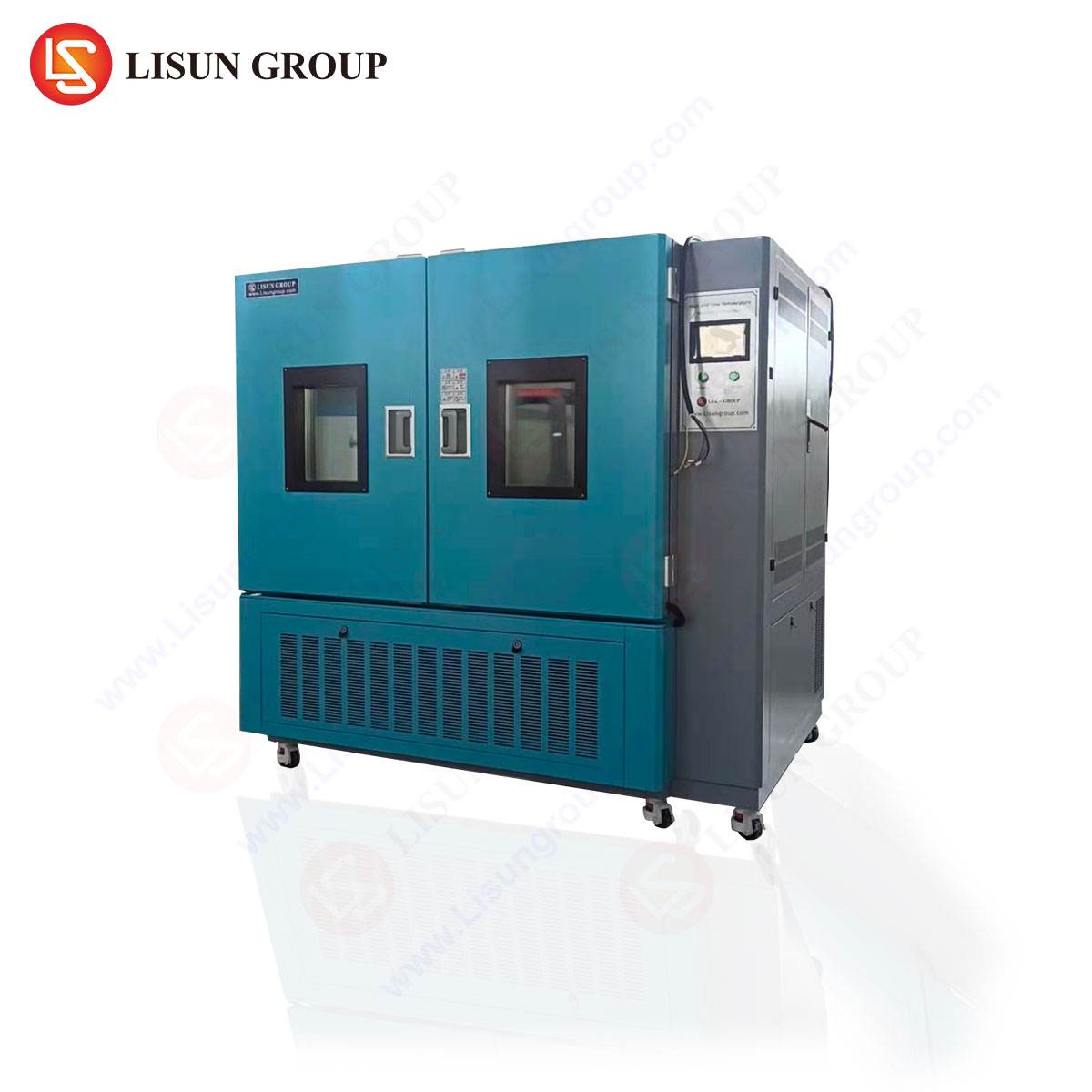
Cycling mode mimics real-world temperature variations, with ramp rates adjustable from 1°C/min to 10°C/min. This is critical for IEC 60068-2-14 test Nb, which requires rapid temperature changes. The system simultaneously records optical flux, resulting in a dataset that links mechanical stress (from coefficient of thermal expansion mismatch) to lumen degradation. Data analysis tools identify inflection points where failure mechanisms activate.
5.1 Integrating Sphere Design at Low Temperatures
Conventional integrating spheres suffer from air turbulence and coating degradation at extreme temperatures. LISUN employs a sealed sphere with inert gas purging (N2) to prevent condensation and maintain reflectance stability. The sphere’s inner coating has a temperature coefficient of <0.5% per 10°C, ensuring photometric error remains below 1.5% from -40°C to +100°C.
5.2 Calibration and Reference Standards
Before each test cycle, the system performs a self-calibration using a NIST-traceable standard lamp. This lamp is measured at room temperature, then the correction factor is applied to low-temperature measurements. For CIE 127-2007 compliance, the system uses a conditioned photometer head with a V(λ) filter, achieving Class A accuracy. This is crucial for automotive LED testing, where ambient temperature ranges from -40°C to 85°C.
6.1 Real-Time Monitoring and Alerts
The LISUN software provides a dashboard showing lumen depreciation curves, junction temperature estimates (via forward voltage method), and chamber humidity. Alerts trigger when degradation exceeds predefined thresholds, allowing engineers to terminate tests early. Data export to CSV and Excel facilitates integration with statistical tools like Minitab for Weibull analysis.
6.2 Arrhenius Model Parameters and Confidence Intervals
The software calculates activation energy from at least three test temperatures (e.g., 45°C, 70°C, 100°C) using linear regression of ln(lifetime) vs. 1/T (Kelvin). Output includes L70 and L50 with 90% confidence intervals, as per TM-21 guidelines. For TM-28-14, the model adapts to shorter test durations (3000 hours) by using a two-stage exponential decay model. This flexibility ensures accurate predictions for high-flux LED arrays.
7.1 Workflow Integration in QC Labs
A typical setup includes three chambers connected to one central control unit. Lab technicians can schedule tests for different product batches (e.g., automotive LEDs, horticultural lighting) simultaneously. The system complies with ISO 17025 requirements for calibration traceability, as it logs temperature sensor IDs and calibration dates. This simplifies audit readiness for IEC 60068 compliance reports.
7.2 Case Study: LED Driver Reliability Testing
An LED driver manufacturer used the LEDLM-84PL to test driver-IC temperature limits. By cycling between -30°C and +85°C, they identified solder joint cracking at -20°C, which reduced lumen output by 8% after 500 cycles. The software’s harsh environment mode (modified Arrhenius) predicted product lifetime of 10,000 hours, prompting a redesign with eutectic solder. This accelerated product release by two months.
LISUN’s Low Temperature Test Chamber Solutions for IEC 60068 Compliance | LISUN delivers a unified platform for verifying LED reliability against global standards. By integrating IES LM-80, LM-84, TM-21, and TM-28 methodologies with IEC 60068 thermal cycling, the LEDLM-80PL and LEDLM-84PL reduce test uncertainty and time-to-market. The Arrhenius-based software accurately extrapolates L70/L50 metrics from 6000-hour datasets, while customizable hardware supports diverse test protocols. For manufacturing and third-party labs, this solution ensures robust quality control, aligns with CIE 127 and LM-79-19 measurement guidelines, and enhances product credibility. Adopting LISUN’s technology enables proactive reliability engineering, mitigating field failures and warranty costs. Whether for LED packages, modules, or drivers, this system represents a strategic investment in predictive compliance and data-driven design optimization.
Q1: How does the LEDLM-80PL ensure measurement accuracy when the chamber temperature is below 0°C?
A: The system uses a sealed integrating sphere with nitrogen purging to prevent frost formation on optical surfaces. The photometric detector is thermally insulated and maintained at a constant 25°C to avoid electronic drift. Additionally, a heated window (optical grade fused silica) allows light transmission while blocking heat loss. The software applies a temperature correction factor derived from internal PT100 sensors, reducing total measurement error to <1.5%. This design complies with CIE 127-2007 Class A requirements, even at -40°C.
Q2: Can the system perform tests according to both IES LM-80 and IEC 60068 simultaneously?
A: Yes. The dual-mode operation allows users to run steady-state LM-80 tests in one chamber while executing thermal cycling per IEC 60068-2-14 in another. The central control unit logs data independently but can merge results for correlation analysis. However, for strict compliance, each test should use separate devices. The LEDLM-80PL supports three independent temperature setpoints, enabling parallel testing at 45°C, 55°C, and 85°C, which exceeds LM-80’s minimum of two temperatures.
Q3: How does the Arrhenius Model handle humidity, which is not a temperature stressor?
A: The standard Arrhenius Model only considers temperature. However, LISUN’s software includes an extended Peck model that adds humidity as a second stressor. Users can input relative humidity levels (e.g., 85% RH) and the software calculates a combined acceleration factor. This is particularly useful for IEC 60068-2-78 damp heat tests. The model uses empirical coefficients for silicone encapsulation materials, improving prediction accuracy for LED packages with high humidity sensitivity.