









Abstract
The assessment of fire resistance in electrical and electronic components is critical for ensuring product safety and regulatory compliance. One of the most stringent tests for evaluating the flammability of insulating materials is the needle flame test, which simulates the effect of a small flame from an internal fault or overload. This paper provides a technical analysis of the testing methodology as defined by IEC 60695-2-2 and IEC 60695-11-5. It examines the operational principles of the Needle Flame Test Chamber, specifically focusing on the model LISUN ZY-3, which is designed to meet these international standards. The paper discusses the challenges faced by manufacturers in quality control, including the need for precise flame control and repeatable testing conditions. By analyzing the technical specifications of the Needle Flame Test Chamber and its application across various industries—from lighting instruments to household appliances—this study demonstrates how standardized testing using a Needle Flame Test apparatus mitigates fire risks. The conclusion highlights the practical value of this equipment in validating material conformity and enhancing overall product safety in the global market.
Keywords: Needle Flame Test Chamber; IEC60695-2-2; Needle Flame Test apparatus; Flammability Testing; Electrical Safety
1. Introduction
Fire hazards originating from electrical equipment remain a primary concern for manufacturers, regulatory bodies, and end-users. Internal component failures, such as short circuits or overloads, can generate small ignition sources that may propagate into larger fires if insulating materials are not adequately flame-retardant. To address this, international standardization bodies have developed rigorous test methods. The IEC 60695 series, particularly IEC 60695-2-2, specifies the needle flame test, a method designed to simulate the effect of a small flame (typically 12 mm high) on a test specimen.
A significant challenge in implementing this test is achieving consistency and reproducibility across different laboratories. Variations in gas flow, burner design, and flame temperature can lead to non-uniform results. Consequently, the selection of a precise and compliant testing instrument is paramount. The LISUN ZY-3 Needle Flame Test Chamber has been developed specifically to meet the stringent requirements of IEC 60695-2-2 and IEC 60695-11-5. This paper analyzes the technical architecture of this Needle Flame Test apparatus, its operational principles, and its role in the broader context of fire hazard testing. The objective is to provide engineers and quality assurance professionals with a clear understanding of how this equipment facilitates reliable fire risk assessment.
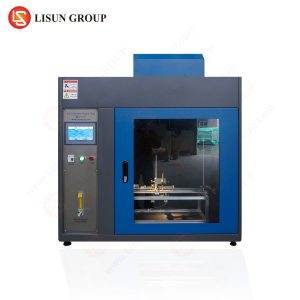
图1: LISUN ZY-3 Needle Flame Test Chamber for IEC 60695-2-2 Testing
2. Technical Principles of the Needle Flame Test
The needle flame test is a fundamental method for evaluating the flammability of materials used in electrotechnical products. It simulates a small flame source that might result from the ignition of a component due to an electrical fault.
2.1 The Principle of Simulated Fault Ignition
The core principle involves exposing a vertically oriented test specimen to a standardized needle flame for a defined period, usually 30 seconds. The flame is produced by burning a gas mixture (typically butane or propane) from a precision-ground needle burner. The standard requires the flame height to be precisely 12 mm ± 1 mm. The test assesses several parameters: whether the specimen ignites, the duration of any after-flame (flaming time), the distance of flame propagation, and whether burning droplets fall and ignite a base layer of tissue paper.
2.2 The LISUN ZY-3 Architecture
The LISUN ZY-3 Needle Flame Test Chamber is engineered to control these variables precisely. It features a combustion chamber with a viewing window to observe the test. The core component is the needle burner, which is designed to produce a consistent 12 mm flame. The apparatus includes a precise gas flow control system, a timing mechanism for the application time, and a specimen holder that allows for reproducible positioning. The chamber is also equipped with a draft shield to minimize external air currents that could affect flame stability. This design ensures that the test conditions strictly adhere to the parameters defined in IEC 60695-2-2.

Video 1: Demonstration of the Needle Flame Test apparatus operation
3. Standards Compliance and Testing Methodology
For a Needle Flame Test Chamber to be effective, it must strictly adhere to the international standards it claims to meet. The ZY-3 model is designed to comply with two primary standards.
3.1 IEC 60695-2-2 and IEC 60695-11-5
IEC 60695-2-2 provides the general requirements for the needle flame test method. It defines the test apparatus, the test procedure, and the method of evaluation. IEC 60695-11-5 specifically details the test flame used, specifying the burner design, gas supply, and flame characteristics. The LISUN ZY-3 is built to meet both these standards, ensuring that its output is globally recognized and acceptable for certification purposes. The test is typically performed on a single component or a small sub-assembly.
The standard procedure involves several steps:
1. **Preparation:** The specimen is conditioned according to the relevant product standard.
2. **Application:** The needle flame is applied to a specific point on the specimen for 30 seconds.
3. **Observation:** During and after application, the following are recorded:
– Whether the specimen ignites.
– The maximum height of flame propagation.
– The after-flame time after the test flame is removed.
– Whether burning particles or droplets fall and ignite the underlying tissue paper.
4. **Evaluation:** A material is considered to have passed the test if it does not ignite, or if the after-flame time is below a specified limit (e.g., 30 seconds) and no burning droplets fall.
Table 1: Key Technical Specifications of the LISUN ZY-3 Needle Flame Test Chamber
| Parameter | Specification | Standard Reference |
|---|---|---|
| Flame Height | 12 mm ± 1 mm | IEC 60695-11-5 |
| Burner Type | Precision Needle Burner | IEC 60695-2-2 |
| Flame Application Time | 0 – 99.9 s (adjustable) | IEC 60695-2-2 |
| Gas Type | Butane or Propane (95% purity min.) | IEC 60695-11-5 |
| Chamber Volume | >0.5 m³ | Standard Draft Shield |
| Test Standard Compliance | IEC 60695-2-2, IEC 60695-11-5 | International |
4. Practical Applications and Case Analysis
The Needle Flame Test apparatus is a critical tool in the quality control departments of numerous industries. Its application is mandatory for components that are in close proximity to potential ignition sources.
4.1 Application in Lighting and Electrical Instruments
In the lighting industry, components such as lamp holders, ballasts, and wiring insulation must pass the needle flame test. For instance, a manufacturer of high-pressure sodium lamps must ensure that the insulation of the internal wiring does not propagate a flame from a short circuit. Using a Needle Flame Test Chamber like the ZY-3 allows for rapid and standardized quality checks. Similarly, for household appliances like washing machines and refrigerators, control boards and terminal blocks are routinely tested to prevent fire hazards.
4.2 Case Study: Improving Material Selection
A common challenge is the selection of appropriate plastic materials. A manufacturer of power tools might initially use a standard polycarbonate for a motor housing. Upon testing with the Needle Flame Test apparatus, the material might exhibit excessive after-flame time or produce burning droplets. This forces the manufacturer to switch to a flame-retardant grade of polycarbonate or a different material altogether. The ZY-3 provides the quantitative data—such as after-flame time of 15 seconds versus a required limit of 30 seconds—that justifies this material change. This process minimizes fire risk and ensures compliance with global safety standards like IEC 60335 for household appliances.
5. Conclusion
The needle flame test, as defined by IEC 60695-2-2, is an indispensable method for the fire hazard assessment of electrical and electronic components. The precision required for this test—from flame height to application time—demands a highly accurate and reliable testing instrument. The LISUN ZY-3 Needle Flame Test Chamber fulfills these stringent requirements by providing a controlled environment, a precise burner system, and full compliance with international standards. Its application across diverse sectors, from lighting instruments to power tools, demonstrates its versatility in identifying material vulnerabilities and preventing fire propagation. By integrating this Needle Flame Test apparatus into their quality control processes, manufacturers can make data-driven decisions about material selection, thereby significantly reducing the risk of product-related fires. The future of fire safety testing will continue to rely on such standardized, reproducible methods to ensure the safety of consumers and property globally.
6. Frequently Asked Questions (FAQ)
Q1: What is the primary difference between the Needle Flame Test and the Glow Wire Test?
A: The Glow Wire Test simulates the thermal stress from an overheated component (e.g., a resistor), using a heated wire. The Needle Flame Test simulates the effect of a small flame from an ignition source (e.g., a spark or short-circuit arc). They evaluate different fire initiation scenarios.
Q2: What gas is typically required for the LISUN ZY-3 Needle Flame Test Chamber?
A: The ZY-3 requires a commercial grade of butane or propane gas with a minimum purity of 95%. The gas supply must be clean and free of contaminants to ensure a stable and consistent 12 mm flame height as per IEC 60695-11-5.
Q3: How often should the Needle Flame Test apparatus be calibrated?
A: Calibration frequency depends on usage intensity and internal quality procedures, but annual calibration is a standard industry practice. The flame height, gas flow rate, and timer should be verified against a certified reference to maintain compliance with IEC 60695-2-2.
Q4: Can the ZY-3 test large components or complete products?
A: No, the Needle Flame Test is designed for small components or sub-assemblies that can be mounted in the test chamber. The chamber volume is typically >0.5 m³ to ensure safe ventilation, but the focus is on the material behavior of a specific part, not a whole product.
Q5: What is the typical pass/fail criterion for the Needle Flame Test?
A: A common pass criterion is that the specimen does not ignite, or if it does, the after-flame time must be less than 30 seconds. Additionally, the specimen must not produce burning droplets that ignite a layer of tissue paper placed 200 mm below. Specific limits are often defined in the relevant product safety standard (e.g., IEC 60335).