









Abstract
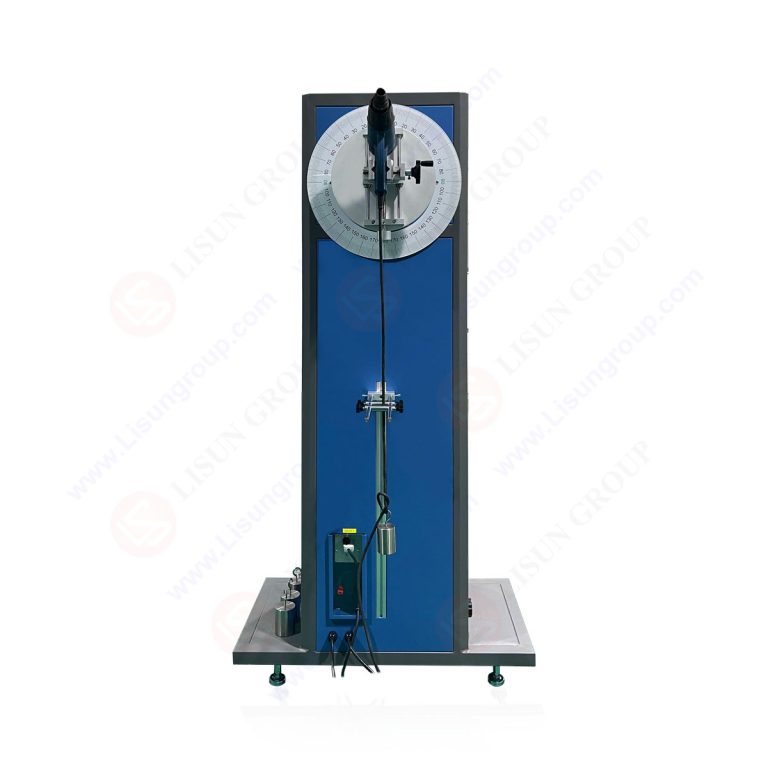
The LISUN SW Series Power Cord Flexibility Bending Tester represents a precision-engineered solution for evaluating the mechanical endurance of power cords under repeated flexing conditions. This PLC-controlled power cord bending tester addresses the critical need for automated, repeatable compliance testing against international standards such as IEC 60884-1 and IEC 60335-1. Designed for R&D and quality control professionals in household appliance manufacturing, hand-held tool production, and component supply chains, the SW Series integrates servo motor drive technology with programmable logic control to deliver precise bending cycles, load current monitoring, and automatic failure detection. This article provides a comprehensive technical examination of the SW Series architecture, operational parameters, standard compliance capabilities, and practical implementation strategies for rigorous cable reliability validation. The multi-station configurations, ranging from single to six test positions, enable parallel testing while maintaining individual station independence for diverse specimen evaluation.
1.1 PLC-Based Control System Design
The LISUN SW Series employs a programmable logic controller (PLC) as its central processing unit, managing all test sequences, parameter adjustments, and safety interlocks. The PLC architecture enables precise timing control for bending cycles, with programmable dwell times at each angular position ranging from 1 to 99 seconds. This digital control methodology eliminates the variability inherent in electromechanical timer-based systems, ensuring that each bending cycle maintains ±0.1 second accuracy over extended test durations. The control system interfaces with a human-machine interface (HMI) touchscreen, allowing operators to configure test parameters including bending angle adjustment from 0° to ±180°, bending speed ranging from 10 to 60 cycles per minute, and total cycle count up to 999,999 cycles. The PLC continuously monitors servo motor feedback signals to detect mechanical anomalies such as binding or excessive resistance, automatically halting the test when preset thresholds are exceeded.
1.2 Servo Motor Drive and Mechanical Actuation
Each test station incorporates an independent servo motor drive system, providing precise angular positioning with ±0.1° resolution. The servo motor assembly delivers controlled torque output up to 5 N·m for the SW-1 and SW-2 models, with the SW-6 six-station configuration scaling to 3 N·m per station due to shared power distribution. The mechanical actuation mechanism converts rotary motion into linear bending action through a cam-follower linkage, achieving smooth acceleration and deceleration profiles that prevent inertial overshoot. The bending fixture accommodates power cord diameters from 6 mm to 14 mm, with interchangeable clamping inserts for different cord geometries. The mechanical design incorporates self-lubricating bearings and hardened steel pivot points, achieving mechanical service life exceeding 2 million cycles before maintenance intervention.
2.1 Model Comparison and Station Architecture
The SW Series offers three distinct configurations to match laboratory throughput requirements. The SW-1 single-station model serves as an entry-level solution for low-volume testing or prototype validation, occupying a footprint of 600 × 400 × 500 mm. The SW-2 dual-station configuration enables simultaneous testing of two specimens, with independent parameter sets per station for comparing different cord constructions under identical or varied conditions. The SW-6 six-station model represents the highest throughput option, supporting parallel testing of up to six specimens while maintaining individual load current monitoring and failure detection per channel.
| Parameter | SW-1 Single Station | SW-2 Dual Station | SW-6 Six Station | IEC 60884-1 Minimum Requirement |
|---|---|---|---|---|
| Test Stations | 1 | 2 | 6 | 1 |
| Bending Angle Range | 0° to ±180° | 0° to ±180° | 0° to ±180° | ±90° |
| Bending Speed Range | 10-60 cycles/min | 10-60 cycles/min | 10-60 cycles/min | 30 ± 10 cycles/min |
| Load Current Capacity | 0.1-25 A | 0.1-20 A per station | 0.1-15 A per station | 0.2-10 A |
| Cycle Counter | 0-999,999 cycles | 0-999,999 cycles | 0-999,999 cycles | 10,000 cycles |
| Failure Detection | Current interrupt | Current interrupt | Current interrupt | Visual or electrical |
2.2 Independent Station Control and Data Logging
Each test station in the SW-2 and SW-6 models operates with complete parametric independence, allowing operators to test different cord types, bending angles, and load currents simultaneously. The PLC logs individual station data including cumulative cycles, elapsed test time, and failure event timestamps. The data logging system stores up to 100 test records internally, with export capability via USB interface to CSV format for external analysis. The independent station architecture prevents cross-contamination of test conditions, meaning a failure in one station does not interrupt testing in other active stations. This parallel testing capability reduces overall qualification time by a factor equal to the number of stations, representing significant efficiency improvements for high-volume compliance laboratories.
3.1 IEC 60884-1 Clause 24.2 Flexing Test Protocol
The SW Series directly implements the flexing test requirements specified in IEC 60884-1 Clause 24.2 for plugs and socket-outlets. The standard mandates a bending angle of ±90° from the vertical plane, applied at a rate of 30 ± 10 cycles per minute for 10,000 cycles when testing at room temperature. The equipment applies a specified load current based on the cord rating, typically 0.2 A for signal cables up to 10 A for heavy-duty power cords. The PLC-controlled bending tester maintains the precise angular displacement throughout the test, automatically adjusting servo parameters to compensate for mechanical wear. The test protocol requires monitoring for conductor breaks, insulation damage, or intermittent electrical continuity loss exceeding 0.1 seconds duration. The SW Series detects such failures through continuous current sensing with 10 ms response time, meeting the standard’s requirement for electrical continuity monitoring.
3.2 IEC 60335-1 Clause 25.14 Cord Anchorage and Flexing
For household appliances, IEC 60335-1 Clause 25.14 specifies flexing tests to verify cord anchorage integrity and conductor endurance. The standard requires 10,000 bending cycles for detachable cords and 20,000 cycles for non-detachable cords, with the specimen weighted to simulate typical service loads. The SW Series accommodates weighting fixtures up to 5 kg per station, with adjustable pulley systems to maintain consistent tension during bending. The standard also specifies that the bending speed shall not exceed 60 cycles per minute, which aligns with the SW Series upper speed limit. The equipment automatically calculates the required test duration based on the configured cycle count and speed, providing real-time progress indication on the HMI display. The test concludes with automatic station shutdown upon reaching the target cycle count or detecting a failure condition.
4.1 Continuous Load Current Monitoring
The SW Series integrates precision current sensing for each test station, using Hall-effect sensors with 0.5% accuracy across the full measurement range. The system applies a user-configurable load current through the power cord under test, typically set between 0.1 A and 25 A depending on model and cord rating. The PLC continuously compares the measured current against the configured threshold, detecting open-circuit conditions when current drops below 90% of the set value for more than 50 ms. This detection methodology identifies conductor fractures, connector separation, or intermittent contact failures before complete mechanical separation occurs. The system also monitors for short-circuit conditions, where current exceeds 110% of the set value, indicating insulation breakdown or conductor-to-conductor contact.
4.2 Automatic Stop Functions and Operator Safety
The safety architecture incorporates multiple automatic stop triggers to protect both the equipment and test specimens. Mechanical limits include over-travel detection at the bending end-stops, with servo drive shutdown within 20 ms of limit switch activation. Electrical safety includes ground fault monitoring for each station, with automatic power disconnection if leakage current exceeds 5 mA. The equipment enclosure meets IP20 protection requirements, with interlock switches on all access panels that halt all moving components within 100 ms of panel opening. The PLC maintains a fault log recording the trigger condition, station identification, and total cycles at the time of fault, enabling post-test analysis of failure mechanisms. The automatic stop functions operate independently of the main controller, using redundant hardware safety relays for fail-safe operation.
5.1 Incoming Material Qualification Protocols
Quality control departments in appliance manufacturing utilize the SW Series for incoming inspection of power cords from multiple suppliers. A typical qualification protocol involves testing five samples per production lot, applying 10,000 bending cycles at ±90° with the rated load current. The PLC logs individual sample performance, providing statistical data for supplier comparison. The test results inform acceptance criteria, with typical pass thresholds requiring zero conductor breaks and less than 5% increase in electrical resistance after the full test duration. The SW-6 six-station model enables batch testing of six samples simultaneously, completing lot qualification within 6.5 hours for 10,000-cycle tests at 30 cycles per minute. This throughput enables same-day release of incoming materials, reducing inventory holding costs while maintaining quality standards.
5.2 Design Validation Testing for New Cord Assemblies
R&D engineers employ the SW Series during the design validation phase for new power cord assemblies. The adjustable bending angle capability allows testing beyond standard requirements, typically performing 30,000 cycles at ±135° to evaluate safety margins. The variable speed control enables accelerated testing at 60 cycles per minute for preliminary screening, with subsequent verification at standard speeds. The load current adjustment function allows testing at 125% of rated current to evaluate thermal stress effects during mechanical flexing. The test results guide design decisions regarding conductor stranding, insulation material selection, and strain relief geometry. The data logging feature provides granular failure analysis, identifying whether failures occur at the connector junction, midpoint of the cord, or at the equipment entry point.
6.1 Accreditation-Ready Test Documentation
Third-party testing laboratories rely on the SW Series for generating compliance documentation that withstands accreditation audits. The PLC automatically records test parameters including operator identification, specimen description, ambient temperature, and applied load current at test initiation. During testing, the system generates time-stamped records of cycle count, current measurements, and any failure events with millisecond precision. The internal memory stores complete test records for each specimen, with data integrity verification through cyclic redundancy checks (CRC). The USB export function produces test reports in a format compatible with ISO/IEC 17025 documentation requirements, including raw data files and summary tables. The equipment calibration schedule, recommended at 12-month intervals, ensures metrological traceability to national standards through certified calibration weights and current sources.
6.2 Multi-Standard Testing Flexibility
The SW Series supports testing protocols across multiple international standards without hardware modification. Configuration files stored in the PLC enable rapid switching between IEC 60884-1, IEC 60335-1, IEC 60745-1, and GB/T 2099.1 without manual parameter re-entry. The standards library includes preset test sequences that automatically configure bending angle, speed, cycle count, and load current according to the selected standard. The system also supports custom test protocols for internal qualification requirements that may exceed standard specifications. For laboratories serving diverse client bases, this flexibility reduces setup time between test campaigns and minimizes operator errors in parameter configuration. The PLC firmware can be updated to incorporate new standard revisions, ensuring long-term compliance with evolving regulatory requirements.
7.1 Preventive Maintenance Schedule
Regular maintenance ensures the SW Series maintains its specified accuracy over extended operational life. Daily checks include verifying mechanical alignment of the bending fixtures, inspecting clamping surfaces for wear, and cleaning current sensing contacts with isopropyl alcohol. Weekly maintenance involves lubricating pivot points with lithium-based grease and checking belt tension on the servo drive mechanism. Monthly calibration verification includes measuring bending angle accuracy using a digital protractor, confirming ±0.5° tolerance, and verifying current sensor accuracy using a calibrated shunt resistor. The PLC stores calibration coefficients for each sensor channel, automatically applying corrections to maintain measurement accuracy between annual calibration intervals.
7.2 Troubleshooting Common Operational Issues
Common operational issues and their resolutions include station failure to reach target bending angle, typically caused by mechanical binding at pivot points requiring lubrication or bushing replacement. Intermittent current monitoring alarms may indicate degraded sensor connections or electrical noise from adjacent high-power equipment, addressed by checking shielded cable connections and verifying ground integrity. PLC communication errors with the HMI touchscreen often resolve through USB cable replacement or firmware reinstallation. The equipment includes self-diagnostics accessible through the HMI service menu, providing real-time status of servo encoder signals, sensor inputs, and safety relay states. The diagnostics function records the last 50 alarm events with timestamp and station identification, facilitating rapid troubleshooting and minimizing downtime.
The LISUN SW Series Power Cord Flexibility Bending Tester delivers a robust, PLC-controlled platform for conducting rigorous power cord reliability validation in compliance with international standards including IEC 60884-1, IEC 60335-1, IEC 60745-1, and GB/T 2099.1. The integration of servo motor drive technology ensures precise angular control within ±0.1°, while the multi-station configurations enable parallel testing throughput ranging from one to six specimens simultaneously. The current-based failure detection system provides 10 ms response time for identifying conductor fractures, insulation breakdown, or connector failures, enhancing test reliability and operator safety through automatic stop functions. For R&D and quality control engineers in appliance manufacturing and component supply chains, the SW Series offers documented, repeatable test protocols that support incoming material qualification, design validation, and compliance certification. Third-party laboratories benefit from accreditation-ready documentation and multi-standard flexibility that reduces setup time between test campaigns. By automating the mechanical endurance evaluation of power cords, the SW Series reduces testing variability compared to manual methods while increasing throughput by up to 600% in multi-station configurations. The equipment represents a essential investment for organizations seeking to validate power cord reliability against stringent global safety standards.
Q1: How does the SW Series determine when a power cord fails during bending testing?
A: The SW Series employs continuous load current monitoring through Hall-effect sensors with 0.5% accuracy across the 0.1 A to 25 A measurement range. The PLC compares measured current against the user-configured setpoint, typically set to the cord’s rated current. The system detects open-circuit failures when current drops below 90% of the setpoint for more than 50 milliseconds, indicating conductor fracture or connector separation. Short-circuit detection occurs when current exceeds 110% of the setpoint, suggesting insulation breakdown or conductor-to-conductor contact. The failure detection triggers automatic station shutdown within 20 ms, and the event is logged with timestamp and cumulative cycle count for subsequent analysis. This method complies with IEC 60884-1 Clause 24.2 requirements for electrical continuity monitoring during flexing tests.
Q2: Can the SW-6 six-station model test different types of power cords simultaneously?
A: Yes, each test station in the SW-6 operates with complete parametric independence, allowing simultaneous testing of different cord types, diameters, and ratings. Each station has independent control over bending angle (0° to ±180°), bending speed (10 to 60 cycles per minute), load current (0.1 A to 15 A per station), and total cycle count (up to 999,999 cycles). For example, Station 1 can test a 1.0 mm² appliance cord at 10 A with ±90° bending, while Station 3 tests a 0.75 mm² signal cable at 0.5 A with ±45° bending. The PLC manages all stations concurrently, with individual failure detection per channel. This parallel independent operation enables laboratories to process diverse test requests simultaneously, reducing overall testing time compared to sequential single-station testing. The independent architecture also means a failure in one station does not interrupt testing in other active stations.
Q3: What calibration procedures are required to maintain IEC compliance for the SW Series?
A: The SW Series requires annual calibration to maintain measurement traceability and compliance with ISO/IEC 17025 requirements for testing laboratories. The calibration procedure includes three primary verifications: bending angle accuracy using a digital protractor with ±0.1° resolution, confirming the servo positioning maintains ±0.5° tolerance across the full range. Current sensor accuracy verification uses a calibrated shunt resistor traceable to national standards, confirming ±0.5% accuracy at five points across the measurement range. Cycle counter accuracy is verified against an independent timer, confirming ±1 cycle accuracy over 10,000 cycles. The PLC stores calibration coefficients for each sensor channel, automatically applying corrections between calibration intervals. Monthly in-house verification includes checking mechanical alignment and cleaning current sensing contacts. Calibration certificates should document all measurement points, as-found and as-left values, and uncertainty calculations per ISO Guide 98-3.
Q4: How does the SW Series handle testing of power cords with strain relief or molded connectors?
A: The SW Series accommodates power cords with strain relief and molded connectors through interchangeable clamping fixtures designed for different cord geometries. The bending fixture includes adjustable clamping plates that secure the cord at the test point specified by relevant standards, typically 100 mm from the strain relief or connector entry point. For cords with molded connectors, the fixture includes a recessed mounting plate that positions the connector body without applying stress to the molding interface. The test protocol applies the bending moment at the specified distance from the connector, ensuring the mechanical stress distribution matches actual service conditions. The servo motor drive maintains constant angular displacement regardless of cord stiffness variations, ensuring consistent test conditions for cords with different flexibility characteristics. The auto-stop function detects if the strain relief transfers excessive stress to the connector junction, triggering failure detection if electrical continuity is interrupted at any point in the assembly.
Q5: What is the typical test duration for a standard IEC 60884-1 flexing test using the SW-6?
A: For a standard IEC 60884-1 Clause 24.2 flexing test requiring 10,000 cycles at 30 cycles per minute, the total test duration is approximately 5.6 hours when accounting for ramp-up and ramp-down sequences. The SW-6 completes six specimens simultaneously in this timeframe, yielding an effective test time of 0.93 hours per specimen. Accelerated testing at 60 cycles per minute reduces duration to 2.8 hours for six specimens, though the final qualification must be verified at standard speed per the standard’s requirements. The PLC automatically calculates completion time based on configured parameters and displays real-time progress on the HMI. For producers testing large batches, the SW-6 enables completion of 48 specimens (eight batches of six) within a standard 8-hour shift when running continuous operation. The equipment supports overnight unattended operation with automatic shutdown upon test completion or failure detection, maximizing laboratory utilization without requiring operator presence during extended tests.