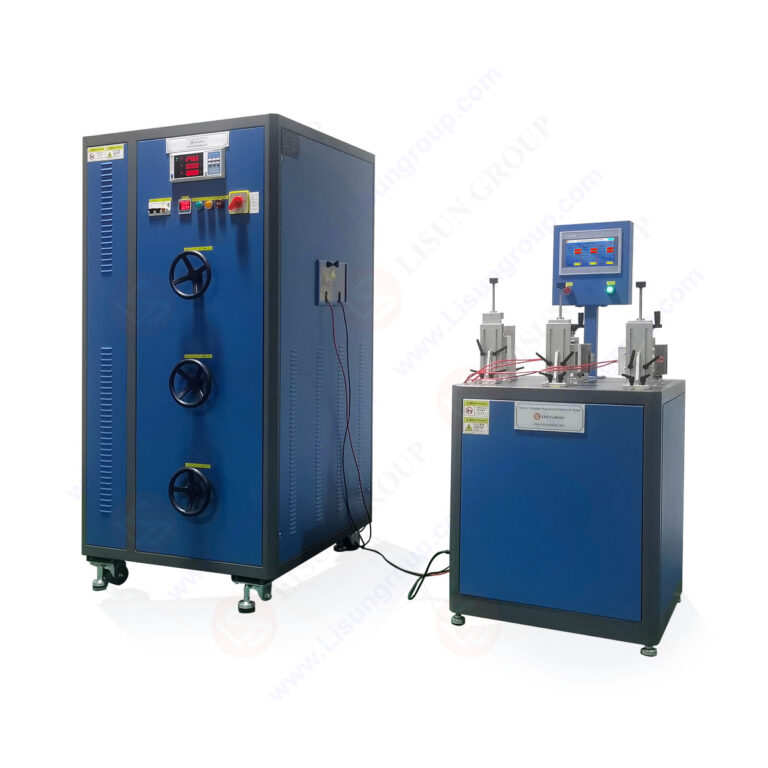
This article provides a comprehensive technical guide on plug socket breaking capacity testing, covering international standards, testing methodologies, and equipment specifications for verifying electrical safety and durability of plugs, sockets, and switches. The primary focus is on evaluating breaking capacity under load conditions to prevent electrical fatigue failure and contact adhesion. LISUN’s CZKS-3 series plug and socket breaking capacity testers enable precise, automated compliance verification against IEC 60884-1, IEC 60669-1, and GB/T 2099.1 standards. The article details testing parameters, operational principles, and application scenarios for household and automotive electronics. A technical comparison table of the CZKS-3 variants—CZKS-3P, CZKS-3S, and CZKS-3A—provides numerical data on voltage ranges, current capacities, and cycle counts. The guide concludes with practical insights into selecting appropriate testing configurations for manufacturing and third-party laboratory environments.
1.1 Defining Breaking Capacity in Electrical Components
Breaking capacity refers to the maximum electrical load that a plug, socket, or switch can safely interrupt without experiencing arc-induced damage, contact welding, or insulation breakdown. In plug socket breaking capacity testing, this parameter is critical for verifying that a device can disconnect under rated voltage and current conditions without creating hazardous conditions. The test simulates worst-case operational scenarios, including overload and short-circuit conditions, to ensure that the contact mechanism remains functional after repeated interruptions. IEC 60884-1 Clause 20 specifies breaking capacity test procedures for plugs and sockets, requiring devices to interrupt a predetermined current at a specific voltage for a defined number of cycles.
1.2 Importance for Safety Compliance
Manufacturers must validate breaking capacity to obtain certifications such as CE, UL, or CCC marks. Non-compliance can lead to product recalls, liability claims, and safety incidents. A device with insufficient breaking capacity may fail catastrophically, causing electrical fires or electric shock hazards. The CZKS-3 series testers from LISUN provide automated solutions for conducting these tests with high repeatability, eliminating human error. Testing under controlled conditions reveals weaknesses in contact geometry, spring tension, and arc suppression mechanisms. For household applications, breaking capacity testing ensures that a standard 10A or 16A socket can disconnect under load without sustaining damage that compromises future operation.
1.3 Scope of This Technical Guide
This article covers the fundamental principles, standards, and methodologies for plug socket breaking capacity testing. It provides detailed insights into the technical specifications of the CZKS-3 series, including the CZKS-3P for single-phase testing, the CZKS-3S for three-phase applications, and the CZKS-3A for automotive-grade connectors. The guide also addresses common challenges such as arcing erosion, contact bounce, and mechanical wear. Application scenarios include manufacturing quality control, type-testing laboratories, and research institutions specializing in electrical component reliability.
2.1 IEC 60884-1: Plugs and Socket-Outlets for Household and Similar Purposes
IEC 60884-1 is the primary international standard for plug and socket testing. Clause 20.1 requires that socket-outlets withstand 50 cycles of breaking capacity tests at 1.25 times rated current for resistive loads. The test voltage must equal 1.1 times the rated voltage. For example, a 10A 250V socket undergoes testing at 12.5A and 275V. The standard mandates that no flashover or persistent arcing occurs during the test, and contact resistance must remain within acceptable limits afterward. The CZKS-3 series automates these cycles with programmable voltage and current settings, ensuring precise adherence to test parameters.
2.2 IEC 60669-1: Switches for Household and Similar Fixed Electrical Installations
For switch durability testing, IEC 60669-1 Clause 19 outlines breaking capacity requirements. Switches must interrupt rated current at rated voltage for 200 cycles under inductive loads, with power factor correction applied. The standard differentiates between AC and DC switching, with DC tests requiring higher arc suppression measures. The CZKS-3 series supports both AC and DC testing modes, enabling comprehensive evaluation of toggle, push-button, and rotary switches. Compliance with IEC 60669-1 is essential for building fixture switches used in residential and commercial installations.
2.3 IEC 61058-1: Switches for Appliances
IEC 61058-1 governs switches integrated into appliances, such as those in coffee makers or power tools. Clause 15 specifies breaking capacity tests at 1.1 times rated voltage and 1.25 times rated current for 50 operations. The standard includes endurance testing under resistive, inductive, and motor load conditions. The CZKS-3A variant is optimized for these applications, offering lower current ranges suitable for small appliance switches. Adherence to IEC 61058-1 ensures that appliance switches can safely interrupt power during normal use and fault conditions.
2.4 GB/T 2099.1: Chinese National Standard for Plugs and Sockets
GB/T 2099.1 mirrors many requirements of IEC 60884-1 but includes additional tests for higher ambient temperature conditions and specific mechanical endurance. Clause 22 requires breaking capacity tests at 1.25 times rated current for 50 cycles followed by thermal rise measurements. The standard is mandatory for products sold in the Chinese market. The CZKS-3 series incorporates these requirements as factory-preset test sequences, simplifying certification processes for manufacturers exporting to China.
3.1 Overview of the CZKS-3 Platform
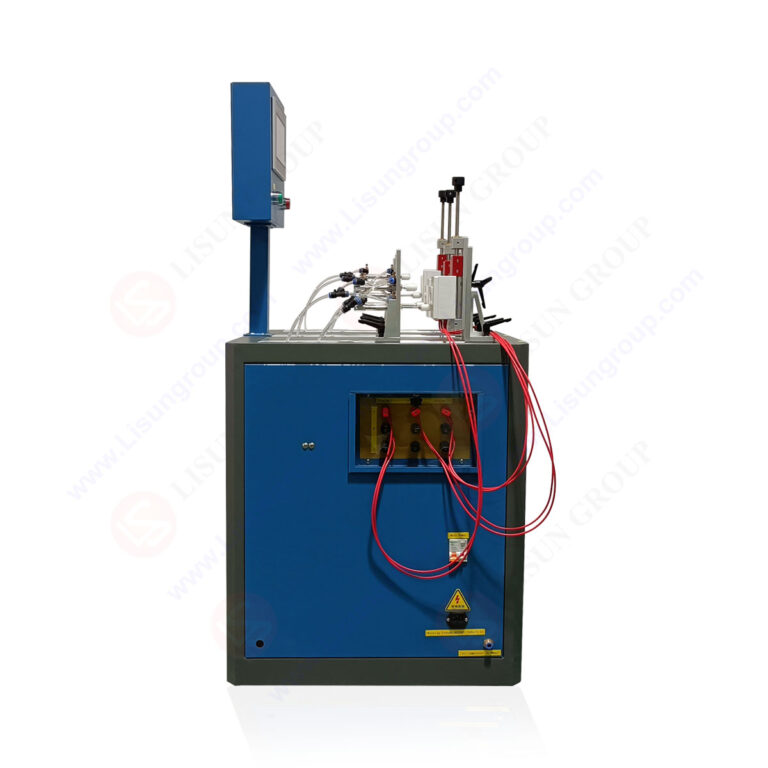
The LISUN CZKS-3 series plug socket breaking capacity tester is a PLC-controlled, cylinder-driven automated test system designed for high-throughput reliability assessment. The platform integrates a programmable power supply, contact resistance measurement unit, and mechanical actuation system into a single chassis. The tester supports multiple test protocols stored in non-volatile memory, allowing operators to switch between standards without reprogramming. The system logs test results, including peak current, arc duration, and contact resistance after each cycle, enabling detailed failure analysis.
3.2 Variant Specifications Comparison
The CZKS-3 series includes four models tailored to different testing requirements. The table below summarizes key technical parameters.
| Parameter | CZKS-3 | CZKS-3P | CZKS-3S | CZKS-3A |
|---|---|---|---|---|
| Rated Voltage Range | 50-250V AC | 50-300V AC | 50-500V AC | 5-50V DC |
| Rated Current Range | 1-20A | 1-30A | 1-50A | 0.5-10A |
| Test Cycles per Standard | 50-200 | 50-200 | 50-100 | 100-500 |
| Load Type | Resistive | Resistive/Inductive | Resistive/Inductive/Motor | Resistive/Inductive |
| Contact Resistance Measurement | Yes | Yes | Yes, with Kelvin probes | Yes |
| Applicable Standards | IEC 60884-1, GB/T 2099.1 | IEC 60884-1, IEC 60669-1 | IEC 60669-1, IEC 61058-1 | IEC 61058-1, ISO 7637 |
3.3 CZKS-3S for Three-Phase Applications
The CZKS-3S variant supports three-phase breaking capacity testing up to 500V AC, making it suitable for industrial plugs and sockets used in machinery and commercial kitchens. The system includes three independent load banks that can be configured for star or delta connections. Phase-angle control enables testing at specific switching angles to simulate worst-case arc initiation. This variant is essential for compliance with IEC 60309, the standard for industrial plugs and socket-outlets.
4.1 Pre-Test Preparation and Setup
Before initiating plug socket breaking capacity testing, operators must calibrate the CZKS-3 system for the specific device under test. The test sample is mounted in a fixture that replicates real-world installation conditions, including cable strain and enclosure proximity. The power supply is set to 1.1 times rated voltage, and the load bank is adjusted to 1.25 times rated current. For inductive loads, the power factor is set between 0.6 and 0.8 using an LCR network. The system performs a pre-check to ensure contact resistance is below the standard’s threshold, typically 50 milliohms for household sockets.
4.2 Cycle Execution and Monitoring
The CZKS-3 series executes breaking capacity cycles using a pneumatic cylinder that actuates the plug insertion and withdrawal mechanism. Each cycle involves plugging the test sample into a powered socket, holding for 1-3 seconds to allow current stabilization, then withdrawing at a controlled speed. The system monitors arc voltage and current in real-time, triggering an alarm if arc duration exceeds 2 milliseconds for AC or 5 milliseconds for DC. After disconnection, the sample is rated to ensure no electrical fatigue failure occurs. The system records contact resistance after every 10 cycles to track degradation.
4.3 Post-Test Evaluation and Pass/Fail Criteria
Upon completion of the required cycles, the test sample undergoes visual inspection for physical damage such as melted insulation, pitted contacts, or carbon tracking. Electrical tests include insulation resistance measurement at 500V DC and dielectric strength testing at 2000V AC for 1 minute. The sample passes if contact resistance increase is less than 50% from initial measurements, no flashover occurs during dielectric testing, and mechanical operation remains smooth. The CZKS-3 series automatically generates a test report summarizing all measurements and indicating pass/fail status.
5.1 Household Plug and Socket Manufacturing
Manufacturers of household electrical accessories use the CZKS-3 series for batch testing of production samples. The system’s automated cycling capability allows testing of up to 100 samples per shift, providing statistical data for process control. For example, a factory producing 16A sockets can run the CZKS-3P in continuous mode for 50 cycles per sample, identifying early failures caused by inconsistent spring tension or contact plating defects. The system’s data logging enables traceability required by ISO 9001 quality management systems.
5.2 Automotive Connector Durability Testing
Automotive connectors face harsh operating environments including vibration, temperature extremes, and high inrush currents. The CZKS-3A variant is specifically designed for testing low-voltage DC connectors used in electric vehicles and infotainment systems. The system tests breaking capacity at 12V and 48V systems, with current ranging from 1A to 10A. Testing includes 500 cycles at 1.25 times rated current to ensure connectors can withstand repeated disconnections during maintenance or fault conditions. The CZKS-3A’s integrated temperature measurement tracks contact heating during high-current cycles.
5.3 Third-Party Certification Laboratories
Accredited testing laboratories use the CZKS-3 series for type-testing certification services. The system’s ability to store multiple test protocols simplifies workflow management. For instance, a laboratory can test a client’s switch design against IEC 60669-1 in the morning and then test a socket-outlet against IEC 60884-1 in the afternoon without reconfiguration. The system’s calibration certificates and traceable measurements support ISO/IEC 17025 accreditation requirements. The CZKS-3S variant is particularly valuable for laboratories handling industrial three-phase equipment.
6.1 Arc Erosion and Contact Degradation
During plug socket breaking capacity testing, the electric arc that forms during contact separation erodes the contact material through vaporization and splatter. Silver-cadmium oxide and silver-tin oxide alloys are commonly used in contacts to resist erosion. However, repeated arcing can create craters and uneven surfaces that increase contact resistance over time. The CZKS-3 series’ ability to measure contact resistance after each cycle provides quantifiable data on degradation rates. For example, a 10A socket may show contact resistance increasing from 10 milliohms to 25 milliohms after 50 cycles, indicating impending failure.
6.2 Contact Adhesion and Welding
Contact adhesion occurs when the molten metal generated by the arc resolidifies, creating a mechanical bond between plug pins and socket contacts. This phenomenon is more prevalent in DC systems due to the lack of current zero-crossing. The CZKS-3A variant includes a high-speed current interruption feature that detects welding by measuring the force required to withdraw the plug after a test cycle. If withdrawal force exceeds 50 Newtons, the system identifies contact adhesion and flags the sample as a failure. Prevention measures include using contact materials with lower weldability and implementing faster contact separation mechanisms.
6.3 Thermal Runaway in Overloaded Conditions
When breaking capacity tests are conducted at overcurrent conditions (1.25 times rated current), the heat generated at the contact interface can accelerate oxidation and material softening. Thermal runaway occurs when contact resistance increases due to oxidation, generating more heat, which further accelerates oxidation. The CZKS-3 series monitors contact temperature using infrared sensors, providing early warning when temperature exceeds safe thresholds. For example, a socket outlet passing 12.5A continuously may reach 120°C at the contact point, approaching the melting point of typical contact alloys. Post-test dielectric strength tests verify that insulation has not degraded due to thermal stress.
7.1 Calibration and Maintenance of Test Equipment
Accurate plug socket breaking capacity testing requires regular calibration of the CZKS-3 series. Voltage and current measurements should be verified using a certified reference meter every 12 months. The pneumatic cylinder’s stroke speed and distance must be checked to ensure repeatability, as improper actuation can skew test results. Operators should perform daily visual inspections of contact fingers and load bank resistors for signs of damage or discoloration. LISUN provides calibration services and spare parts to maintain system accuracy over its operational lifespan.
7.2 Sample Preparation and Handling
Test samples must be conditioned at standard laboratory conditions (23°C ± 5°C, 50% ± 20% relative humidity) for at least 24 hours before testing. The plug pins should be cleaned with isopropyl alcohol to remove manufacturing residues that could affect contact resistance measurements. For automotive connectors, the CZKS-3A requires pre-mating the connector 10 times to stabilize the contact interface before beginning breaking capacity cycles. Operators should wear grounded wrist straps to prevent electrostatic discharge damage to electronic components integrated into smart plugs or switches.
7.3 Data Analysis and Reporting
The CZKS-3 series generates comprehensive test reports that include cycle-by-cycle contact resistance, arc duration, maximum temperature, and a histogram of failure modes. Engineers should analyze trends in contact resistance over cycles to predict remaining life. For example, a linear increase in contact resistance suggests uniform erosion, while a sudden spike indicates localized damage. The report format complies with IEC 60884-1 Annex A requirements, facilitating submission to certification bodies. Data archiving supports long-term reliability studies and product improvement initiatives.
Plug socket breaking capacity testing is a cornerstone of electrical safety compliance, ensuring that connectors can safely interrupt currents under fault conditions without causing hazardous failures. The LISUN CZKS-3 series provides a robust, automated solution that addresses the testing requirements of multiple international standards, including IEC 60884-1, IEC 60669-1, IEC 61058-1, and GB/T 2099.1. With variants spanning the CZKS-3 for household applications, the CZKS-3P for enhanced current ranges, the CZKS-3S for three-phase industrial testing, and the CZKS-3A for automotive-grade connectors, this platform offers flexibility for diverse testing scenarios. The system’s PLC-controlled actuation, real-time monitoring, and data logging capabilities reduce testing time while improving accuracy and repeatability. By enabling early detection of electrical fatigue failure, contact adhesion, and thermal runaway, the CZKS-3 series helps manufacturers and laboratories validate product reliability before market introduction. Adopting systematic breaking capacity testing not only fulfills regulatory requirements but also enhances brand reputation through demonstrated commitment to safety and quality.
Q1: What is the difference between breaking capacity and making capacity in plug socket testing?
A: Breaking capacity refers to the ability of a plug or socket to safely interrupt an electrical circuit while current is flowing, typically measured as the maximum current that can be interrupted at rated voltage. Making capacity, conversely, is the ability to close a circuit onto a fault without causing damage. In plug socket breaking capacity testing, the focus is on the disconnection event, which must occur without sustained arcing, contact welding, or insulation failure. The CZKS-3 series tests breaking capacity by withdrawing the plug from a powered socket under controlled load conditions. Making capacity is usually tested separately using a different protocol that involves plugging into an energized socket. Both parameters are critical for comprehensive safety assessment under IEC 60884-1.
Q2: How does the CZKS-3 series handle inductive load testing compared to resistive loads?
A: Inductive loads, such as those from motors or transformers, require different testing parameters due to the stored magnetic energy that is released during current interruption. This energy can sustain the arc longer, increasing contact erosion. The CZKS-3 series accommodates inductive loads by integrating a programmable LCR network that adjusts the power factor to specified values (typically 0.6 to 0.8). The system also modifies the withdrawal speed to ensure that the arc is extinguished within standard limits. For the CZKS-3S variant, inductive load testing includes phase-angle control to initiate interruption at the peak current point, representing worst-case conditions. The system measures arc energy (in joules) to provide quantitative data on stress levels.
Q3: Can the CZKS-3A be used for testing USB-C connectors under ISO 7637 standards?
A: Yes, the CZKS-3A variant is suitable for testing USB-C and other DC connectors under ISO 7637, which governs conducted transients in road vehicles. The system supports voltage ranges from 5V to 50V DC and current ranges from 0.5A to 10A, covering typical USB power delivery parameters. Testing under ISO 7637 involves applying transient pulses that simulate load dump and switching disturbances in automotive electrical systems. The CZKS-3A can be programmed to inject these transients during breaking capacity cycles, assessing connector performance under real-world vehicle conditions. The system’s high-speed data acquisition (10 MHz sampling rate) captures transient waveforms for analysis.
Q4: What maintenance is required for the pneumatic cylinder system in the CZKS-3 series?
A: The pneumatic cylinder system requires periodic lubrication of the rod seals and cylinder walls using non-conductive pneumatic oil every 500 test cycles. Operators should inspect the cylinder’s air filter and regulator for moisture or debris accumulation on a weekly basis. The stroke position sensors should be calibrated monthly to ensure the plug withdrawal distance remains consistent at 10mm ± 0.5mm. If inconsistent cycle times are observed, the cylinder’s piston seal may need replacement. LISUN provides a maintenance kit that includes seals, lubricant, and replacement air hoses. Proper maintenance extends the cylinder’s service life to over 50,000 cycles without performance degradation.
Q5: How does environmental temperature affect breaking capacity test results?
A: Ambient temperature significantly impacts breaking capacity test results because contact resistance and arcing behavior change with temperature. At elevated temperatures (above 35°C), contact materials oxidize more rapidly, leading to increased contact resistance and higher arc intensity. The CZKS-3 series can be configured to operate within a temperature-controlled chamber for tests requiring specific thermal conditions. For standard compliance testing per IEC 60884-1, the laboratory environment must be maintained at 23°C ± 5°C. If field conditions warrant testing at extremes, the system’s thermal monitoring capabilities track contact temperature independently of ambient conditions, providing accurate data for derating calculations.