









The LISUN RFCI61000-6 series RF Conducted Immunity Test System provides a comprehensive solution for power equipment conducted immunity testing in accordance with international EMC standards. This integrated platform combines a signal source, power amplifier, and power meter within a single enclosure, enabling precise RF interference injection from 150 kHz to 230 MHz. Designed for technical professionals in EMC compliance, the system supports multiple injection methods including coupling-decoupling networks (CDN), electromagnetic clamps, and current injection probes. Available in 35W and 85W output power variants, the system addresses conducted immunity requirements for LED manufacturing, medical devices, power equipment, industrial control, new energy charging stations, and communications infrastructure. This article examines the system’s technical architecture, compliance capabilities, and practical applications for regulatory validation.
1.1 Integrated Signal Generation and Amplification Module
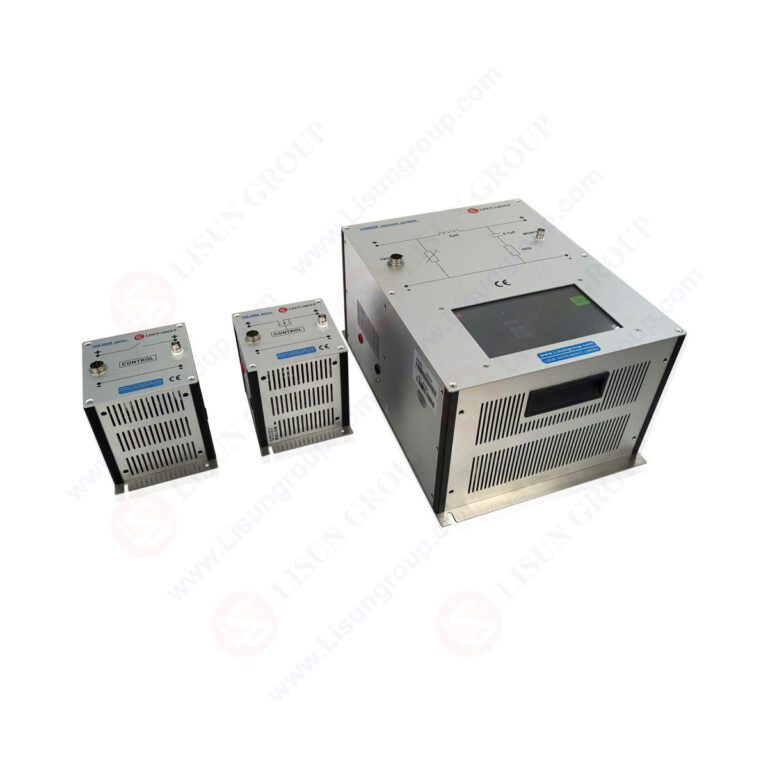
The RFCI61000-6 series features a fully integrated RF signal source capable of generating continuous-wave (CW), amplitude-modulated (AM), and pulse-modulated signals across the 150 kHz to 230 MHz frequency range. The signal source provides frequency resolution of 1 Hz with level accuracy within ±1 dB. The internal power amplifier delivers rated output power with less than 1.5:1 voltage standing wave ratio (VSWR) under full load conditions, ensuring minimal reflected power and stable injection into the equipment under test (EUT). The integration eliminates external cabling losses and reduces calibration uncertainty compared to discrete component configurations.
1.2 Power Measurement and Leveling Control
The built-in power meter operates with a measurement range of -20 dBm to +40 dBm and provides closed-loop leveling control for maintaining consistent RF injection levels. The system employs a dual-path measurement architecture that monitors both forward and reflected power simultaneously. Real-time power adjustment compensates for impedance variations in the EUT and coupling network, maintaining test level accuracy within ±1.5 dB across the full frequency spectrum. This automated leveling capability reduces test time and improves repeatability compared to manual adjustment methods.
1.3 Touchscreen Interface and Automation Integration
A 7-inch color touchscreen interface provides direct access to test parameter configuration, including frequency sweeps, modulation settings, and injection method selection. The system supports GPIB, RS-232, and USB interfaces for remote operation and integration with automated test sequences. Pre-programmed test routines align with IEC 61000-4-6 test level requirements, allowing operators to initiate compliance tests with minimal configuration effort. The interface displays real-time power readings, VSWR status, and test progress indicators.
2.1 Coupling-Decoupling Network (CDN) Compatibility
The RFCI61000-6 series supports the full range of CDN types specified in IEC 61000-4-6, including CDN-M1, CDN-M2, CDN-M3, CDN-S1, CDN-S2, CDN-S3, CDN-S4, CDN-AF2, and CDN-AF4. Each CDN provides defined impedance characteristics for specific cable types and signal configurations. The system automatically detects connected CDN models and adjusts calibration parameters accordingly. Maximum injection voltage reaches 140 dBµV (10 V) into 50-ohm systems for conducted immunity testing, with CDN insertion loss compensated through the power leveling algorithm.
2.2 Electromagnetic Clamp and Current Probe Methods
For applications where direct CDN connection is impractical due to cable size or accessibility constraints, the system supports electromagnetic clamp injection per IEC 61000-4-6 Clause 7.3. The EM-clamp method provides inductive coupling to multi-conductor cables without galvanic connection, maintaining EUT isolation during testing. Current injection probes (CIP) enable testing on individual conductors or bundled cables where specific injection points are required. The system’s power amplifier maintains rated output into the low-impedance load presented by current probes through adaptive impedance matching.
2.3 Direct Injection for Shielded Enclosures
Direct RF injection into shielded enclosures or screened rooms follows the procedures defined in IEC 61000-4-6 Annex B. The RFCI61000-6 series provides calibrated injection ports with N-type connectors for connecting to bulkhead feedthroughs. The system’s low VSWR characteristic (<1.5:1) minimizes standing wave effects within the injection path, ensuring uniform field application to the EUT. Direct injection is particularly relevant for testing large power equipment where cable bundles exceed CDN current ratings.
3.1 Alignment with IEC 61000-4-6 and EN 61000-4-6
The RFCI61000-6 series directly implements the test level requirements from IEC 61000-4-6 Edition 5.0 2023-09, including Level 1 (120 dBµV), Level 2 (130 dBµV), Level 3 (140 dBµV), and Level X (user-defined). The system supports the mandatory 80% amplitude modulation at 1 kHz for immunity testing per Clause 6.2. Frequency step sizes follow the recommended 1% logarithmic intervals for swept measurements. The system automatically calculates dwell time based on EUT response time constants, with minimum dwell time of 1 second per frequency step.
3.2 GB/T 17626.6 Compliance for Chinese Market
For products targeting the Chinese market, the system supports GB/T 17626.6-2017 test requirements, which align closely with IEC 61000-4-6 but include specific injection level adjustments for 220V/50Hz power systems. The RFCI61000-6 series provides pre-configured test profiles for GB/T 17626.6 levels, including the required frequency range of 150 kHz to 80 MHz for conducted immunity testing. Additional upper range extension to 230 MHz accommodates enhanced testing requirements specified in GB/T 17626.6 Annex C for specific product categories.
3.3 Product-Specific Standards and Application Notes
The system includes application-specific test configurations for IEC 60601-1-2 (medical electrical equipment), CISPR 11/EN 55011 (industrial, scientific, and medical equipment), and IEC 61851-21-1 (electric vehicle conductive charging systems). Pre-loaded test sequences adjust injection levels, frequency ranges, and modulation parameters according to each standard’s requirements. The system maintains calibration records for each test configuration, supporting audit documentation requirements for regulatory submissions.
4.1 Power Output and Frequency Characteristics
| Parameter | RFCI61000-6-35W | RFCI61000-6-85W | IEC 61000-4-6 Requirement |
|---|---|---|---|
| Output Power (CW) | 35 W (45.4 dBm) | 85 W (49.3 dBm) | >10 V (140 dBµV) into 50Ω |
| Frequency Range | 150 kHz – 230 MHz | 150 kHz – 230 MHz | 150 kHz – 80 MHz (minimum) |
| Output Impedance | 50 Ω | 50 Ω | 50 Ω nominal |
| VSWR (full range) | <1.5:1 | <1.5:1 | <2.0:1 recommended |
| Harmonic Distortion | <-20 dBc | <-20 dBc | <-15 dBc typical |
| Amplitude Modulation | 0-100% @ 1 kHz | 0-100% @ 1 kHz | 80% AM @ 1 kHz mandatory |
| Frequency Resolution | 1 Hz | 1 Hz | 1% of frequency step |
4.2 Level Accuracy and Calibration Stability
The RFCI61000-6 series maintains power level accuracy of ±1.0 dB across the 150 kHz to 80 MHz range, degrading to ±1.5 dB from 80 MHz to 230 MHz. The internal reference oscillator provides frequency stability of ±5 ppm over 0°C to 40°C operating temperature range. Automated calibration routines verify system performance against internal reference standards every 24 hours of operation. The recommended calibration interval is 12 months for maintaining full specification compliance.
4.3 Modulation Capabilities and Signal Quality
The system supports continuous wave, amplitude modulation with variable depth from 0% to 100% at 1 kHz, and pulse modulation with adjustable pulse width from 1 µs to 10 ms. Modulation frequency accuracy is ±0.1% of the set value. Signal purity exceeds -20 dBc for harmonics and -40 dBc for non-harmonic spurious emissions within the operating band. These specifications ensure that conducted immunity testing accurately reproduces the RF disturbance profiles described in applicable EMC standards.
5.1 LED Lighting and Power Supply Testing
LED drivers and power supplies require conducted immunity testing per EN 55015 and IEC 61547 to ensure stable operation under RF disturbances. The RFCI61000-6 series, with CDN-M3 and CDN-S4 coupling networks, enables testing of AC mains input ports and DC output cables. The 85W variant provides sufficient power margin for testing multiple EUTs simultaneously in production environments. Automated test sequences reduce per-unit test time to under 15 minutes for full frequency sweeps.
5.2 Medical Device and Industrial Control Compliance
Medical electrical equipment per IEC 60601-1-2 requires conducted immunity testing at enhanced levels for life-supporting and critical function devices. The system’s 140 dBµV injection capability meets Level 3 requirements for medical devices used in professional healthcare facilities. Industrial control systems per IEC 61326-1 benefit from the system’s low VSWR characteristic when testing long cable runs typical in factory automation. The system supports testing of programmable logic controllers (PLCs), variable frequency drives, and sensor interfaces.
5.3 New Energy Charging Infrastructure
Electric vehicle charging stations per IEC 61851-21-1 require conducted immunity testing on power lines, control pilot signals, and communication interfaces. The RFCI61000-6 series with CDN-AF2 and CDN-AF4 networks tests AC and DC power ports up to 100A continuous current rating. The system’s pulse modulation capability enables testing of charging communication protocols under transient RF interference conditions. DC fast-charging stations benefit from the 85W variant’s ability to maintain injection levels across wide impedance variations.
6.1 Automated Calibration Verification
The RFCI61000-6 series includes a self-calibration routine that verifies output power accuracy, frequency response flatness, and modulation depth at 10 test points across the operating frequency range. Calibration data is stored in non-volatile memory with time-stamped records for quality management system documentation. The system supports external calibration traceable to national standards through the rear-panel calibration ports, maintaining ISO 17025 compliance for accredited testing laboratories.
6.2 Test Report Generation and Data Logging
Built-in report generation capabilities produce test reports in PDF and CSV formats, including test level settings, frequency points, measured injection levels, VSWR data, and pass/fail criteria. Reports include system identification information, calibration due dates, and test operator details. Data logging at 1-second intervals enables post-test analysis of EUT response characteristics and identification of susceptibility frequency bands.
7.1 Power Requirements for Specific Applications
Selection between the 35W and 85W variants depends on the EUT impedance characteristics and required test levels. For standard conducted immunity testing per IEC 61000-4-6 Level 3 (10 V), the 35W model provides adequate margin for most CDN configurations with EUT impedances above 20 ohms. The 85W model is recommended for applications requiring Level X testing above 10 V, testing multiple EUTs simultaneously, or characterizing low-impedance devices below 10 ohms.
7.2 CDN Selection and Configuration Matching
The complete RFCI61000-6 series test system requires appropriate CDN selection based on the EUT cable configuration. Standard packages include CDN-M3 for mains power testing, CDN-AF2 for asymmetric signals, and CDN-S4 for symmetrical data lines. Custom CDN configurations are available for specialized cable types. The system automatically configures injection parameters when specific CDN models are connected through the rear-panel identification interface.
The LISUN RFCI61000-6 series RF Conducted Immunity Test System delivers integrated, standards-compliant conducted immunity testing for power equipment and electronic products across regulated industries. The combination of built-in signal source, power amplifier, and power meter within a single instrument reduces system complexity and calibration uncertainty while improving test throughput. Support for multiple injection methods including CDN, electromagnetic clamps, and current probes provides flexibility for diverse EUT configurations. Compliance with IEC 61000-4-6, EN 61000-4-6, GB/T 17626.6, and product-specific standards ensures regulatory acceptance of test results. The 35W and 85W power variants accommodate different testing requirements, from standard compliance validation to enhanced immunity characterization. The system’s automated calibration, reporting, and data logging capabilities support quality management system requirements for accredited testing laboratories and manufacturer self-certification programs.
Q1: What is the difference between conducted immunity testing using CDN versus electromagnetic clamp injection methods?
A: Coupling-decoupling networks (CDN) provide defined impedance characteristics and galvanic isolation between the RF injection source and the EUT power or signal ports. CDN methods are preferred when testing individual cable types with known impedances, as they provide reproducible injection levels and minimal test configuration variability. Electromagnetic clamp injection, described in IEC 61000-4-6 Clause 7.3, uses inductive coupling to inject RF energy into multi-conductor cables without direct electrical connection. This method is advantageous when cable bundles exceed CDN current ratings or when testing installed equipment where disconnection is impractical. The clamp method introduces higher coupling uncertainty, typically ±3 dB versus ±1.5 dB for CDN methods, requiring wider test margins for compliance demonstration. The LISUN RFCI61000-6 series supports both methods with automated calibration compensation.
Q2: How does the RFCI61000-6 series ensure accurate injection levels when the EUT impedance varies during testing?
A: The RFCI61000-6 series employs closed-loop power leveling that continuously monitors forward and reflected power through the internal dual-path power meter. When EUT impedance variations cause changes in the load seen by the power amplifier, the system adjusts the signal source output level to maintain the set injection voltage at the EUT port. The leveling algorithm updates at 10 ms intervals, compensating for impedance changes that occur during EUT operational state transitions. The system’s low VSWR characteristic (<1.5:1) across the full frequency range ensures that the power amplifier operates within its linear region even with impedance mismatches up to 3:1 VSWR. The leveling accuracy is maintained within ±1.5 dB for load impedances between 10 and 200 ohms, covering the typical impedance range of CDN-connected EUTs per IEC 61000-4-6 Annex C.
Q3: What test levels and frequency ranges are required for conducted immunity testing of medical devices according to IEC 60601-1-2?
A: IEC 60601-1-2 Edition 4.1 requires conducted immunity testing from 150 kHz to 80 MHz for medical electrical equipment and systems. The standard specifies test Level 2 (130 dBµV, 3 V) for equipment intended for use in professional healthcare facility environments, and Level 3 (140 dBµV, 10 V) for life-supporting equipment and devices used in home healthcare environments. The modulation requirement is 80% amplitude modulation at 1 kHz with 1 Hz frequency stepping at 1% logarithmic intervals. The dwell time per frequency step must be sufficient for the EUT to respond, with minimum 1 second per step. The RFCI61000-6 series provides pre-configured test profiles for both levels, including the required CDN configurations for mains power ports (CDN-M3), signal input/output ports (CDN-S4), and patient coupling ports where applicable.
Q4: Can the RFCI61000-6 series be used for testing electric vehicle charging stations, and what are the specific requirements?
A: Yes, the RFCI61000-6 series is suitable for conducted immunity testing of electric vehicle (EV) charging stations per IEC 61851-21-1 and GB/T 18487.2. Testing requires injection of RF disturbances on AC power input ports, DC output ports, and control pilot communication lines. The frequency range extends from 150 kHz to 80 MHz for conducted immunity, with test levels typically at 130 dBµV for residential charging equipment and 140 dBµV for commercial fast-charging stations. The 85W variant is recommended for testing DC fast chargers because the output impedance of charging power modules can present low-impedance loads to the test system. CDN-AF2 and CDN-AF4 networks are used for asymmetric power port injection, while control pilot lines require CDN-M2 or CDN-S2 configurations depending on signal voltage levels. The system’s pulse modulation capability is particularly useful for testing charging communication protocols under transient interference conditions.