









Here is the comprehensive technical article based on your instruction, adhering to the mandatory structure, style, and SEO requirements.
Abstract
The validation of LED lifetime and reliability hinges on the precise simulation of environmental stressors, a task fulfilled by Reliable Environmental Test Chambers for IEC 60068 Compliance. This article explores the LISUN LEDLM-80PL and LEDLM-84PL LED Optical Aging Test Instruments, designed to accelerate lumen depreciation testing per IES LM-80 and IES LM-84 standards. By leveraging the Arrhenius Model for predictive analysis and offering dual testing modes, these systems facilitate TM-21 and TM-28 extrapolations. We detail how these Reliable Environmental Test Chambers for IEC 60068 Compliance integrate temperature control, data acquisition, and photometric measurement to deliver accurate L70/L50 life metrics, providing technical professionals with a blueprint for robust LED quality assurance.
1.1 The Physics of Lumen Depreciation and Thermal Stress
LED performance is intrinsically linked to junction temperature. Elevated temperatures accelerate the degradation of phosphor, solder joints, and encapsulants, leading to a measurable reduction in luminous flux over time. To predict the useful life of an LED—typically defined by L70 (70% lumen maintenance) or L50 (50% lumen maintenance)—engineers must isolate the thermal effects from other variables. Reliable Environmental Test Chambers for IEC 60068 Compliance provide the controlled, stable thermal environment required to conduct accelerated aging tests, ensuring that the data collected is attributable to temperature rather than ambient fluctuations. This allows for the mathematical modeling of failure rates via reaction kinetics, such as the Arrhenius Model, which is foundational for lifetime projection.
1.2 Aligning with IEC 60068 and IES Standards
The specification of environmental test chambers is governed by a suite of international standards. IEC 60068 provides the baseline for environmental testing procedures, defining temperature tolerances, chamber volume, and air circulation requirements. However, for lighting-specific applications, the IES (Illuminating Engineering Society) standards provide more granularity. The LISUN LEDLM series is engineered to meet the stringent requirements of both IEC 60068 and IES LM-80-15, ensuring that the test environment itself does not compromise the integrity of the LED samples.
1.3 The LISUN Approach to Dual-System Configurations
LISUN offers two distinct configurations to address different industry validation needs: the LEDLM-80PL and the LEDLM-84PL. The LEDLM-80PL is optimized for the IES LM-80-08 standard, which is the precursor for TM-21 life projection. Conversely, the LEDLM-84PL is tailored for the newer IES LM-84-14 standard, which allows for testing at higher temperatures and combined electrical/thermal stress conditions. Both systems function as Reliable Environmental Test Chambers for IEC 60068 Compliance, yet they are calibrated to handle the specific test durations and data logging requirements of their respective standards.
2.1 Chamber Specifications and Temperature Control
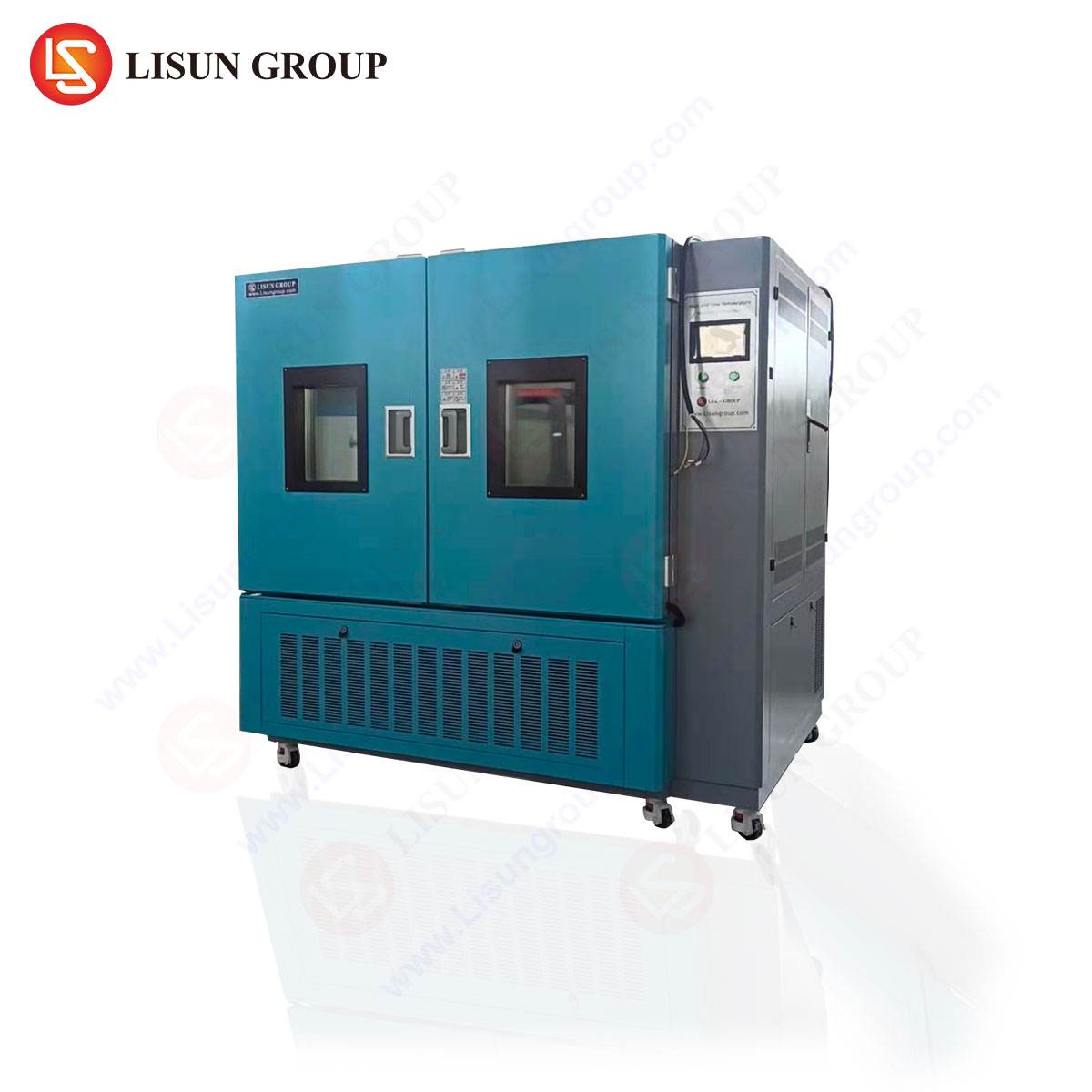
The physical integrity of the chamber is paramount. The LISUN systems typically operate within a temperature range of ambient +20°C to 100°C or higher, with a uniformity of ±3°C and a stability of ±0.5°C at the set point. These are not just standard ovens; they are designed with forced air circulation to prevent thermal stratification. This precision is mandatory for maintaining the reproducibility required by CIE 127 standards for LED measurement. The system supports up to 3 connected temperature chambers, allowing for simultaneous multi-temperature testing, which is critical for developing accurate Arrhenius plots.
2.2 Photometric Measurement Integration
A distinct advantage of the LISUN LEDLM series is the integration of the integrating sphere and spectroradiometer within the aging test loop. Unlike methods that require removing samples for measurement—which introduces thermal shock—the LISUN system allows for in-situ measurement. The LEDLM-84PL can house a built-in photometric detector or integrate with an external LISUN HAAS-2000 system for high-accuracy spectral analysis. This setup facilitates the measurement of not just lumen maintenance, but also chromaticity shift (Δu’v’), a key parameter in TM-28 and TM-21 reporting.
2.3 Software-Driven Data Acquisition and Control
The proprietary software acts as the brain of the operation, controlling the temperature cycling and data logging intervals. It automatically calculates percentile maintenance values and interfaces with the Arrhenius Model to project long-term life. The software manages the “dual testing modes” – specifically, the “Constant Temperature Mode” and the “Cyclic Temperature Mode” – allowing engineers to simulate either static operating conditions or diurnal temperature swings as specified in some accelerated stress test protocols. This software architecture ensures that the Reliable Environmental Test Chambers for IEC 60068 Compliance deliver actionable data, not just raw temperature logs.
3.1 Constant Temperature Mode for LS LM-80
In the Constant Temperature Mode, the chamber maintains a strict, unchanging temperature set point (e.g., 55°C, 85°C, or 105°C) for the duration of the test. This is the standard requirement for IES LM-80-15 testing, where samples must be tested at 55°C, 85°C, and a third user-selected temperature. The LISUN system allows for high current driving of the DUTs (Devices Under Test) to accelerate degradation without exceeding the thermal limits of the chamber. The 6000-hour test duration is a standard benchmark, and the system is designed to run this protocol uninterrupted, with redundant data logging to prevent data loss.
3.2 Cyclic Temperature Mode for CMH and Stress Testing
The Cyclic Mode introduces thermal cycling, which induces mechanical stress due to Coefficient of Thermal Expansion (CTE) mismatches within the LED package. This is particularly relevant for automotive lighting or outdoor fixtures where thermal shock is common. The software supports programmable ramp rates and dwell times, enabling compliance with specific IEC 60068-2-14 test procedures (temperature change). This function expands the utility of the chamber from purely Lumen Maintenance testing to broader reliability qualification, offering a more holistic assessment compared to standard aging racks.
3.3 Comparative Data Analysis
The software enables side-by-side comparison of data from tests run in different modes. For instance, a test running at 85°C constant can be compared to a test running cyclic between 25°C and 85°C. This comparison helps engineers determine whether thermal fatigue or thermal degradation is the dominant failure mechanism. The following table illustrates the standard configurations:
| Parameter (Typical) | LEDLM-80PL (LM-80 Focus) | LEDLM-84PL (LM-84 Focus) |
|---|---|---|
| Primary Standard | IES LM-80-08 | IES LM-84-14 |
| Temperature Range | Ambient +20°C to 100°C | Ambient +20°C to 105°C |
| Typical Test Duration | 6000 Hours (Minimum) | 6000 Hours (Recommended) |
| Measurement Method | External or In-situ (Optional) | In-situ (Built-in capability) |
| Life Projection Output | TM-21 (L70/L50) | TM-28 (L70/L50) |
| Chamber Connectivity | Up to 3 Chambers | Up to 3 Chambers |
| Data Output | Lumen Maintenance, Chromaticity Shift | Lumen Maintenance, Chromaticity Shift |
4.1 Applying the Arrhenius Model for Acceleration
The Arrhenius Model is the cornerstone of accelerated life testing. The LISUN software utilizes an Arrhenius equation to establish the relationship between the test temperature (T) and the reaction rate (k) of the lumen depreciation mechanism. By testing at multiple temperatures (e.g., 55°C, 85°C, and 105°C), the software calculates the activation energy (Ea) specific to the LED package being tested. This allows engineers to extrapolate the lifespan at a lower, operational junction temperature (e.g., 60°C) without having to run a real-time test for a decade.
4.2 TM-21 and TM-28 Extrapolation Protocols
Once the 6000-hour test data is compiled, the software applies the TM-21-11 standard algorithm for non-linear regression. This standard requires at least 6000 hours of data, with the last 5000 hours used for extrapolation to a maximum of 6 times the test duration (e.g., 36,000 hours). The LEDLM-84PL supports TM-28-14, which uses the same fundamental principles but is often applied to LED packages and arrays where the driving current and temperature are monitored more rigorously. The software automates this calculation, minimizing the risk of human error and ensuring the reported L70 life is defensible.
4.3 Data Integrity and Reporting
In a regulated environment, data traceability is essential. The software logs timestamps, temperature readings, electrical data (current, voltage, power), and optical data (lumens, CCT, CRI) at user-defined intervals. The export functions generate reports that align with the templates required by IES LM-79-19 and CIE 084 for submission to regulatory bodies like ENERGY STAR or DLC (DesignLights Consortium). This integration elevates the test chamber from a simple heat source to a complete data acquisition system.
5.1 Photometric Accuracy and CIE 127
The accuracy of the lumen maintenance data is only as good as the photometric measurement. The LISUN system adheres to CIE 127:2007 for LED measurement conditions, which defines the requirements for integrating sphere geometry and detector field-of-view. By utilizing a 2-meter or 1.5-meter integrating sphere for large modules, or a smaller sphere for individual LEDs, the system minimizes errors from self-absorption and stray light. This ensures that the optical readings taken at 1000-hour intervals are scientifically valid over the entire 6000-hour period.
5.2 Electrical and Optical Testing Alignment with IES LM-79-19
While LM-80 testing focuses on the LED package, the overall luminaire performance is validated by IES LM-79-19. The LISUN environmental chambers can be configured to house complete luminaires (in the case of the LEDLM-84PL with larger chamber options) for absolute photometry testing within a controlled environment. This allows for simultaneous assessment of total luminous flux and electrical power consumption, providing the efficacy data (lumens per watt) required for product datasheets and energy compliance labels, all within a Reliable Environmental Test Chamber for IEC 60068 Compliance.
5.3 The Role of CIE 70 and Spectral Analysis
CIE 70 provides standards for the measurement of intensity distribution, which is not directly measured here. However, the spectral data captured by the integrated spectroradiometer (per CIE 13.3) allows for the calculation of Color Rendering Index (CRI) and chromaticity coordinates. Monitoring these spectral shifts is vital for applications where color consistency is critical (e.g., horticultural lighting). The ability to correlate lumen maintenance with spectral power distribution (SPD) changes over time is a key feature that distinguishes LISUN’s advanced chambers from standard thermal ovens.
6.1 Test Plan Design for LM-80 Compliance
To utilize the LEDLM-80PL effectively, a test plan must specify at least three temperatures: 55°C, 85°C, and a third condition (often 105°C or the maximum rated temperature). The current is set to the rated drive current (e.g., 350mA, 700mA). The chamber must maintain these temperatures while the LEDs are powered. The 6000-hour duration is mandatory, with interim measurements at 0, 1000, 2000, 3000, 4000, 5000, and 6000 hours. LISUN’s chamber automation ensures these checkpoints are met without opening the chamber, preserving thermal equilibrium.
6.2 Failure Analysis and Troubleshooting
When a sample fails prematurely (e.g., catastrophic failure before 6000 hours), the data logging software helps engineers identify the approximate failure time and environmental conditions. By comparing the data across multiple chambers, engineers can pinpoint batch-specific issues (e.g., poor phosphor quality) versus systemic design flaws (e.g., poor thermal management). The high stability of the chamber temperatures ensures these conclusions are statistically significant.
6.3 Scaling Production Testing
For third-party labs and large manufacturers, throughput is critical. With support for up to 3 connected chambers, one software interface can manage multiple tests simultaneously. Whether testing LEDs from different suppliers or validating different product families, the centralized control reduces operator workload and increases laboratory throughput significantly. This modularity ensures that as testing needs grow, the hardware investment scales efficiently.
7.1 Beyond 6000 Hours: Extended Testing and TM-28
While 6000 hours provides a 6x extrapolation to 36,000 hours via TM-21, some accreditations (like DLC) require even longer test durations for premium claims. The LISUN chambers are designed for continuous operation, allowing for testing up to 10,000 hours or more. Running tests to 10,000 hours allows extrapolation to 60,000 hours, which is closer to the actual rated life of modern LEDs, thus reducing the uncertainty margin in the reported L70 values.
7.2 Correlating Chamber Data with Field Performance
The gap between accelerated testing and real-world performance remains a challenge. While Reliable Environmental Test Chambers for IEC 60068 Compliance provide the stress, the correlation factor is derived from the Arrhenius Model activation energy. LISUN’s software provides a “Temperature Correction” feature, allowing engineers to input the expected thermal resistance (Junction-to-Case) to calculate the actual junction temperature (Tj). This Tj is the true driver of degradation, and standardizing on Tj rather than case temperature is a growing trend in the industry, leading to more accurate lifetime predictions.
7.3 Integration with Smart Manufacturing (Industry 4.0)
Modern chambers are becoming IoT-enabled. LISUN systems feature Ethernet and RS-232 interfaces for remote monitoring and data integration into Manufacturing Execution Systems (MES). This allows quality managers to view real-time aging test data dashboards via mobile devices. This connectivity ensures that the environmental test chamber is not an isolated piece of equipment but a vital data node in the smart factory ecosystem.
In conclusion, the LISUN LCD Optical Aging Test Instruments (LEDLM-80PL and LEDLM-84PL) represent a significant advancement in the field of LED reliability testing. These systems are more than just heaters; they are comprehensive test platforms that merge precise thermal control with high-accuracy photometric detection, all governed by robust, standards-compliant software. By utilizing dual testing modes and applying the Arrhenius Model, engineers can accurately extrapolate 6000-hour test results to predict L70/L50 lifespan metrics in accordance with IES standards. These Reliable Environmental Test Chambers for IEC 60068 Compliance mitigate the risk of premature LED failures, ensuring that only the most robust products reach the market. For technical professionals seeking to validate product durability and meet regulatory requirements, implementing LISUN’s integrated solutions offers a clear path to enhanced product quality and long-term brand reliability in a competitive global market.
Q1: How does the LISUN LEDLM-80PL ensure that the LED sample temperature is accurately controlled to meet IES LM-80 standards?
A: The LEDLM-80PL utilizes a closed-loop air circulation system with multiple temperature sensors to maintain high uniformity (±3°C) and stability (±0.5°C). However, LM-80 requires that the thermocouple measures the “case temperature” or “board temperature” of the LED, not just the air. The LISUN system provides dedicated terminals for attaching thermocouples directly to the LED PCB. These readings are fed into the control system, allowing for accurate adjustment of the chamber set point to achieve the desired case temperature (e.g., 55°C or 85°C), ensuring the test data is valid and compliant with the strict requirements of the IES LM-80-15 standard.
Q2: What is the practical difference between the TM-21 extrapolation and the TM-28 method for the user?
A: TM-21-11 is the standard method for projecting long-term lumen maintenance of LED light sources using data from the IES LM-80-08 test. TM-28-14 is a newer standard used with IES LM-84-14 data, often applied to LED packages, arrays, and modules and provides methods for projecting luminous flux maintenance. For the user, the primary difference lies in the data set requirements and input parameters. TM-28 allows for the use of less stringent testing conditions in some cases but relies on accurate temperature data. The LISUN software supports both, automatically selecting the correct algorithm based on the test standard (LM-80 vs. LM-84) chosen at the start of the experiment.
Q3: Can the “Reliable Environmental Test Chambers for IEC 60068 Compliance” be used for non-LED components like power supplies or automotive electronics?
A: Yes, absolutely. While the software is optimized for optical measurements, the chamber can operate in a “stand-alone” mode. The temperature control functions (constant and cyclic) are designed to adhere to IEC 60068-2 general procedures and IEC 60068-2-14 for temperature change. You can program temperature profiles without activating the integrating sphere software. This allows you to test the thermal robustness of PCB boards, plastic housings, or sensors for compliance with IEC 60068 standards, making the LISUN system a versatile multi-purpose environmental test solution in a laboratory setting.
Q4: How do I handle the issue of “self-heating” when testing high-power LEDs at high current?
A: Self-heating occurs when the LED’s own heat generation raises its temperature above the ambient chamber set point. To prevent this, the LISUN system monitors the actual measured temperature at the specimen fixture. The control algorithm reduces the chamber air temperature to compensate for the operational heat of the LED, ensuring the total temperature at the “case” measurement point matches the target. In Constant Temperature Mode, the system auto-tunes to the electrical current of the LED, preventing thermal runaway and ensuring that the aging of the LED is not accelerated by uncontrolled temperature increases.
Q5: What kind of data granularity is possible during the 6000-hour test?
A: The LISUN software allows for tight control over data acquisition. For optical data, you can program measurements at any given time, typically at 0, 24, 48, 168 (1 week), 360, 1000, 2000, 3000, and 6000 hours intervals as recommended by the standards. For electrical and thermal data (current, voltage, case temperature), the software can log continuously (e.g., every 5 minutes) to monitor for any short-term anomalies or power supply fluctuations. This dual-granularity ensures you have smooth trend lines for long-term depreciation analysis and detailed event logs for troubleshooting.